Photos: Bern by Beat Bieri, Pexels License; Munich by 0xd1ma, Pexels License.
Bern or Munich?
Our verdict in twelve categories, each scored against the same fixed benchmark cities, and the climate month by month, so you can choose for your trip.
Choose Bern for
- beaches
- getting around
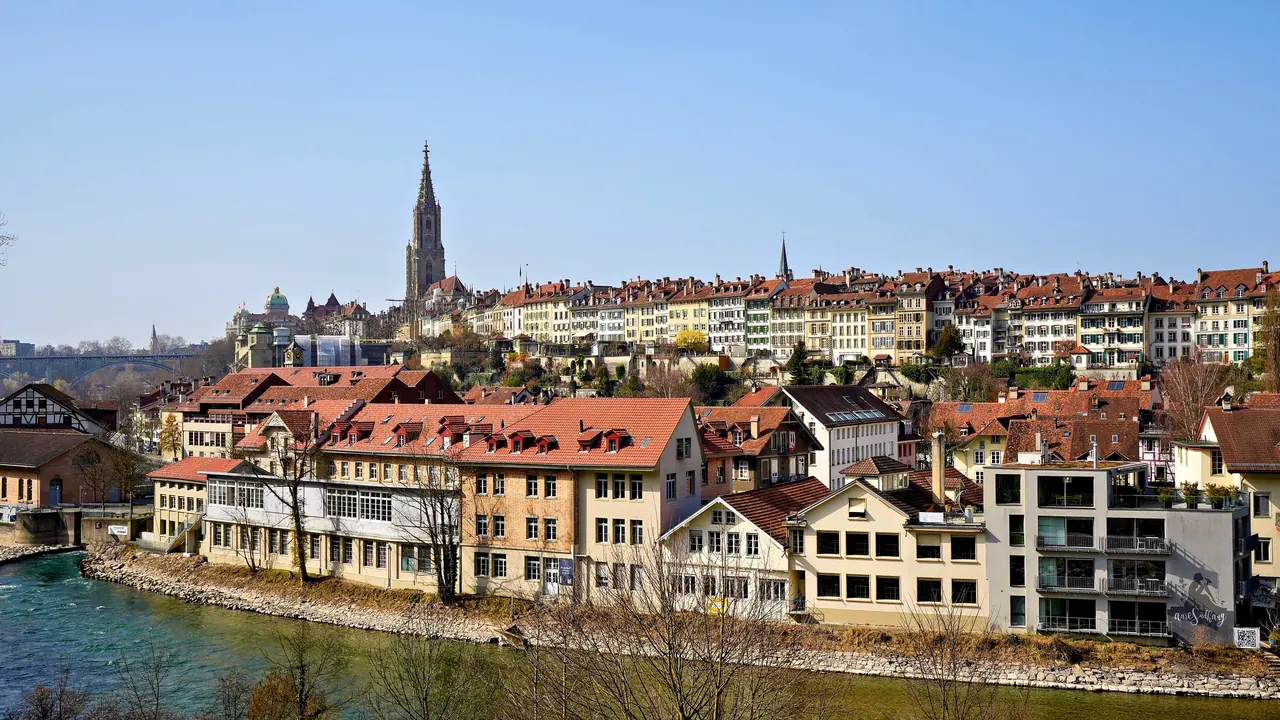
Bern suits a slower, smaller trip. The UNESCO old town of arcades and painted fountains can be walked end to end in twenty minutes, and on summer afternoons you can float down the Aare past the Federal Palace. The station puts a different Swiss lake town or mountain valley within reach each morning. Choose it if you want scenery, quiet evenings and an easy rhythm, and don't mind that almost everything costs more.
Choose Munich for
- live music and the arts
- shopping
- prices
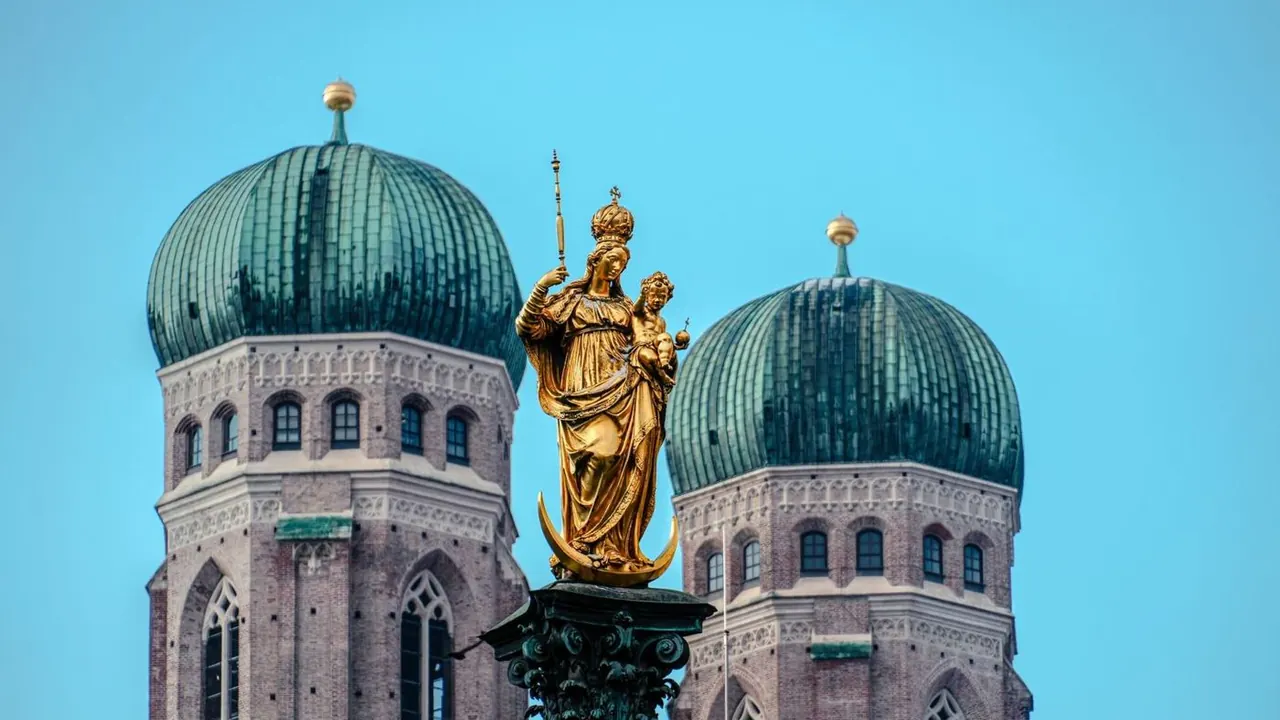
Munich is the fuller city. It has the great picture collections of the Kunstareal, an opera house of world standing and beer gardens where meals turn into evenings. Its shops, bars and things for children also go further than Bern's. It suits travellers who want plenty to do in town before heading to the Alps, and it is somewhat gentler on the budget.
Scoreboard
Twelve categories on one fixed scale from 0 to 100. The shaded stretch is the gap between the two.
Your match
Pick a travel style or drag the sliders, and both match scores follow your weighting.
Wins on beaches and getting around with your weighting.
Wins on live music and the arts and shopping with your weighting.
What matters to you?
Category by category
What the scores mean for a trip.
Beaches & swimming
Neither city has a coast, but in Bern swimming is closer to hand and more of a ritual. The Aare runs right past the old town, and confident swimmers float downstream from the Marzili past the Federal Palace. Lake Thun is about twenty minutes away by train for calmer water.
In Munich the swimming mostly happens out of town. The Isar's gravel banks at the Flaucher are for sunbathing and barbecues, while the real swims are in the Starnberger See and the Ammersee, under an hour away by S-Bahn. Both cities have the same short season, from June to early September.
Food & drink
Munich gives eating out more character and more choice. Beer gardens under chestnut trees, white sausage with pretzels before noon and the Viktualienmarkt next to Marienplatz make meals part of the sightseeing, and there is a respectable tier of starred restaurants on top.
Bern's food is narrower and more homely: the Berner Platte, rösti and fondue in vaulted cellars and guildhall dining rooms, Emmental cheese at the weekly markets, and very good chocolate. It is satisfying for a few days, but the range is that of a small city and the bills are steep.
Culture & sights
Munich has far more to see. The Kunstareal alone could fill several days, with the old masters in the Alte Pinakothek, the Blue Rider painters at the Lenbachhaus and the Glyptothek's sculpture. The Residenz, Nymphenburg and the Deutsches Museum come on top of that.
Bern's strength is the town itself. Its intact UNESCO old town of sandstone arcades, fountains and the Zytglogge holds together in a way that Munich, much of it rebuilt after the war, cannot. Add the Zentrum Paul Klee and Einstein's flat on Kramgasse, and two days cover it well.
Nightlife
In Bern, a night out usually means a vaulted cellar bar under the arcades or, in summer, a terrace by the Aare. Aarbergergasse and the streets near the station fill up at weekends, and the Reitschule is the one place for late, rough-edged parties. On weeknights the city goes quiet early.
Munich's evenings start in a beer hall or beer garden and often stay there, but there is much more for anyone who wants to move on. Cocktail and gay bars are packed close together around the Glockenbachviertel and Gärtnerplatz, Schwabing has student pubs, and a few techno and house clubs run until morning at weekends. During the Oktoberfest the tents take over the whole city.
Nature & outdoors
Both cities have the Alps in view and real mountains about an hour away, so the outdoors is equally strong. The setting is what differs. From Bern, the Eiger, Mönch and Jungfrau line the horizon above the old town, and the Jungfrau region is an hour away by train. The Gurten funicular and the wooded paths along the Aare start at the edge of town.
Munich lies on a flat plain, so getting to Garmisch and the Zugspitze takes a deliberate trip. In return, the city has more green space inside it: the English Garden with its Eisbach surfers, and long cycle paths along the Isar. The Five Lakes add gentle sailing and cycling country.
Day trips
Both are excellent bases, so the choice is between Swiss towns and Bavarian and Austrian ones. Bern's trips are short and close together. Fribourg is twenty minutes away, Gruyères, walled Murten, Thun and Solothurn are all near, and Lucerne, Basel and Zurich are about an hour off.
Munich's trips are longer but grander: Neuschwanstein and the other royal castles, Salzburg and Innsbruck across the border, and Nuremberg and Regensburg. Expect more time on the train per outing from Munich, and a wider sweep of history.
Good for families
Bern's bear park below the old town, the Dählhölzli zoo along the Aare and the big playground at the top of the Gurten funicular each make a good half-day, and the city is calm and safe. There is no theme park or major aquarium, though, and the fast Aare is no place for small swimmers, so families often head up into the mountains.
Munich keeps children busy for longer without leaving town. Hellabrunn zoo spreads along the Isar meadows, the Deutsches Museum has hands-on sections and a children's area, and the Olympic Park has an aquarium. Many beer gardens come with playgrounds, and a Lego theme park is about an hour and a half away by car.
Getting around
Both are easy without a car, and the difference is size. Bern's centre is a twenty-minute walk from end to end, under arcades that keep off the rain, and the main station sits at the top of the old town. The catch is the steep climbs up from the Aare, eased by funiculars and a public lift.
Munich is bigger, so the U-Bahn and S-Bahn do more of the work, running to Nymphenburg, the Olympic Park, the airport and the lakes. The city is flat and good for cycling, though delays on the central S-Bahn line are a regular irritation.
Shopping & style
Bern is good for an easy browse, not a shopping trip. Watch and chocolate shops line the arcades of Spitalgasse and Marktgasse, and antique, book and craft shops sit in cellars down steep steps off Gerechtigkeitsgasse. The Zibelemärit sells woven onion braids in late November. There is little fashion or luxury.
Munich goes much further. Maximilianstrasse has the luxury houses, Neuhauser Strasse and Kaufingerstrasse the department stores, and Glockenbach and Schwabing the independent boutiques. The city's distinctive purchase is Tracht, the dirndls and lederhosen made by specialist tailors around the centre, and Munich is one of the best places to buy it.
Affordability
Neither city is cheap, but Munich is easier on a budget. Hotels are its main expense, especially during the Oktoberfest and the trade fairs. Beer-hall meals are fair value, you can bring a picnic to a beer garden, and several museums charge only a token fee on Sundays.
In Bern almost everything costs more, from a plain guesthouse to a beer on a terrace. The hotel transport pass, the free bear park and Federal Palace tours, and supermarket lunches all help, but a stay there is still a real expense.
Live music & performing arts
This is one of the widest gaps between the two. Munich has the Bavarian State Opera in the National Theatre, three orchestras of real standing, the rococo Cuvilliés Theatre and a long-running summer opera festival, so a music lover can plan a whole trip around the programme.
Bern offers what a small capital usually does: opera and drama at the Stadttheater, the symphony orchestra in the Casino, new dance at the Dampfzentrale and the Gurtenfestival in July. It makes for a good evening out, but not a reason to come.
Wellness & relaxation
Munich has the stronger bathing culture. There is the Art Nouveau Müller'sches Volksbad with its Roman-style steam bath, public saunas with the German infusion rituals, and the huge thermal complex at Erding about forty minutes away.
Bern has no bathing tradition of its own, only a thermal complex on the western edge and some hotel spas. Its slow pace, quiet Sundays and riverside terraces still make it an easy place to unwind, and anyone after serious spa time goes up to the Bernese Oberland.
When should you go?
Pick your month. The climate figures are measured averages, not a forecast.
Bern in July
Munich in July
Daytime high, °C
Rainfall in the month, mm
Where the figures come from
Bern has no rain gauge within 25 km of the centre, so its rainfall comes from a gridded climate dataset read at the city rather than from a gauge further away.
Bern's sunshine is measured 71 km from the centre, at Herten.
Temperature and rainfall are climate normals, averaged over the years shown. Bern: 2010-2020 (sunshine 1991-2020, rainfall 1991-2020) normals, Bern / Bern - Belp Airport (5.5 km from centre). Munich: 1991-2020 normals, München (1.9 km from centre).
The two cities share a central European climate and are at their best at the same time. July and August are the warmest months, with highs of about 26°C in Bern and 25°C in Munich. River and lake swimming really only works from June to early September. Summer is also the wettest stretch in both, with heavy showers from May to August. The long days still bring the most sunshine, and Bern gets a little more of it in high summer.
For walking the streets, late spring and September are the most comfortable: mild, and Munich in particular is noticeably drier in September than in midsummer. Winter is grey and cold in both, with highs near 5°C and short, dim days. Bern is slightly gloomier in December, and the snow lies in the mountains rather than in the streets of either city.
Which traveller are you?
On a beach and sun trip, neither city has a coast, but Bern makes more of its water. Floating down the Aare past the Federal Palace and lazing on the Marzili lawns is ordinary summer life in town, and Lake Thun is close by for calmer swims.
For a culture and arts trip, Munich is the stronger choice. The Pinakotheks, the Residenz and the Deutsches Museum go well beyond Bern's museums. With the Bavarian State Opera and three major orchestras, the evenings are as full as the days.
On a tight budget, Munich is the easier of two expensive cities. Beer-hall meals, picnics in beer gardens, museums that charge a token fee on Sundays and free parks all stretch money further than in Bern, where even a simple guesthouse is costly.
Before you go
| Measure | Bern | Munich |
|---|---|---|
| Official language | French, German, Italian, Romansh | German |
| Currency | Swiss Franc (CHF) | Euro (EUR) |
| Sockets | CJ230 V, 50 Hz | CF230 V, 50 Hz |
| Driving side | Right | Right |
| Time zone | UTC+1, UTC+2 in summer | UTC+1, UTC+2 in summer |
| Emergency number | 112 | 112 |
| Elevation | 542 m | 519 m |
| Main airport | Zürich Airport (ZRH)101 km from centre226 non-stop destinations | Munich Airport (MUC)29 km from centre210 non-stop destinations |
| Public holidays this year | 10 days | 12 days |
By the numbers
| Measure | Bern | Munich |
|---|---|---|
| City population | 136,988 | 1,505,036 |
| People per km² | 2,655 | 4,844 |
| Museums within 10 km | 30 | 74 |
| UNESCO World Heritage sites within 50 km | 2 | 1 |
Where else could you go?
Every comparison below shares a destination with this one, so you can follow Bern or Munich somewhere new.