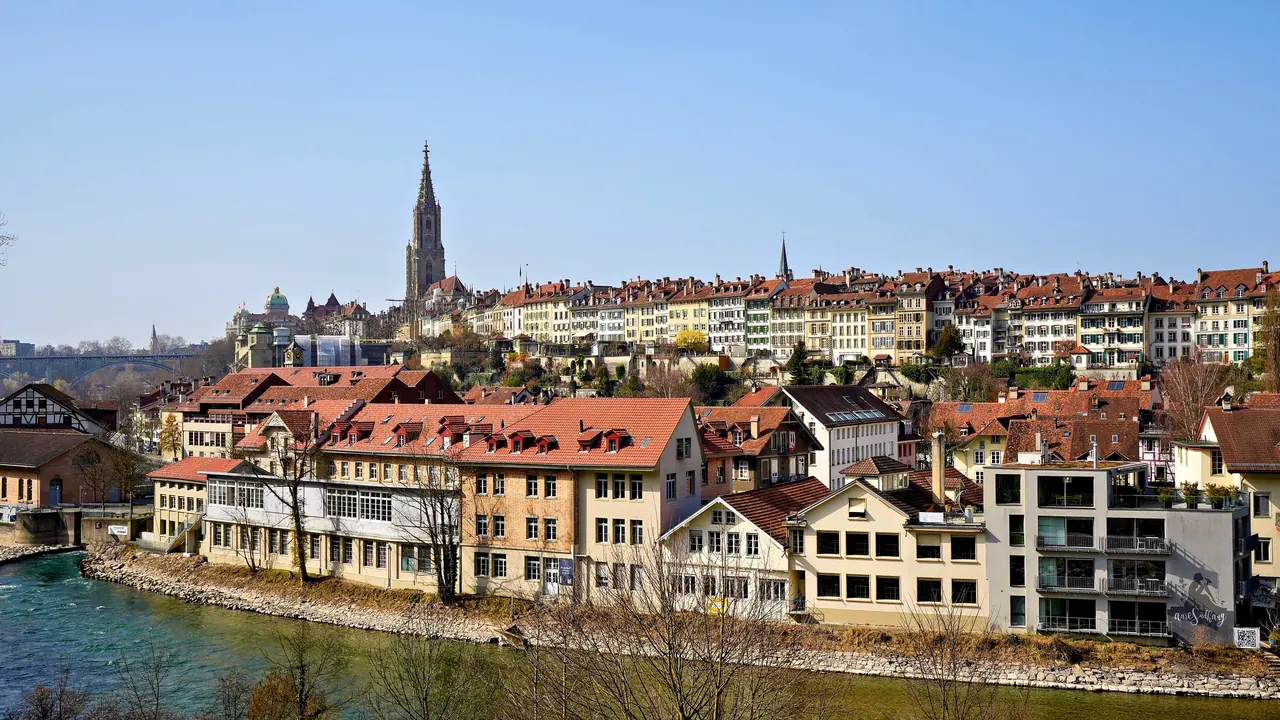
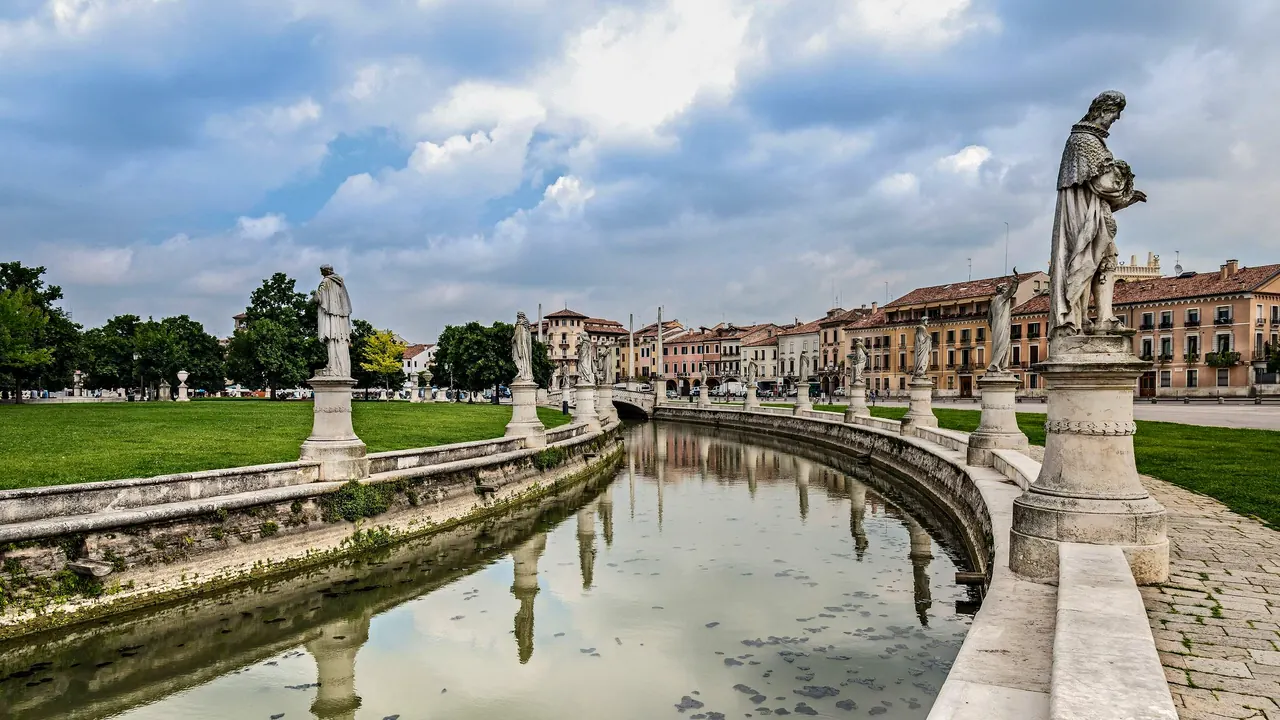
Photos: Bern by Beat Bieri, Pexels License; Padua by Didier Descouens, CC BY-SA 4.0, cropped.
Bern or Padua?
Our verdict in twelve categories, each scored against the same fixed benchmark cities, and the climate month by month, so you can choose for your trip.
Choose Bern for
- nature and the outdoors
- families
- getting around
Bern is the pick for travellers who want mountains on the doorstep and a city that runs like clockwork. The Jungfrau peaks, Lake Thun and the river swim through town make it far stronger outdoors, and its bear park, zoo and easy trams make it the calmer choice with children. The catch is the cost, which is steep at every turn.
Choose Padua for
- prices
- food and drink
- wellness
Padua rewards people who come for art, food and the evening ritual of the spritz in the squares. Giotto's chapel and the great basilica give it the deeper sights, the markets and Venetian cooking give it the better table, and the thermal spas of Abano lie just outside town. It is also far easier on the wallet, and it doubles as a cheaper bed for visiting Venice.
Scoreboard
Twelve categories on one fixed scale from 0 to 100. The shaded stretch is the gap between the two.
Your match
Pick a travel style or drag the sliders, and both match scores follow your weighting.
Too close to call, 2 points apart
Wins on nature and the outdoors and families with your weighting.
Wins on prices and food and drink with your weighting.
What matters to you?
Category by category
What the scores mean for a trip.
Beaches & swimming
Neither city is on the coast, but in Bern swimming is part of summer life in town. Locals walk upstream from the Marzili, jump into the Aare and drift back past the Federal Palace, and the lidos at Lorraine and Eichholz have lawns and pools. The current is cold and strong, so it suits confident swimmers, and Lake Thun offers calmer bathing twenty minutes away by train.
Padua's sea is an hour away at Sottomarina or the Venice Lido. The Adriatic there is warmer and shallow enough for small children, but the shore is a flat run of umbrellas, so it makes a day out rather than a reason to stay.
Food & drink
Padua eats better and with more character. Bigoli with duck sauce, baccalà and spring-pea risotto come from the Venetian home kitchen, and the morning stalls in Piazza delle Erbe and Piazza della Frutta, with the delicatessens under the Palazzo della Ragione, are the real centre of it. The early-evening spritz with small bites, the Euganean wines and Caffè Pedrocchi round it out.
Bern's cooking is hearty and traditional: the Berner Platte, rösti and fondue in cellar restaurants under the arcades, good Emmental cheese at the markets and excellent chocolate. The choice is that of a small city, and every meal out costs a lot.
Culture & sights
In Bern, UNESCO lists the whole old town, and the old town is the main sight: arcaded streets, painted fountains, the Zytglogge and the Minster tower looking out to the Alps. The Zentrum Paul Klee and the Einstein Museum give the city more depth than you would expect from its size.
Padua's art carries more weight. Its UNESCO listings cover particular treasures rather than the streets: the fourteenth-century fresco cycles, led by Giotto's Scrovegni Chapel, whose frescoes changed European painting, and the Orto Botanico of 1545. Add Donatello's bronzes at the Basilica of Saint Anthony and the anatomical theatre in Palazzo Bo, and you have two full days of sightseeing.
Nightlife
Padua has more going on after dark, though neither city does big nights. From early evening the squares around the Palazzo della Ragione fill with students and locals over spritz, and during term the wine bars around the old ghetto keep weekday evenings busy. The city empties in the university breaks.
Bern's evenings happen in vaulted cellar bars and along Aarbergergasse at weekends, with the Reitschule for late, rough-edged parties and the riverside terraces in summer. On weeknights it goes quiet early.
Nature & outdoors
Bern is in a different league for the outdoors. The snow peaks of the Bernese Oberland are visible from the old town, and Interlaken and the Jungfrau region are about an hour away for high-mountain hiking and skiing. Closer in are Lake Thun, the Gurten funicular and wooded paths along the Aare.
Padua sits on a flat plain. The Euganean Hills, about 15km away, are good for vineyard walks and road cycling, the Brenta towpaths make level rides, and real mountain walking on Monte Grappa or the Asiago plateau means about an hour and a half by car.
Day trips
Both are superb bases, and Padua has the edge thanks to its neighbours. Venice is under half an hour by train, Vicenza a quarter of an hour, and Verona, Bologna and Ferrara are about an hour away, along with the Brenta villas and the walled towns around the Euganean Hills.
From Bern the trips run to Lucerne, Basel and Zurich, medieval Fribourg, Gruyères and lake towns such as Murten and Thun. Bern's list is mostly lakes, castles and Alpine scenery, while Padua's includes some of the great art cities of Italy.
Good for families
Bern is the easier city with children. The bear park below the old town, the Dählhölzli zoo along the Aare, the dioramas at the Natural History Museum and the playground on the Gurten fill several days, and the mountains are close for the rest. The fast river does need watching.
Padua is flat, safe and welcoming, and children can run around in Prato della Valle, but beyond the botanical garden little is made for them. Families usually plan days at Gardaland, Lake Garda or the Adriatic.
Getting around
Both centres take about twenty minutes to cross on foot under arcades, but Bern's transport is the smoother. Trams and buses share one punctual fare system, funiculars and a lift link the old town with the river below, and the main station sits right at the top of the old town. The climbs up from the Aare are the only effort.
Padua is entirely flat and good by bicycle, with a tram from the station to the centre and Prato della Valle. Its rail connections are excellent, but a car still helps for the hills and the villa countryside.
Shopping & style
Neither is a shopping destination, and they differ mainly in what you take home. Bern's arcaded streets offer Swiss watches and chocolate, and the cellar shops down steep steps on Gerechtigkeitsgasse sell antiques, design and crafts.
Padua leans towards Italian shoes and fashion, university bookshops and above all food: cheeses, cured meats and Euganean wine from the market delicatessens. Its monthly antiques fair in Prato della Valle is a good Sunday browse.
Affordability
This is where the two differ most. Bern is very expensive, from plain hotels to a terrace beer, and budget travellers lean on supermarket lunches, the hotel tram pass and free pleasures like the bear park and the river paths.
Padua costs what a mid-sized northern Italian city usually does. A standing spritz and market food are cheap, trattorias are fair, and many visitors sleep here precisely because it is a cheaper base than Venice. Rooms only get dearer around the trade fairs and graduation season.
Live music & performing arts
Bern offers the fuller evening programme. The Stadttheater stages opera and ballet, the Bern Symphony Orchestra plays in the Casino above the Aare, and the Dampfzentrale handles contemporary dance. The spring jazz festival and the Gurtenfestival in July add a couple of bigger moments.
Padua's Teatro Verdi and its chamber orchestra, heard in the Sala dei Giganti or the Basilica, are modest but rewarding. For major opera people go out to the Fenice in Venice or the Arena in Verona.
Wellness & relaxation
Padua has a real spa tradition right on its doorstep. Abano Terme and Montegrotto, about 12km away, form one of Europe's largest thermal districts, with hot mineral water and mud cures used since Roman times, and many spa hotels take day visitors after a morning of sightseeing.
Bern has an unhurried feel, quiet Sundays and a modern thermal complex on its western edge, but no bathing heritage. For serious spa time, visitors head up to the hotels of the Bernese Oberland.
When should you go?
Pick your month. The climate figures are measured averages, not a forecast.
Bern in July
Padua in July
Daytime high, °C
Rainfall in the month, mm
Where the figures come from
Bern has no rain gauge within 25 km of the centre, so its rainfall comes from a gridded climate dataset read at the city rather than from a gauge further away.
Bern's sunshine is measured 41 km from the centre, at Payerne.
Padua's temperatures are measured 35 km from the centre, at Treviso / Istrana.
Padua has no rain gauge within 25 km of the centre, so its rainfall comes from a gridded climate dataset read at the city rather than from a gauge further away.
Padua's sunshine is measured 36 km from the centre, at Treviso / S. Angelo.
Temperature and rainfall are climate normals, averaged over the years shown. Bern: 2010-2020 (sunshine 1961-1990, rainfall 1991-2020) normals, Bern / Bern - Belp Airport (5.5 km from centre). Padua: 1991-2020 normals, Treviso / Istrana (35.4 km from centre).
Bern is at its best from June to early September, when afternoons reach about 26°C, July brings the most sunshine of the year and the Aare is warm enough for the locals' river swim. Rain falls in every month. It is heaviest in late spring, with 118mm in May while the days are still only mild, and summer stays showery between the sunny spells. Winters are cold, grey and short on sunshine in the city, so the arcades are more pleasant than long walks along the river.
Padua is warmer in every month. July and August reach 31°C on the humid plain, which is too hot for long afternoons of sightseeing, but the Adriatic is at its warmest then, about 26°C in August, for a day at the sea. May and September are the comfortable months for walking the old centre, and April and October are mild too. Padua's rain peaks in November rather than late spring. In December and January it gets more than twice Bern's sunshine, though fog often settles over the plain.
Which traveller are you?
For an outdoors trip, Bern is the clear choice. The Eiger, Mönch and Jungfrau are about an hour away by train, with cable cars, high trails and skiing, while Padua's flat plain leaves you with the gentle Euganean Hills and a drive to the pre-Alps.
On a family trip with children, Bern has more to offer: the bear park, the Dählhölzli zoo, the Gurten playground and easy trams. In Padua the main sights are frescoes and churches, and the fun for children mostly means day trips to Gardaland or the beach.
On a tight budget, Padua is far easier. Rooms are moderately priced, a standing spritz and market food cost little, and Venice is a cheap train ride away. In Bern even plain hotels and simple meals are expensive, and supermarket lunches become a habit.
Before you go
| Measure | Bern | Padua |
|---|---|---|
| Official language | French, German, Italian, Romansh | Italian |
| Currency | Swiss Franc (CHF) | Euro (EUR) |
| Sockets | CJ230 V, 50 Hz | CFL230 V, 50 Hz |
| Driving side | Right | Right |
| Time zone | UTC+1, UTC+2 in summer | UTC+1, UTC+2 in summer |
| Emergency number | 112 | 112 |
| Elevation | 542 m | 12 m |
| Main airport | Zürich Airport (ZRH)101 km from centre226 non-stop destinations | Venice Marco Polo Airport (VCE)39 km from centre103 non-stop destinations |
| Public holidays this year | 10 days | 13 days |
By the numbers
| Measure | Bern | Padua |
|---|---|---|
| City population | 136,988 | 206,496 |
| People per km² | 2,655 | 2,220 |
| Museums within 10 km | 30 | 29 |
| UNESCO World Heritage sites within 50 km | 2 | 5 |
| Swim season, months above 21 °C | - | 4 months |
Where else could you go?
Every comparison below shares a destination with this one, so you can follow Bern or Padua somewhere new.