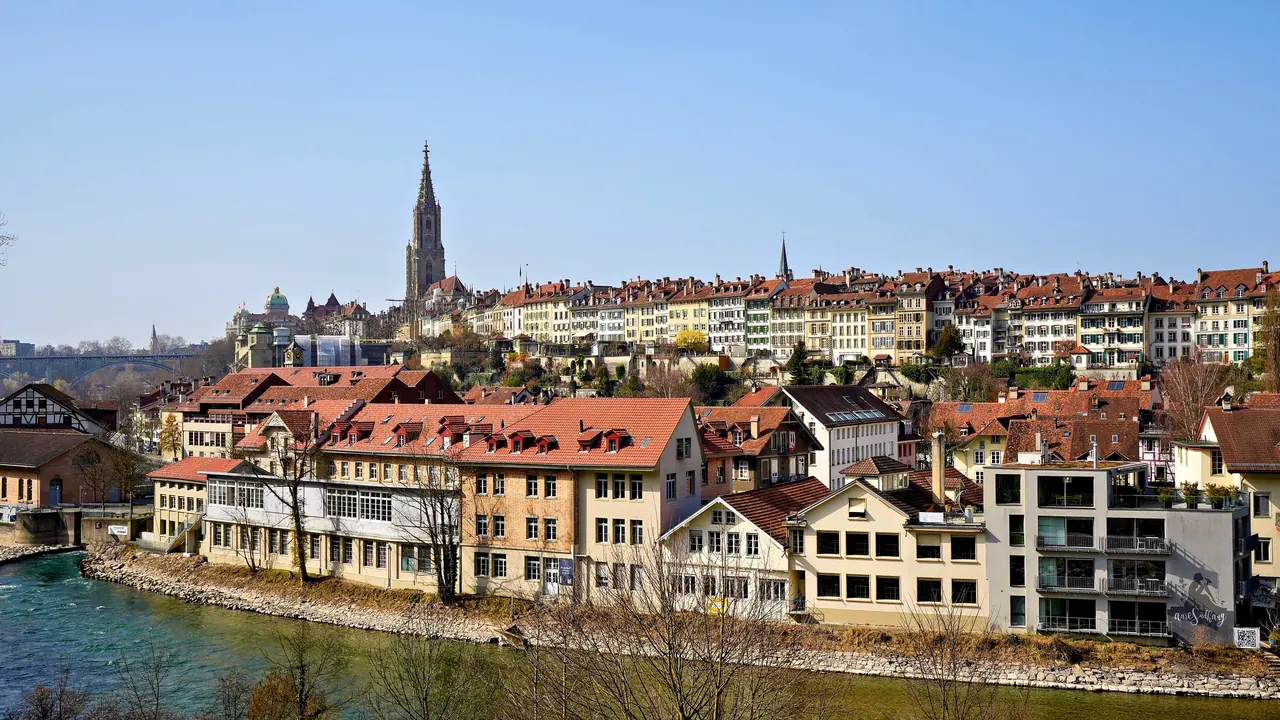
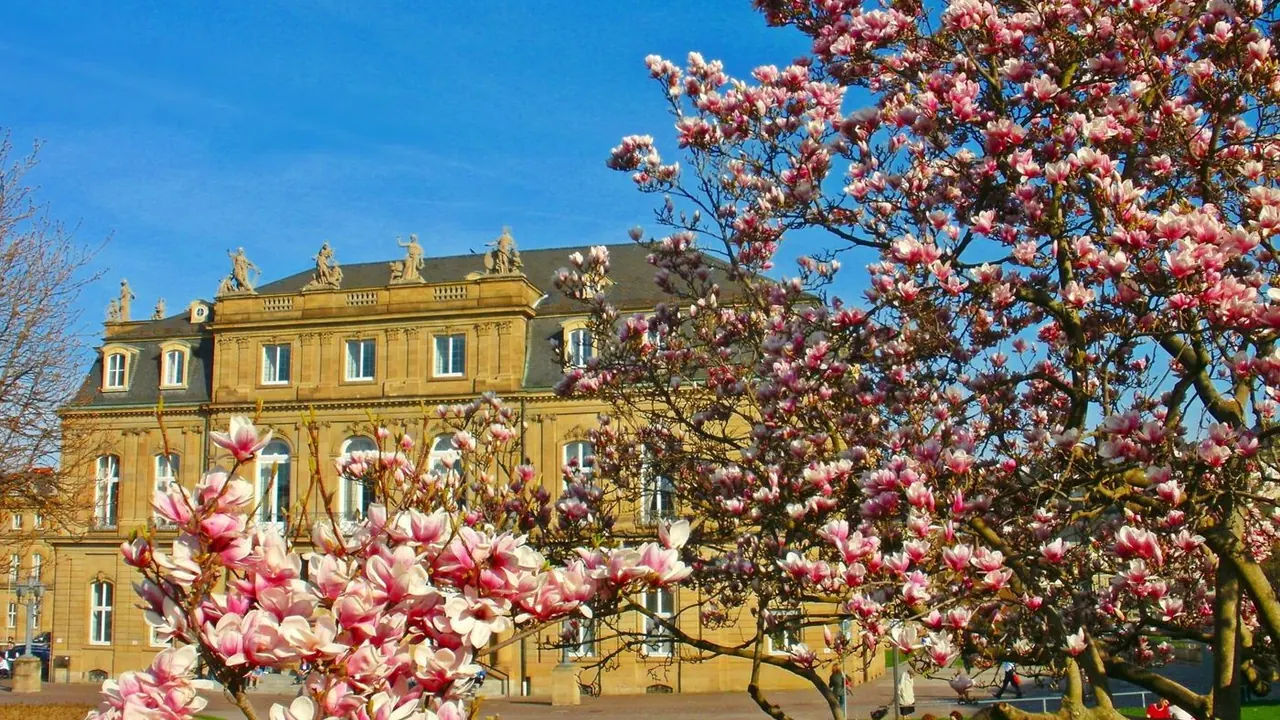
Photos: Bern by Beat Bieri, Pexels License; Stuttgart by Baden de, CC BY 3.0, cropped.
Bern or Stuttgart?
Our verdict in twelve categories, each scored against the same fixed benchmark cities, and the climate month by month, so you can choose for your trip.
Choose Bern for
- beaches
- nature and the outdoors
- getting around
Bern suits travellers who want real mountains and lakes on the doorstep, with a compact UNESCO old town to come back to each evening. The Jungfrau region is about an hour away by train, there are summer swims in the Aare, and the rail hub sits at the top of the old town. That makes it the better pick for an active trip, as long as the budget can take Swiss prices.
Choose Stuttgart for
- prices
- live music and the arts
- food and drink
For anyone who puts evenings first, Stuttgart is the better choice. It has a stage programme led by one of Europe's most respected ballet companies, Swabian taverns pouring wine from the city's own slopes, and mineral baths for a long soak. It also costs noticeably less, though there is no summer swimming to speak of and the countryside is gentler.
Scoreboard
Twelve categories on one fixed scale from 0 to 100. The shaded stretch is the gap between the two.
Your match
Pick a travel style or drag the sliders, and both match scores follow your weighting.
Too close to call, 2 points apart
Wins on beaches and nature and the outdoors with your weighting.
Wins on prices and live music and the arts with your weighting.
What matters to you?
Category by category
What the scores mean for a trip.
Beaches & swimming
Neither city has a coast, but Bern has a real summer swimming culture. From June to early September, locals walk upstream from the Marzili baths and drift back down the Aare past the Federal Palace. For calmer bathing under the Alps, Lake Thun is a short train ride away. The current is cold and strong, so the river is for confident swimmers.
In Stuttgart the Neckar is a working river of barges and locks, so a swim there means one of the city's outdoor pools, some of them fed by mineral springs. Lake Constance is more than two hours south.
Food & drink
Both cities cook hearty regional food, but Stuttgart's has more range and more local character. Maultaschen, Käsespätzle and wine from vineyards inside the city limits are served in traditional taverns and in seasonal Besen in growers' own homes. There is also a deep fine-dining tier for a city of its size.
Bern does Berner Platte, rösti and fondue well in guildhall dining rooms and arcade cellars, and its chocolate is excellent. Still, the choice is that of a small city and every meal is expensive. The best of eating there is in the markets and the November Zibelemärit.
Culture & sights
The two are close in depth but very different in kind. Bern's main sight is the old town itself, a UNESCO-listed loop of sandstone arcades, painted fountains, the Zytglogge and the Minster. Behind it come the Zentrum Paul Klee and the Einstein flat on Kramgasse.
Stuttgart lost most of its historic core to bombing, so its sights come from industry and modern design: the Mercedes-Benz and Porsche museums, the Staatsgalerie's postmodern wing and the Le Corbusier houses of the Weissenhof Estate. Choose Bern for streets to wander and Stuttgart for collections and architecture.
Nightlife
Stuttgart has the wider range of evenings, with real clubs alongside its bars, while a night out in Bern is mostly about drinking in cellars. In Bern that means the vaulted bars under the arcades and around Aarbergergasse, terraces along the Aare in summer, and the Reitschule for late, rough-edged parties. During the week the old town goes quiet early.
Stuttgart adds clubs in basements and old industrial spaces, where electronic music has a small but loyal crowd. There is also a weekend bar strip on Theodor-Heuss-Strasse and wine bars in the Bohnenviertel. Its busiest nights come with the seasons: the wine village in late summer and the beer tents of the Cannstatter Volksfest in autumn.
Nature & outdoors
Bern has high mountains within easy reach. The Eiger, Mönch and Jungfrau line the view from the old town and are about an hour away by train, with cable cars, alpine hiking and winter skiing. Lake Thun and the Gurten are closer still.
Stuttgart's countryside is gentler. Vineyard trails, the deer forests of the Rotwildpark, the cliff edges of the Swabian Jura and the northern Black Forest give walkers and cyclists plenty to do, but nothing there reaches alpine scale.
Day trips
Both cities make excellent bases, and Bern is slightly ahead. It sits at the centre of the Swiss rail network, so Lucerne, Basel and Zurich are each about an hour away. Fribourg is twenty minutes off, and Murten, Thun, Solothurn and Neuchâtel are all close. From Fribourg it is a short trip on to the castle and cheese dairies of Gruyères, and you can see a different town each day without planning around connections.
Stuttgart's day trips lean towards palaces and old towns: baroque Ludwigsburg, Tübingen and Heidelberg's castle, about forty minutes away by fast train. Further out are the abbey at Maulbronn and Hohenzollern Castle, and Strasbourg is possible on a long day.
Good for families
Both cities are safe, orderly and easy with children, so the difference lies in the outings. Bern has the bear park, the Dählhölzli zoo and a meadow playground at the top of the Gurten funicular, though the fast Aare means keeping small children away from the river. Stuttgart has Wilhelma, a zoo and botanical garden that fills a whole day, car museums for older children and the fairy-tale garden at Ludwigsburg.
Getting around
Bern is the easier city to get around. The centre is a twenty-minute walk from the station to the bear park, under arcades that keep off the rain. Because the station sits at the top of the old town, day trips begin right on the edge of the sights.
Stuttgart's flat core around Königstrasse and Schlossplatz is just as walkable, but the city climbs steeply up the sides of its basin. To reach Wilhelma, the car museums and the hills you will rely more on the Stadtbahn and S-Bahn, or climb the Stäffele stairways.
Shopping & style
Stuttgart is better for a shopping trip. Königstrasse is a long pedestrian high street, Breuninger covers luxury and designer fashion, and the Metzingen outlet town is about half an hour away. Bern suits browsing more than serious buying. It has watches and chocolate under the arcades, and antiques, books and crafts in the cellar shops of Gerechtigkeitsgasse, but little fashion range.
Affordability
Stuttgart is the cheaper city, and by a clear margin. Bern charges full Swiss prices, so the bill climbs at every step, from the room for the night to a beer on a riverside terrace. What softens it is how much of Bern costs nothing at all: wandering the old town, watching the bears, following the Aare on foot and swimming in it in summer. Most hotels also include the local trams and buses with the stay.
Stuttgart is a prosperous German city rather than a Swiss one, and that alone makes an ordinary day noticeably lighter on the wallet. A beer garden evening or a simple meal stays within normal bounds, and the vineyard trails and parks are free. Most of the money goes on smart restaurants and central hotels.
Live music & performing arts
For an evening at the theatre, Stuttgart is the clear choice. The Stuttgart Ballet, famous since John Cranko's era, shares the state theatre by the palace gardens with an opera company known for bold productions. The Liederhalle carries a strong Bach tradition, and Möhringen runs long seasons of musicals.
Bern has the institutions of a small capital: German-language opera and drama at the Stadttheater, the symphony orchestra at the Casino and new dance at the Dampfzentrale. Add the spring jazz festival and the Gurtenfestival in July, but it is something to fit into a trip rather than travel for.
Wellness & relaxation
For actual soaking, Stuttgart has the real bathing tradition. The mineral springs of Bad Cannstatt and Berg feed public baths such as the Mineralbad Leuze, with naturally carbonated warm water indoors and out. Bern has no bathing history to match, just a large thermal complex on the western edge and some hotel spas. Its quiet Sundays and long riverside lunches still make it a restful place to slow down.
When should you go?
Pick your month. The climate figures are measured averages, not a forecast.
Bern in July
Stuttgart in July
Daytime high, °C
Rainfall in the month, mm
Where the figures come from
Bern has no rain gauge within 25 km of the centre, so its rainfall comes from a gridded climate dataset read at the city rather than from a gauge further away.
Bern's sunshine is measured 71 km from the centre, at Herten.
Temperature and rainfall are climate normals, averaged over the years shown. Bern: 2010-2020 (sunshine 1991-2020, rainfall 1991-2020) normals, Bern / Bern - Belp Airport (5.5 km from centre). Stuttgart: 1991-2020 normals, Stuttgart / Neckartal (2.8 km from centre).
The two have almost the same temperatures through the year. Midwinter highs are only 5°C to 6°C, and both reach 26°C in July and August. May to September is comfortable for walking the streets in either city. In Bern, June to early September is the season when the Aare and Lake Thun are warm enough to swim. Summer sunshine is much the same in both, with Bern slightly ahead in July.
The real difference is rain. Bern is markedly wetter, peaking at about 118mm in May, and every summer month there brings heavier rain than in Stuttgart, where the wettest month, July, has about 79mm. Stuttgart's winters and springs are also notably dry. December to February is cold and dull in both cities, better for museums, the theatre and Stuttgart's warm mineral pools than for long walks, though Bern's arcades keep you dry in town.
Which traveller are you?
For an outdoors trip, Bern is the stronger pick. The Eiger, Mönch and Jungfrau are about an hour away by train and Lake Thun is closer still. Riverside paths, the Gurten and summer swims in the Aare all start from town. Stuttgart's Jura and Black Forest are gentler.
On a trip on a tight budget, Stuttgart goes much further. Tavern meals are fair for the portions, hotel rates drop at weekends, and a day ticket covers the transport. Bern charges heavily for rooms, meals and even a terrace beer, however simply you travel.
For a food and nightlife trip, Stuttgart has more to offer. You can start with Maultaschen and city-grown Trollinger in wine taverns and seasonal Besen, then move on to the bars along Theodor-Heuss-Strasse or the Volksfest tents in autumn. Bern's menus are traditional and its weeknights end early.
Before you go
| Measure | Bern | Stuttgart |
|---|---|---|
| Official language | French, German, Italian, Romansh | German |
| Currency | Swiss Franc (CHF) | Euro (EUR) |
| Sockets | CJ230 V, 50 Hz | CF230 V, 50 Hz |
| Driving side | Right | Right |
| Time zone | UTC+1, UTC+2 in summer | UTC+1, UTC+2 in summer |
| Emergency number | 112 | 112 |
| Elevation | 542 m | 245 m |
| Main airport | Zürich Airport (ZRH)101 km from centre226 non-stop destinations | Stuttgart Airport (STR)10 km from centre124 non-stop destinations |
| Public holidays this year | 10 days | 12 days |
By the numbers
| Measure | Bern | Stuttgart |
|---|---|---|
| City population | 136,988 | 609,365 |
| People per km² | 2,655 | 2,938 |
| Museums within 10 km | 30 | 42 |
| UNESCO World Heritage sites within 50 km | 2 | 3 |
Where else could you go?
Every comparison below shares a destination with this one, so you can follow Bern or Stuttgart somewhere new.