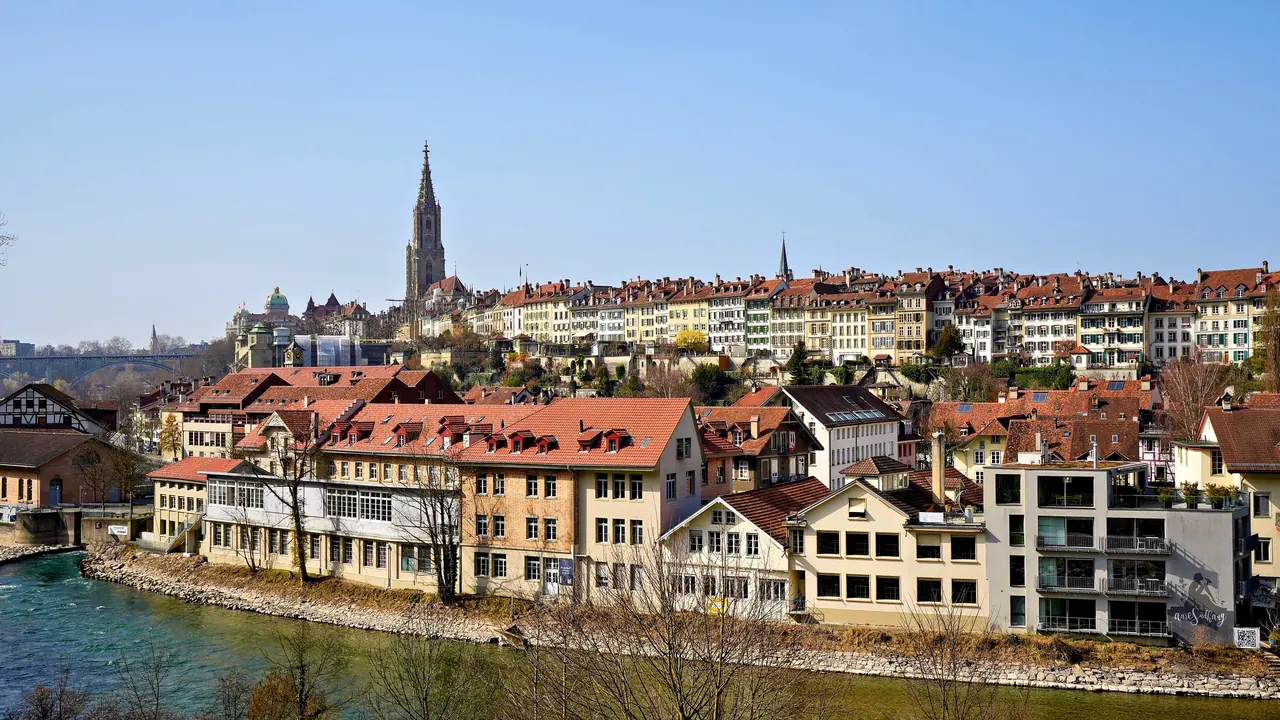
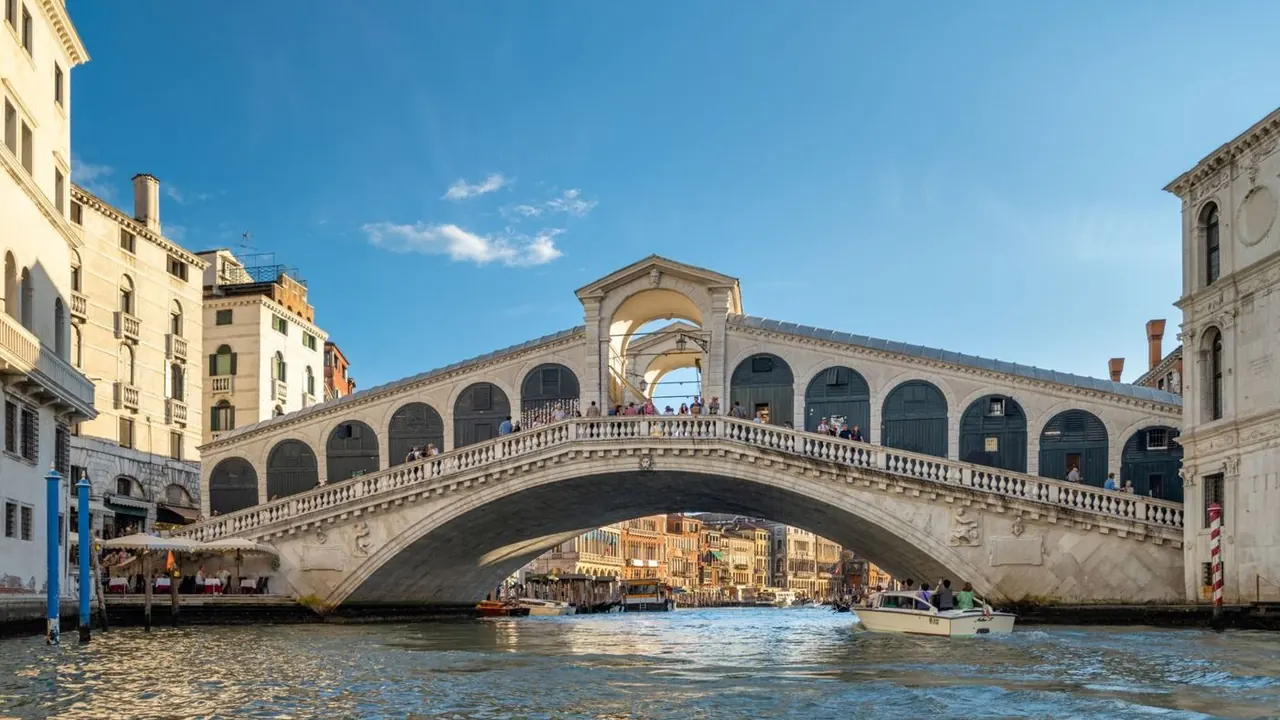
Photos: Bern by Beat Bieri, Pexels License; Venice by David Vives, Pexels License.
Bern or Venice?
Our verdict in twelve categories, each scored against the same fixed benchmark cities, and the climate month by month, so you can choose for your trip.
Choose Bern for
- nature and the outdoors
- getting around
- families
Bern suits travellers who want the Alps within easy reach and a calm, orderly base to come back to each evening. Its compact arcaded old town is quick to see, the trains run everywhere, and the Jungfrau peaks, Lake Thun and a week of small Swiss towns are all close. Families and walkers will find it far easier going than Venice, provided they accept steep prices and quiet nights.
Choose Venice for
- culture and sights
- food and drink
- beaches
Venice is the choice for someone who wants one of the great art cities of Europe and is happy to spend days on foot among palaces, churches and canals. Its painting, opera and lagoon cooking go much deeper than anything Bern offers, and a hot day can end on the Lido sand. The price of that is crowds on the main routes, endless stepped bridges and very little countryside to walk in.
Scoreboard
Twelve categories on one fixed scale from 0 to 100. The shaded stretch is the gap between the two.
Your match
Pick a travel style or drag the sliders, and both match scores follow your weighting.
Too close to call, level with your weighting
Wins on nature and the outdoors and getting around with your weighting.
Wins on culture and sights and food and drink with your weighting.
What matters to you?
Category by category
What the scores mean for a trip.
Beaches & swimming
Neither city is a beach destination, but Venice has an actual stretch of sand. The Lido is a short boat ride away, with shallow Adriatic water around 25°C in high summer that suits children and waders, and quieter Pellestrina beyond.
Bern's swimming is a river experience rather than a beach one: drifting down the cold, fast Aare past the Federal Palace and climbing out at the Marzili lawns. It is exhilarating for strong swimmers, but for gentle bathing you take the train to Lake Thun.
Food & drink
Bern cooks in an Alpine register. Expect the Berner Platte of smoked meats and sausages, rösti and fondue served in old guildhall rooms and arcade cellars, and fine chocolate and Emmental cheese at the Bundesplatz markets. The food is dependable rather than memorable. There are Italian, Asian and modern Swiss kitchens as well, but only as many as a small city can offer.
Venice is the better place to eat, as long as you avoid the picture-menu restaurants around San Marco. Cicchetti with a small glass of wine at a bacaro counter near the Rialto, cuttlefish risotto blackened with its ink and lagoon seafood from the market have a character Bern cannot match. Beyond Venetian and Italian cooking, though, the choice is thin.
Culture & sights
Both old towns carry UNESCO status, but they are on a different scale. Bern's sandstone arcades, fountains, Zytglogge and Minster make a handsome, compact centre, and the Zentrum Paul Klee and Einstein's flat give it real substance for a city of its size.
Venice is in another league. The whole city is the monument, from San Marco and the Doge's Palace to the palazzi on the Grand Canal, and the art inside its churches and scuole could fill a week without repeating itself.
Nightlife
Neither city is for clubbing, but Bern has a little more going on after dark. Its vaulted cellar bars and the streets around Aarbergergasse stay busy at weekends, and the Reitschule runs late, rough-edged parties.
Venice peaks at aperitivo time with spritzes outside the bacari on the Fondamenta della Misericordia, then thins out to a few student bars in Campo Santa Margherita. By midnight the canals are silent, which suits a romantic walk better than a night out.
Nature & outdoors
This is where Bern pulls far ahead. The Bernese Alps are visible from the old town and about an hour away by train, with high hiking, cable cars and skiing, while the Gurten, the Aare woods, the Emmental and the Jura give easier walks and rides close by.
Venice's nature is the lagoon: salt marshes around Torcello with herons and flamingos, best explored by kayak or rowing boat. It is lovely in its quiet way, but the land is flat and the Dolomites are more than two hours off.
Day trips
Both are superb bases, and the difference is in what you see. From Bern the trips are Swiss towns and lakes: Lucerne, Fribourg, Gruyères, Murten and Thun, all reached easily by train, with mountain scenery thrown in.
From Venice the draw is art and history: Giotto in Padua, Verona's arena, Palladio's Vicenza and the Brenta villas, plus Murano, Burano and Torcello by boat without boarding a train at all.
Good for families
Bern is much the easier city with children. It is calm, clean and safe. The bears on the riverbank below the old town and the wooded enclosures of the Dählhölzli zoo along the Aare make easy half-days, and the animal dioramas at the Natural History Museum fill a wet morning. Little ones can splash in the shallow pools at the Marzili lido while the fast river beside it is left to strong swimmers, and the mountains an hour away round off a longer stay.
Venice wins children over at first sight, with travel by boat, no cars and glass-blowing on Murano, and the Lido's shallow sand is a good escape on a hot afternoon. Day to day, though, it is hard going. Hundreds of stepped bridges make a pushchair a struggle, the main routes are packed in summer, the alleys turn hot and humid, and there are few parks or playgrounds where children can run about.
Getting around
Bern is one of the simplest cities to move around. The old town walks end to end in about twenty minutes under cover of the arcades, trams and buses run to the minute, and the main station sits right at the top of the centre.
Venice is walkable too, but more slowly and with more effort. Its alleys twist and dead-end at canals, the vaporetti are slow and crowded, and hundreds of stepped bridges make luggage and pushchairs a constant chore.
Shopping & style
Venice has more to buy, chiefly crafts made in the city: Murano glass, Burano lace, papier-mâché masks, marbled paper and furlane slippers, plus Italian fashion names near San Marco. The catch is the cheap imported copies on the main routes.
Bern's arcades offer watches, chocolate and Swiss chains, with antiques and design in the cellar shops of Gerechtigkeitsgasse. It is pleasant browsing, but there is less that you could not find elsewhere.
Affordability
Both cities are expensive, and Bern is the costlier of the two. Hotels, meals and even a terrace beer cost well above most of Europe, softened by a free local transport pass from many hotels and free sights such as the bear park and river paths.
Venice is steep too, with dear hotels and visitor-priced boats, but standing cicchetti meals and a bed in Mestre or the quieter sestieri bring the cost of a stay down further than Bern allows.
Live music & performing arts
Venice has the stronger evening programme, led by La Fenice, where Verdi and Rossini had premieres, along with Biennale festivals and the ever-present Vivaldi concerts in churches. Jazz and rock are scarce.
Bern covers the range of a small capital, with opera at the Stadttheater, the symphony orchestra at the Casino and contemporary dance at the Dampfzentrale. Its spring jazz festival and the Gurtenfestival in July give it the popular music Venice lacks.
Wellness & relaxation
Bern is the more restful place overall. The whole city runs at an easy pace, Sundays are quiet, and a large thermal and sauna complex on the western edge adds proper spa time, with mountain spa hotels within reach.
Venice offers stillness in pockets, such as early mornings in Castello or on Giudecca, but the daytime crush around San Marco works against it. For real thermal bathing you travel an hour to Abano Terme.
When should you go?
Pick your month. The climate figures are measured averages, not a forecast.
Bern in July
Venice in July
Daytime high, °C
Rainfall in the month, mm
Where the figures come from
Bern has no rain gauge within 25 km of the centre, so its rainfall comes from a gridded climate dataset read at the city rather than from a gauge further away.
Bern's sunshine is measured 71 km from the centre, at Herten.
Venice has no rain gauge within 25 km of the centre, so its rainfall comes from a gridded climate dataset read at the city rather than from a gauge further away.
Venice's sunshine is measured 26 km from the centre, at Treviso / S. Angelo.
Temperature and rainfall are climate normals, averaged over the years shown. Bern: 2010-2020 (sunshine 1991-2020, rainfall 1991-2020) normals, Bern / Bern - Belp Airport (5.5 km from centre). Venice: 1991-2020 normals, Venezia / Tessera (6.7 km from centre).
Bern is a summer city. June to August bring highs around 26°C and the most sunshine, which is when the Aare swims and mountain hikes are at their best, though this is also the wettest stretch, with more than 100mm of rain most months from May to August, often in showers and storms. From November to February it is cold and grey in town, good for the Christmas season and skiing higher up but not for long days outdoors.
Venice runs a few degrees warmer all year. July and August reach about 29°C and feel humid in the alleys, with the Adriatic at the Lido around 25°C, so June and September are often more pleasant for walking while the sea stays swimmable. Rain peaks in autumn, with October the wettest month at about 87mm, and winters are milder and noticeably sunnier than in Bern, which makes a cold-season visit to the museums more appealing.
Which traveller are you?
For a culture and arts trip, Venice is the clear pick. Titian, Tintoretto and the Accademia, the Basilica of San Marco, the Biennale and an evening at La Fenice add up to a week's worth, where Bern's sights fit into two days.
On an outdoors trip, Bern wins easily. The Eiger, Mönch and Jungfrau are about an hour by train, Lake Thun is closer still, and the Gurten and river paths start in town. Venice offers lagoon kayaking and flat cycling, but no mountains nearby.
On a family trip with children, Bern is the easier city. The bear park, Dählhölzli zoo, Gurten playground and pushchair-friendly trams make days simple, while Venice's stepped bridges, summer crowds and scarce parks make it hard work, especially with small children.
Before you go
| Measure | Bern | Venice |
|---|---|---|
| Official language | French, German, Italian, Romansh | Italian |
| Currency | Swiss Franc (CHF) | Euro (EUR) |
| Sockets | CJ230 V, 50 Hz | CFL230 V, 50 Hz |
| Driving side | Right | Right |
| Time zone | UTC+1, UTC+2 in summer | UTC+1, UTC+2 in summer |
| Emergency number | 112 | 112 |
| Elevation | 542 m | 2 m |
| Main airport | Zürich Airport (ZRH)101 km from centre226 non-stop destinations | Venice Marco Polo Airport (VCE)7 km from centre103 non-stop destinations |
| Public holidays this year | 10 days | 13 days |
By the numbers
| Measure | Bern | Venice |
|---|---|---|
| City population | 136,988 | 250,369 |
| People per km² | 2,655 | 602 |
| Museums within 10 km | 30 | 52 |
| UNESCO World Heritage sites within 50 km | 2 | 5 |
| Swim season, months above 21 °C | - | 4 months |
Where else could you go?
Every comparison below shares a destination with this one, so you can follow Bern or Venice somewhere new.