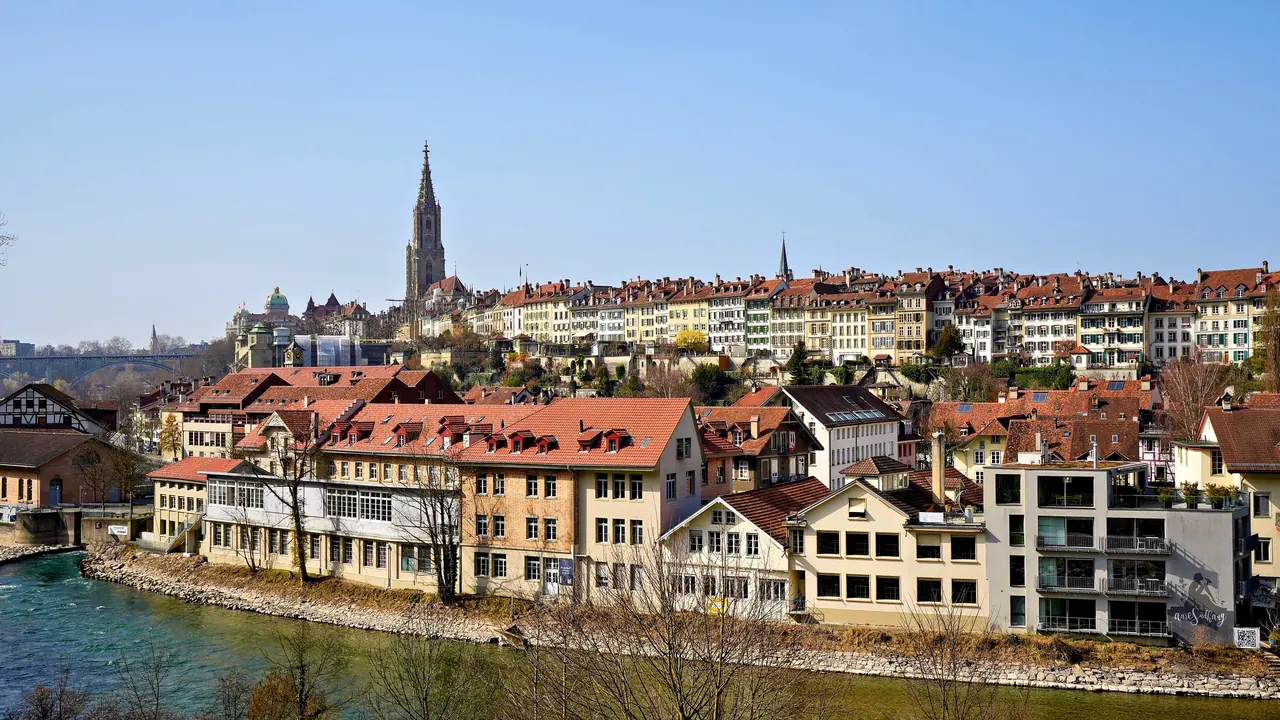
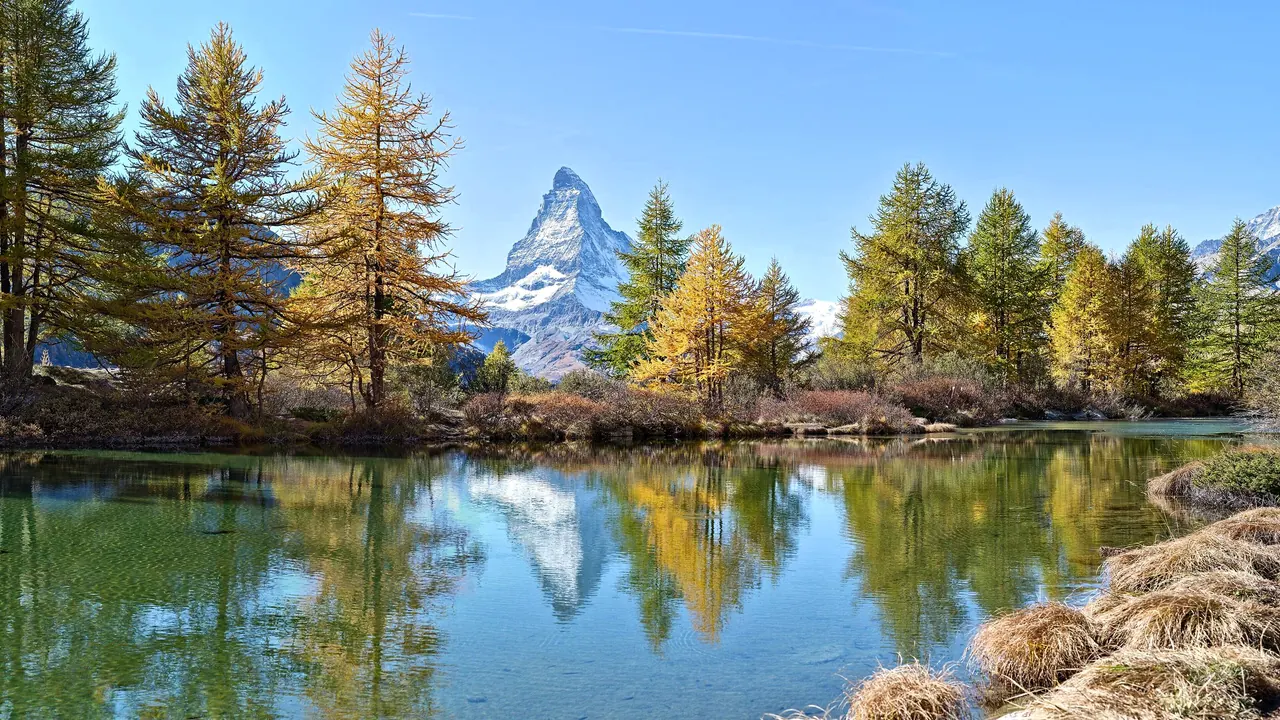
Photos: Bern by Beat Bieri, Pexels License; Zermatt by Roy Egloff, CC BY-SA 4.0, cropped.
Bern or Zermatt?
Our verdict in twelve categories, each scored against the same fixed benchmark cities, and the climate month by month, so you can choose for your trip.
Choose Bern for
- day trips
- culture and sights
- beaches
Bern suits a traveller who wants a real town to explore and the Alps within reach. Its arcaded UNESCO old town, the Klee and Einstein museums, an opera house and a symphony orchestra fill the days and evenings. With the station at the top of the old town, Lucerne, Fribourg or Lake Thun make easy outings. In summer you can swim in the Aare, and it works at any time of year.
Choose Zermatt for
- nature and the outdoors
- wellness
Zermatt is for anyone who comes for the mountains and little else. The Matterhorn stands over a car-free village, and lifts climb to glaciers and high ridges, with skiing in winter and hundreds of kilometres of trails in summer. There is little culture, shopping or variety, and it costs even more than Bern, but no Swiss city can put you this close to the high Alps.
Scoreboard
Twelve categories on one fixed scale from 0 to 100. The shaded stretch is the gap between the two.
Your match
Pick a travel style or drag the sliders, and both match scores follow your weighting.
Wins on day trips and culture and sights with your weighting.
Wins on nature and the outdoors and wellness with your weighting.
What matters to you?
Category by category
What the scores mean for a trip.
Beaches & swimming
Neither city is on the sea, but only Bern really gets you into the water. In summer you can walk upstream from the Marzili baths and float back down the Aare on its fast green current, then dry off on the lawns of the riverside lidos. For calmer water, Lake Thun is a short train ride away.
Zermatt has no bathing lake. Its tarns are for photographing the Matterhorn, not for swimming, so in this alpine village a swim means a hotel pool.
Food & drink
The two are evenly matched, but the setting is very different. Bern eats in guildhall dining rooms and vaulted cellars: Berner Platte, rösti and veal in cream sauce, with Emmental cheese from the Bundesplatz market and good chocolate. It is open all year, and the Zibelemärit onion market comes in late November.
In Zermatt the best meals are lunches on chalet terraces at Findeln or Zum See, reached on skis or on foot: raclette, air-dried beef and Valais wines like Petite Arvine, with the Matterhorn in view. In the low seasons many of these places close.
Culture & sights
In Bern the city itself is the sight. The UNESCO-listed old town has kilometres of sandstone arcades, painted fountains, the Zytglogge and the carved Minster portal. On top of that come the Zentrum Paul Klee, the Kunstmuseum and the Einstein Museum, enough for two full days.
Zermatt's heritage is narrow and tied to the mountain: the underground Matterhorn Museum on the 1865 first ascent, the climbers' graves by the church and the larch-wood barns of the Hinterdorf. All of that fits into a morning.
Nightlife
Neither place is known for nights out, and they quieten in different ways. Bern's evenings run all year through the cellar bars under the arcades and along Aarbergergasse, with late, rough-edged parties at the Reitschule and riverside terraces in summer.
Zermatt's nightlife is winter après-ski: ski boots and loud music in slope-side bars, then a few late bars along the main street. In summer the hikers turn in early.
Nature & outdoors
From Bern you can see the Eiger, Mönch and Jungfrau on a clear day and reach their trails and lifts in about an hour by train. Closer to town there are the Gurten, wooded paths along the Aare and gentle cycling through the Emmental.
Zermatt is far stronger here, because you are already among the high peaks. The Matterhorn rises straight above the streets, cog railways and cable cars climb to the Gornergrat and the Glacier Paradise, and the glacier keeps some pistes open in summer. Walks like the Five Lakes trail and the Europaweg bridge start from the village.
Day trips
Bern sits at the hub of Swiss railways and is excellent for day trips. Lucerne, Basel and Zurich are about an hour away, Fribourg is twenty minutes, and Gruyères, Murten, Thun and Solothurn make a different outing every day.
Zermatt is at the end of a valley, and every trip starts with a long ride down to the Rhône. Sion's castle hills and vineyards are the best outing, Brig is nearer, and a trip to Bern takes a long day. Most visitors stay in the mountains instead.
Good for families
Bern gives children more to do: bears on the riverbank, the wooded Dählhölzli zoo, the Natural History Museum's dioramas and a funicular up to the Gurten playground. The Marzili has shallow pools, though the river itself is for strong swimmers only.
Zermatt's appeal is its car-free calm, with nursery slopes at Sunnegga, marmots and cog-railway rides. There is little to do indoors on a wet day, and the air at the highest viewpoints is thin for small children.
Getting around
Both are easy without a car, but Bern is easier. You can cross the old town on foot in about twenty minutes, dry under the arcades, and punctual trams and short funiculars cover the rest. The station sits right at the top of the centre.
You reach Zermatt by train, usually after parking at Täsch, and then walk or take small electric taxis to the lifts. Hotels on the slopes mean a steep haul with luggage, and leaving the valley takes over an hour.
Shopping & style
Bern has more to browse. Arcaded streets run from Spitalgasse to Kramgasse, and down Gerechtigkeitsgasse cellar shops sell antiques, books and design. Weekly markets add cheese and produce.
Zermatt is one main street of watch boutiques, souvenirs and serious outdoor outfitters. It is good for ski or climbing gear and not much else.
Affordability
Both are among the most expensive places you could choose, and Zermatt is a little harsher. In Bern the hotel transport pass, free sights such as the bear park and the Federal Palace tours, and lunches from the market stalls take some of the pressure off.
In Zermatt every day also brings lift and cog-railway fares. Self-catering, supermarket picnics and staying down the valley in Täsch are the main ways to save.
Live music & performing arts
Bern has a small capital's year-round programme: opera and ballet at the Stadttheater, the symphony orchestra in the Casino, contemporary dance at the Dampfzentrale, plus a spring jazz festival and the Gurtenfestival in July.
Zermatt has no theatre or concert hall. Outside Zermatt Unplugged in spring and the chamber music festival in late summer, live music means an après-ski band.
Wellness & relaxation
The two are on a par, but they relax you in different ways. Bern's calm comes from quiet Sundays and long lunches by the river, with a large thermal bath and wellness complex on the western edge and a hammam in the old town.
Zermatt has many hotel spas with mountain views, some of them open to day guests, and the clean, car-free air is restful. In peak weeks, though, the village feels busy and active.
When should you go?
Pick your month. The climate figures are measured averages, not a forecast.
Bern in July
Zermatt in July
Daytime high, °C
Rainfall in the month, mm
Where the figures come from
Bern has no rain gauge within 25 km of the centre, so its rainfall comes from a gridded climate dataset read at the city rather than from a gauge further away.
Bern's sunshine is measured 41 km from the centre, at Payerne.
Zermatt has no weather station within reach, so its figures come from a gridded climate model rather than a measured record, and read a broad area rather than the city itself.
Temperature and rainfall are climate normals, averaged over the years shown. Bern: 2010-2020 (sunshine 1961-1990, rainfall 1991-2020) normals, Bern / Bern - Belp Airport (5.5 km from centre). Zermatt: 1991-2020 normals, TerraClimate 4 km grid at the town, no weather station within 90 km.
Bern is best from June to September, when afternoons reach about 26°C, the Aare is warm enough for confident swimmers and the sunniest weeks fall in July. Late spring and summer are also the wettest months, with around 118mm in May, so expect thundery showers between the fine days. From November to February the city is cold and grey with few sunny hours, though the covered arcades make walking the old town bearable.
Zermatt's year turns on altitude. From December to March daytime highs sit around -2°C, which keeps the snow good for skiing. July and August reach only about 14°C, mild walking weather for the trails and passes. November is the wettest month, with about 130mm, and late autumn and spring are the quiet in-between periods when it is neither ski nor hiking season.
Which traveller are you?
On a culture and arts trip, Bern is the clear choice. It has a UNESCO old town, the largest Paul Klee collection, Switzerland's oldest art museum and the Einstein flat, with opera and symphony concerts in the evenings. Zermatt's mountaineering heritage fills a single morning.
For an outdoors trip, choose Zermatt. Trails, glaciers and four-thousand-metre peaks start at the edge of the village, lifts climb above 3,800m, and the skiing runs across into Italy. From Bern the mountains are a train ride away, not outside your door.
On a family trip with children, Bern has more to fill the days: the bear park, the Dählhölzli zoo, natural history dioramas and the Gurten playground. Zermatt's car-free streets are relaxing, but the village offers little on a rainy day.
Before you go
| Measure | Bern | Zermatt |
|---|---|---|
| Official language | French, German, Italian, Romansh | French, German, Italian, Romansh |
| Currency | Swiss Franc (CHF) | Swiss Franc (CHF) |
| Sockets | CJ230 V, 50 Hz | CJ230 V, 50 Hz |
| Driving side | Right | Right |
| Time zone | UTC+1, UTC+2 in summer | UTC+1, UTC+2 in summer |
| Emergency number | 112 | 112 |
| Elevation | 542 m | 1,624 m |
| Main airport | Zürich Airport (ZRH)101 km from centre226 non-stop destinations | Geneva International Airport (GVA)128 km from centre150 non-stop destinations |
| Public holidays this year | 10 days | 9 days |
By the numbers
| Measure | Bern | Zermatt |
|---|---|---|
| City population | 136,988 | 6,023 |
| People per km² | 2,655 | 25 |
| Museums within 10 km | 30 | 2 |
| UNESCO World Heritage sites within 50 km | 2 | 2 |
Where else could you go?
Every comparison below shares a destination with this one, so you can follow Bern or Zermatt somewhere new.