Bhutan
Thimphu
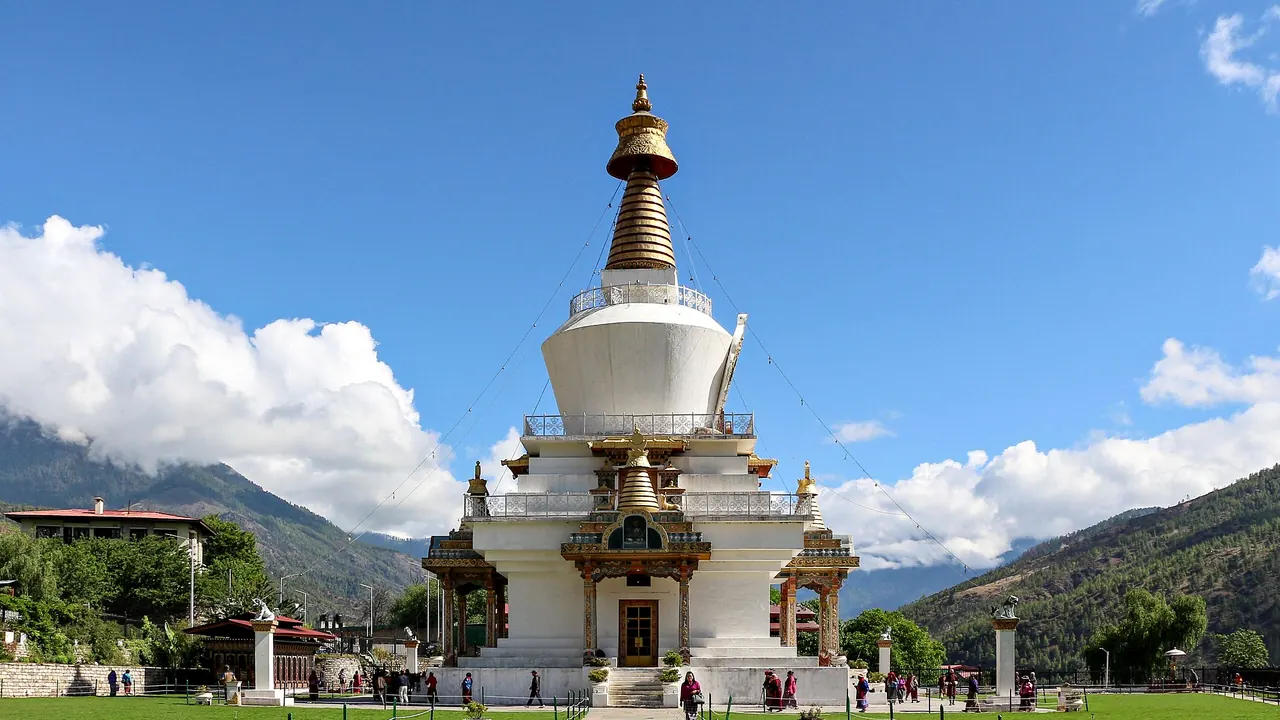
The National Memorial Chorten
- Nature & outdoors80
- Culture & sights55
- Wellness & relaxation55
Photo: Bernard Gagnon, CC BY-SA 4.0, cropped
Match
37
Every category weighted equally
- Beach & sun33
- Culture & arts39
- Food & nightlife33
- Family trip36
- Outdoors43
- Relax & unwind39
- Shopping & style36
- On a budget34
Thimphu in twelve categories
Our verdict on each, scored 0 to 100 against the same fixed benchmark cities, so a score means the same thing on every page.
Beaches & swimming. Scores 2 out of 100.
Food & drink. Scores 33 out of 100.
Culture & sights. Scores 55 out of 100.
Nightlife. Scores 18 out of 100.
Nature & outdoors. Scores 80 out of 100.
Day trips. Scores 50 out of 100.
Good for families. Scores 30 out of 100.
Getting around. Scores 42 out of 100.
Shopping & style. Scores 30 out of 100.
Affordability. Scores 15 out of 100.
Live music & performing arts. Scores 30 out of 100.
Wellness & relaxation. Scores 55 out of 100.
Thimphu category by category
Beaches & swimming
2Thimphu has no beaches and no swimming worth planning for. It sits in a high Himalayan valley in a landlocked country, and the Wang Chhu running past the city is a cold, fast mountain river. Swimming means a hotel pool, and few hotels have one. Visitors who need water time should pair Bhutan with a coastal stop elsewhere.
Food & drink
33Bhutanese food is distinctive and fiery: ema datshi, chillies cooked in soft local cheese, comes with almost every meal, alongside red rice, kewa datshi with potatoes, dried pork or beef with radish, and buckwheat dishes from the higher valleys. Momos are the everyday snack, and butter tea and the rice spirit ara are worth trying once.
The range is narrow, though. Tourist meals often come as mild buffets unless you ask for the real heat, and the restaurant scene is small, mostly Indian, Tibetan and simple cafés around Norzin Lam. The Centenary Farmers' Market by the river, piled with chillies, cheese and dried fish at weekends, is the most rewarding food experience in town.
Culture & sights
55Thimphu is a small capital where the heritage is still in use. Tashichho Dzong, the whitewashed fortress-monastery by the river, houses both the government and the central monk body, and its courtyards open to visitors outside office hours. The National Memorial Chorten is circled by elderly residents spinning prayer wheels from dawn, and the giant gilded Buddha Dordenma looks down over the valley from its hilltop.
Around these sit smaller sights: the Folk Heritage Museum in a traditional farmhouse, the Textile Museum, the National Institute for Zorig Chusum where students learn the thirteen traditional arts, Changangkha Lhakhang above town and Simtokha Dzong at the valley's southern edge. Even the ordinary architecture follows traditional rules. It is a two or three day list, not a dense one.
Nightlife
18Going out in Thimphu is low-key. There are a few bars and lounges around the centre, karaoke rooms that locals take seriously, a couple of small dance clubs busy mainly at weekends, and drayangs, local venues where singers perform folk and pop songs on request. Nights end early by most standards, and many visitors on a guided trip are back at the hotel after dinner. Come for the rest of Bhutan, not for evenings out.
Nature & outdoors
80Thimphu fills a steep, pine-covered valley at about 2,300m, and the hills begin where the streets end. Short hikes climb to Tango and Cheri monasteries at the head of the valley, to Phajoding high above town or along prayer-flag ridges, and the Royal Botanical Park and Jigme Dorji National Park protect large stretches of forest nearby. The Motithang Takin Preserve keeps the national animal close to town.
About an hour east, the Dochula pass at around 3,100m looks out over the snow peaks of the eastern Himalaya on clear days, best from October to December. Multi-day treks such as the Druk Path and Dagala routes start near the city, with guides required. Mountain biking is popular, while summer monsoon brings cloud and leeches to the trails.
Day trips
50Paro, about an hour and a quarter by road down the valley, is the one day trip that matters, and it is a first-rate one. Rinpung Dzong rises above the town, the National Museum sits in the round watchtower above it, and Kyichu Lhakhang is one of the oldest temples in the country. The main reason to go is Taktsang, the Tiger's Nest monastery on its cliff face, reached by a steep walk that takes most of a morning. Start early and keep the whole day free for it. Many itineraries spend a night in Paro anyway, since the country's only international airport is there.
Beyond Paro the list stops quickly. Dochula, about an hour east, has 108 memorial chortens and a temple at the pass, and is easy to fit into half a day. Punakha, with its dzong where two rivers meet and Chimi Lhakhang on the way, is close to three hours each way on winding mountain roads. It is a long, tiring day trip and better as an overnight stop. Mountain distances put the rest of Bhutan, Haa included, out of reach for a day trip.
Good for families
30Thimphu is safe, unhurried and friendly to children, and Bhutanese culture is warm towards them, but almost nothing here is made for them. The Motithang Takin Preserve, the prayer wheels at the Memorial Chorten, the weekend market and short forest walks will hold younger children for a while. Most of a typical itinerary is temples, dzongs and long, winding drives, which test small children's patience and stomachs. The altitude is usually manageable, but some find the first days tiring. It suits older children with an interest in hiking and other cultures better than toddlers.
Getting around
42The town centre around Norzin Lam is compact, with no traffic lights and a white-gloved policeman directing cars at the main junction, and it is pleasant to walk. Beyond it the city climbs steep hillsides, and the Buddha Dordenma, the monasteries and the valley head are too far and too uphill to reach on foot comfortably. City buses exist but are not much use to a visitor, and there is no rail anywhere in the country. Most travellers move around in a car with a driver, which is easy but leaves little room for wandering on your own. Taxis cover the gaps in town.
Shopping & style
30Shopping in Thimphu is about craft. Handwoven textiles are the real prize, from kira fabric and scarves in intricate patterns to yak-wool pieces, alongside thangka paintings, wooden masks and bowls, prayer flags and incense. The government-run handicraft emporium, the craft bazaar stalls and small shops along Norzin Lam cover most of it, and the weekend market adds a stall of everyday ritual objects and baskets. Beyond crafts there is little: no fashion streets, no luxury and only modest local stores.
Affordability
15Thimphu is an expensive place to visit, though not because daily life is costly. Bhutan follows a long-standing policy of charging most foreign visitors a substantial daily fee for every night in the country, and most itineraries also include a licensed guide, a car and driver, and hotels of tourist standard. Together these make a stay cost far more than the cheap local cafés, momos and taxi rides suggest. Visitors who keep trips short and stay in simpler hotels can reduce the bill, but there is no budget way to see Bhutan.
Live music & performing arts
30The great performance in Thimphu is the Thimphu Tshechu, the autumn festival when monks and lay dancers perform masked cham dances in the courtyard of Tashichho Dzong for several days before crowds in their finest clothes. It is a sight worth planning a trip around. The rest of the year is quieter: the Royal Academy of Performing Arts preserves folk dance and music and holds performances, drayangs offer local songs in the evening, and a few venues host Bhutanese bands. There is no opera, orchestra or significant theatre scene.
Wellness & relaxation
55Thimphu is a calm capital, and the whole pace of a Bhutan trip is slow: incense in temple halls, monks chanting at dusk, early nights and long mountain views. The traditional dotsho, a wooden tub of river water heated with fire-hot stones and infused with artemisia leaves, is offered in farmhouses and many hotels and is the local way to soothe legs after a hike. Upscale lodges add full spas and massage based on traditional medicine, and meditation sessions at monasteries are easy to arrange. There are no public bathhouses or thermal springs in the city itself.
When should you go?
Pick a month to see what it is like. The climate figures are measured averages, not a forecast.
Thimphu in July
Daytime high, °C
Rainfall in the month, mm
The whole year
Shaded against this city’s own year: the deepest cell is its best month for that figure and the palest its weakest.
Where the figures come from
Thimphu has no weather station within reach, so its figures come from a gridded climate model rather than a measured record, and read a broad area rather than the city itself.
Temperature and rainfall are climate normals, averaged over the years shown. Thimphu: 1991-2020 normals, TerraClimate 4 km grid at the town, no weather station within 90 km.
Before you go
| Measure | Thimphu |
|---|---|
| Official language | Dzongkha |
| Currency | Ngultrum (BTN) |
| Sockets | CFGM230 V, 50 Hz |
| Driving side | Left |
| Time zone | UTC+6 |
| Emergency number | Police 113, ambulance 112, fire 110 |
| Elevation | 2,321 m |
| Main airport | Paro International Airport (PBH)22 km from centre15 non-stop destinations |
By the numbers
| Measure | Thimphu |
|---|---|
| City population | 114,551 |
| People per km² | 4,243 |
| Museums within 10 km | 1 |
| UNESCO World Heritage sites within 50 km | 0 |
Compare Thimphu with
Every comparison with a written verdict behind it.