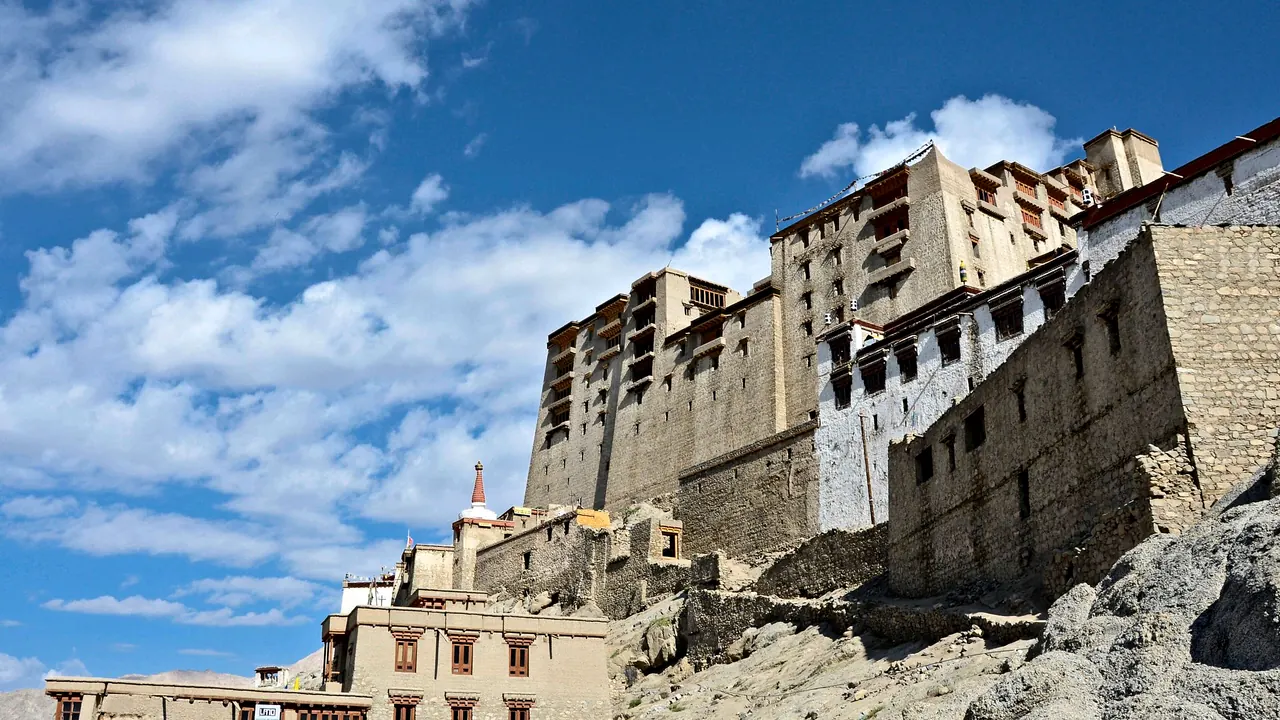
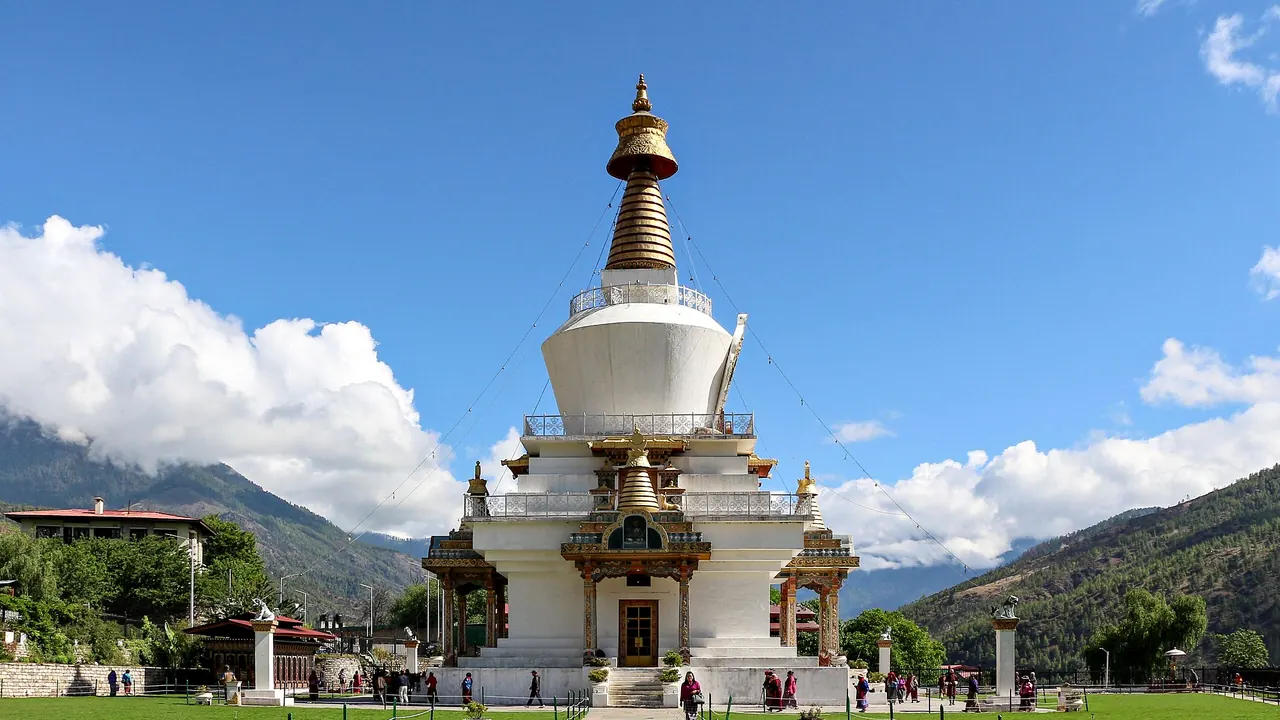
Photos: Leh by Rayan Naqash, CC BY-SA 3.0, cropped; Thimphu by Bernard Gagnon, CC BY-SA 4.0, cropped.
Leh or Thimphu?
Our verdict in twelve categories, each scored against the same fixed benchmark cities, and the climate month by month, so you can choose for your trip.
Choose Leh for
- prices
- day trips
- nature and the outdoors
Leh suits a traveller who wants huge, bare mountain country and is ready to work for it. It offers treks through Hemis National Park, the road up to Khardung La, rafting on the Zanskar, and a chain of painted monasteries along the Indus with Alchi as the high point. It is also far easier on the wallet, with homestays and noodle soups costing little. It does ask for days of acclimatisation, so it suits fit adults more than families.
Choose Thimphu for
- wellness
- getting around
- families
For a gentler and more rounded trip, Thimphu is the better choice. Its heritage is still in daily use, from Tashichho Dzong to the prayer wheels at the Memorial Chorten, and the pace is slow and calm. The altitude is easier, a driver handles the steep roads and children cope better. The catch is Bhutan's daily visitor fee, which makes it by far the more expensive of the two.
Scoreboard
Twelve categories on one fixed scale from 0 to 100. The shaded stretch is the gap between the two.
Your match
Pick a travel style or drag the sliders, and both match scores follow your weighting.
Too close to call, 2 points apart
Wins on prices and day trips with your weighting.
Wins on wellness and getting around with your weighting.
What matters to you?
Category by category
What the scores mean for a trip.
Beaches & swimming
Neither city has anywhere to swim, as both lie deep in the Himalaya with no coast nearby. The only difference is what the water is for. In Leh the snowmelt-fed Indus and Zanskar are used for rafting. In Thimphu the Wang Chhu is a cold river to walk beside, and a swim means one of the few hotel pools.
Food & drink
The two kitchens share momos and butter tea, and neither is a reason to travel on its own, but they taste quite different. Leh leans on warming Tibetan and Ladakhi noodle soups, skyu and its prized apricots, while the trekkers' rooftop cafés around Changspa serve pizza and good coffee.
Thimphu has the bolder home cooking: ema datshi, chillies in melted cheese, with red rice at almost every meal, though you may have to ask for the real heat. Its best food outing is the weekend Centenary Farmers' Market rather than any restaurant.
Culture & sights
Thimphu has the edge, mostly because its monuments are part of daily life. Tashichho Dzong houses both the government and the monk body, residents circle the Memorial Chorten from dawn, and the Zorig Chusum institute and Textile Museum show traditional crafts still being taught and practised. That is enough for two or three days.
Leh town is a shorter visit. A day or two covers the towering Leh Palace, the mud-brick old town and sunset at Shanti Stupa. Its finest art lies in the valley monasteries outside town rather than in Leh itself.
Nightlife
Neither is a place for nights out, but Thimphu at least has some. Locals take karaoke seriously, drayangs have singers performing on request, and a couple of small clubs fill up at weekends. Leh offers a late rooftop dinner and perhaps a beer, and then the cold and the early starts send everyone to bed.
Nature & outdoors
Both are mountain bases, but Leh's landscape is bigger and wilder. It is a bare high valley beneath the Stok range, with the Markha valley trek, the road over Khardung La above 5,000m, rafting in the Zanskar gorges, and Pangong Tso and the Nubra dunes as overnight trips. Winter adds snow leopard tracking and the frozen Chadar.
Thimphu is green rather than stark: a pine-forested valley where walks to Tango, Cheri and Phajoding start at the edge of the city and the Druk Path trek begins nearby. It needs much less acclimatisation, but the monsoon hides the trails and the Dochula views in cloud.
Day trips
Leh has the wider choice within a day's reach. Thiksey and Shey are under half an hour away and Hemis about an hour. A full day to the west takes in Likir, the ruined citadel at Basgo and the thousand-year-old paintings of Alchi, although nearly everything is a monastery or a palace.
Thimphu has really only one outing, but it is a superb one: Paro, where the climb to Taktsang, the Tiger's Nest, takes up most of the day. Dochula fits into half a day, and Punakha is too far to see properly and get back the same day.
Good for families
Neither is easy with small children, but Thimphu is the gentler choice. At about 2,300m the altitude is usually manageable, the city is safe and welcoming to children, and the takins at Motithang, the prayer wheels and short forest walks give younger ones something to do.
Leh is reached by a single flight to around 3,500m, so altitude sickness is a real risk for children, and most days involve long drives on mountain roads. It works only for sturdy teenagers who are keen on trekking or rafting.
Getting around
Both have a walkable centre, and everything else needs a car, but Thimphu makes this easier. The car and driver included in most Bhutan itineraries handle the steep roads up to Buddha Dordenma and the head of the valley, and taxis cover the gaps around Norzin Lam, where a white-gloved policeman directs the traffic. The cost is less freedom to explore on your own.
In Leh, the walk from the Main Bazaar to the old town is short but leaves you out of breath at this altitude, and buses beyond town are sparse. You depend on the fixed-fare taxi union, hired motorbikes or shared jeeps for the long drives, and some passes close in winter.
Shopping & style
Both sell thangkas, prayer flags and Himalayan crafts, and neither has much else. Leh's Main Bazaar is stronger on pashmina, turquoise and coral jewellery and trekking gear, though much of the stock repeats and quality varies.
Thimphu's prize is handwoven textiles, from kira fabric to yak-wool pieces. They are sold at the government handicraft emporium and the craft stalls along Norzin Lam, and wooden masks and the ritual objects at the weekend market add to the choice.
Affordability
This is where the two differ most. Leh is cheap once you arrive, with homestays and simple meals costing little. The real expenses are taxis, car hire and permits for the outer valleys, and hotels charge more in summer.
Everyday costs in Thimphu, such as local cafés and taxis, are low too. However, Bhutan's long-standing daily fee for most foreign visitors, together with the usual guide, driver and tourist-standard hotels, makes every night expensive. A shorter stay keeps the total down, but there is no budget way to do it.
Live music & performing arts
Both share the same great tradition of masked cham dances performed by monks, but Thimphu gives you more chances to see live performance. The Tshechu fills the courtyard of Tashichho Dzong for several days each autumn, and through the rest of the year the Royal Academy of Performing Arts, the drayangs and a few Bhutanese bands keep folk music going.
In Leh it is a festival or nothing. The summer Hemis festival and the Losar celebrations are deeply moving, but at other times there are only occasional cultural evenings put on for tourists.
Wellness & relaxation
Thimphu is the more restful of the two. The dotsho, a wooden tub of river water heated with fire-hot stones and artemisia, eases tired legs, upscale lodges offer massage based on traditional medicine, and the lower altitude makes for proper sleep.
Leh's calm is plainer. It offers meditation courses at Buddhist centres, consultations with amchi practitioners and slow guesthouse mornings, but thin air, dry skin and broken first nights make it a place for quiet reflection rather than pampering.
When should you go?
Pick your month. The climate figures are measured averages, not a forecast.
Leh in July
Thimphu in July
Daytime high, °C
Rainfall in the month, mm
Where the figures come from
Leh has no weather station within reach, so its figures come from a gridded climate model rather than a measured record, and read a broad area rather than the city itself.
Thimphu has no weather station within reach, so its figures come from a gridded climate model rather than a measured record, and read a broad area rather than the city itself.
Temperature and rainfall are climate normals, averaged over the years shown. Leh: 1991-2020 normals, TerraClimate 4 km grid at the town, no weather station within 90 km. Thimphu: 1991-2020 normals, TerraClimate 4 km grid at the town, no weather station within 90 km.
Leh is a high mountain desert with almost no rain in any month, so its seasons are set by temperature. June to September is the time to go, with daytime highs around 25°C in July and dry, clear weather for treks and passes, though the nights are cold. Winter is harsh, with January highs of about -3°C and some passes closed. Then it suits only those coming for snow leopard tracking or the frozen Chadar trek.
Thimphu is the opposite. It is mild all year, with winter days still reaching about 12°C, but the monsoon arrives in June and peaks at around 248mm in July, bringing cloud and leeches to the trails. Its best months are October and November, when the skies clear for the Dochula views, followed by March to May. The two hardly overlap: Leh's summer peak falls in Thimphu's wettest months, and Thimphu's dry, bright winter is when Leh is frozen.
Which traveller are you?
On a trip on a tight budget, Leh is the obvious choice. Guesthouses, homestays and bowls of thukpa cost little once you arrive, and only transport adds up. In Thimphu, Bhutan's daily visitor fee, guide and driver push the cost far higher.
For an outdoors trip, Leh wins on sheer scale. You have the Markha valley trek, the ride down from Khardung La, rafting in the Zanskar gorges and overnight trips to Pangong Tso. Thimphu's forest hikes to Tango and Cheri are pleasant, but the setting is much smaller.
On a relaxing and wellness trip, Thimphu is the better place to slow down. Hot-stone baths after a walk, meditation at a monastery and lodge spas using traditional medicine all help. In Leh, the thin air and broken sleep work against real rest.
Before you go
| Measure | Leh | Thimphu |
|---|---|---|
| Official language | Hindi, English | Dzongkha |
| Currency | Indian Rupee (INR) | Ngultrum (BTN) |
| Sockets | CM230 V, 50 Hz | CFGM230 V, 50 Hz |
| Driving side | Left | Left |
| Time zone | UTC+5:30 | UTC+6 |
| Emergency number | 108 or 112 | Police 113, ambulance 112, fire 110 |
| Elevation | 3,500 m | 2,321 m |
| Main airport | Leh Kushok Bakula Rimpochee Airport (IXL)5 km from centre5 non-stop destinations | Paro International Airport (PBH)22 km from centre15 non-stop destinations |
By the numbers
| Measure | Leh | Thimphu |
|---|---|---|
| City population | 30,870 | 114,551 |
| People per km² | - | 4,243 |
| Museums within 10 km | 2 | 1 |
| UNESCO World Heritage sites within 50 km | 0 | 0 |
Where else could you go?
Every comparison below shares a destination with this one, so you can follow Leh or Thimphu somewhere new.
- Darjeelingvs Thimphu
- Lhasavs Thimphu
- Amritsarvs Leh
- Kathmanduvs Thimphu
- Rishikeshvs Leh
- Pokharavs Thimphu