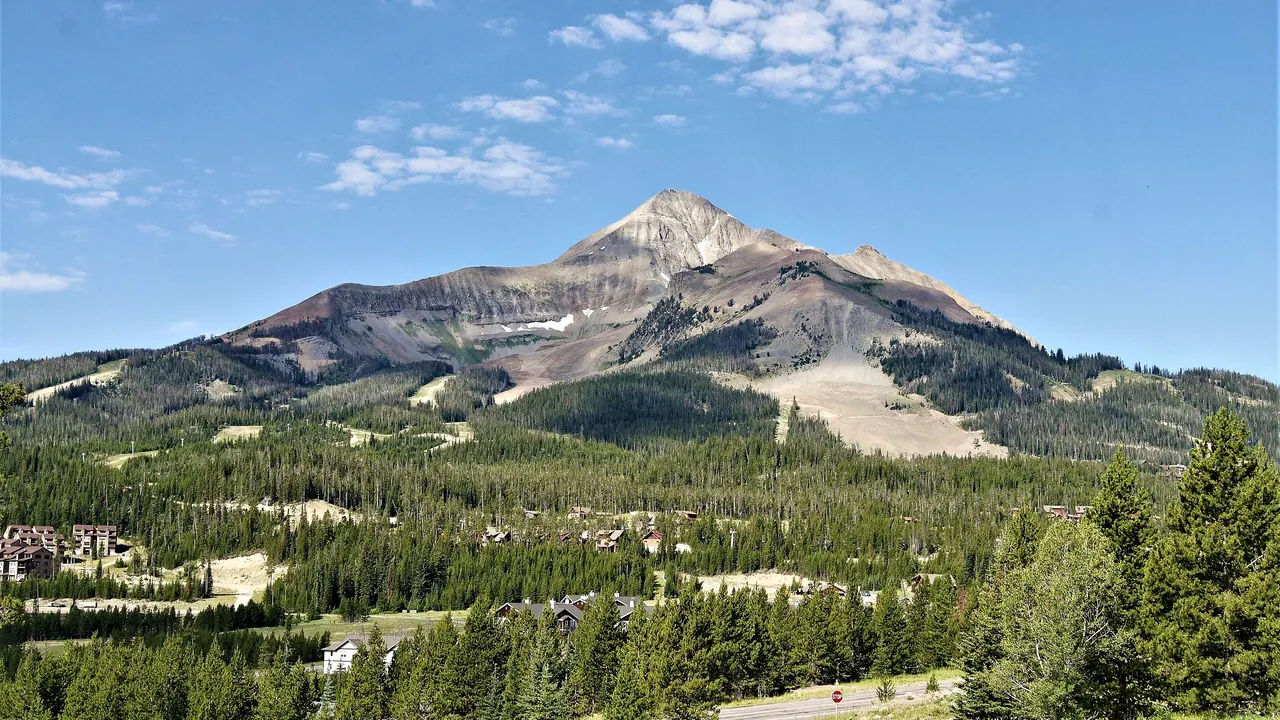
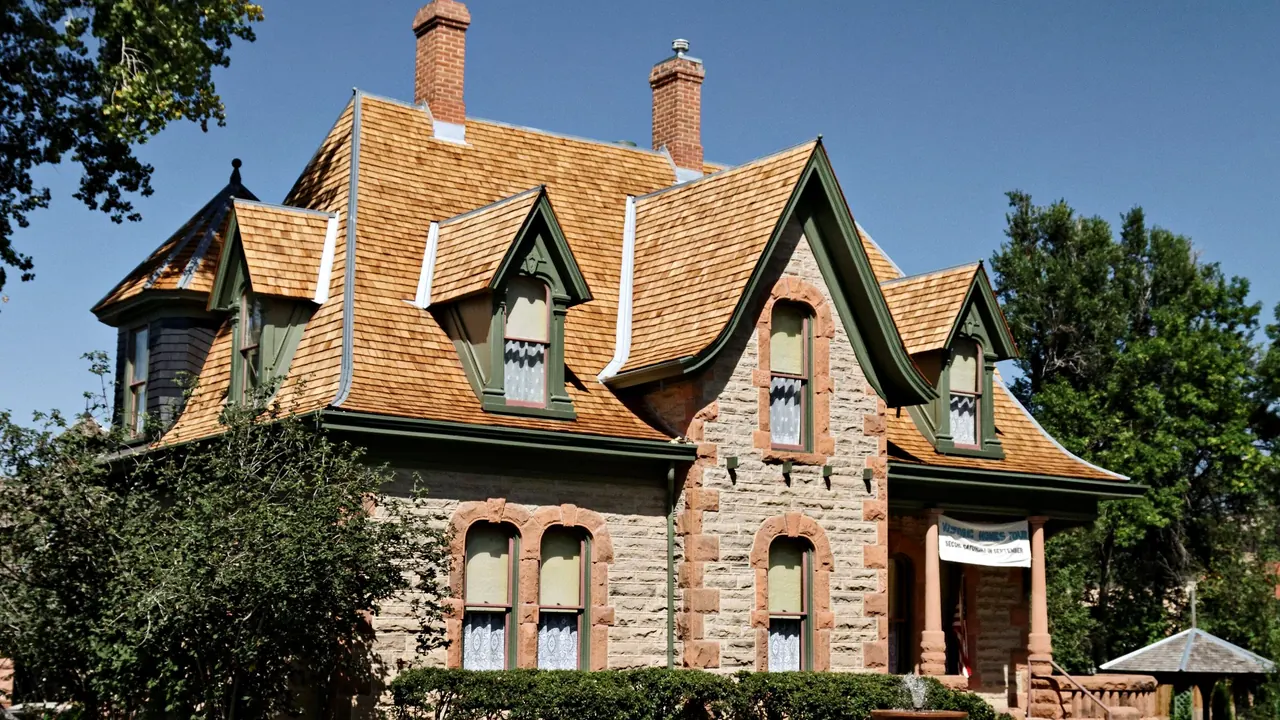
Photos: Big Sky by Greg Gjerdingen, CC BY 2.0, cropped; Fort Collins by Gribeco, CC BY-SA 3.0, cropped.
Big Sky or Fort Collins?
Our verdict in twelve categories, each scored against the same fixed benchmark cities, and the climate month by month, so you can choose for your trip.
Choose Big Sky for
- nature and the outdoors
- wellness
- families
Big Sky is the choice when the mountain is the whole point. Winter means long days on Lone Peak's steep runs and groomers, and summer brings hiking in the Spanish Peaks, fly fishing on the Gallatin and wildlife days in Yellowstone. It suits travellers with a generous budget who are happy with hearty resort dining, an après-ski beer and early, quiet nights, and who won't miss museums, shops or a real town around them.
Choose Fort Collins for
- prices
- nightlife
- food and drink
Travellers who want the outdoors with a working town attached, and who want to spend far less, will do better in Fort Collins. The foothills and the Poudre Canyon begin a short drive from Old Town, and in the evening there are brewery taprooms, student pubs and a concert or show. Boulder, Denver and Rocky Mountain National Park are all reachable in a day. It is the stronger pick for beer lovers, cyclists and mixed-interest groups, though not for downhill skiers, because the big resorts are hours away.
Scoreboard
Twelve categories on one fixed scale from 0 to 100. The shaded stretch is the gap between the two.
Your match
Pick a travel style or drag the sliders, and both match scores follow your weighting.
Wins on nature and the outdoors and wellness with your weighting.
Wins on prices and nightlife with your weighting.
What matters to you?
Category by category
What the scores mean for a trip.
Beaches & swimming
Neither is a place to swim, and both are about as far from the sea as you can get. What differs is the water. In Big Sky it means a cold, rocky river, a few small ponds for a quick dip, or the hotel pool.
Fort Collins at least offers a proper lake afternoon in July and August. Horsetooth Reservoir has a designated swim beach and coves busy with paddleboards and boats.
Food & drink
Fort Collins eats and drinks better, mostly because of the beer. Long-established breweries on the north side of Old Town run tours, and smaller taprooms with food trucks outside are spread across the city. Summer farmers' markets bring Colorado peaches and honey into town.
Big Sky's food is solid mountain fare, such as bison, elk, trout and big pre-ski breakfasts, in the lodges and village restaurants. The range is narrow, prices are steep and some kitchens close between seasons. Serious eaters drive out from both, to Bozeman and Denver respectively.
Culture & sights
Neither city is a sightseeing destination, but Fort Collins at least gives you a day's worth. Its red-brick and sandstone Old Town is a pleasant nineteenth-century centre to stroll, and you can add the Museum of Discovery, the Victorian Avery House and the university's art museum.
Big Sky is a resort built from the 1970s onwards. Apart from the log cabins of the Crail Ranch homestead in Meadow Village, it is all timber lodges and condos.
Nightlife
Fort Collins has a real night out, though a casual one. Students fill the pubs, sports bars and rooftop patios around the Old Town square at weekends, and there are a few dance clubs. Big Sky's evening peaks at teatime, with skiers in boots on the sunny decks at the lift base. After dinner a few Town Center taverns and canyon saloons stay open a while, and most people head to bed early for the first lift.
Nature & outdoors
Both are excellent outdoor bases, but Big Sky is wilder and bigger. Lone Peak towers over one of North America's largest ski areas. Summer trails lead into the Spanish Peaks and Lee Metcalf Wilderness, and Yellowstone's geysers, bison and wolves are about an hour away.
Fort Collins wins on convenience. Horsetooth Mountain and Lory State Park start just west of town, the protected Cache la Poudre canyon has rafting and fishing, and paved river trails run through the city itself. Rocky Mountain National Park is an hour and a half off. For skiing, though, it offers only snowshoe and cross-country trails, not lifts.
Day trips
From Fort Collins there is more variety within reach. You can browse Pearl Street in Boulder beneath the Flatirons, spend a day in Denver's big museums, visit mining-era Golden, or cross into Wyoming for Cheyenne's frontier museum and capitol.
Outings from Big Sky are mostly into the landscape. Bozeman, an hour away, has the dinosaur fossils of the Museum of the Rockies. The boardwalks of gold-rush Virginia City are a longer drive.
Good for families
Both suit children well, in different ways. Big Sky is an active mountain vacation, with ski school and gentle slopes in winter, and zip lines, climbing walls, horse riding and bison-spotting in Yellowstone in summer. Small children can tire at first at around 2,300m, and there is nothing to do indoors on a wet day.
Fort Collins is gentler and more varied. Families can visit the hands-on Museum of Discovery with its dome theatre, meet animals at the city farm in Lee Martinez Park, cycle the flat river paths or spend a lake day at Horsetooth. For a zoo or theme park, both mean a long drive.
Getting around
Fort Collins is easier to move around without a car. Old Town is compact and flat, a rapid-bus line runs north to south, and protected lanes, bike-share and off-street trails make cycling the natural way between breweries, campus and parks.
Big Sky is strung out over about 15km of road. A free bus links the villages, and slopeside lodgings let you ski to the lift. Bozeman airport, Yellowstone and anything beyond the resort need a shuttle or hire car, and the canyon road needs care in winter.
Shopping & style
Neither is a shopping destination, but Fort Collins gives you an afternoon of browsing. Old Town has independent boutiques, bookshops, vintage clothing and Colorado-made gifts, and there is a regional mall nearby. Big Sky's shops are for ski gloves, fly rods and Western-style clothes, plus galleries of wildlife art.
Affordability
The gap in cost is wide. Big Sky is one of the most expensive stays in the American West. Slopeside lodging, lift passes, ski school, guided fishing and resort meals all add up, and summer or a bed down the canyon only softens it.
Fort Collins is mid-priced for the United States. It has plenty of chain hotels and reasonable taprooms, and the trails and Old Town are free. The main extra cost is a hire car, and rooms jump on graduation and football weekends.
Live music & performing arts
Fort Collins has a steadier stage life. The Lincoln Center brings touring Broadway, dance and the local symphony, and the university's arts centre adds opera and theatre in term time. Old Town bar stages host bluegrass and indie bands.
Big Sky's programme is seasonal. A small arts centre in Meadow Village has winter concerts and theatre, and summer brings free lawn concerts and a short classical festival. Between seasons there is little to see.
Wellness & relaxation
Big Sky is the better place to unwind. The big lodges have full spas and massages for sore ski legs, there is a hot tub on almost every deck, and the nights are dark, quiet and full of stars. Natural hot springs are about an hour away towards Bozeman.
Fort Collins has ordinary day spas and yoga studios, and the nearest mineral soak is nearly two hours away. Its calm comes instead from shaded river paths and easy, sunny days.
When should you go?
Pick your month. The climate figures are measured averages, not a forecast.
Big Sky in July
Fort Collins in July
Daytime high, °C
Rainfall in the month, mm
Where the figures come from
Big Sky has no weather station within reach, so its figures come from a gridded climate model rather than a measured record, and read a broad area rather than one spot.
Fort Collins has no rain gauge within 25 km of the centre, so its rainfall comes from a gridded climate dataset read at the destination rather than from a gauge further away.
Temperature and rainfall are climate normals, averaged over the years shown. Big Sky: 2001-2020 normals, NASA POWER reanalysis grid, no weather station within 90 km. Fort Collins: 2006-2020 (rainfall 1991-2020) normals, Fort Collins / Redmond (16.1 km from centre).
Big Sky runs on two seasons. From December to February daytime highs stay below freezing, around -4°C in midwinter, and March is only just above it, with snow on the slopes until April. That is ski season, and too cold for lingering outdoors otherwise. Spring is the wettest stretch, peaking at 83mm in May, so April to early June is muddy and in between. July and August are the summer window, warm by day at about 26°C, drier and cool at night, ideal for hiking and the rivers. By October the cold is back.
Fort Collins is much warmer and drier for most of the year. Winters are mild enough for walking Old Town on a clear day and very dry, with only about 9mm a month in December and January. May brings the most rain. High summer gets hot, reaching 32°C in July, which suits a swim at the reservoir but makes midday walking tiring. Late May and September to early October are the most comfortable months for the streets and trails. The two rarely peak together: Big Sky is at its best in midwinter and midsummer, Fort Collins in late spring and early autumn.
Which traveller are you?
On an outdoors trip, Big Sky wins. It has big-mountain skiing on Lone Peak, wilderness trails in the Spanish Peaks and Lee Metcalf, and fly fishing on the Gallatin, with Yellowstone's geysers and wolves about an hour south. Fort Collins has fine foothills, but no downhill skiing.
For a food and nightlife trip, Fort Collins is clearly better. It is one of America's great craft-beer towns, with brewery tours and taprooms all over the city, and Old Town has pubs, rooftop patios and cocktail bars on weekend nights. Big Sky offers resort meals and an après-ski drink before bed.
On a trip with a tight budget, choose Fort Collins. Its chain hotels and casual taprooms are moderately priced, and its trails, river paths and Old Town cost nothing. Big Sky is among the priciest stays in the American West, with costly lodging, lift passes and meals.
Before you go
| Measure | Big Sky | Fort Collins |
|---|---|---|
| Currency | US Dollar (USD) | US Dollar (USD) |
| Sockets | AB120 V, 60 Hz | AB120 V, 60 Hz |
| Driving side | Right | Right |
| Time zone | UTC-7, UTC-6 in summer | UTC-7, UTC-6 in summer |
| Emergency number | 911 | 911 |
| Elevation | 2,200 m | 1,525 m |
| Main airport | Bozeman Yellowstone International Airport (BZN)59 km from centre27 non-stop destinations | Denver International Airport (DEN)88 km from centre231 non-stop destinations |
| Public holidays this year | 12 days | 12 days |
By the numbers
| Measure | Big Sky | Fort Collins |
|---|---|---|
| Population | 3,591 | 169,810 |
| People per km² | 12 | 1,181 |
| Museums within 10 km | 0 | 2 |
| UNESCO World Heritage sites within 50 km | 0 | 0 |
Where else could you go?
Every comparison below shares a destination with this one, so you can follow Big Sky or Fort Collins somewhere new.
- Estes Parkvs Fort Collins
- Bouldervs Fort Collins
- Denvervs Fort Collins
- Winter Park, Coloradovs Fort Collins
- Keystonevs Fort Collins
- Breckenridgevs Fort Collins