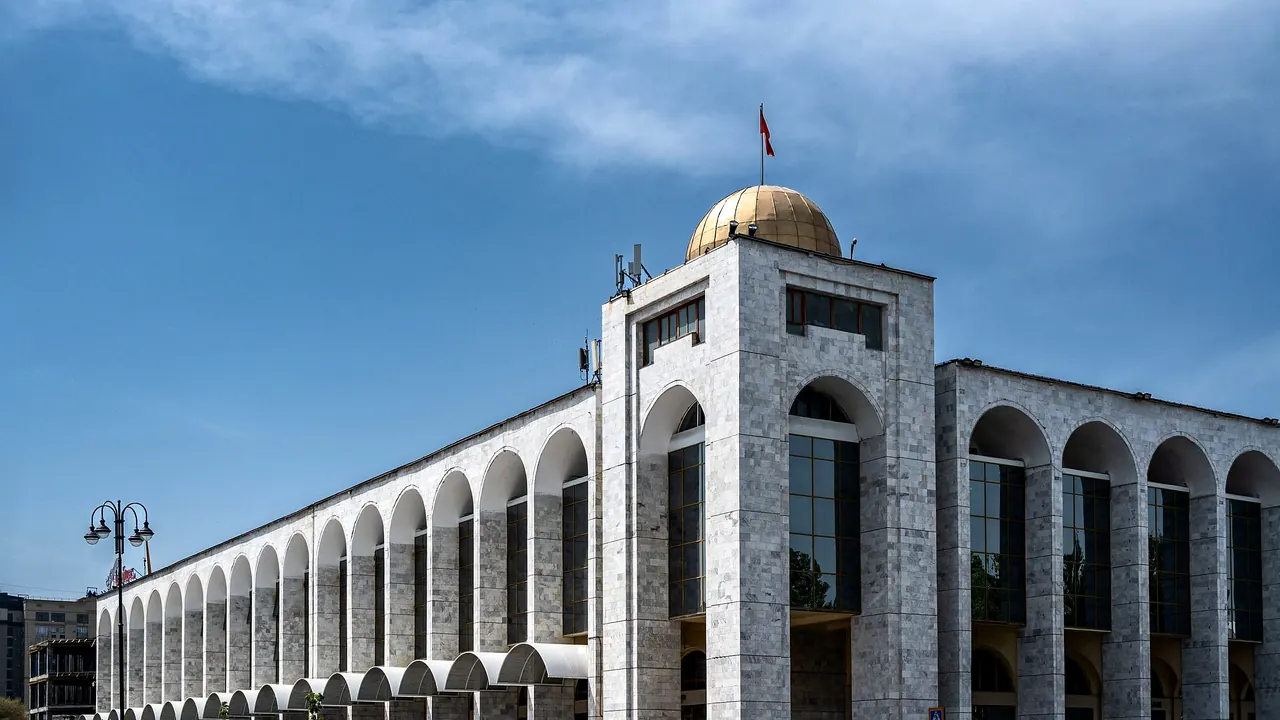
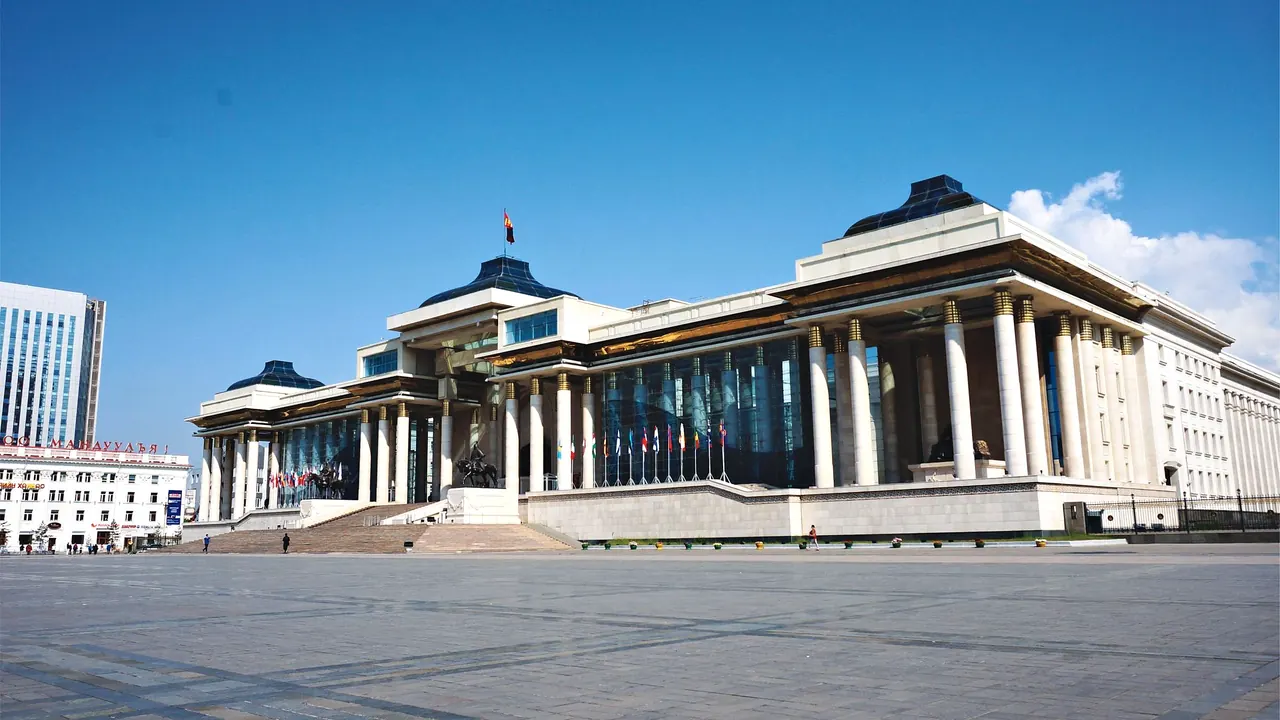
Photos: Bishkek by xiquinhosilva, CC BY 4.0, cropped; Ulaanbaatar by MBVisign, Pexels License.
Bishkek or Ulaanbaatar?
Our verdict in twelve categories, each scored against the same fixed benchmark cities, and the climate month by month, so you can choose for your trip.
Choose Bishkek for
- wellness
- prices
- nature and the outdoors
Bishkek is the pick for travellers who want the mountains close at hand and a city that is easy and cheap to live in between outings. The Ala-Too range rises right behind the suburbs, Ala-Archa is under an hour away, and back in town the walkable grid, the hearty Central Asian cooking and the banya make rest days comfortable. It suits trekkers, riders and anyone stretching a budget across a long stay.
Choose Ulaanbaatar for
- culture and sights
- live music and the arts
- nightlife
Ulaanbaatar rewards the traveller who comes for Mongolia itself: its Buddhist monasteries, its nomadic culture and the open steppe. Gandan, the Choijin Lama Temple and the Zanabazar bronzes give it more to see, and the evening shows of throat singing and horse-head fiddle are a highlight Bishkek cannot match. The city itself is tiring, so it works best as a base for ger camps and horse riding in Terelj and Hustai, on a summer trip.
Scoreboard
Twelve categories on one fixed scale from 0 to 100. The shaded stretch is the gap between the two.
Your match
Pick a travel style or drag the sliders, and both match scores follow your weighting.
Wins on wellness and prices with your weighting.
Wins on culture and sights and live music and the arts with your weighting.
What matters to you?
Category by category
What the scores mean for a trip.
Beaches & swimming
Neither city is a beach destination, and in town both leave swimmers with hotel pools and cold river paddling. The difference is what lies further out. From Bishkek, the warm north shore of Issyk-Kul makes a real lake-beach detour of a few days, while Ulaanbaatar has nothing comparable, only the shallow Tuul and the Terelj streams in high summer.
Food & drink
Bishkek eats better, thanks to the range of the Silk Road table: hand-pulled lagman, plov from huge cauldrons, tandoor samsa and the spicier noodles and dumplings of Uyghur and Dungan cooks. Osh Bazaar, with its dried fruit, nuts and honey, makes a good morning's grazing.
Ulaanbaatar's cooking is plainer herder fare, buuz, khuushuur and salty milk tea, filling but rarely subtle, with Korean barbecue and Russian places adding variety in the centre. Both run heavily on mutton and fermented mare's milk in summer, and vegetarians will struggle in either.
Culture & sights
Ulaanbaatar has the deeper set of sights, because its history as a monastery town left real treasures. Monks still chant at Gandan beneath the giant Buddha, the Choijin Lama Temple and the Bogd Khan's Winter Palace survive as museums, and the Chinggis Khaan National Museum covers the steppe empires.
Bishkek offers mainly a young Soviet city: Ala-Too Square with the Manas statue and the changing of the guard, the felt collection at the Fine Arts Museum and an absorbing walk past modernist mosaics. It takes a day or two, against two or three for Ulaanbaatar.
Nightlife
Neither is worth the trip for its nights, but Ulaanbaatar goes out a little harder. Around Sukhbaatar Square and Seoul Street, vodka-fuelled pubs, karaoke rooms and a few large hip-hop clubs fill up on summer weekends, usually done as a pub crawl by taxi.
Bishkek is mellower: craft beer pubs, cocktail bars and hookah lounges near the main avenues and the university, with evenings more often spent over long restaurant dinners than on a dance floor.
Nature & outdoors
Bishkek has the better outdoors, chiefly because of how high and close its mountains are. Ala-Archa's juniper valleys and the trail to the Ak-Sai glacier sit beneath 4,000m peaks less than an hour away, gorges like Alamedin and Chunkurchak add waterfalls and yurt camps, and the city is the natural launch pad for Tien Shan treks, with small ski bases in winter.
Ulaanbaatar's outdoors is about open space rather than altitude. You can hike Bogd Khan Uul from the suburbs, ride across the granite country of Terelj and watch takhi wild horses at Hustai. Its outdoor season is shorter, though, and the traffic eats into every outing.
Day trips
Both are thin on easy outings to towns or heritage sites, and their best excursions need an overnight stay. From Bishkek the one classic is the Burana Tower and its stone balbal figures on the old Silk Road site of Balasagun; otherwise you head into the mountains.
Ulaanbaatar's day trips lean more towards living culture: the huge steel Chinggis Khaan statue at Tsonjin Boldog, the ruined Manzushir Monastery and visits to herding families in their gers. Kharkhorin, like Issyk-Kul from Bishkek, is too far for a day.
Good for families
Both are hard work with small children in the city, with rough pavements, heavy traffic and little built for young visitors, though children are warmly received in each. Bishkek's draw is its shady parks, especially Panfilov Park's old fairground rides, and riverside picnics in Ala-Archa.
Ulaanbaatar has the dinosaur museum with real Gobi fossils, and children usually love the ger nights, gentle horses and marmot spotting of the countryside. That makes a summer trip based partly outside the city the best way for families to do Mongolia.
Getting around
Bishkek is the easier city to move around. Its flat grid of wide, tree-lined avenues puts most sights within half an hour's walk of Ala-Too Square, and cheap ride-hailing covers the rest, even if the marshrutka routes are a puzzle.
Ulaanbaatar's walkable core is small, and beyond it severe jams on the few east-west roads, crowded Cyrillic-labelled buses and icy winter pavements slow everything down. Neither has a metro, and in both cities the countryside needs a hired driver.
Shopping & style
The two are close as places to shop, and each has one signature buy. In Bishkek it is felt, from shyrdak rugs to white ak-kalpak hats, bought in central craft cooperatives, with Osh Bazaar and the vast Dordoi container market for spectacle.
In Ulaanbaatar it is cashmere, sold in factory outlets and at the long-established State Department Store on Peace Avenue, alongside horse-head fiddles and Buddhist art, while Narantuul market offers the rough local equivalent of Dordoi. Neither has much fashion or luxury shopping.
Affordability
Bishkek is the cheaper trip overall. Daily spending is low in both, but in Bishkek that low cost carries through to guesthouses, theatre tickets and even a hired driver for a mountain day.
Ulaanbaatar's canteens, buses and museum entry are inexpensive too, but its central hotels and Western restaurants come close to Southern European levels, summer is the dear season, and the driver, guide and vehicle needed for the countryside can cost more than everything else combined.
Live music & performing arts
Ulaanbaatar has the more memorable stage. Its summer evening shows of khoomei throat singing, morin khuur, long song, tsam masked dance and contortion are a must, and the salmon-pink opera house on Sukhbaatar Square and the Naadam festival in July add more.
Bishkek keeps up a respectable Soviet repertoire of ballet, opera and Philharmonic concerts, plus komuz music and Manas epic recitals if you are lucky. Its programme mostly runs from autumn to spring and thins out in summer, just when Ulaanbaatar's shows are at their peak.
Wellness & relaxation
Bishkek is much the easier place to unwind. The banya, with its steam, birch-branch whisking and cold plunge, is part of everyday life and easy to book, the Issyk-Ata springs and their sanatoriums are a couple of hours away, and the shaded boulevards slow the pace.
Ulaanbaatar wears you out with traffic, noise and smoky winter air, and offers little beyond hotel spas and Korean-style saunas. Its rest comes from leaving, with a quiet night or two by a wood stove in a Terelj ger.
When should you go?
Pick your month. The climate figures are measured averages, not a forecast.
Bishkek in July
Ulaanbaatar in July
Daytime high, °C
Rainfall in the month, mm
Temperature and rainfall are climate normals, averaged over the years shown. Bishkek: 1991-2020 normals, Bishkek (3.3 km from centre). Ulaanbaatar: 1991-2020 normals, Ulaan-Baator (2.9 km from centre).
The two cities have very different years. Bishkek has a long, hot, dry summer: July reaches about 33°C under almost constant sun, which is pleasant in the mountains but heavy for walking the avenues at midday. Spring is the wet season, with April the rainiest month at around 77mm, so late May, June and September are the sweet spots, warm and sunny without the worst heat. Winters hover around freezing, cold but manageable for a city stay or a little skiing.
Ulaanbaatar has a much shorter window. Winter is extreme, with January highs near -16°C, and although those months are dry and surprisingly sunny, outdoor plans shrink to almost nothing. Summer is mild rather than hot, peaking around 26°C in July, but it is also when the rain arrives, with about 71mm that month, mostly in showers. June to early September is the time to go. Bishkek gives you more usable months and works in spring and autumn, when Ulaanbaatar is already cold.
Which traveller are you?
On a culture and arts trip, Ulaanbaatar is the stronger choice. Its working monastery, temple museums and gilded Zanabazar bronzes outclass Bishkek's Soviet squares, and the nightly throat-singing and contortion shows give you a performance tradition you will not find elsewhere.
For a trip on a tight budget, Bishkek goes further. Meals, ride-hailing, guesthouses and theatre tickets all cost little, and a mountain day with a hired driver stays affordable, whereas in Mongolia the drivers and guides needed to reach the countryside can swallow the budget.
On a relaxing and wellness trip, Bishkek is far easier. You can book a banya by the hour, soak at the Issyk-Ata springs and stroll shaded boulevards. Ulaanbaatar's traffic and noise wear you down, and real calm only comes once you are out at a Terelj ger camp.
Before you go
| Measure | Bishkek | Ulaanbaatar |
|---|---|---|
| Official language | Kyrgyz | Mongolian |
| Currency | Som (KGS) | Tugrik (MNT) |
| Sockets | CF220 V, 50 Hz | CE220 V, 50 Hz |
| Driving side | Right | Right |
| Time zone | UTC+6 | UTC+8 |
| Emergency number | 161 | 105 |
| Elevation | 750 m | 1,350 m |
| Main airport | Manas International Airport (BSZ)23 km from centre42 non-stop destinations | Ulaanbaatar Chinggis Khaan International Airport (UBN)31 km from centre38 non-stop destinations |
| Public holidays this year | - | 10 days |
By the numbers
| Measure | Bishkek | Ulaanbaatar |
|---|---|---|
| Population | 1,191,000 | 1,396,288 |
| People per km² | 9,378 | 297 |
| Museums within 10 km | 6 | 19 |
| UNESCO World Heritage sites within 50 km | 2 | 0 |
Where else could you go?
Every comparison below shares a destination with this one, so you can follow Bishkek or Ulaanbaatar somewhere new.
- Almatyvs Bishkek
- Karakolvs Bishkek
- Tashkentvs Bishkek
- Dushanbevs Bishkek
- Samarkandvs Bishkek
- Beijingvs Ulaanbaatar