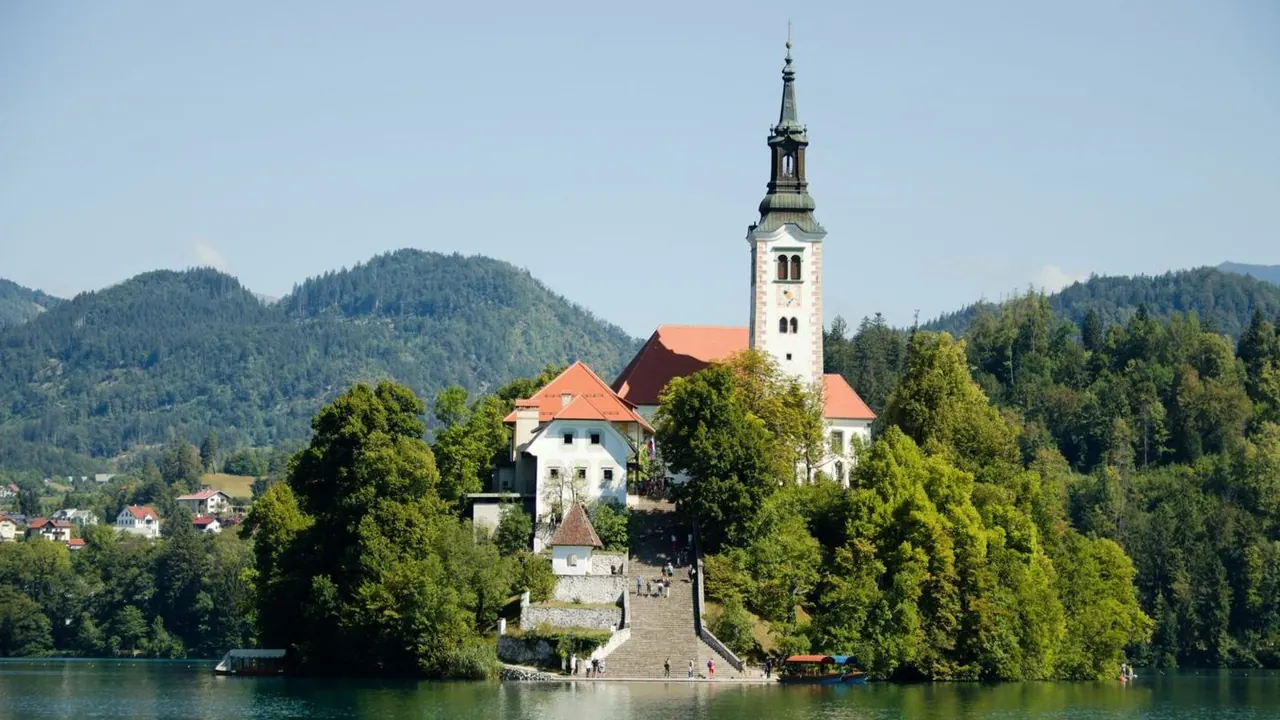
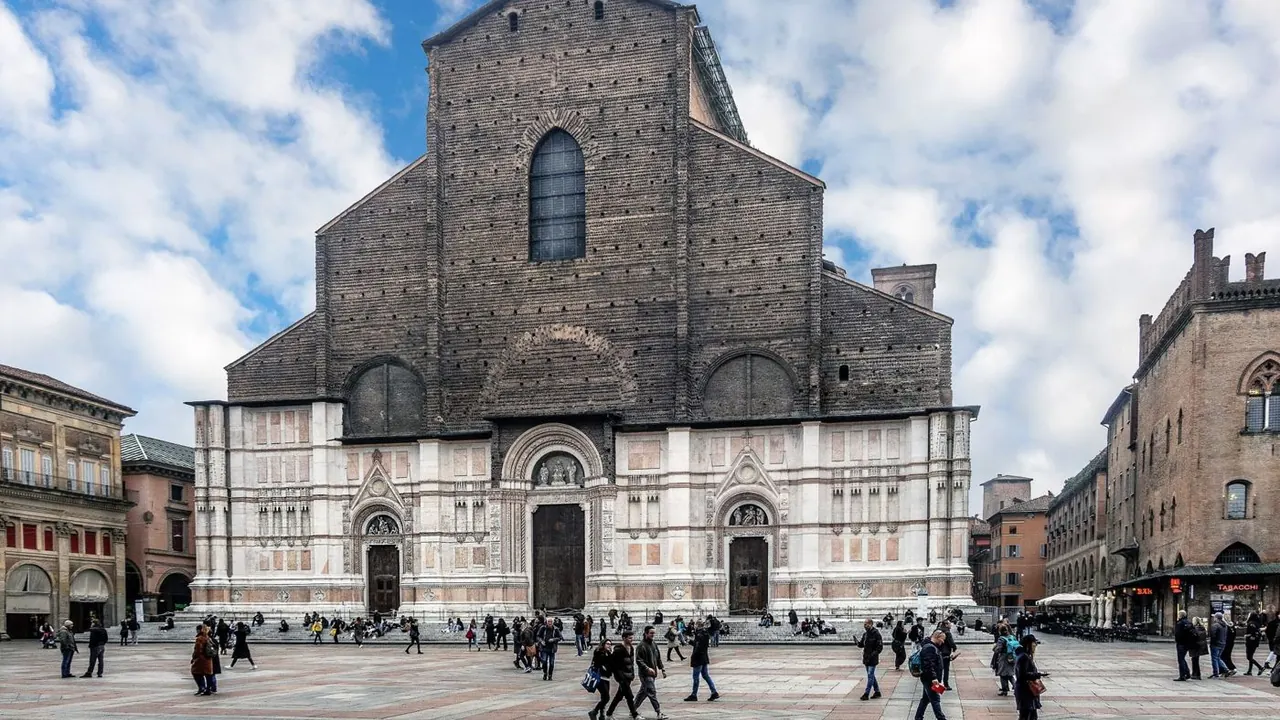
Photos: Bled by Philipp Schwarz, Pexels License; Bologna by Vanni Lazzari, CC BY-SA 4.0, cropped.
Bled or Bologna?
Our verdict in twelve categories, each scored against the same fixed benchmark cities, and the climate month by month, so you can choose for your trip.
Choose Bled for
- nature and the outdoors
- beaches
- wellness
Bled is for travellers who want mountains, clear water and quiet. The lake, the Vintgar Gorge and Triglav National Park are on the doorstep, summer swimming from grassy lidos is easy, and families whose children like being outdoors will fill their days. Expect simple food and early nights, because the village offers little beyond its landscape.
Choose Bologna for
- food and drink
- culture and sights
- live music and the arts
Anyone who travels to eat, look at buildings and stay out late will be happier in Bologna. Its medieval centre of brick and porticoes, its trattorias and Quadrilatero delicatessens and its student bars keep both days and evenings full. Fast trains also put Florence, Ravenna and Venice within easy reach.
Scoreboard
Twelve categories on one fixed scale from 0 to 100. The shaded stretch is the gap between the two.
Your match
Pick a travel style or drag the sliders, and both match scores follow your weighting.
Wins on nature and the outdoors and beaches with your weighting.
Wins on food and drink and culture and sights with your weighting.
What matters to you?
Category by category
What the scores mean for a trip.
Beaches & swimming
Bled has the better swimming, simply because the water is right there. In high summer you can slip into the lake from grassy lidos, wooden piers or rocks along the path, or swim out to the island. Colder, wilder Lake Bohinj is half an hour away.
Bologna has no water of its own. A swim means an hour on the train to Rimini or Cervia, where the Adriatic is warm and shallow but lined with rented sunbeds. That works as a day out of the summer heat, not as part of the stay.
Food & drink
Bologna is a city people travel to for its cooking, and Bled is not. In Bologna, pasta is still rolled by hand in shop windows, and family trattorias serve mortadella and tortellini in brodo. The Quadrilatero is lined with delicatessens, and Parmigiano and Parma ham come from towns less than an hour away.
Bled has kremšnita on a lakeside terrace, trout and žlikrofi in a few inns, and a lot of hotel and pizzeria cooking. The better meals are in the farm inns out in the valleys, and anyone who travels to eat will run out of options within a couple of days.
Culture & sights
Bled has a handful of memorable sights: the clifftop castle with its small museum and famous view, the baroque church on the island reached by pletna boat, and the old spa villas along the shore. Together they make a lovely single day.
Bologna needs two or three days for its centre alone. The porticoes, Piazza Maggiore and San Petronio, the Two Towers, the seven churches of Santo Stefano, the anatomical theatre in the Archiginnasio and the Bolognese painting in the Pinacoteca give it a depth Bled cannot match.
Nightlife
After dark the two have little in common. In Bled, an evening means a drink on a hotel or café terrace and a stroll along the lit shore, and the village is asleep before midnight.
In Bologna, students keep the university quarter around Piazza Verdi busy until late, Via del Pratello is lined with small taverns, and aperitivo leads on to wine bars. The scene is informal rather than polished, the clubs are out on the edge of town, and August is the quiet month.
Nature & outdoors
Landscape is the reason to choose Bled. It sits where the Julian Alps begin, and the Ojstrica and Osojnica viewpoints, the Vintgar Gorge, Lake Bohinj and the Pokljuka plateau are all close. Activities run from meadow walks to canyoning, and there is skiing in winter.
Bologna's outdoors is gentler: hill paths up to San Luca and through the Colli Bolognesi, the gypsum caves of the Parco dei Gessi, and the Via degli Dei trail to Florence. The higher Apennines are an hour and a half away, and the summer heat pushes walking into spring and autumn.
Day trips
Both make good bases, but Bologna's position on the main rail junction of northern Italy puts more within reach without a car. Florence is about half an hour away. Ravenna's mosaics, Ferrara, Modena and Parma are short train rides, and Venice, Verona and Padua each make a long day out.
Bled's outings take more planning. Ljubljana and Radovljica are close, while Postojna cave, Predjama Castle and the harbour at Piran each fill a full day. The Wörthersee in Austria lies just beyond the Karawanks tunnel, and Italian Friuli is reachable by car.
Good for families
Bled is the better choice for children who like being outside. Summer days fill easily with rowing to the island to ring the bell, the shallow lidos, the toboggan run and rope park on Straža, and the gorge walkways. A wet day is much harder to fill.
Bologna is easy to get around with children, since the centre is flat, largely car-free and shaded by porticoes, and pasta and gelato keep mealtimes simple. Its sights are aimed at adults, though, so families tend to head out to Mirabilandia or the beach at Rimini. The midsummer heat is hard on small children.
Getting around
Both centres are easy on foot, so the difference lies beyond them. Bologna's station sits at the edge of the old town with fast and regional trains across the north, and buses climb into the hills. A car is more burden than help in its largely car-free centre.
In Bled the lake path links the whole village, and buses and trains reach Ljubljana and Bohinj. Trailheads, the Vršič pass and the Soča valley are thinly served, though, so anyone exploring the Alps usually hires a car or books transfers.
Shopping & style
Bled has almost nothing to buy beyond honey, lace, painted beehive panels and souvenirs from the lakeside stalls. Bologna is no shopping capital, but it gives you real browsing. Its delicatessens sell Parmigiano and balsamic vinegar to take home, and there are high-street chains on Via dell'Indipendenza, fashion houses around the Galleria Cavour and markets at the Montagnola and Piazza Santo Stefano.
Affordability
Overall costs come out much the same, but the money goes in different places. In Bled you pay for the view, and lakeside rooms are dear in July and August. Beds are cheaper in Radovljica, Bohinj or at the campsite, and the trails and viewpoints cost nothing.
In Bologna, eating out is where you save: trattorias and generous aperitivo cost less than in Italy's best-known tourist cities. Old-town hotels are expensive, though, and the big trade fairs make rooms scarce across the city.
Live music & performing arts
If live performance matters to your trip, Bled cannot promise any. There is no theatre or regular venue. A summer concert in the castle, a church or by the lake, or a folk evening staged for visitors, is a matter of luck. A planned night of opera or music means going to Ljubljana, under an hour away.
Bologna has something on most nights of the year. The Teatro Comunale is one of Italy's historic opera houses, and with its long jazz tradition and the students' gig circuit you can find live music without booking far ahead. Spoken theatre is in Italian, so for most visitors the stage means opera and concerts, and in summer the music moves out into the squares and courtyards.
Wellness & relaxation
Slowing down comes more naturally in Bled, which grew up in the nineteenth century as a health resort where Arnold Rikli brought guests for air and sun cures. Hotel spas use the mild springs at the eastern end of the lake. The real tonic, though, is the stillness of early walks and slow boat rides, especially outside high summer.
In Bologna, relaxing means a long lunch under the arches, in a city where the student quarter is noisy and summers are heavy. For thermal water you go out to Castel San Pietro Terme or to Porretta Terme, an old spa town in the Apennines.
When should you go?
Pick your month. The climate figures are measured averages, not a forecast.
Bled in July
Bologna in July
Daytime high, °C
Rainfall in the month, mm
Where the figures come from
Bled's temperatures are measured 36 km from the centre, at Klagenfurt.
Bled has no rain gauge within 25 km of the centre, so its rainfall comes from a gridded climate dataset read at the city rather than from a gauge further away.
Bologna has no rain gauge within 25 km of the centre, so its rainfall comes from a gridded climate dataset read at the city rather than from a gauge further away.
Bologna's sunshine is measured 82 km from the centre, at Cervia.
Temperature and rainfall are climate normals, averaged over the years shown. Bled: 1991-2020 normals, Klagenfurt (35.5 km from centre). Bologna: 1991-2020 normals, Bologna / Borgo Panigale (5.5 km from centre).
Bled is at its best in summer and early autumn. From late June to early September the lake is warm enough to swim, and July highs reach about 27°C, good weather for the trails too. Autumn is also its wettest stretch, though, and November is the rainiest month at around 211mm, often in afternoon showers. May and September are good walking months. From November to March the village is cold, with daytime highs near freezing in midwinter.
In Bologna the year works the other way round. July and August reach about 32°C, too hot for comfortable sightseeing on foot. They are the sunniest months, and July is the driest. Spring, from April to early June, is the best time to walk the streets. Early autumn is pleasant too, but September to November brings the most rain, around 95mm a month. Winters are cool but clearly milder than Bled's.
Which traveller are you?
For an outdoors trip, Bled is the clear choice. The lake path, the Vintgar Gorge and Triglav National Park are all close by, and the Julian Alps add hut hikes, rafting on the Sava, paragliding and winter skiing. Bologna offers gentle hill walks.
On a food and nightlife trip, Bologna wins easily. You get tagliatelle al ragù in old osterie and aperitivo with Lambrusco, then student bars around Piazza Verdi and taverns along Via del Pratello. In Bled the evening ends with a terrace drink well before midnight.
For a culture and arts trip, choose Bologna. The arcaded medieval centre, the Archiginnasio and the Pinacoteca fill two or three days, and the Teatro Comunale stages opera and concerts. Bled's castle and island church take a day, and there is no theatre.
Before you go
| Measure | Bled | Bologna |
|---|---|---|
| Official language | Slovene | Italian |
| Currency | Euro (EUR) | Euro (EUR) |
| Sockets | CF230 V, 50 Hz | CFL230 V, 50 Hz |
| Driving side | Right | Right |
| Time zone | UTC+1, UTC+2 in summer | UTC+1, UTC+2 in summer |
| Emergency number | 112 | 112 |
| Elevation | 501 m | 54 m |
| Main airport | Ljubljana Jože Pučnik Airport (LJU)31 km from centre32 non-stop destinations | Bologna Guglielmo Marconi Airport (BLQ)6 km from centre98 non-stop destinations |
| Public holidays this year | 21 days | 13 days |
By the numbers
| Measure | Bled | Bologna |
|---|---|---|
| City population | 4,969 | 387,971 |
| People per km² | 26 | 2,754 |
| Museums within 10 km | 4 | 68 |
| UNESCO World Heritage sites within 50 km | 3 | 3 |
Where else could you go?
Every comparison below shares a destination with this one, so you can follow Bled or Bologna somewhere new.