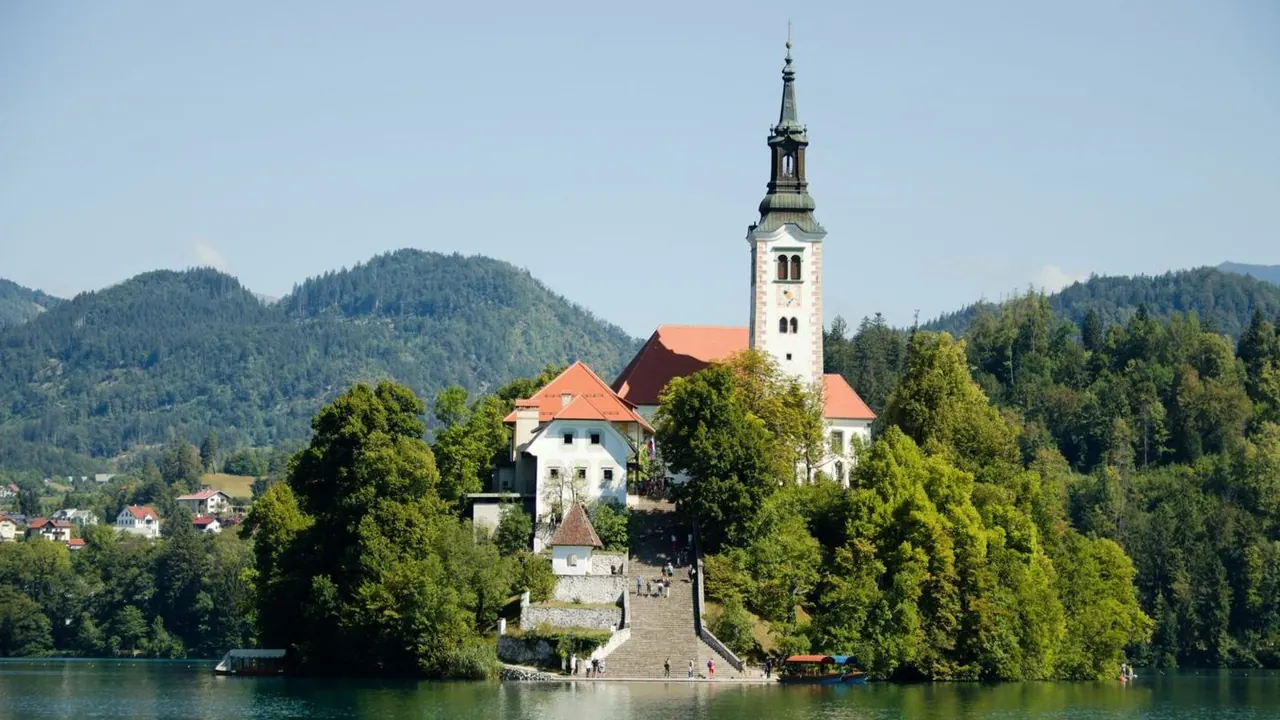
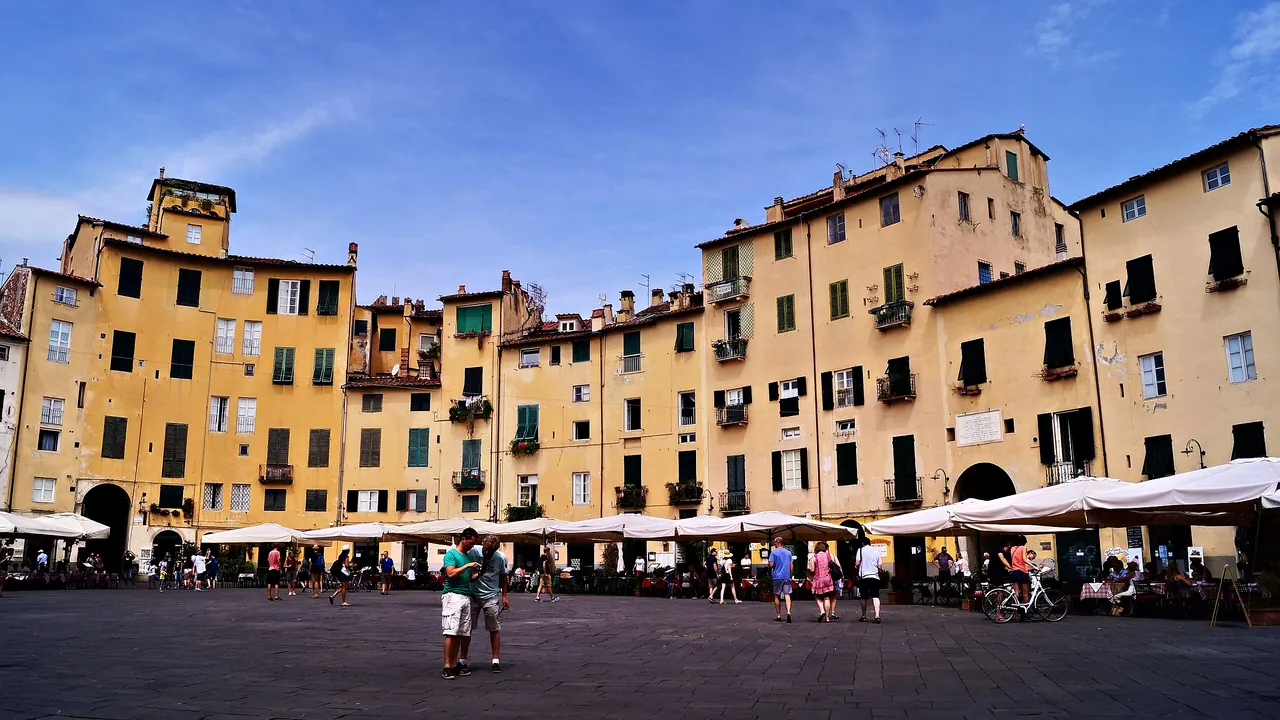
Photos: Bled by Luka Peternel, CC BY-SA 4.0, cropped; Lucca by Stefano Sansavini, CC BY-SA 4.0, cropped.
Bled or Lucca?
Our verdict in twelve categories, each scored against the same fixed benchmark cities, and the climate month by month, so you can choose for your trip.
Choose Bled for
- nature and the outdoors
- wellness
- families
Bled is the choice for a trip built around mountains and water. The Julian Alps start at the edge of the village, so the days go on gorge walkways, lake swims, viewpoint climbs and drives into Triglav National Park, and the evenings are early and very quiet. It suits walkers, cyclists and families who are happy outdoors, and who don't mind that the eating, the sights and anything after dark are thin.
Choose Lucca for
- live music and the arts
- culture and sights
- food and drink
Lucca rewards travellers who want a town to explore as well as countryside around it. Inside the intact Renaissance walls are Romanesque churches, Puccini evenings and family trattorias, and the trains run easily to Pisa, Florence and the Versilia beaches. Pick it for art, food and a good spread of day trips, with gentle hills nearby rather than high peaks.
Scoreboard
Twelve categories on one fixed scale from 0 to 100. The shaded stretch is the gap between the two.
Your match
Pick a travel style or drag the sliders, and both match scores follow your weighting.
Wins on nature and the outdoors and wellness with your weighting.
Wins on live music and the arts and culture and sights with your weighting.
What matters to you?
Category by category
What the scores mean for a trip.
Beaches & swimming
Neither town has a beach of its own, and they solve that in very different ways. In Bled you swim in the lake itself, from grassy lidos and wooden piers below the castle or at the shallow Velika Zaka end. The water is fresh and calm, and the season is short.
From Lucca you take a train for about 25 minutes to Viareggio and the long Versilia sands. There you choose between rows of beach-club umbrellas and the wilder pine-backed dunes of the Lecciona, in warmer water that stays swimmable for longer. If you want to be in the water within a short walk, Bled is easier. If you want real sea and sand, go with Lucca.
Food & drink
Lucca is the place to eat. Its rustic provincial cooking includes tordelli in ragù, Garfagnana spelt soup, chestnut dishes in the cold months, cecina from bakery counters, buccellato and the Colline Lucchesi wines, all served in family osterie inside the walls.
Bled has its famous cream slice and a few inns serving trout and žlikrofi. Beyond that it is mostly hotel dining rooms and pizzerias aimed at day visitors, and the better meals mean driving out to farm inns in the valleys.
Culture & sights
Lucca's whole centre is the sight. The walls, the towers, the carved arcades of San Michele in Foro, the Ilaria del Carretto tomb in the cathedral and the oval amphitheatre square are enough for two unhurried days.
Bled offers one memorable postcard: the cliff-top castle with its small museum and printing workshop, and the baroque island church reached by pletna boat. That makes a fine half day or so, but anyone interested in architecture or museums will want more than Bled can give.
Nightlife
Both towns go quiet early. Lucca at least has an evening ritual, with aperitivo on Piazza San Michele, a long dinner, a few wine bars and student pubs, and in summer the Versilia discos are a taxi ride away. Bled's evenings stop at a terrace drink and a walk along the lit shore, and for a real night out you have to go to Ljubljana.
Nature & outdoors
This is Bled's great strength. The Julian Alps rise right behind the lake, and Vintgar Gorge, the Pokljuka pastures, the Savica waterfall and the Vršič road to the Soča valley are all within easy reach. There is rafting on the Sava, paragliding, and skiing in winter.
Lucca's outdoors is gentler and further from the door. Around town there are the walls, the Serchio cycle paths and olive-covered hills. The marble peaks of the Apuan Alps and the Garfagnana woods are about an hour north, and they are well worth the trip, but the mountains are an excursion here rather than the backdrop to every day.
Day trips
Lucca has the stronger list, and most of it is reachable by train. Pisa is about half an hour away and Florence a little over an hour, with Pistoia and Montecatini on the same line. Closer to town are the Marlia and Collodi villas, and to the north lie Pietrasanta's studios, Carrara and Viareggio. The Cinque Terre is possible with an early start.
Bled makes a good base for a small country, with Ljubljana under an hour away, medieval Radovljica next door, and Postojna, Predjama and Piran as full days out. The Austrian lakes are close too. The range is good, but the places themselves are smaller, and more of the trips need a car.
Good for families
Both are calm, safe and easy with children, but the days look different. In Bled they row out to the island, ring the wishing bell, ride the summer toboggan on Straža and walk the gorge, which works well in sunshine but leaves little to do on a wet day.
Lucca's fun comes from riding a family quadricycle around the walls and climbing the tree-topped tower. Pinocchio Park and the beach are each under half an hour away, and Lucca Comics & Games delights teenagers in autumn.
Getting around
Lucca is easier. Inside the walls you walk or cycle on flat, mostly car-free streets, and the station by the southern gate has regular trains to Pisa, Florence and the coast. A car only helps for the villas and the Garfagnana.
Bled's lakeside is easy on foot. Beyond it, the trailheads, Pokljuka, Vršič and the Soča valley are poorly served by buses, so exploring the Alps usually means hiring a car and fighting for parking by the lake in summer.
Shopping & style
Lucca has real streets to browse. Via Fillungo has fashion and jewellery behind Liberty-style shopfronts, and the side lanes have delicatessens for oil, farro and buccellato, while the monthly antiques market around the cathedral is the highlight. It is small-town rather than luxury shopping. Bled has a handful of lakeside stalls selling honey, lace and painted beehive panels, and little else.
Affordability
Overall costs come out much the same, and in each place the room is the main expense. Bled's lakeside hotels charge for the view and fill up in July and August, so a guesthouse in the surrounding villages, the campsite at the western end of the lake, or a bed in Radovljica or Bohinj brings the bill down. Lucca has few hotels inside its walls, and its B&Bs fill in summer and at festival time, so staying just outside the gates is often the better deal.
How much the days cost differs more. In Bled the lake path, the viewpoints and the mountain trails cost nothing, but the pletna boat to the island, the castle and Vintgar Gorge all charge entry. In Lucca the walls and many churches are free, the paid sights are modest, and trattoria meals and regional trains are fairly priced.
Live music & performing arts
Lucca, as Puccini's birthplace, can put opera into even a short stay. There are aria recitals in a central church for most of the year, a season at the Teatro del Giglio, and in summer open-air Puccini by the lake at Torre del Lago, plus big concerts in Piazza Napoleone.
Bled has no venue of its own. It offers only the odd summer concert in the castle or churches and folk evenings put on for visitors, so for opera or theatre you need to go to Ljubljana.
Wellness & relaxation
Bled was built as a cure resort, and it can still offer a warm soak without leaving the lake. In the nineteenth century Arnold Rikli brought guests here for air and sun cures. Several large lakeside hotels have spas and indoor pools fed by the mild springs at the eastern end, and visitors staying elsewhere can sometimes use them as day guests. Beyond that, the calm comes from early walks around still water and very quiet weeks outside the summer peak.
Lucca has no thermal water of its own, so a proper soak means a day out: Montecatini's belle époque spa buildings half an hour away by train, the warm cave pools at Monsummano or the steam grottoes of Bagni di Lucca. In town, you unwind on car-free streets, over long lunches and on the walls at dusk.
When should you go?
Pick your month. The climate figures are measured averages, not a forecast.
Bled in July
Lucca in July
Daytime high, °C
Rainfall in the month, mm
Where the figures come from
Bled's temperatures are measured 36 km from the centre, at Klagenfurt.
Bled has no rain gauge within 25 km of the centre, so its rainfall comes from a gridded climate dataset read at the city rather than from a gauge further away.
Temperature and rainfall are climate normals, averaged over the years shown. Bled: 1991-2020 normals, Klagenfurt (35.5 km from centre). Lucca: 1991-2020 normals, Pisa / S. Giusto (21.4 km from centre).
Bled is a summer place. Days are pleasant from late May to September, peaking around 27°C in July, and that is also the only stretch when the lake is warm enough to swim. Rain is frequent all year and gets heavier as autumn goes on, reaching about 211mm in November. Winter highs barely clear freezing, which is good for snow on Pokljuka but not for wandering about.
Lucca runs warmer and drier. July and August reach about 30°C with little rain and plenty of sun, which is fine on the beach but hard work in the streets at midday. The sea stays near 25°C through late summer, and swimming lasts from June to September. Rain arrives in October and November, while winter highs of about 11°C still allow comfortable sightseeing. For walking the town, spring and early autumn are the best times. In short, Bled suits midsummer best, while Lucca works for most of the year.
Which traveller are you?
For an outdoors trip, Bled is the clear pick. Vintgar Gorge, the climbs to Ojstrica and Osojnica, Lake Bohinj and the hut routes of Triglav National Park are all close by, so hiking, rafting and cycling fill whole days from the door.
On a culture and arts trip, Lucca has far more to offer. Its complete walls, San Michele and San Martino, Puccini recitals and the Teatro del Giglio will fill two days, and Florence and Pisa are an easy train ride away. Bled is a castle and an island church.
For a food and nightlife trip, Lucca is better, though neither is lively. Tordelli, farro soup, local wines and aperitivo on the piazzas beat Bled's kremšnita and hotel dining rooms. Bled's evenings end with a lakeside stroll and early quiet.
Before you go
| Measure | Bled | Lucca |
|---|---|---|
| Official language | Slovene | Italian |
| Currency | Euro (EUR) | Euro (EUR) |
| Sockets | CF230 V, 50 Hz | CFL230 V, 50 Hz |
| Driving side | Right | Right |
| Time zone | UTC+1, UTC+2 in summer | UTC+1, UTC+2 in summer |
| Emergency number | 112 | 112 |
| Elevation | 501 m | 19 m |
| Main airport | Ljubljana Jože Pučnik Airport (LJU)31 km from centre32 non-stop destinations | Pisa International Airport (PSA)21 km from centre82 non-stop destinations |
| Public holidays this year | 21 days | 13 days |
By the numbers
| Measure | Bled | Lucca |
|---|---|---|
| City population | 4,969 | 88,798 |
| People per km² | 26 | 478 |
| Museums within 10 km | 4 | 20 |
| UNESCO World Heritage sites within 50 km | 3 | 4 |
| Swim season, months above 21 °C | - | 4 months |
Where else could you go?
Every comparison below shares a destination with this one, so you can follow Bled or Lucca somewhere new.