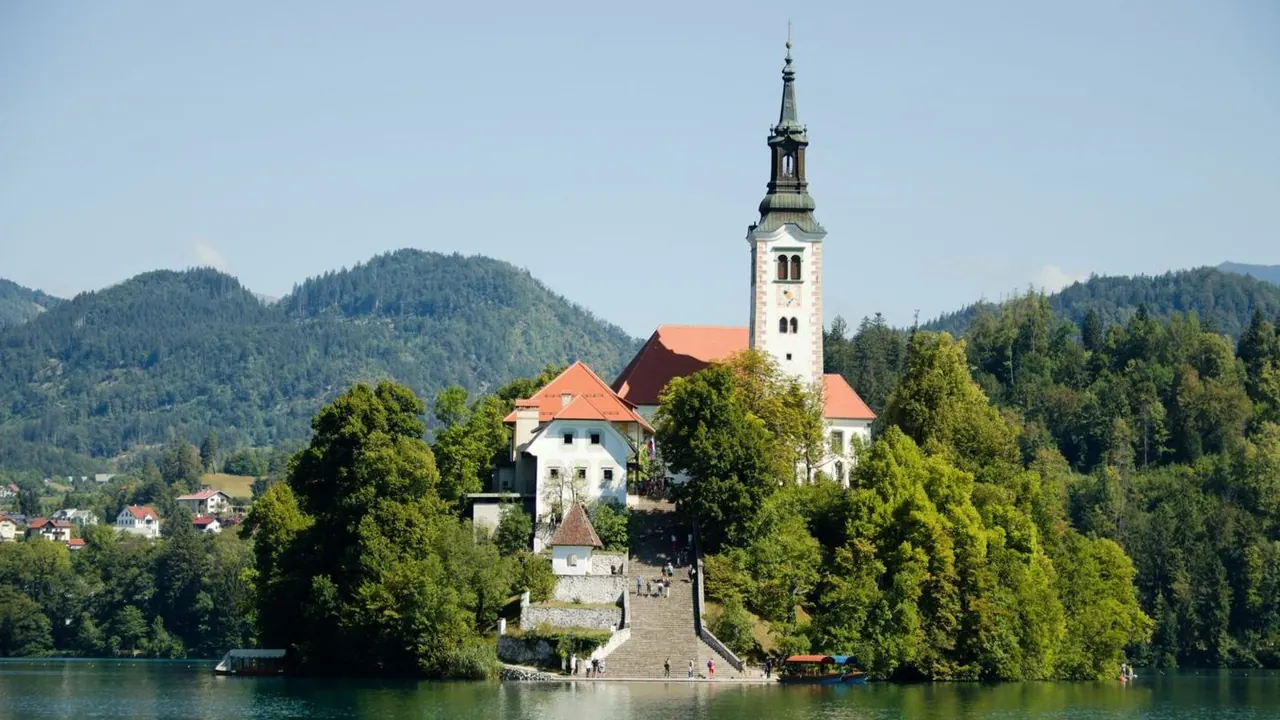
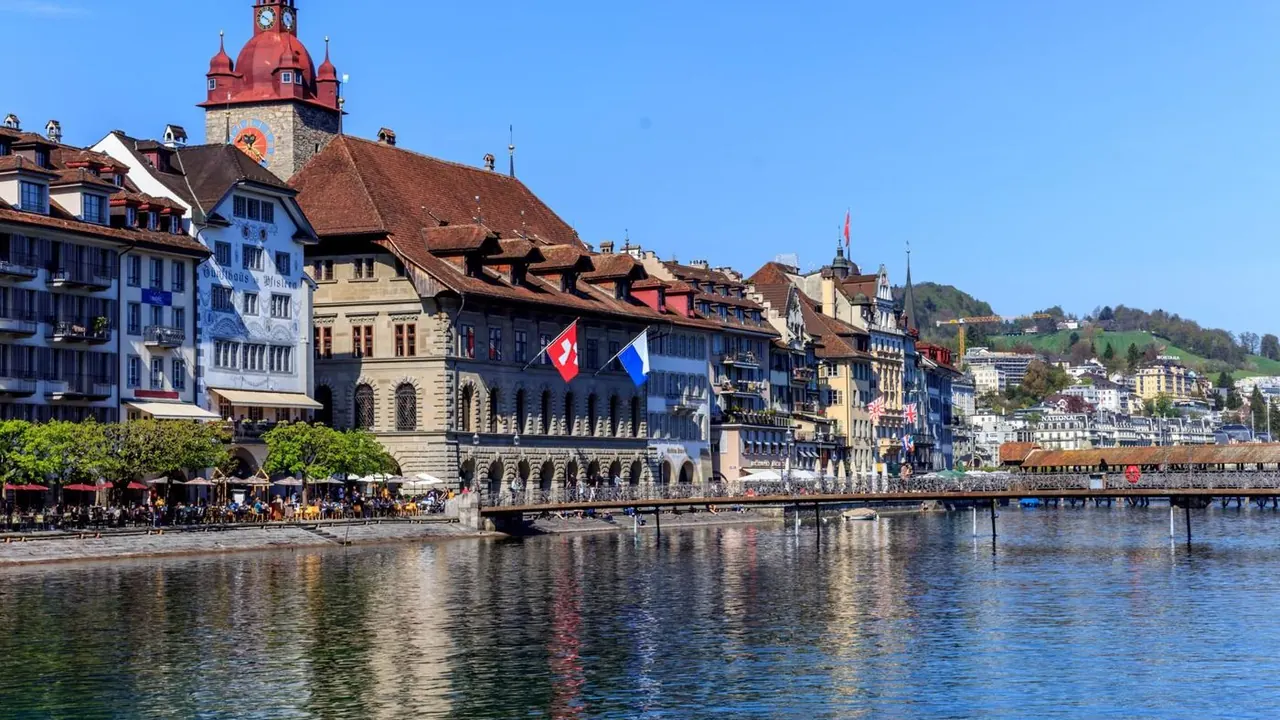
Photos: Bled by Philipp Schwarz, Pexels License; Lucerne by ILOVESwitzerland, Pexels License.
Bled or Lucerne?
Our verdict in twelve categories, each scored against the same fixed benchmark cities, and the climate month by month, so you can choose for your trip.
Choose Bled for
- prices
- beaches
- wellness
Bled suits a slow, outdoor Alpine stay at a much lower cost than Lucerne. The days are for walking the lake path, climbing to the viewpoints, heading into Triglav National Park and swimming from the lidos, where the water is warmer than Lucerne's. It is also the calmer place to rest. Couples and outdoorsy families who are happy with quiet terrace evenings will like it most. Anyone after good food, museums or a night out will find too little here and end up going to Ljubljana.
Choose Lucerne for
- live music and the arts
- shopping
- culture and sights
Travellers who want a real town as well as mountains will be happier in Lucerne, provided they can pay Swiss prices. It has the medieval Old Town and its landmarks, a world-class concert hall, a wider choice of restaurants and shops, and trains and steamers that reach Pilatus, Rigi and Bern without a car. It is the natural pick for a first trip to Switzerland or for anyone coming for classical music.
Scoreboard
Twelve categories on one fixed scale from 0 to 100. The shaded stretch is the gap between the two.
Your match
Pick a travel style or drag the sliders, and both match scores follow your weighting.
Wins on prices and beaches with your weighting.
Wins on live music and the arts and shopping with your weighting.
What matters to you?
Category by category
What the scores mean for a trip.
Beaches & swimming
Neither city has sand or sea, so this is lake swimming in both. Bled has the edge. Its lake is warmer, with shallow lidos below the castle and at Velika Zaka, and some people swim out to the island.
Lucerne's bathing is more of an urban habit, from the Lido, the wooden lake baths and the lawns at Ufschötti. The water is a few degrees cooler, so it suits a quick dip on a hot afternoon better than a day spent swimming.
Food & drink
Neither city is a food destination, but Lucerne gives more to choose from. Its guild houses and panelled taverns serve fondue, rösti, lake perch and the local Chügelipastete. The Saturday market and a few Neustadt bistros add some variety.
Bled's menus are mostly pizzerias, hotel dining rooms and inns serving trout and žlikrofi. Its kremšnita cream slice is the one dish people remember. The better Slovenian cooking is in the farm inns out in the valleys.
Culture & sights
Lucerne has much more to see. Its medieval Old Town has frescoed squares, the Chapel Bridge and the Musegg towers. Add the Lion Monument, the Bourbaki Panorama and a strong Picasso and Klee collection, and two full days are easily filled.
Bled has two famous sights, the cliff-top castle and the baroque island church with its wishing bell, reached by pletna boat. Both are lovely, but one day covers them, and for museums people travel elsewhere.
Nightlife
Lucerne at least offers a modest night out. There are wine bars along the Reuss, a few cocktail bars and a small club scene in the Neustadt that students keep going at weekends, and at Fasnacht the whole Old Town stays out in costume until dawn.
Bled has nothing like that. An evening there means a drink on a hotel terrace and a walk along the lit shore, and the village is asleep well before midnight.
Nature & outdoors
Both are superb bases for the Alps, and Lucerne edges ahead mainly because its mountains are so easy to reach. Cogwheel railways and cable cars climb Pilatus, Rigi and the Stanserhorn, and Titlis keeps snow all year. Paddle steamers make it easy to combine a boat ride and a hike in one day.
Bled's outdoors is wilder and more hands-on. There are the Vintgar Gorge walkways and the steep climbs to Ojstrica and Osojnica, and Lake Bohinj and the Pokljuka plateau lie inside Triglav National Park. Rafting on the Sava and the drive over the Vršič pass to the Soča valley add to it.
Day trips
Lucerne is slightly the better base. Zurich, Bern and Basel are each under an hour by train, and the lake steamers run down to the Rütli meadow and the William Tell country around Altdorf.
Bled's day trips cover a whole small country and some of its neighbours. Ljubljana and Radovljica are close, the Postojna cave and Piran on the Adriatic each make a full day, and Austrian Carinthia is just through the Karawanks tunnel. More of these trips need a car, though.
Good for families
Both suit families who like the outdoors, and Lucerne is a little ahead because of the Swiss Museum of Transport. It can fill a whole day, rain or shine. Paddle steamers and cogwheel trains are rides in themselves, though they cost a lot for a family.
Bled's pleasures are simpler and cheaper: rowing a boat to the island, ringing the bell, the toboggan run on Straža and the shallow lidos. With no big indoor attraction, a wet day there is harder to fill.
Getting around
Lucerne is far easier. The station, the steamer piers and the Old Town sit together on the lakefront. Integrated tickets cover the trains, cogwheel railways and cable cars into the mountains, so a car is never needed.
Bled's centre and lake path are easy on foot, and buses run to Ljubljana and Bohinj. Pokljuka, Vršič and the Soča valley are poorly served, though, so most visitors exploring the Julian Alps hire a car and struggle to park by the lake in summer.
Shopping & style
Lucerne has the only real shopping of the two, and it is mostly Swiss watches, jewellery, army knives and chocolate around Schwanenplatz, with a few independent boutiques in the Old Town lanes. Bled has a handful of lakeside stalls selling honey, lace and painted beehive panels, and little else.
Affordability
Bled is the cheaper of the two by a wide margin, even though it is Slovenia's priciest resort. Guesthouses in nearby villages and the lakeside campsite keep costs down, and the lake path and trails are free.
In Lucerne even a simple meal is expensive, and the mountain railways that make the trip worthwhile add a lot to the budget. A Swiss travel pass and picnics help, but only so far.
Live music & performing arts
This is where Lucerne pulls furthest ahead. The Lucerne Festival brings leading orchestras to Jean Nouvel's lakefront hall, which is known for its acoustics. A resident symphony orchestra and the city theatre keep music, opera and dance going through the year.
Bled has no venue of its own. It has only the odd summer concert in the castle or a church, and folk evenings put on for visitors, so serious music means a trip to Ljubljana.
Wellness & relaxation
Bled is the more restful of the two. It grew up as a nineteenth-century health resort around Arnold Rikli's sun and air cures. Warm springs at the eastern end of the lake still feed the hotel pools, and outside the summer peak the village is very still.
Lucerne has no bathing tradition of its own. Its best soak is Mario Botta's mineral bath high on the Rigi, an hour away. Steamer trips are restful, but the Old Town fills with tour groups in the middle of the day.
When should you go?
Pick your month. The climate figures are measured averages, not a forecast.
Bled in July
Lucerne in July
Daytime high, °C
Rainfall in the month, mm
Where the figures come from
Bled's temperatures are measured 36 km from the centre, at Klagenfurt.
Bled has no rain gauge within 25 km of the centre, so its rainfall comes from a gridded climate dataset read at the city rather than from a gauge further away.
Lucerne has no rain gauge within 25 km of the centre, so its rainfall comes from a gridded climate dataset read at the city rather than from a gauge further away.
Lucerne's sunshine is measured 42 km from the centre, at Zurich Town / Ville..
Temperature and rainfall are climate normals, averaged over the years shown. Bled: 1991-2020 normals, Klagenfurt (35.5 km from centre). Lucerne: 2005-2025 (sunshine 1991-2020, rainfall 1991-2020) normals, Emmen (4.2 km from centre).
Both cities are at their best from June to September, but the summers differ. Bled is warmer, with July highs around 27°C, and it is the sunnier of the two, which makes its lake the better place for swimming in high summer. It is also wetter late in the season, with heavy August rain near 152mm, often as afternoon storms over the mountains. Lucerne stays a little cooler at about 24°C. Its wettest stretch comes earlier, from May to July, and its skies are greyer all year.
Spring and autumn suit walking in both, with mild days in May and late September. In winter Bled turns colder, with highs near freezing, but it is drier and brighter than Lucerne. Lucerne's December is especially dull and damp, so this is the season for skiing, not for sightseeing.
Which traveller are you?
On a trip on a tight budget, Bled is the clear pick. Lucerne is among the costliest places in Europe. In Bled the lake path, viewpoints and trails are free, and guesthouses in Radovljica or Bohinj are cheaper still.
For a culture and arts trip, choose Lucerne. The Chapel Bridge, the Lion Monument and the Rosengart's Picasso and Klee give it far more to see. The lakefront concert hall and the Lucerne Festival offer music that Bled cannot match.
For a beach and sun trip in an Alpine setting, Bled wins. Its lake warms to around 24°C in high summer, the lidos have shallow ends, and the summers are sunnier. Lucerne's lake stays cooler, and swimming there is more a break between excursions.
Before you go
| Measure | Bled | Lucerne |
|---|---|---|
| Official language | Slovene | French, German, Italian, Romansh |
| Currency | Euro (EUR) | Swiss Franc (CHF) |
| Sockets | CF230 V, 50 Hz | CJ230 V, 50 Hz |
| Driving side | Right | Right |
| Time zone | UTC+1, UTC+2 in summer | UTC+1, UTC+2 in summer |
| Emergency number | 112 | 112 |
| Elevation | 501 m | 436 m |
| Main airport | Ljubljana Jože Pučnik Airport (LJU)31 km from centre32 non-stop destinations | Zürich Airport (ZRH)49 km from centre226 non-stop destinations |
| Public holidays this year | 21 days | 12 days |
By the numbers
| Measure | Bled | Lucerne |
|---|---|---|
| City population | 4,969 | 86,234 |
| People per km² | 26 | 2,963 |
| Museums within 10 km | 4 | 14 |
| UNESCO World Heritage sites within 50 km | 3 | 1 |
Where else could you go?
Every comparison below shares a destination with this one, so you can follow Bled or Lucerne somewhere new.