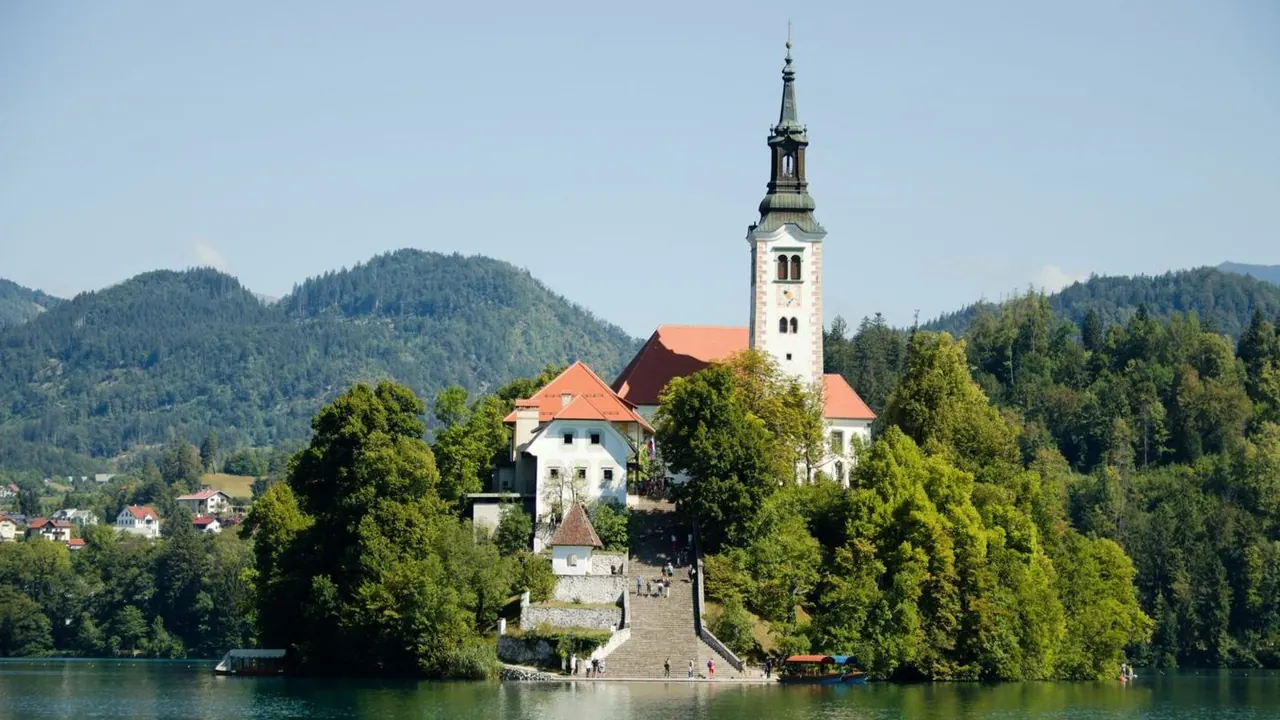
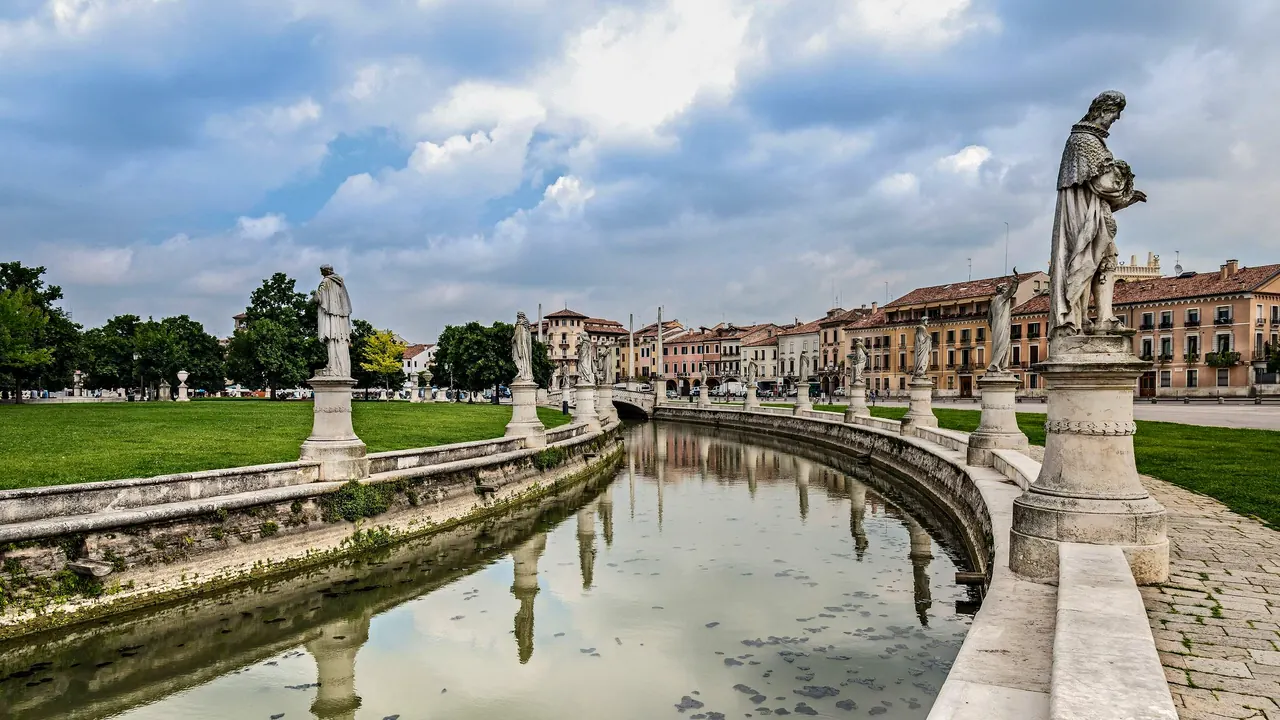
Photos: Bled by Luka Peternel, CC BY-SA 4.0, cropped; Padua by Didier Descouens, CC BY-SA 4.0, cropped.
Bled or Padua?
Our verdict in twelve categories, each scored against the same fixed benchmark cities, and the climate month by month, so you can choose for your trip.
Choose Bled for
- nature and the outdoors
- beaches
- families
Bled suits travellers who want mountains outside the window and plan to spend their days walking, swimming in a lake and heading into the Julian Alps. Evenings are quiet and the food is plain. In return you get Triglav National Park on the doorstep and a calm lakeshore, which make it a restful, active base for families and outdoor couples.
Choose Padua for
- culture and sights
- food and drink
- nightlife
If you come for paintings, churches, markets and long evenings in the squares, Padua makes more sense. Giotto's Scrovegni Chapel, a university centre that stays busy after dark and a station with fast trains across the Veneto make it a city to look, eat and travel from. The thermal spas of Abano are a short ride away. Mountains are a day trip from here, not the view.
Scoreboard
Twelve categories on one fixed scale from 0 to 100. The shaded stretch is the gap between the two.
Your match
Pick a travel style or drag the sliders, and both match scores follow your weighting.
Wins on nature and the outdoors and beaches with your weighting.
Wins on culture and sights and food and drink with your weighting.
What matters to you?
Category by category
What the scores mean for a trip.
Beaches & swimming
Neither city is on the sea, but in Bled you can swim right in the village. In high summer the lake warms to about 24°C, and people swim from grassy lidos, wooden piers and rocks along the shore, some of them all the way out to the island. Lake Bohinj, half an hour away, is a colder and wilder second option.
From Padua a swim means an hour's journey to Sottomarina or the Lido of Venice. The shallow Adriatic there is gentle for small children, but the beaches are flat rows of umbrellas. Bled gives you the more scenic swim and the easier one to fit into a day.
Food & drink
Padua is a far better place to eat. It has twin morning markets beneath the Palazzo della Ragione, Venetian home cooking such as bigoli with duck sauce and risotto with spring peas, and wines from the Euganean Hills. That keeps a food lover busy for days, even though fine dining is thin.
Bled offers kremšnita on a lake terrace and a short list of trout, žlikrofi and pizza, much of it aimed at day visitors. The better meals are in the farm inns of the surrounding valleys, and a keen eater will have done the village within a couple of days.
Culture & sights
Bled has a cliff-top castle with a small museum and a baroque island church reached by pletna boat. Both are memorable for their setting more than for what is inside, and most visitors see everything in a day.
Padua is in a different league. It has Giotto's Scrovegni frescoes, a UNESCO-listed group of fourteenth-century fresco cycles and the domed Basilica of Saint Anthony with Donatello's bronzes. Add the world's oldest permanent anatomical theatre and the 1545 botanical garden, and there is enough for two or three full days.
Nightlife
Bled is asleep well before midnight. A drink on a hotel terrace and a walk along the lit shore is the whole evening, and anyone who wants more has to go to Ljubljana.
Neither city is for clubbing, but Padua at least has a real evening out. Students and locals stand with drinks in Piazza delle Erbe and Piazza dei Signori until late, and there are wine bars and small pubs in the old ghetto and around the Bo. The city does go quiet in high summer and during the university breaks.
Nature & outdoors
This is what Bled does best. The Julian Alps begin at the lakeshore. The Pokljuka plateau, the Savica waterfall and Lake Bohinj are all within half an hour, and the emerald Soča valley lies over the Vršič pass. There is hut-to-hut hiking, canyoning on the Sava and cross-country skiing in winter.
Padua sits on a flat plain, so its outdoors is gentler and further away. It offers trails and vineyards in the Euganean Hills, level bike rides along the Brenta towpaths and birdwatching on the lagoon. Real mountain walking, on Monte Grappa or the Asiago plateau, is about an hour and a half away by car.
Day trips
Bled is a good base for a small country. Ljubljana, medieval Radovljica and the Postojna cave are all within range, as are Piran on the coast and Austria's Wörthersee. Many of these trips are easiest by car, though, and the list runs out sooner.
Padua's location is exceptional. Venice is under half an hour away by train and Vicenza a quarter of an hour, and Verona, Bologna and Ferrara are around an hour. The Brenta villas and walled towns such as Montagnana and Este are closer still, so you could take a different day trip almost every day of a week.
Good for families
Bled suits children better because they can be outdoors all day. They can row out to ring the island bell, paddle at the shallow lidos, and try the toboggan run and rope park on Straža, and the flat lake path takes pushchairs. Rainy days are the weak point, as there is nothing large indoors.
Padua is flat and safe, children are welcome in any trattoria, and Prato della Valle gives them room to run. But the sights are frescoes and churches, so families tend to rely on trips to Gardaland or the Adriatic.
Getting around
Both centres are small enough to walk. In Bled you follow the lakeshore path, and in Padua you walk under the arcades of a largely traffic-free core, with a tram from the station.
The difference is getting further afield. Bled's buses and two small stations cover Ljubljana and Bohinj, but trailheads, Pokljuka and the Vršič pass are poorly served, so most visitors exploring the Alps hire a car. Padua's station sits on main lines in every direction, which makes a car optional for almost everything except the hills.
Shopping & style
Bled has almost nothing to buy beyond a few lakeside stalls selling honey, lace and painted beehive panels, plus a small supermarket for the basics.
Padua has real shops: fashion and shoe stores along the arcades, university bookshops and delicatessens beneath the Palazzo della Ragione that are ideal for cheese and wine to take home. A large antiques market fills Prato della Valle one Sunday a month. It is good for browsing, though serious shoppers still go on to Venice or Milan.
Affordability
Bled charges resort prices for lakeside rooms and terrace views, especially in July and August. Guesthouses in nearby villages, the campsite at the western end of the lake or a bed in Radovljica bring the cost down. The walks and viewpoints that draw people here are free.
Padua is somewhat easier on the wallet. It costs what an ordinary northern Italian city does, and its hotels are a sensible base for exploring the region. Market produce and a standing aperitivo are cheap, and you can walk everywhere in the centre, which keeps daily costs down.
Live music & performing arts
Bled has no stage of its own. Summer brings occasional concerts in the castle or the churches and folk evenings for visitors, but for a real performance you have to go to Ljubljana.
Padua's programme is modest but runs all year. Teatro Verdi, a nineteenth-century horseshoe theatre, puts on plays and some opera, and a chamber orchestra plays in the Sala dei Giganti and the Basilica. Students keep small live-music venues going. The Fenice in Venice and the summer Arena in Verona are easy to reach for major opera.
Wellness & relaxation
Bled's calm comes mostly from its setting. It has its history as Arnold Rikli's nineteenth-century health resort, a few hotel spas with pools fed by mild springs, and early walks around still water outside the summer peak.
Padua has the stronger offer in Abano Terme and Montegrotto Terme, about 12km away. Together they form one of Europe's largest thermal districts, with hot mineral pools and mud treatments at dozens of spa hotels, many of which take day visitors. A long soak after a morning of frescoes is easy here, in a way Bled's few hotel pools cannot match.
When should you go?
Pick your month. The climate figures are measured averages, not a forecast.
Bled in July
Padua in July
Daytime high, °C
Rainfall in the month, mm
Where the figures come from
Bled's temperatures are measured 36 km from the centre, at Klagenfurt.
Bled has no rain gauge within 25 km of the centre, so its rainfall comes from a gridded climate dataset read at the city rather than from a gauge further away.
Padua's temperatures are measured 35 km from the centre, at Treviso / Istrana.
Padua has no rain gauge within 25 km of the centre, so its rainfall comes from a gridded climate dataset read at the city rather than from a gauge further away.
Padua's sunshine is measured 36 km from the centre, at Treviso / S. Angelo.
Temperature and rainfall are climate normals, averaged over the years shown. Bled: 1991-2020 normals, Klagenfurt (35.5 km from centre). Padua: 1991-2020 normals, Treviso / Istrana (35.4 km from centre).
Bled has a short summer and a long cold season. The lake is warm enough to swim from late June to early September, when daytime highs reach about 27°C and the sun is out longest. Rain is heavy all year, though, and builds through autumn, with November the wettest month at around 211mm. From December to February highs sit close to freezing, which suits skiing on Pokljuka and at Vogel better than lakeside strolls. May, June and September are the best months for walking.
Padua is warmer and drier in every month. July and August reach about 31°C and feel humid, so sightseeing in the middle of the day is hard work. The Adriatic, an hour away, is at its warmest then, around 26°C in August. April to early June and September through October are the comfortable months for walking the arcades. Even winter is mild enough for the city, though it is often grey and foggy.
Which traveller are you?
On an outdoors trip, Bled is the clear pick. The lake path, the steep viewpoints and Triglav National Park are on the doorstep, with rafting, paragliding and winter skiing close by. From Padua, the hills and the pre-Alps mean a drive.
For a culture and arts trip, Padua wins easily. Giotto's frescoes, the Basilica of Saint Anthony, the old anatomical theatre and evenings at Teatro Verdi fill several days. Bled's castle and island church take a single morning.
For a food and nightlife trip, Padua is far ahead. You get morning markets in Piazza delle Erbe, Venetian dishes such as bigoli and baccalà, Euganean wines and crowded squares at aperitivo time. Bled offers its custard slice, lakeside terraces and early nights.
Before you go
| Measure | Bled | Padua |
|---|---|---|
| Official language | Slovene | Italian |
| Currency | Euro (EUR) | Euro (EUR) |
| Sockets | CF230 V, 50 Hz | CFL230 V, 50 Hz |
| Driving side | Right | Right |
| Time zone | UTC+1, UTC+2 in summer | UTC+1, UTC+2 in summer |
| Emergency number | 112 | 112 |
| Elevation | 501 m | 12 m |
| Main airport | Ljubljana Jože Pučnik Airport (LJU)31 km from centre32 non-stop destinations | Venice Marco Polo Airport (VCE)39 km from centre103 non-stop destinations |
| Public holidays this year | 21 days | 13 days |
By the numbers
| Measure | Bled | Padua |
|---|---|---|
| City population | 4,969 | 206,496 |
| People per km² | 26 | 2,220 |
| Museums within 10 km | 4 | 29 |
| UNESCO World Heritage sites within 50 km | 3 | 5 |
| Swim season, months above 21 °C | - | 4 months |
Where else could you go?
Every comparison below shares a destination with this one, so you can follow Bled or Padua somewhere new.