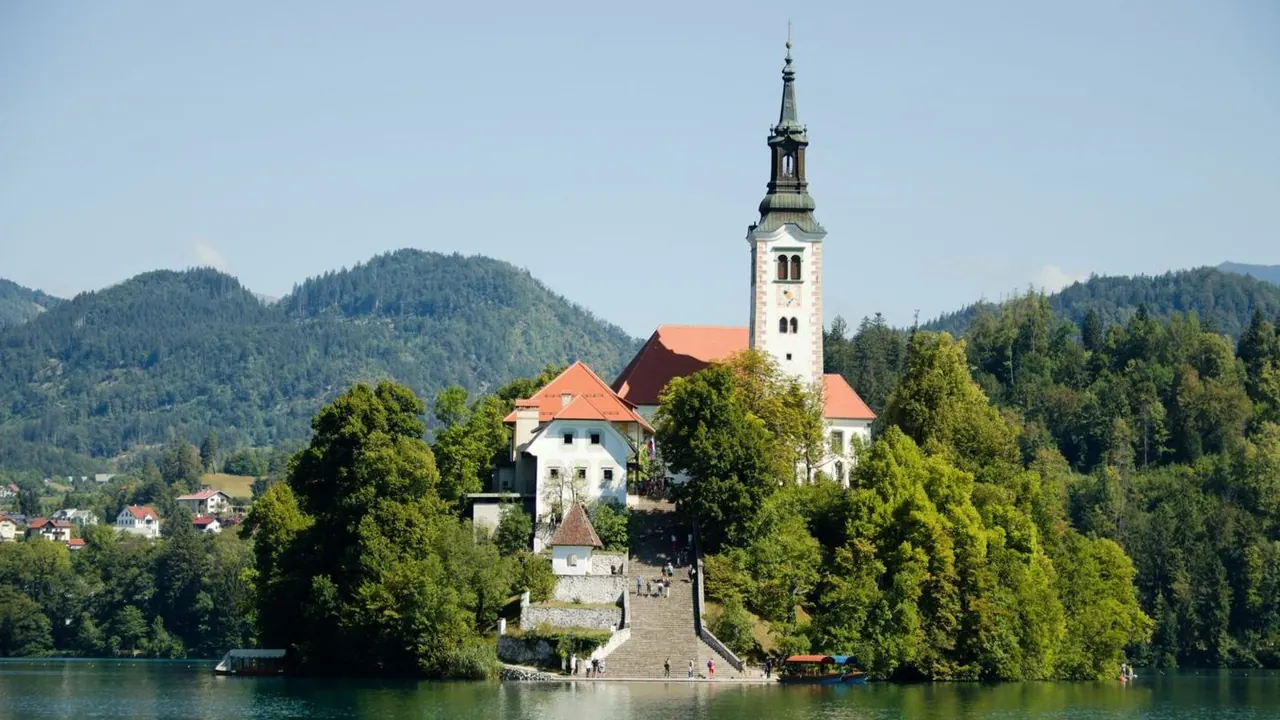
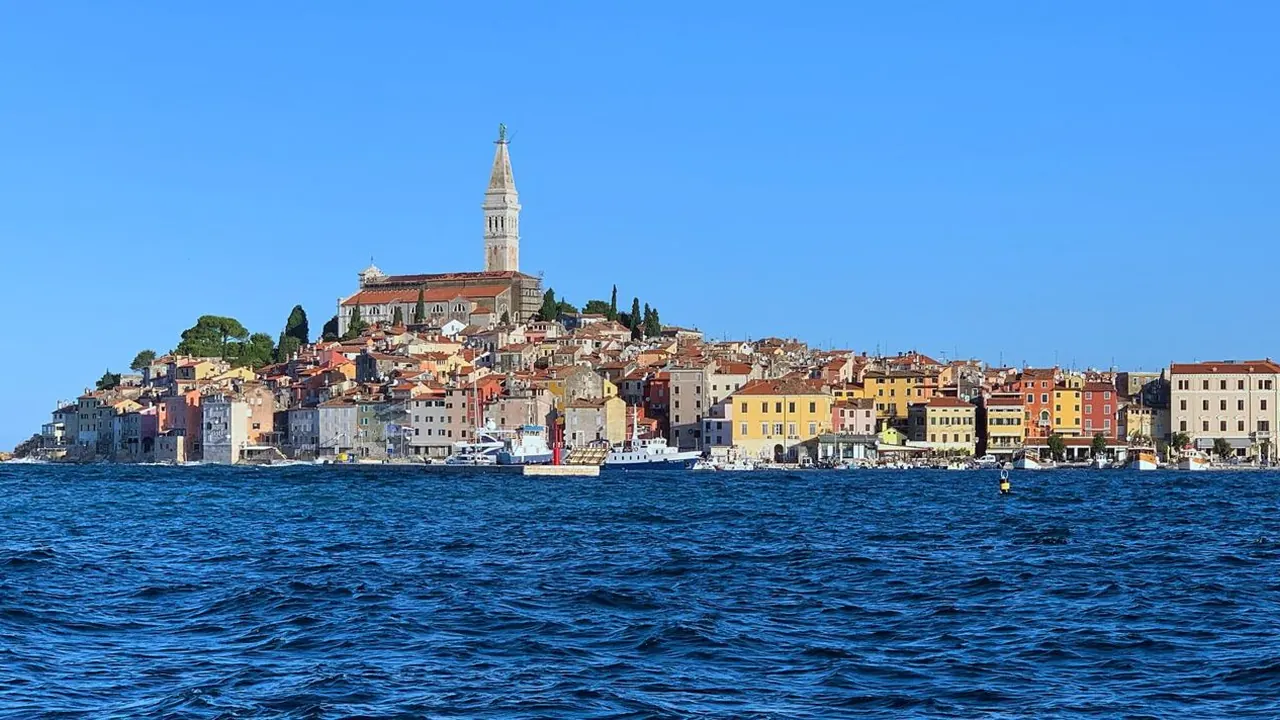
Photos: Bled by Philipp Schwarz, Pexels License; Rovinj by Vyacheslav Bukharov, CC BY-SA 4.0, cropped.
Bled or Rovinj?
Our verdict in twelve categories, each scored against the same fixed benchmark cities, and the climate month by month, so you can choose for your trip.
Choose Bled for
- nature and the outdoors
- wellness
- prices
Bled is for travellers who want mountains outside the window. It sits at the edge of the Julian Alps, with gorge walks, lake circuits, hut routes and winter skiing all close by, and the pace is slow enough to work as a rest cure. Families who like to be outdoors do well here, and it costs a little less than Rovinj. Evenings are very quiet, though, and the food is plain.
Choose Rovinj for
- food and drink
- shopping
- beaches
Rovinj suits a sea-and-supper trip. The Adriatic laps the old town walls, you swim off limestone ledges in the pines, and Istrian truffles, fish and Malvazija make dinner the main event of the day. The Venetian old town is a sight in itself, and you get more of a night out, more shopping and more summer music than in Bled. What you give up is high mountain scenery and sandy, gentle water.
Scoreboard
Twelve categories on one fixed scale from 0 to 100. The shaded stretch is the gap between the two.
Your match
Pick a travel style or drag the sliders, and both match scores follow your weighting.
Wins on nature and the outdoors and wellness with your weighting.
Wins on food and drink and shopping with your weighting.
What matters to you?
Category by category
What the scores mean for a trip.
Beaches & swimming
Rovinj is the better place to swim, simply because it has the sea. Several kilometres of limestone ledges, pebble coves and bathing platforms run south into the Golden Cape, the water is very clear, and boats go to the islands of St Catherine and Red Island. It has no sand, though, and you will want water shoes.
Bled offers lake swimming: grassy lidos below the castle cliff, shallow water at Velika Zaka, and the swim out to the island. The water is pleasant in midsummer, but the season is shorter, and the main alternative is the colder Lake Bohinj.
Food & drink
Rovinj belongs to the Istrian food region, and it shows. There is grilled fish, scampi buzara, fuži with truffle, peppery olive oil and Teran wine, plus country konobas worth the drive. Harbour menus can be touristy, but a week of good meals is easy.
Bled is much thinner. The custard kremšnita by the lake is the one famous dish, and beyond that it is mostly hotel dining rooms, pizzerias and inns serving trout and žlikrofi. For the best meals you head out to the valley farm inns.
Culture & sights
Neither town is a museum destination, but Rovinj gives you more to look at. Its whole old town is the sight: pastel Venetian houses climbing a former island to St Euphemia's bell tower, with the lanes of Grisia and the Balbi Arch along the way. The Batana House adds a local maritime story.
Bled has a handful of memorable set pieces: the cliff-top castle with its small museum and printing workshop, the pletna boat to the island church and its wishing bell, and the old spa villas along the shore. Most people have seen it all in a day.
Nightlife
Rovinj at least gives you an evening out. There are sunset drinks on the rocks, cocktail and wine bars along the waterfront, and a couple of places to dance in high summer, though it goes quiet out of season. Bled has a terrace drink and a walk along the lit shore, no clubs at all, and anyone after more has to go to Ljubljana.
Nature & outdoors
This is Bled's great strength. It has the Osojnica viewpoint over the island, the green river in the Vintgar Gorge, the Savica waterfall, the Pokljuka pastures and multi-day hut routes in Triglav National Park, with rafting on the Sava, paragliding, and cross-country and downhill skiing in winter.
Rovinj's outdoors is gentler and centred on the sea. You can cycle the gravel paths of the Golden Cape, kayak or dive around the archipelago, take a boat up the Lim Fjord, and ride quiet roads through vineyards and red earth. It is pleasant, but there are no peaks and no real wilderness.
Day trips
Both towns make good bases, but the trips you take from each are quite different. From Bled you can reach a whole small country: Ljubljana in under an hour, medieval Radovljica, the Postojna cave and Predjama Castle, and Austrian lakeside towns through the Karawanks tunnel.
From Rovinj the trips are Roman and Venetian. You have Pula's amphitheatre, the mosaics of the Euphrasian Basilica in Poreč, the hill towns of Motovun and Grožnjan among the truffle woods, and the Brijuni islands. Both can reach Piran, but most of Istria needs a car.
Good for families
Bled has the edge with children who enjoy being active. They can row out to the island and ring the bell, swim from the shallow lidos, ride the toboggan and try the rope park on Straža, and the flat lake path suits pushchairs. Wet days are hard to fill, though.
Rovinj has big resort campsites with pools and the shady Golden Cape, but the shore is sharp rock and the cobbled old town is steep, which is tiring with small children.
Getting around
Getting around is much the same in both: easy on foot in town, harder beyond it. Bled has the advantage of rail, with Lesce-Bled on the main line, the scenic Bohinj line, and buses to Ljubljana, but the trailheads and passes really need a car.
Rovinj's old town is closed to cars and taxi boats run to the islands, but there is no railway, so you rely on buses or a car for the hill towns and wineries.
Shopping & style
Neither is a shopping destination, but Rovinj gives you more to browse. Artists' studios and small galleries line Grisia, and there are truffle products, olive oil, wine and lavender to take home. In Bled you will find little more than a few lakeside stalls selling honey, lace and painted beehive panels.
Affordability
Both are the expensive resort of their country, but Bled is the easier of the two on the wallet. Many of its best things, such as the lake path, the viewpoints and the trails, cost nothing, and staying in Radovljica or Bohinj cuts costs further.
Rovinj charges Mediterranean resort prices in July and August, and fish sold by weight adds up quickly. Apartments, campsites and a trip in late spring or September help.
Live music & performing arts
Live performance is scarce in both, and Rovinj has slightly more. In summer there are classical concerts in St Euphemia, music on the harbour, and the local bitinada singing, and Pula's Roman arena hosts big concerts close by. Bled offers only occasional castle or church concerts and folk evenings, so for opera or theatre you go to Ljubljana.
Wellness & relaxation
Bled has the longer tradition of rest. It grew up as a nineteenth-century health resort around Arnold Rikli's air and sun cures, and lakeside hotels warm their pools with mild springs. Early walks around still water add to the calm.
Rovinj relies on its resort hotel spas and a slow rhythm of long lunches and late swims in the pines, which is at its best in May, June and September. In high summer the crowded centre makes calm harder to find.
When should you go?
Pick your month. The climate figures are measured averages, not a forecast.
Bled in July
Rovinj in July
Daytime high, °C
Rainfall in the month, mm
Where the figures come from
Bled's temperatures are measured 36 km from the centre, at Klagenfurt.
Bled has no rain gauge within 25 km of the centre, so its rainfall comes from a gridded climate dataset read at the city rather than from a gauge further away.
Rovinj's temperatures are measured 64 km from the centre, at Trieste.
Rovinj has no rain gauge within 25 km of the centre, so its rainfall comes from a gridded climate dataset read at the city rather than from a gauge further away.
Temperature and rainfall are climate normals, averaged over the years shown. Bled: 1991-2020 normals, Klagenfurt (35.5 km from centre). Rovinj: 1991-2020 normals, Trieste (63.7 km from centre).
Bled has a short summer. From June to August the days are warm and fairly sunny, reaching about 27°C in July, and the lake is warm enough for swimming. Summer is also the wet season, which runs from June into September, with rain peaking at about 152mm in August. May is the best month for long hikes in the hills: the days are mild rather than hot, and it is drier than the months that follow. September is a good choice too, because it is just as mild, though rainier than May. In winter the highs stay around freezing, which is too cold for strolling but right for snow on Pokljuka and Vogel.
Rovinj is milder all year. High summer is its sunniest time and gets only moderate rain. The sea is good for swimming from June to September and reaches about 26°C in August. The wet season comes in autumn: rain builds from September and peaks at around 102mm in November. Spring and early autumn are pleasant for walking and cycling, and winter is grey and mild rather than freezing. So the two get most of their rain at different times, in summer at Bled and in late autumn at Rovinj.
Which traveller are you?
For an outdoors trip, Bled is far ahead. Triglav National Park, the Vintgar Gorge, Lake Bohinj and the Vršič pass are all within easy reach, along with hut-to-hut hiking, rafting, canyoning, paragliding and skiing. Rovinj has forest paths and kayaking, but no mountains.
On a beach and sun trip, choose Rovinj. You have the clear Adriatic, pine-shaded rocks along the Golden Cape and taxi boats out to quiet island coves, with dry, sunny summers. Bled's lake swimming is lovely but lasts only about two months and comes with stormier weather.
For a food and nightlife trip, Rovinj wins easily. Istrian truffle pasta, scampi buzara and local wines fill long dinners, and there are waterfront cocktail bars afterwards. In Bled the eating is mostly kremšnita and inn food, and the village is asleep before midnight.
Before you go
| Measure | Bled | Rovinj |
|---|---|---|
| Official language | Slovene | Croatian |
| Currency | Euro (EUR) | Euro (EUR) |
| Sockets | CF230 V, 50 Hz | CF230 V, 50 Hz |
| Driving side | Right | Right |
| Time zone | UTC+1, UTC+2 in summer | UTC+1, UTC+2 in summer |
| Emergency number | 112 | 112 |
| Elevation | 501 m | 0 m |
| Main airport | Ljubljana Jože Pučnik Airport (LJU)31 km from centre32 non-stop destinations | Pula Airport (PUY)31 km from centre34 non-stop destinations |
| Public holidays this year | 21 days | 14 days |
By the numbers
| Measure | Bled | Rovinj |
|---|---|---|
| City population | 4,969 | 12,968 |
| People per km² | 26 | - |
| Museums within 10 km | 4 | 1 |
| UNESCO World Heritage sites within 50 km | 3 | 1 |
| Swim season, months above 21 °C | - | 4 months |
Where else could you go?
Every comparison below shares a destination with this one, so you can follow Bled or Rovinj somewhere new.