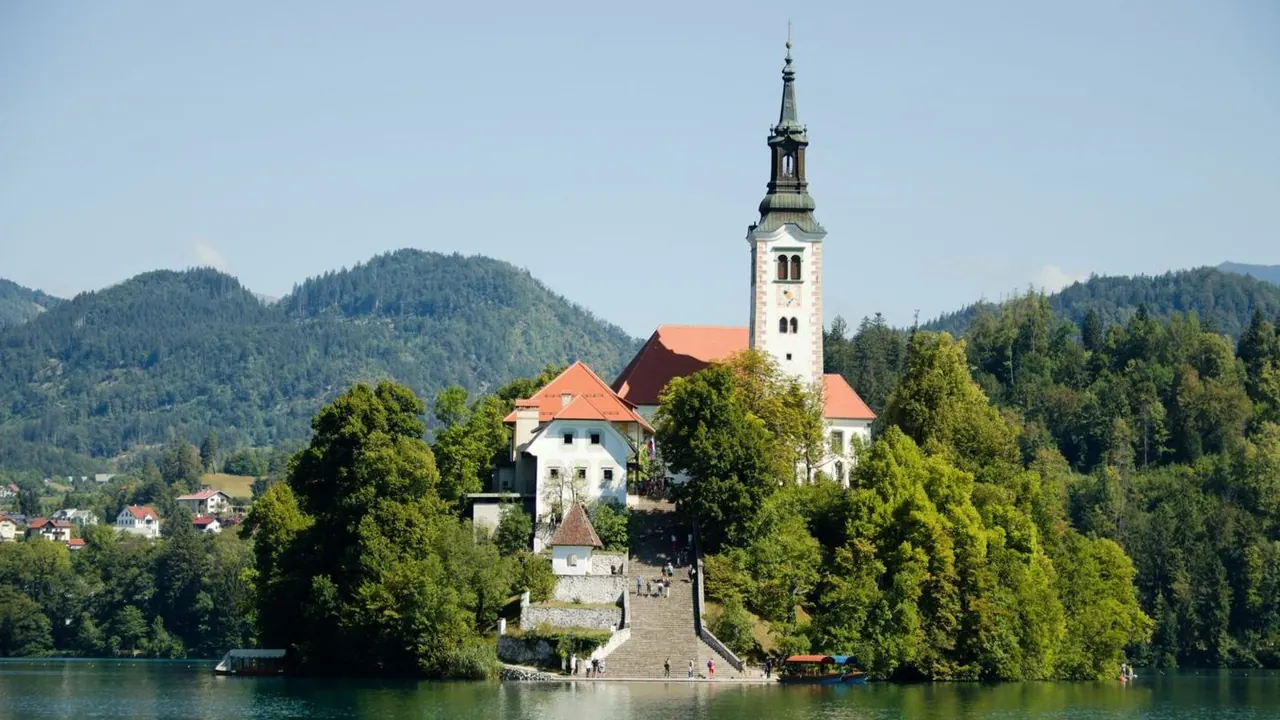
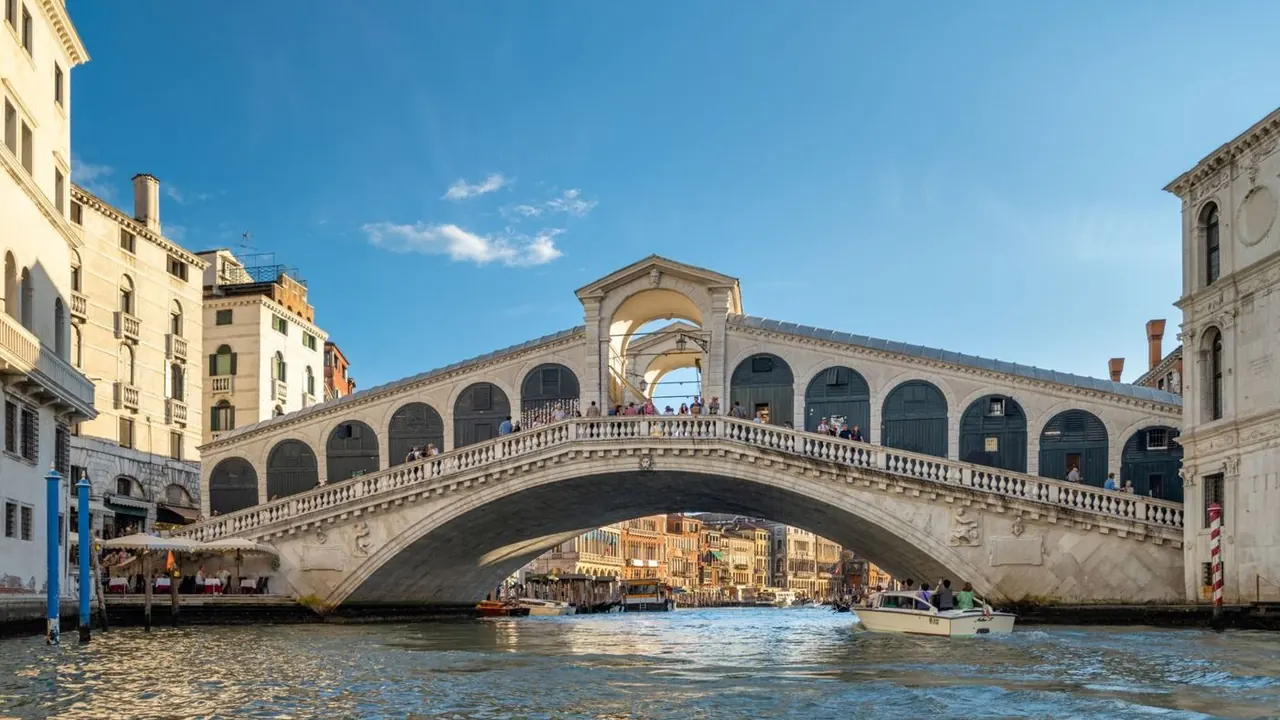
Photos: Bled by Philipp Schwarz, Pexels License; Venice by David Vives, Pexels License.
Bled or Venice?
Our verdict in twelve categories, each scored against the same fixed benchmark cities, and the climate month by month, so you can choose for your trip.
Choose Bled for
- nature and the outdoors
- prices
- families
Bled suits travellers who want the Julian Alps on the doorstep and a calm lake to come back to each evening. Hikers, cyclists, families with younger children and anyone who simply wants to slow down will get more from it than from Venice, and the bill is lighter. Food, shopping and evenings are thin, though, and Ljubljana makes up for them.
Choose Venice for
- culture and sights
- live music and the arts
- shopping
For art, architecture and a night at the opera, Venice is in another league. It suits a first trip to Italy, a city break built around culture, or a base for touring the Veneto by train, with good cicchetti along the way. You have to accept high prices, summer crowds and very few hills or green spaces.
Scoreboard
Twelve categories on one fixed scale from 0 to 100. The shaded stretch is the gap between the two.
Your match
Pick a travel style or drag the sliders, and both match scores follow your weighting.
Wins on nature and the outdoors and prices with your weighting.
Wins on culture and sights and live music and the arts with your weighting.
What matters to you?
Category by category
What the scores mean for a trip.
Beaches & swimming
Neither place is a beach destination, and the difference is mostly in kind. In Bled you swim in a lake, from grassy lidos and wooden piers, in water of about 24°C in high summer. The colder, wilder Lake Bohinj is half an hour away. Venice has a real sandy sea beach on the Lido, shallow, warm and gentle but greenish, and mostly laid out in rows of cabanas.
For a swim in fresh water with mountains behind you, Bled is the more appealing. For sand and open sea Venice has a slight edge, with quieter Pellestrina and the resort strips of Jesolo as alternatives. In both places a swim fills an afternoon rather than the whole trip.
Food & drink
Venice gives food lovers far more. The bacari around the Rialto and in Cannaregio lay out cicchetti to eat standing with a spritz. Lagoon dishes such as cuttlefish risotto black with its ink and bigoli in salsa come from the Rialto market, as long as you steer clear of the picture-menu places on the main routes.
Bled comes down to kremšnita on a lake terrace, hotel dining rooms, pizzerias and a few inns serving trout and žlikrofi. The better country cooking is in the farm inns of the surrounding valleys, and the village itself runs out of interest within a couple of days.
Culture & sights
This is the widest gap between the two. In Venice the whole city is the sight: San Marco, the Doge's Palace and the palazzi along the Grand Canal. Behind them come the Accademia, Titian in the Frari, Tintoretto at San Rocco and the Biennale in the Arsenale and Giardini. A week barely covers it.
Bled has its cliff-top castle with a small museum and the famous view, the baroque church on the island reached by pletna boat, and a few villas from its spa-resort days. That is a lovely day of sightseeing at most. Anyone looking for galleries goes on to Ljubljana.
Nightlife
Neither suits a big night out, but Venice has more to fill an evening. The aperitivo crowd packs the bacari along the Fondamenta della Misericordia, and students keep a few bars busy late around Campo Santa Margherita. Bled offers a drink on a terrace and a walk along the lit shore, and the village is asleep well before midnight. For clubs, people in Venice head to Jesolo in summer, and people in Bled go to Ljubljana.
Nature & outdoors
Bled wins outright. It sits where the Julian Alps begin. The Vintgar Gorge, the climb to Osojnica, Lake Bohinj, the Savica waterfall and the Pokljuka plateau are all within about half an hour, with rafting on the Sava, paragliding, multi-day hut routes and winter skiing at Vogel on top.
Venice's outdoors is flat and watery. You can kayak or learn Venetian rowing among the herons and flamingos of the northern lagoon, or cycle the sea walls of Pellestrina. Real mountains are more than two hours away, and the city has little green space beyond the Giardini.
Day trips
Venice is the stronger base, mainly because fast trains make the Veneto easy without a car. Padua is about half an hour away, Vicenza and Verona a little further, and Bologna and Trieste around two hours. Murano, Burano and Torcello are a boat ride across the lagoon.
Bled covers a lot of ground in a small country. Ljubljana is under an hour away, medieval Radovljica is next door, and Postojna cave with Predjama Castle or the harbour at Piran each make a full day. Austrian Carinthia is through the Karawanks tunnel, though several of these trips are easiest by car.
Good for families
Bled is easier with children. The flat lake path takes pushchairs and the lidos are shallow. Rowing out to ring the island bell, the toboggan run and rope park on Straža, and the Vintgar walkways fill the days, though a rainy day is hard to fill.
Venice thrills children with its boats and car-free alleys, the Lido sand, Murano glass-blowing and the dinosaurs in the natural history museum. But stepped bridges defeat pushchairs, summers are hot and crowded, and playgrounds are few, so it works best as a short stay with older children.
Getting around
You walk in both places, but Venice is easier for a visitor without a car. Almost everything is within a forty-minute walk, vaporetti run to the Lido and the islands, and trains end right at Santa Lucia. The price is hundreds of stepped bridges and slow, crowded boats.
Bled's lakeside is easy on foot, and buses link it to Ljubljana and Bohinj. The places that make a stay worthwhile, though, such as the trailheads, Pokljuka, the Vršič pass and the Soča valley, mostly need a hire car or a transfer, and parking by the lake is tight in summer.
Shopping & style
Venice is a real destination for craft shopping. Murano glass, Burano lace, papier-mâché masks, marbled paper and furlane slippers come from workshops in Dorsoduro, Castello and on Murano, and the big fashion names line Calle Larga XXII Marzo. Be wary of the imported fakes sold along the main routes. Bled has a few lakeside stalls selling honey, lace and painted beehive panels, and almost nothing else.
Affordability
Bled is the cheaper of the two. It is expensive by Slovenian standards, especially by the lake in July and August, but guesthouses in the nearby villages, the campsite or a room in Radovljica or Bohinj bring costs down. The lake path, viewpoints and mountain trails are all free.
Venice is among the most expensive places to stay in Italy. Water transport is priced for visitors, and most sights and churches charge for entry. Eating cicchetti at the counter, staying in a quieter sestiere or sleeping in Mestre helps, but it rarely feels cheap.
Live music & performing arts
Venice has a proper stage. La Fenice puts on opera, ballet and symphonic concerts, the Teatro Goldoni stages drama, and the Biennale runs its own festivals. Most evenings there are Vivaldi concerts in churches and scuole, though their quality varies. Bled has no theatre or concert hall, only the odd summer concert in the castle or a church and folk evenings for visitors, so a night at the opera means going to Ljubljana.
Wellness & relaxation
Bled is the more restful stay. It began as a nineteenth-century health resort under Arnold Rikli, and that history lives on in lakeside hotel spas fed by mild springs. Early walks around still water and slow boat rides set the pace, especially outside the summer peak.
Venice has hotel spas in palazzi and on the Lido, and Castello, Cannaregio and Giudecca are calm early and late in the day. The daytime crowds around San Marco break the spell, though. For real thermal bathing you would go to Abano Terme, about an hour away.
When should you go?
Pick your month. The climate figures are measured averages, not a forecast.
Bled in July
Venice in July
Daytime high, °C
Rainfall in the month, mm
Where the figures come from
Bled's temperatures are measured 36 km from the centre, at Klagenfurt.
Bled has no rain gauge within 25 km of the centre, so its rainfall comes from a gridded climate dataset read at the city rather than from a gauge further away.
Venice has no rain gauge within 25 km of the centre, so its rainfall comes from a gridded climate dataset read at the city rather than from a gauge further away.
Venice's sunshine is measured 26 km from the centre, at Treviso / S. Angelo.
Temperature and rainfall are climate normals, averaged over the years shown. Bled: 1991-2020 normals, Klagenfurt (35.5 km from centre). Venice: 1991-2020 normals, Venezia / Tessera (6.7 km from centre).
Bled is at its best in summer. From June to August daytime highs sit in the mid-twenties and peak around 27°C in July. That is warm enough to swim in the lake, but it is also a wet stretch of the year, with about 152mm of rain in August. May and September are good months for hiking. In December and January highs hover near freezing, which suits skiing on Pokljuka and Vogel. November and February are a little milder but still cold, so neither is a time for lazy lakeside walks.
Venice runs hotter. July and August reach 30°C and the Adriatic off the Lido warms to about 25°C, which is good for a beach afternoon but sticky for long days on foot. April to June and late September into October are the most comfortable months for walking the city, although September is its wettest month. Winters are much milder than Bled's, with highs around 8°C: cool, but fine for museums and churches.
Which traveller are you?
On a culture and arts trip, Venice is the clear choice. The Basilica, the Doge's Palace, Titian in the Frari, Tintoretto at San Rocco, the Biennale and an evening at La Fenice fill a week. Bled's castle and island church take a day.
For an outdoors trip, Bled is the base. The Julian Alps offer everything from meadow walks to hut routes, plus the Vintgar Gorge, rafting on the Sava and skiing in winter. Venice has only flat lagoon kayaking and cycling along the sea walls.
On a family trip with young children, Bled is simpler. There is a flat lake path for pushchairs, shallow lidos, boats to row out to the island and a summer toboggan run. In Venice, stepped bridges, summer crowds and a lack of parks make it harder work.
Before you go
| Measure | Bled | Venice |
|---|---|---|
| Official language | Slovene | Italian |
| Currency | Euro (EUR) | Euro (EUR) |
| Sockets | CF230 V, 50 Hz | CFL230 V, 50 Hz |
| Driving side | Right | Right |
| Time zone | UTC+1, UTC+2 in summer | UTC+1, UTC+2 in summer |
| Emergency number | 112 | 112 |
| Elevation | 501 m | 2 m |
| Main airport | Ljubljana Jože Pučnik Airport (LJU)31 km from centre32 non-stop destinations | Venice Marco Polo Airport (VCE)7 km from centre103 non-stop destinations |
| Public holidays this year | 21 days | 13 days |
By the numbers
| Measure | Bled | Venice |
|---|---|---|
| City population | 4,969 | 250,369 |
| People per km² | 26 | 602 |
| Museums within 10 km | 4 | 52 |
| UNESCO World Heritage sites within 50 km | 3 | 5 |
| Swim season, months above 21 °C | - | 4 months |
Where else could you go?
Every comparison below shares a destination with this one, so you can follow Bled or Venice somewhere new.