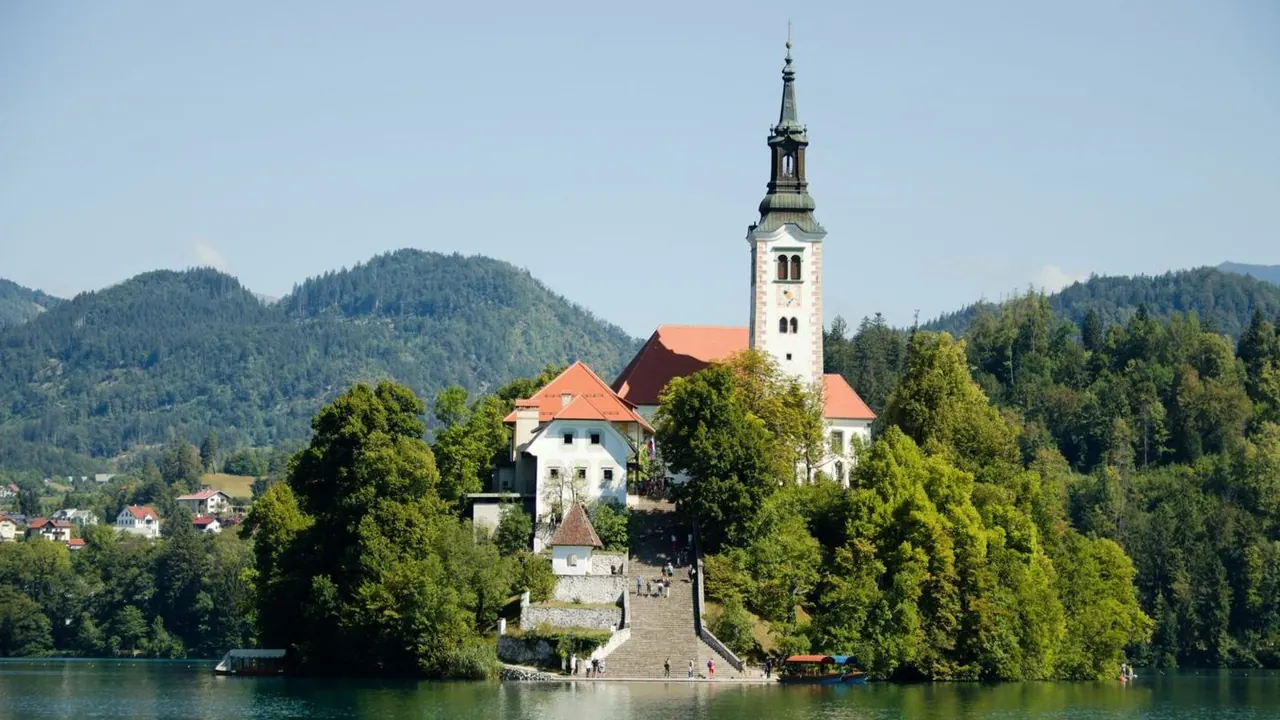
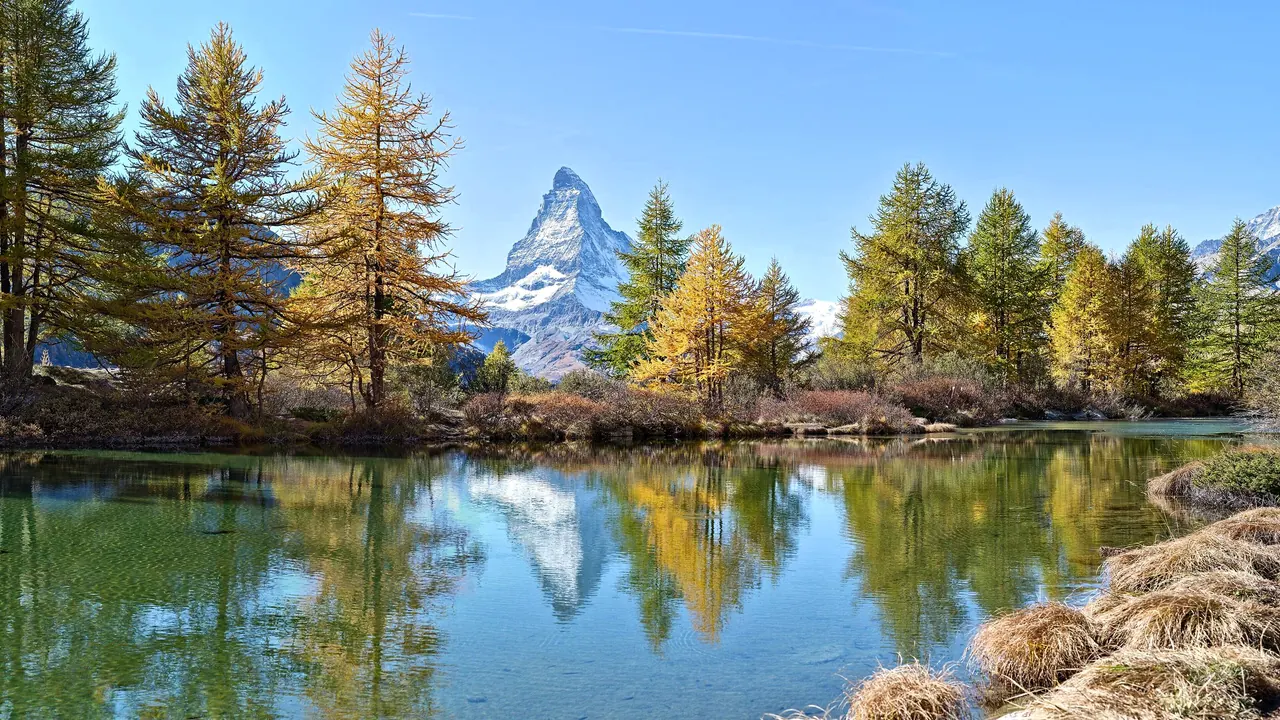
Photos: Bled by Luka Peternel, CC BY-SA 4.0, cropped; Zermatt by Roy Egloff, CC BY-SA 4.0, cropped.
Bled or Zermatt?
Our verdict in twelve categories, each scored against the same fixed benchmark cities, and the climate month by month, so you can choose for your trip.
Choose Bled for
- beaches
- prices
- day trips
Bled suits a summer trip that mixes gentle mountain days with lake swimming and outings across a small country. The water warms enough to swim from the lidos, Ljubljana, the Postojna cave and the Adriatic coast are all within reach, and a guesthouse in a nearby village keeps the bill far below anything in the Swiss Alps. Families with young children, and anyone who wants a slow, calm stay, will feel at home here.
Choose Zermatt for
- nightlife
- shopping
- food and drink
Choose Zermatt when the mountains themselves are the whole point. The Matterhorn stands over a car-free village, trains and cable cars lift you onto glaciers and high trails, and in winter the pistes run across into Italy, with chalet lunches and après-ski to follow. It needs a generous budget and offers little beyond the peaks, but for skiers, serious hikers and climbers its high Alps go a level beyond Bled's lower, greener Julian Alps.
Scoreboard
Twelve categories on one fixed scale from 0 to 100. The shaded stretch is the gap between the two.
Your match
Pick a travel style or drag the sliders, and both match scores follow your weighting.
Wins on beaches and prices with your weighting.
Wins on nightlife and shopping with your weighting.
What matters to you?
Category by category
What the scores mean for a trip.
Beaches & swimming
Bled is the one of the two where swimming is part of the stay. In July and August the lake reaches about 24°C, and you can swim from the lido below the castle cliff, from the shallow western end near Velika Zaka or out to the island, with colder, wilder Lake Bohinj half an hour away.
Zermatt has no bathing water at all. Its tarns are glacial meltwater, there to reflect the Matterhorn rather than to swim in, so a swim there means a hotel pool.
Food & drink
Neither is a place to travel to eat, but Zermatt has more to offer. It feeds a wealthy international crowd, so there are a few serious fine-dining kitchens in the village. The best of it is lunch at the wooden chalets around Findeln, Furi and Zum See, with raclette, air-dried beef and Valais wines such as Petite Arvine on a terrace facing the Matterhorn.
Bled's one famous taste is kremšnita, the tall cream slice eaten by the lake. Beyond that it is trout, žlikrofi dumplings and buckwheat dishes in inns and hotel dining rooms, and the better meals are out in the valley farm inns.
Culture & sights
The two are broadly level, each with sights that fill a day at most, but the stories they tell are different. Bled's are romantic and picture-book: the castle on its cliff with a small museum and printing workshop, and the baroque island church with its wishing bell, reached by a traditional pletna boat.
Zermatt's heritage is about mountaineering. The underground Matterhorn Museum recounts the first ascent of 1865 and the deaths on the way down, the climbers' cemetery holds those the peaks claimed, and the larch barns of the Hinterdorf recall the farming village that came before the hotels.
Nightlife
Zermatt has a real night out, but only in season. On winter afternoons the slope-side bars fill with ski boots and loud music, and a few bars and small clubs on the main street carry on past midnight at weekends. In summer the hikers turn in early.
Bled stays quiet all year: a drink on a lakeside terrace, a walk along the lit shore and bed. For anything livelier you have to go to Ljubljana, under an hour away.
Nature & outdoors
Both are superb mountain bases, but Zermatt plays in a higher league. The Matterhorn rises straight above the village, dozens of four-thousand-metre peaks ring the valley, and lifts reach the glacier at over 3,800m, with summer skiing, guided ascents and the end of the Haute Route.
Bled is gentler and greener, at the edge of the Julian Alps. It offers the level lake circuit, the Vintgar Gorge walkways, Triglav National Park and Bohinj close by, plus rafting and canyoning on the Sava and paragliding, which suits mixed groups who don't want to climb high.
Day trips
Bled is by far the better base for seeing more than one place. Ljubljana's old town and Plečnik architecture are under an hour away, medieval Radovljica is next door, and the Postojna cave, Venetian Piran and the Austrian lakes around Klagenfurt all make easy full days.
From Zermatt every outing starts with the long train ride down the valley. Sion's castle hills and Brig's Stockalper Palace are worthwhile, but most visitors happily spend their spare days up the mountain instead.
Good for families
Bled is the easier choice with young children. The flat lake path takes pushchairs and small bikes, the lidos are shallow, and rowing out to ring the island bell, the summer toboggan and the rope park on Straža hill fill the days.
Zermatt's car-free streets are a real plus, and its ski schools, nursery slopes and marmot-spotting walks work well for families who ski or hike. The thin, cold air at the highest viewpoints can be too much for small children, though. Neither has a zoo or big indoor attraction for rainy days.
Getting around
Zermatt is simpler once you arrive. With no ordinary cars, you walk the compact village, electric taxis and ski buses cover the edges, and the cog railway, the Sunnegga funicular and the gondolas all start within walking distance. Leaving takes over an hour by train, but it links smoothly into the Swiss rail network.
Bled's lakeside is easy on foot and buses reach Ljubljana and Bohinj, but trailheads, Pokljuka and the Vršič pass are thinly served. Most people exploring the Julian Alps end up hiring a car and fighting for summer parking by the lake.
Shopping & style
Zermatt at least has a proper shopping street, lined with Swiss watch and jewellery boutiques and some well-stocked ski and mountaineering outfitters, useful if you need good gear. Bled has little more than lakeside stalls selling honey, lace and painted beehive panels, and real shopping means a trip to Ljubljana.
Affordability
Bled costs more than the rest of Slovenia, but it is still far cheaper than Zermatt. Village guesthouses, the lakeside campsite and stays in Radovljica or Bohinj cut costs, and the lake path and mountain trails are free.
Zermatt is expensive even by Alpine standards, from plain hotel rooms to a drink on a mountain terrace, and the lifts most visitors rely on add a lot more. Self-catering and a bed down in Täsch help, but it remains a place to save up for.
Live music & performing arts
Neither village has a theatre or concert hall, but Zermatt has two festivals worth planning a trip around: Zermatt Unplugged with acoustic sets on mountain stages in spring, and a late-summer chamber music festival in the village church.
Bled offers only occasional summer concerts in the castle or churches and folk evenings put on for visitors. Anyone wanting opera or theatre heads to Ljubljana.
Wellness & relaxation
The two are evenly matched, but they relax you in different ways. Bled has a history as a health resort dating from Arnold Rikli's sun and air cures, mild springs warming the hotel spa pools, and a slow rhythm of early walks around still water and boat rides to the island.
Zermatt has no springs but many excellent hotel spas with mountain views, and car-free quiet. In peak weeks the mood is more active than restful, and proper thermal baths are further down the Valais.
When should you go?
Pick your month. The climate figures are measured averages, not a forecast.
Bled in July
Zermatt in July
Daytime high, °C
Rainfall in the month, mm
Where the figures come from
Bled's temperatures are measured 36 km from the centre, at Klagenfurt.
Bled has no rain gauge within 25 km of the centre, so its rainfall comes from a gridded climate dataset read at the city rather than from a gauge further away.
Zermatt has no weather station within reach, so its figures come from a gridded climate model rather than a measured record, and read a broad area rather than the city itself.
Temperature and rainfall are climate normals, averaged over the years shown. Bled: 1991-2020 normals, Klagenfurt (35.5 km from centre). Zermatt: 1991-2020 normals, TerraClimate 4 km grid at the town, no weather station within 90 km.
Bled is at its best from June to early September, when afternoons reach about 27°C, the lake is warm enough for swimming and July brings the most sunshine. Summer is not dry, though, with regular showers and storms, and the rain builds through autumn to a peak of about 211mm in November. From December to February highs hover around freezing, which suits a snowy, quiet visit with nearby skiing more than lakeside walks.
Zermatt runs on a different calendar. Even in July and August the village only reaches about 14°C, which is ideal for hiking and climbing but never for swimming, and from December to March highs sit around -2°C, good for the ski season. Its rainfall is spread fairly evenly through the year, with November the wettest month. In short, Bled is the summer warmth choice, and Zermatt is best in deep winter or in the cool, clear mountain summer.
Which traveller are you?
On a trip on a tight budget, Bled is the realistic choice. Guesthouses in the surrounding villages, the lakeside campsite and cheap regional buses keep costs down, and the lake path and viewpoints are free, while Zermatt charges heavily for beds, meals and lifts.
For a beach and sun trip, Bled wins easily. Its lake warms to proper swimming temperature in high summer, with grassy lidos, wooden piers and long sunny afternoons, whereas Zermatt's mountain tarns stay icy and its July days barely feel warm.
On a food and nightlife trip, Zermatt has more to offer, especially in winter. Long lunches at mountain chalets, raclette with Valais wine and après-ski bars running past midnight beat Bled's custard slices, inn cooking and early, quiet evenings.
Before you go
| Measure | Bled | Zermatt |
|---|---|---|
| Official language | Slovene | French, German, Italian, Romansh |
| Currency | Euro (EUR) | Swiss Franc (CHF) |
| Sockets | CF230 V, 50 Hz | CJ230 V, 50 Hz |
| Driving side | Right | Right |
| Time zone | UTC+1, UTC+2 in summer | UTC+1, UTC+2 in summer |
| Emergency number | 112 | 112 |
| Elevation | 501 m | 1,624 m |
| Main airport | Ljubljana Jože Pučnik Airport (LJU)31 km from centre32 non-stop destinations | Geneva International Airport (GVA)128 km from centre150 non-stop destinations |
| Public holidays this year | 21 days | 9 days |
By the numbers
| Measure | Bled | Zermatt |
|---|---|---|
| City population | 4,969 | 6,023 |
| People per km² | 26 | 25 |
| Museums within 10 km | 4 | 2 |
| UNESCO World Heritage sites within 50 km | 3 | 2 |
Where else could you go?
Every comparison below shares a destination with this one, so you can follow Bled or Zermatt somewhere new.