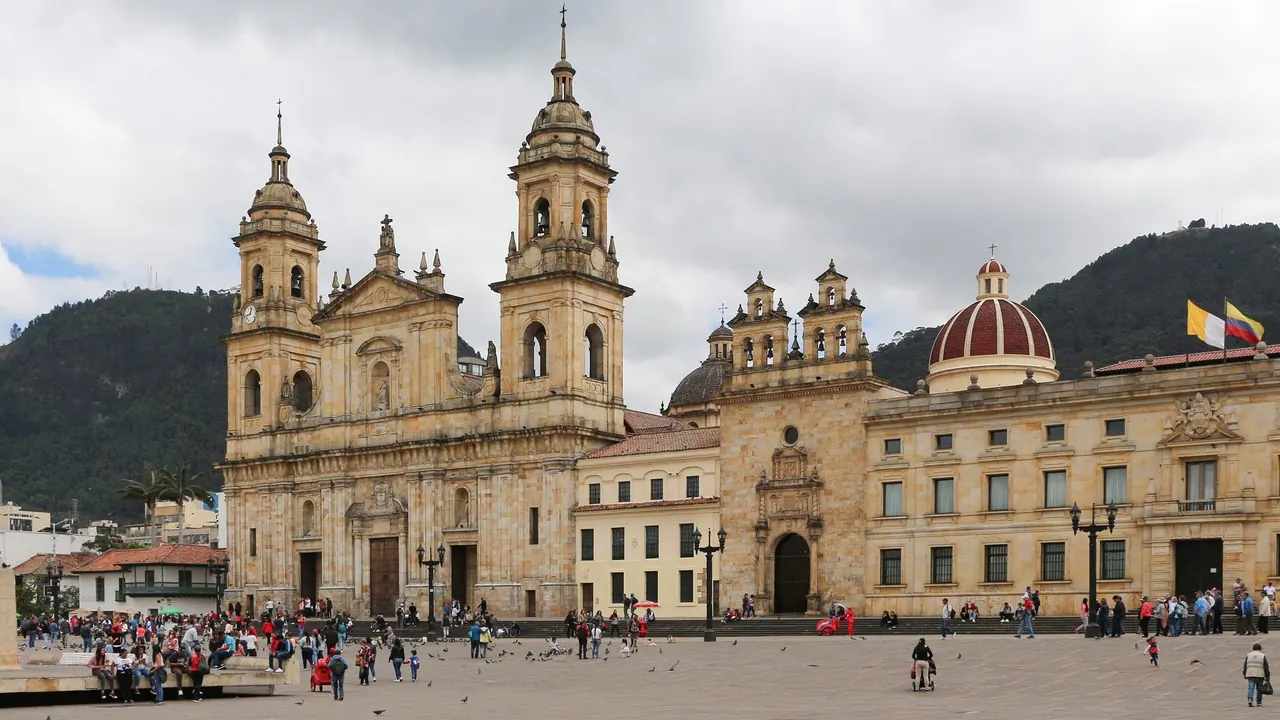
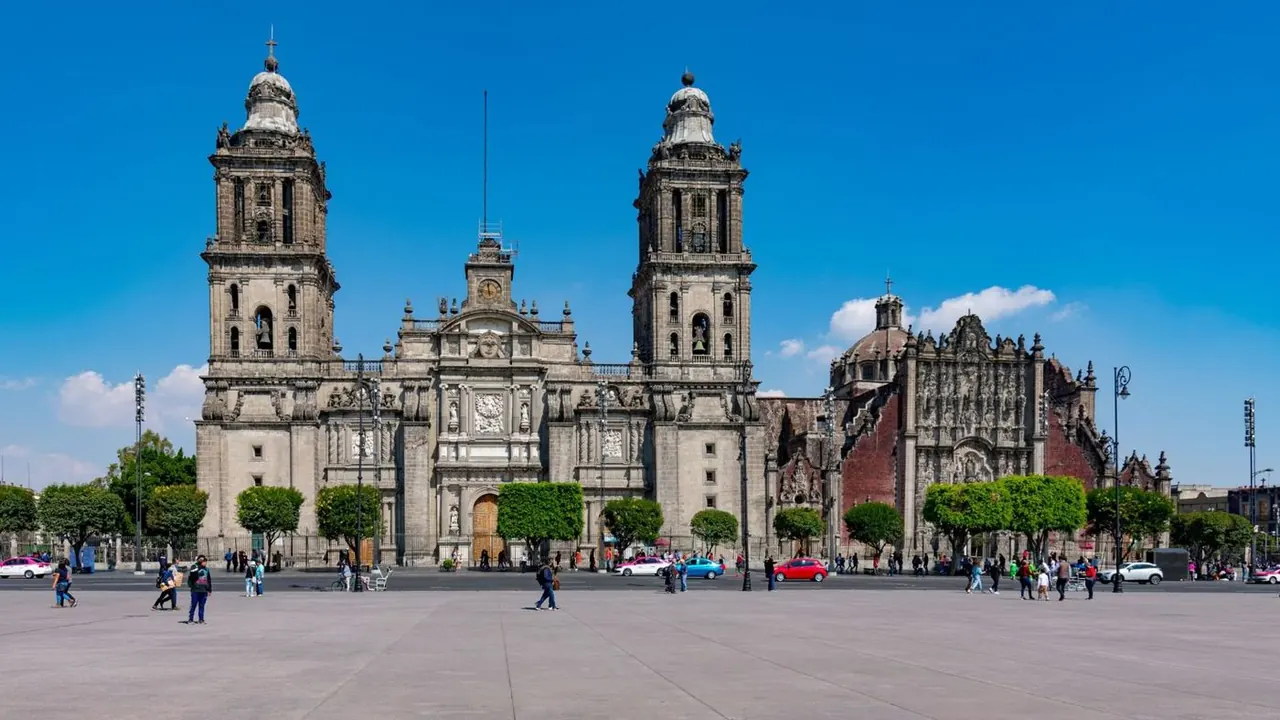
Photos: Bogota by Bernard Gagnon, CC BY-SA 4.0, cropped; Mexico City by Oscar Dominguez, Pexels License.
Bogota or Mexico City?
Our verdict in twelve categories, each scored against the same fixed benchmark cities, and the climate month by month, so you can choose for your trip.
Choose Bogota for
- nature and the outdoors
- prices
Bogota suits travellers who want the Andes as close to the city as the city itself. The páramo, cloud forest and climbing cliffs are within easy reach, the Museo del Oro and La Candelaria make a compact cultural core, and salsa bars give the nights their character. It is the better pick for a cooler, more outdoor-minded trip, for cyclists, and for anyone who would rather see one fine colonial quarter properly than chase a long list of sights.
Choose Mexico City for
- food and drink
- shopping
- day trips
Mexico City is the stronger choice for most other trips, and above all for anyone who travels to eat. Its street stalls and markets are a reason to come in their own right, and its museums, Aztec ruins and murals fill a week. Teotihuacan, Puebla and Taxco all make good days out, and its walkable neighbourhoods and metro make all of this easier to reach. Food lovers, culture seekers and first-time visitors to Latin America will get more from it.
Scoreboard
Twelve categories on one fixed scale from 0 to 100. The shaded stretch is the gap between the two.
Your match
Pick a travel style or drag the sliders, and both match scores follow your weighting.
Wins on nature and the outdoors and prices with your weighting.
Wins on food and drink and shopping with your weighting.
What matters to you?
Category by category
What the scores mean for a trip.
Beaches & swimming
Neither city is a beach destination. Both sit high on a plateau, and swimming means a hotel pool. The difference is in how far the coast is. From Bogota the Caribbean means a flight, and the nearest warm water is in the pool and water-park towns down the western slope. From Mexico City the Pacific at Acapulco is a long drive, so it is easier to add a few beach days by road.
Food & drink
Food is where the two cities differ most. In Mexico City eating is a main reason to come. Al pastor tacos late at night, tamales and atole at breakfast, and the counters of Medellín, San Juan and La Merced markets give the trip its rhythm. Above that come the tasting menus of Roma and Polanco, the pulquerías and the mezcal bars.
Bogota eats well in a quieter way. Ajiaco, hot chocolate with cheese and the pandebono from bakeries are comfort food, and Paloquemao's fruit stalls are a real discovery. Its modern kitchens in Zona G and Usaquén are good, but its street food is only for snacking.
Culture & sights
Both cities have a world-class archaeological collection, the Museo del Oro in Bogota and the Anthropology Museum in Mexico City. The difference is in what surrounds it. Bogota's sights cluster in La Candelaria and around the Plaza de Bolívar, with the Botero Museum, Calle 26's street art and the view from Monserrate, and two or three days cover them well.
Mexico City has far more. The Aztec Templo Mayor sits beside the cathedral on the Zócalo, Rivera's murals cover the National Palace and Bellas Artes, and Coyoacán, San Ángel and the Xochimilco canals each make an outing of their own. A week still leaves things unseen.
Nightlife
Mexico City has the edge, mostly because its nights run longer and are easier to string together. In Roma and Condesa, cocktail bars, mezcalerías and rooftops sit a short walk apart, old Centro cantinas add a traditional evening, and electronic clubs go on until morning.
Bogota's rumba is no less serious about dancing. Its salsa bars and Chapinero's huge clubs are high points, but the scene is split across Zona T, Chapinero and Usaquén, so the night involves taxis. Venues also tend to close earlier.
Nature & outdoors
Bogota wins here because the mountains start at the city's edge. A morning climb to Monserrate is on the doorstep, and beyond the Eastern Hills lies the páramo, a rare high landscape of frailejón plants and glacial lakes, in Chingaza and Sumapaz. Chicaque's cloud forest, the climbing cliffs at Suesca and the Sunday Ciclovía round it out.
Mexico City has Chapultepec, the Xochimilco wetlands and forest hiking at Ajusco and Desierto de los Leones. Its big scenery, the volcano pass at Paso de Cortés and the crater lakes of Nevado de Toluca, is about two hours away through heavy traffic.
Day trips
Mexico City has much more to choose from. Teotihuacan's pyramids are an hour away, Puebla and Cholula combine tiled churches with their own cooking, and Cuernavaca, Tepoztlán and silver-town Taxco lie to the south. Day trips alone could fill several days of a stay.
Bogota has one excellent outing, the salt cathedral at Zipaquirá, and pairs it well with Nemocón or the El Dorado lake at Guatavita. Villa de Leyva is the region's finest town but needs a night, and after that the choice runs short.
Good for families
Long transfers are the main hurdle for families in Bogota. Maloka's science halls, the Salitre Mágico and Mundo Aventura amusement parks and the car-free Sunday roads give children plenty to do, but the sights are spread out, traffic is heavy and parents do best staying in the northern districts.
Mexico City also needs planning by neighbourhood, but it gives children more in return. Chapultepec alone holds the zoo, boating lakes and the Papalote children's museum, the aquarium in Polanco and a trajinera ride at Xochimilco suit all ages, and lucha libre makes a loud, memorable night. In both cities the altitude can tire young children for the first day or two.
Getting around
Distance shapes every day in Bogota. La Candelaria and the northern districts of Chapinero, Zona T and Usaquén lie far apart along the foot of the mountains, and crossing between them means half an hour or more in heavy traffic. TransMilenio's bus lanes are crowded and take time to learn, so most visitors rely on cheap taxis and ride-hailing, though each district is walkable once you arrive and the bike lanes reward confident cyclists.
In Mexico City the main visitor areas, the Centro, Roma, Condesa, Polanco and Coyoacán, are pleasant on foot. A large, cheap metro with a picture sign for each station links them, backed by Metrobús lanes and bike-share. Rush-hour crowds and long distances still send most people home by ride-hailing at night, but a visitor can cover much more of the city on public transport.
Shopping & style
Mexico City is a real shopping destination, especially for crafts. La Ciudadela gathers pottery, alebrijes, textiles and silver from across the country, La Lagunilla's Sunday flea market and San Ángel's Saturday bazaar make long browses, and Masaryk and the grand department stores cover fashion.
Bogota's offer is narrower but has one distinctive item, emeralds from the dealers on Avenida Jiménez. Usaquén's Sunday market is good for hammocks and woven bags, and the rest is malls and local designers in the north.
Affordability
Both are inexpensive by Western standards, and the overall costs are close. Bogota's strength is cheap comfort: good hotels in the northern districts, cheap office-worker set lunches and taxis across town.
Mexico City's savings are in street tacos, market counters and the metro, but the gap between areas is wider there. Staying and eating in Roma, Condesa or Polanco costs close to European prices, while the Centro remains cheap.
Live music & performing arts
Mexico City offers more to a visitor who does not speak Spanish. The Ballet Folklórico at Bellas Artes, mariachis in Plaza Garibaldi and the spectacle of lucha libre at Arena México need no translation, and Sala Nezahualcóyotl and the Auditorio Nacional add concerts.
Bogota's highlights are the gilded Teatro Colón, the Filarmónica and its large festivals, the Ibero-American Theatre Festival and the free Rock al Parque. Day to day, its salsa bars are the most rewarding live music.
Wellness & relaxation
Neither city is restful, but Mexico City has a tradition of its own in the temazcal steam bath, along with good spas in Polanco and Condesa. The shaded plazas of Coyoacán offer quiet corners, and the spa towns around Cuernavaca and Tepoztlán are close for a proper retreat.
Bogota offers hotel spas, and for a real soak the thermal springs at Choachí or Tabio are about an hour away. Usaquén's quieter streets are its calmest corner.
When should you go?
Pick your month. The climate figures are measured averages, not a forecast.
Bogota in July
Mexico City in July
Daytime high, °C
Rainfall in the month, mm
Temperature and rainfall are climate normals, averaged over the years shown. Bogota: 1991-2020 normals, Bogota / Eldorado (14.1 km from centre). Mexico City: 1991-2020 normals, Mexico Central, D. F. (7.9 km from centre).
Bogota hardly changes through the year. Daytime highs sit at about 18°C in every month, so it is always good walking weather but never warm, and a jacket is needed. The choice is about rain. The driest, sunniest spell runs from December to February, with a second calmer spell in July and August, while April, May, October and November are the wettest months, at around 112mm at the peak.
Mexico City has a clear dry season and a clear wet one. From November to April it is sunny and nearly rainless, with the warmest days in April at about 28°C, which is the best time for long days on foot. From June to September afternoon storms set in, peaking in August at around 186mm, though mornings are often fine. Neither city is ever too hot for sightseeing, and Mexico City is the warmer and sunnier of the two in most months.
Which traveller are you?
On a food and nightlife trip, Mexico City is the clear choice. Taco stands, markets, cantinas and mezcal bars run from breakfast to the small hours, and in Roma and Condesa a night out is a walk between bars rather than a taxi ride.
For a culture and arts trip, Mexico City goes deeper. The Templo Mayor, the Anthropology Museum, Rivera's murals and the Ballet Folklórico would fill a week, and Teotihuacan is an easy day out. Bogota's gold museum is superb, but its cultural core is smaller.
On an outdoors trip, Bogota is the better base. The Eastern Hills rise straight behind the city, guided trips reach the páramo of Chingaza and Sumapaz, Suesca's cliffs draw climbers, and the mountain roads and Sunday Ciclovía suit cyclists.
Before you go
| Measure | Bogota | Mexico City |
|---|---|---|
| Official language | Spanish | Spanish, Nahuatl, Yucatec Maya |
| Currency | Colombian Peso (COP) | Mexican Peso (MXN) |
| Sockets | AB110 V, 60 Hz | AB127 V, 60 Hz |
| Driving side | Right | Right |
| Time zone | UTC-5 | UTC-6 |
| Emergency number | 123 | 911 |
| Elevation | 2,582 m | 2,240 m |
| Main airport | El Dorado International Airport (BOG)13 km from centre98 non-stop destinations | Mexico City Benito Juárez International Airport (MEX)7 km from centre109 non-stop destinations |
| Public holidays this year | 19 days | 9 days |
By the numbers
| Measure | Bogota | Mexico City |
|---|---|---|
| City population | 8,034,649 | 9,209,944 |
| People per km² | 5,092 | 6,202 |
| Museums within 10 km | 30 | 108 |
| UNESCO World Heritage sites within 50 km | 0 | 6 |
Where else could you go?
Every comparison below shares a destination with this one, so you can follow Bogota or Mexico City somewhere new.