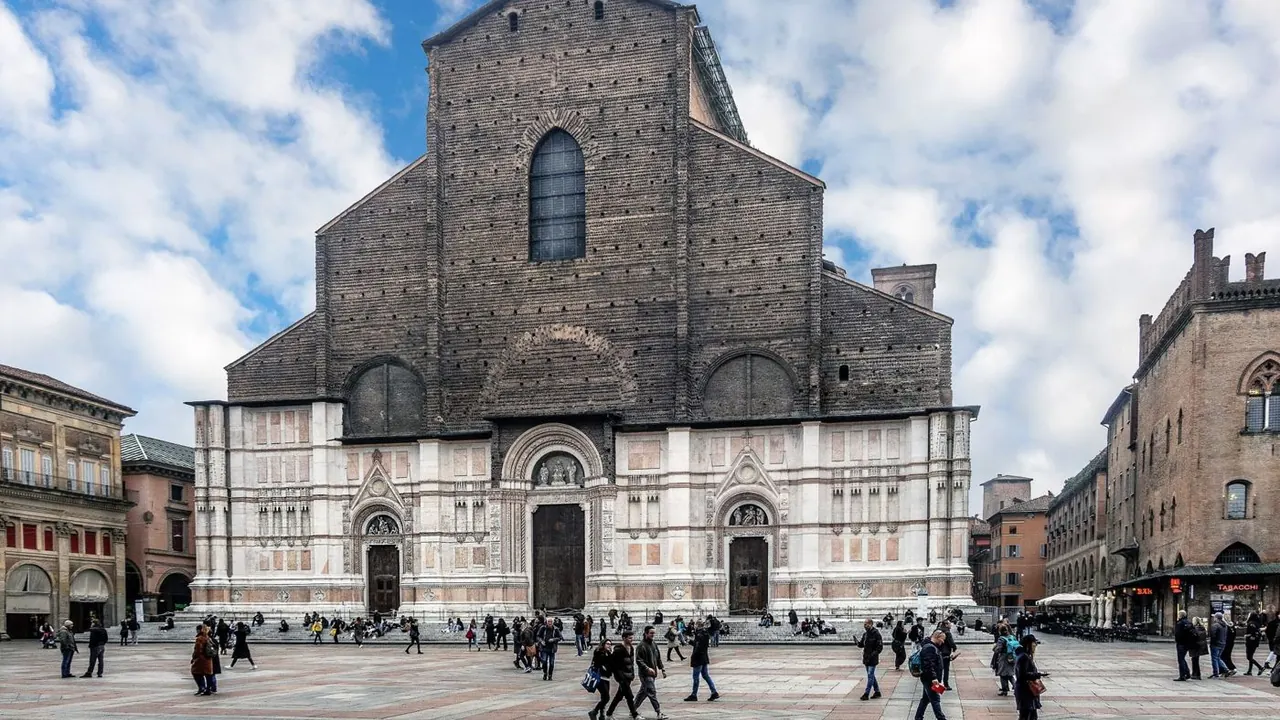
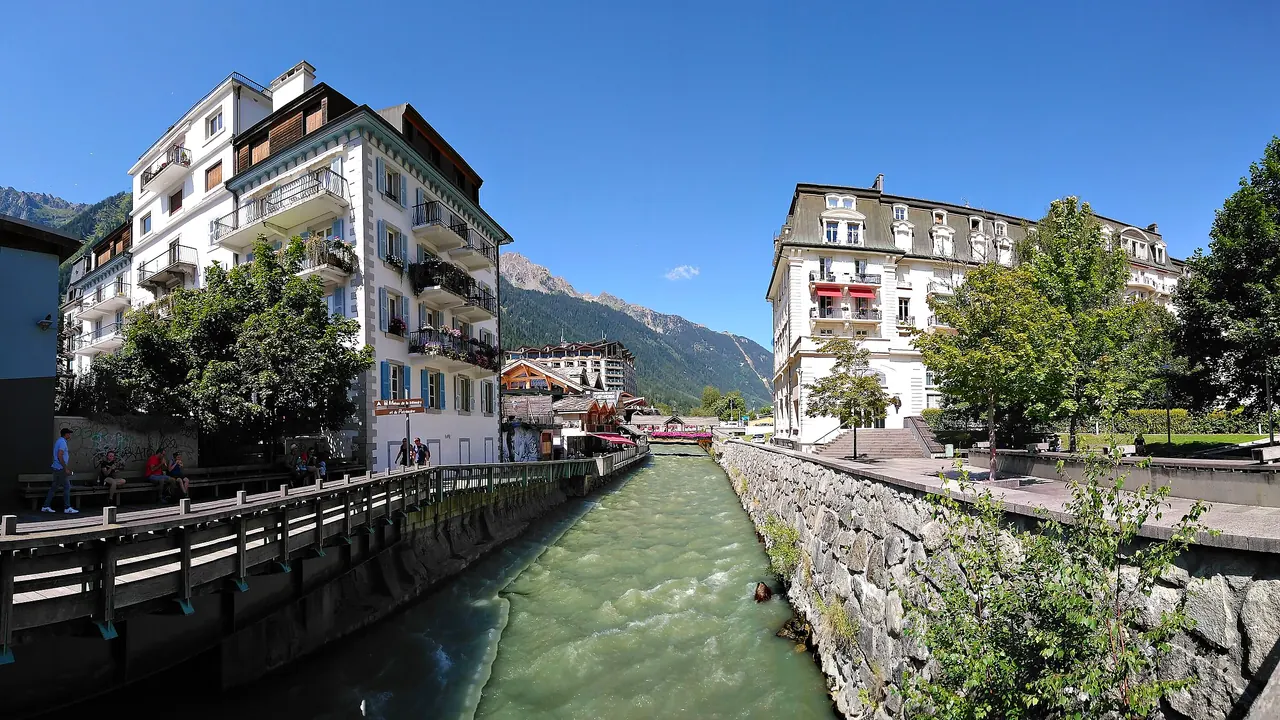
Photos: Bologna by Vanni Lazzari, CC BY-SA 4.0, cropped; Chamonix by Tiia Monto, CC BY-SA 3.0, cropped.
Bologna or Chamonix?
Our verdict in twelve categories, each scored against the same fixed benchmark cities, and the climate month by month, so you can choose for your trip.
Choose Bologna for
- culture and sights
- live music and the arts
- food and drink
Bologna suits a trip built around eating, old streets and trains. The brick centre and its porticoes, the delicatessens of the Quadrilatero, a historic opera house and Florence, Ravenna and Venice within easy rail reach give a week of variety without a car. It also costs noticeably less than an Alpine resort.
Choose Chamonix for
- nature and the outdoors
- wellness
- families
Chamonix is for travellers who want the mountains themselves. Cable cars lift you from town onto the glaciers, the trails to Lac Blanc and the Grand Balcon start at the door, and winter brings serious skiing. Active families do well here too. Expect resort prices, Savoyard food rather than a great table, and evenings that rarely go beyond a few bars.
Scoreboard
Twelve categories on one fixed scale from 0 to 100. The shaded stretch is the gap between the two.
Your match
Pick a travel style or drag the sliders, and both match scores follow your weighting.
Wins on culture and sights and live music and the arts with your weighting.
Wins on nature and the outdoors and wellness with your weighting.
What matters to you?
Category by category
What the scores mean for a trip.
Beaches & swimming
Neither city suits a beach vacation, but at least Bologna has the sea within reach. Rimini and the Romagna lidos are about an hour away by train, with warm, shallow Adriatic water in July and August, even if the shore is rows of rented sunbeds.
In Chamonix, mountain lakes take the place of the sea. Lac de Passy has a small sandy strip facing Mont Blanc, and Lake Annecy makes a fine summer day out by car. These are cool-water afternoons off rather than seaside days.
Food & drink
Food is one of the clearest gaps between the two. Bologna is the home of tagliatelle al ragù, tortellini and mortadella, eaten in old osterie and family trattorias. The shops of the Quadrilatero and the producers of Parma and Modena are close at hand, and you could plan a whole trip around meals.
Chamonix eats well in a narrower way. Fondue, raclette and tartiflette made with Alpine cheeses taste best on a refuge terrace after a morning on the trails. Beyond that, resort menus repeat themselves, and many kitchens close between seasons.
Culture & sights
Bologna's red-brick medieval centre is a sight in itself. The porticoes, San Petronio, the seven churches of Santo Stefano, the anatomical theatre in the Archiginnasio and the Pinacoteca take two or three full days to see properly.
Chamonix's heritage is the story of alpinism. The Musée Alpin and the old guides' quarter tell it well, but they take only half a day. The real sight there is the massif above the town.
Nightlife
Bologna's students give it the livelier evenings. Crowds gather outside the bars around Piazza Verdi, the taverns of Via del Pratello stay open late, and aperitivo near the Quadrilatero turns into a round of wine bars. The city goes quiet in August.
In Chamonix, going out means après-ski: loud, sociable and mostly English-speaking, in bars at the foot of the slopes and along a lane of pubs in the old town, with a couple of small clubs. It is fun in winter but subdued on summer nights, and largely shut between seasons.
Nature & outdoors
Chamonix is in another league here. The Aiguille du Midi cable car climbs to 3,842m above the glaciers of Mont Blanc, and the Mer de Glace is a train ride away. The Tour du Mont Blanc, climbing, paragliding and steep skiing all start from the valley.
Bologna's outdoors is gentler. There is the arcaded climb to San Luca, walks in the Colli Bolognesi and the gypsum caves of the Parco dei Gessi, plus the Via degli Dei for anyone with several days to walk to Florence. These are pleasant, but they are not why you choose the city.
Day trips
Bologna is by far the better base. Florence is about half an hour away by fast train, and Ravenna, Ferrara, Modena, Parma, Verona and Venice are all easy rail outings, each worth a trip in its own right.
Chamonix's day trips cross borders. Courmayeur and the Roman town of Aosta lie through the tunnel, Annecy and Geneva are reached by road, and the Mont Blanc Express runs to Martigny. These trips are rewarding, but the list runs out after a handful, and mountain roads make for long days.
Good for families
Chamonix gives children more to do, as long as the family likes being outside. There are ski schools and sledging in winter, and in summer a luge, treetop courses, the marmots and ibex of the Merlet park and the red train to the Mer de Glace. The highest cable cars are no place for toddlers, though, and there is little to do on wet days.
Bologna is easy rather than exciting with children. The centre is flat and largely car-free, the porticoes give shade and meals are simple. Its sights are made for adults, however, so families tend to add a day at Mirabilandia or on the beach at Rimini.
Getting around
Both are small, flat towns best seen on foot, and neither needs a car. The difference lies beyond the centre.
Bologna's station sits at the edge of the old town and connects you to the fast trains of northern Italy. Chamonix relies on valley buses and the Mont Blanc Express, which are free with the guest card but packed with skiers in winter and sparse in the evenings.
Shopping & style
Bologna has the broader shopping. The Quadrilatero sells mortadella, aged Parmigiano and balsamic vinegar to take home, Via dell'Indipendenza has the high-street chains, a small luxury cluster sits around the Galleria Cavour, and Piazza Santo Stefano holds an antiques market.
Chamonix is a specialist's town. Its outdoor shops carry technical climbing and ski gear along with expert advice, and they are worth saving a big purchase for. Beyond that, it is cheese, génépi, rock crystals and souvenirs.
Affordability
Neither is cheap, but a budget goes much further in Bologna. Trattoria meals and aperitivo with food are good value, most sights are churches and squares that are free to enter, and walking the centre costs nothing. Only hotels are expensive, especially during the trade fairs.
In Chamonix nearly everything adds up: rooms in the peak weeks, lift passes, the big cable cars and mountain guides. Self-catering, picnics, free valley transport and trails that start on the valley floor help, as does avoiding the high seasons.
Live music & performing arts
Bologna has a real musical life. There is opera, ballet and symphonic music at the historic Teatro Comunale, jazz in basement clubs, student gigs and summer concerts and film screenings in Piazza Maggiore. Chamonix has a summer jazz festival, with some sets played high in the mountains, and the odd church concert. For opera or an orchestra you would have to go to Geneva.
Wellness & relaxation
Chamonix is the better place to unwind, though usually after hard exercise. Its large day spa has hot outdoor pools facing the glaciers, many chalets have saunas, and Saint-Gervais has thermal springs in a wooded gorge. The town itself starts early and fills up in high season.
In Bologna, relaxing mostly means a slow lunch under the porticoes, with the spa pools at Castel San Pietro Terme or the old spa town of Porretta Terme as a calm half day out. The summer heat and the noisy university quarter make rest harder.
When should you go?
Pick your month. The climate figures are measured averages, not a forecast.
Bologna in July
Chamonix in July
Daytime high, °C
Rainfall in the month, mm
Where the figures come from
Bologna has no rain gauge within 25 km of the centre, so its rainfall comes from a gridded climate dataset read at the city rather than from a gauge further away.
Bologna's sunshine is measured 82 km from the centre, at Cervia.
Chamonix's temperatures are measured 35 km from the centre, at Bourg-St-Maurice.
Chamonix has no rain gauge within 25 km of the centre, so its rainfall comes from a gridded climate dataset read at the city rather than from a gauge further away.
Temperature and rainfall are climate normals, averaged over the years shown. Bologna: 1991-2020, 14 years observed normals, Bologna / Borgo Panigale (5.5 km from centre). Chamonix: 1999-2020 (rainfall 1991-2020) normals, Bourg-St-Maurice (34.9 km from centre).
Bologna is at its best in late spring and September, when highs of around 24°C make the porticoes and hill walks a pleasure. July and August reach 32°C, which is too hot and humid for long days in the streets, though they are also the sunniest months. Rain builds through autumn and peaks at about 95mm in November. Winter is cold and grey but quiet.
Chamonix is cooler and much wetter all year, with rain or snow in every month and the heaviest falls in early winter, about 169mm in December. The main seasons are summer, with highs near 27°C in July that suit hiking and climbing, and the snowy months for skiing. Late spring and autumn fall between the two. Bologna is the better pick for spring or autumn city walking, and Chamonix for high summer, when Bologna is too hot.
Which traveller are you?
On a culture and arts trip, Bologna wins easily. Its medieval centre, porticoes, churches and Pinacoteca fill several days, the Teatro Comunale stages opera and concerts, and Florence and Ravenna are short train rides away. Chamonix's museums take half a day.
For an outdoors trip, Chamonix is one of the great choices in Europe. Cable cars reach the glaciers from the town centre, the trails to Lac Blanc and the Tour du Mont Blanc start nearby, and winter brings steep skiing. Bologna's hill walks are pleasant but modest.
On a food and nightlife trip, Bologna is the clear pick. Eat hand-made pasta, mortadella and Lambrusco in old osterie, then go on to student bars around Piazza Verdi and the late taverns of Via del Pratello. Chamonix has fondue and après-ski, and little more.
Before you go
| Measure | Bologna | Chamonix |
|---|---|---|
| Official language | Italian | French |
| Currency | Euro (EUR) | Euro (EUR) |
| Sockets | CFL230 V, 50 Hz | CE230 V, 50 Hz |
| Driving side | Right | Right |
| Time zone | UTC+1, UTC+2 in summer | UTC+1, UTC+2 in summer |
| Emergency number | 112 | 112 |
| Elevation | 54 m | 995 m |
| Main airport | Bologna Guglielmo Marconi Airport (BLQ)6 km from centre98 non-stop destinations | Geneva International Airport (GVA)68 km from centre150 non-stop destinations |
| Public holidays this year | 13 days | 11 days |
By the numbers
| Measure | Bologna | Chamonix |
|---|---|---|
| City population | 387,971 | 8,705 |
| People per km² | 2,754 | 75 |
| Museums within 10 km | 68 | 3 |
| UNESCO World Heritage sites within 50 km | 3 | 0 |
Where else could you go?
Every comparison below shares a destination with this one, so you can follow Bologna or Chamonix somewhere new.
- Annecyvs Chamonix
- Genevavs Chamonix
- Lausannevs Chamonix
- Florencevs Bologna
- Luccavs Bologna
- Veronavs Bologna