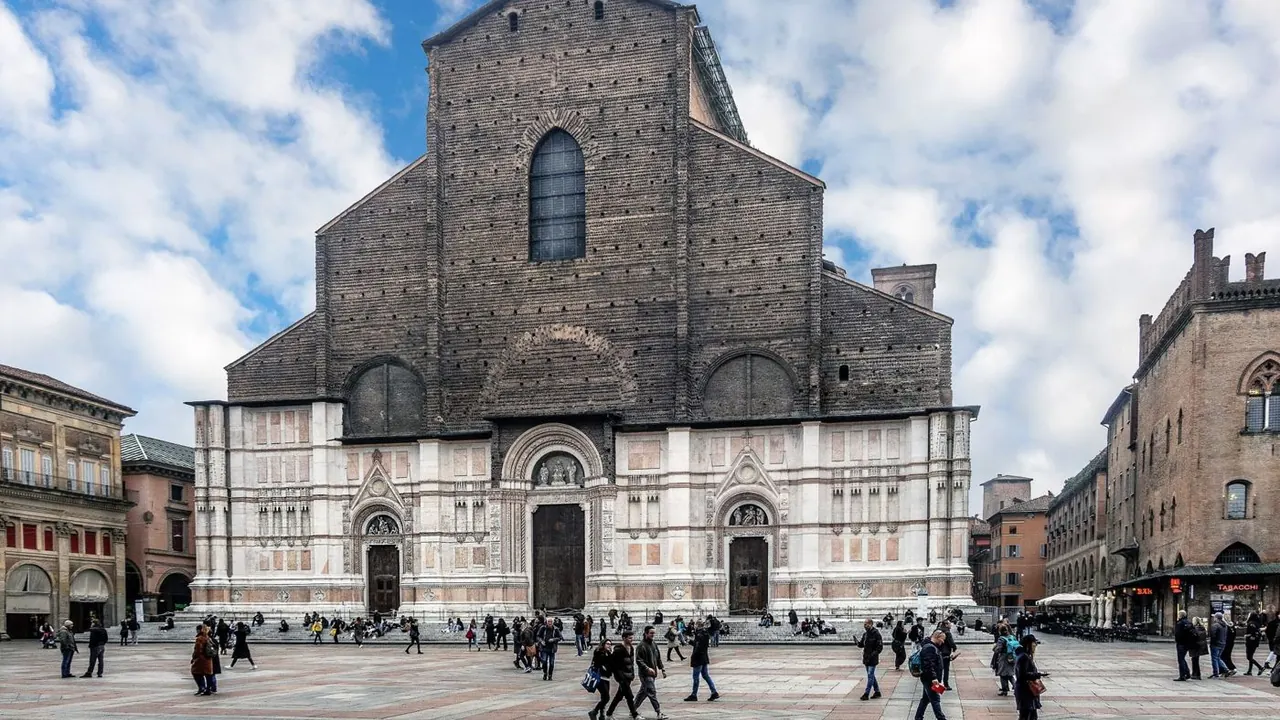
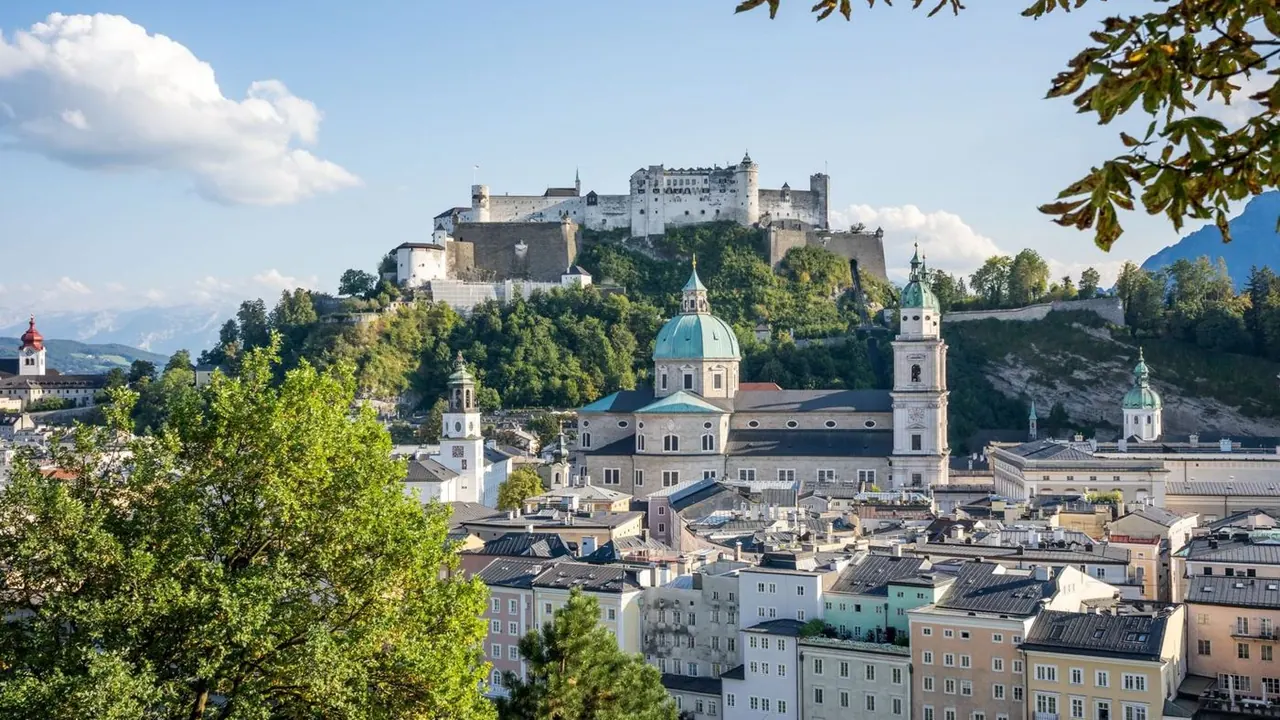
Photos: Bologna by Vanni Lazzari, CC BY-SA 4.0, cropped; Salzburg by Leonhard Niederwimmer, Pexels License.
Bologna or Salzburg?
Our verdict in twelve categories, each scored against the same fixed benchmark cities, and the climate month by month, so you can choose for your trip.
Choose Bologna for
- food and drink
- nightlife
- prices
Bologna suits travellers who plan a trip around the table and the train timetable. Fresh pasta, the Quadrilatero's delicatessens and the evening aperitivo are reasons to come in themselves. Student bars keep the evenings going, and Florence, Ravenna, Parma and Venice are all easy to reach from the central station. Eating out also costs noticeably less than in Salzburg, which helps on a longer stay.
Choose Salzburg for
- nature and the outdoors
- live music and the arts
- families
Salzburg is the better choice when mountains, lakes and music matter more than dinner. The Untersberg, the Salzkammergut lakes and Berchtesgaden are close to the city. Its festivals and concert halls give it one of Europe's strongest classical seasons, and Hellbrunn, the zoo and the salt mines make it the easier of the two with children. Expect to pay more, and expect the old town to be quiet by midnight.
Scoreboard
Twelve categories on one fixed scale from 0 to 100. The shaded stretch is the gap between the two.
Your match
Pick a travel style or drag the sliders, and both match scores follow your weighting.
Too close to call, 2 points apart
Wins on food and drink and nightlife with your weighting.
Wins on nature and the outdoors and live music and the arts with your weighting.
What matters to you?
Category by category
What the scores mean for a trip.
Beaches & swimming
Neither city is a beach destination, and the swimming each offers is quite different. From Bologna a seaside day means about an hour on the train to Rimini or Cervia, where the Adriatic is warm and shallow but lined with rows of rented sunbeds in organised lidos.
Salzburg's swimming is in the Salzkammergut lakes, which are closer, cooler and much clearer. You get in from lawns, jetties and small pebble shores, and the season is short, from June to early September.
Food & drink
Food is the biggest gap between the two. Bologna is the home of ragù, tortellini and mortadella. Fresh pasta is rolled in shop windows, the Quadrilatero's lanes are packed with delicatessens, and Parmigiano and Parma ham are made less than an hour away. Its one weakness is range, since almost everything is Emilian.
Salzburg's cooking is filling Austrian fare: schnitzel, Kasnocken and the Salzburger Nockerl. It is at its best in the coffee houses and the monastery beer garden at Mülln. Old-town menus are aimed at tour groups, and a few days covers the range.
Culture & sights
Both cities have UNESCO-listed old towns that take two or three days to see, but they are built in different styles. Bologna is a medieval city of red brick and miles of porticoes, with the Two Towers, Santo Stefano's cluster of churches and the anatomical theatre of Europe's oldest university.
Salzburg is a compact Baroque showpiece built by the prince-archbishops. Hohensalzburg fortress stands above the cathedral and Residenz, and the Mozart houses and Mirabell's formal gardens add to the walk. It feels more like a planned ensemble, while Bologna feels more like a lived-in university city.
Nightlife
Bologna's students make it the far livelier of the two after dark. Crowds stand outside the cheap bars around Piazza Verdi, and Via del Pratello's taverns stay busy until late. It is informal rather than polished, clubbing means a taxi out of the centre, and in August the city goes quiet.
A Salzburg evening is usually a concert, a late dinner and a litre mug in a beer hall, and the old town has settled by midnight. A few student pubs on Rudolfskai stay open later at weekends, but for a real night out locals take the train to Munich.
Nature & outdoors
Salzburg has the Alps on its doorstep. Wooded ridges with walking paths rise inside the city, a cable car climbs the Untersberg to about 1,800m, and the Gaisberg draws hikers and paragliders. The Salzkammergut lakes and Berchtesgaden National Park are both within an hour.
Bologna's countryside is gentler. There is the arcaded climb to San Luca, the Colli Bolognesi and the gypsum caves of the Parco dei Gessi, and the Via degli Dei sets off for Florence from Piazza Maggiore. Real mountains at Corno alle Scale are further away, and the hot summers push outdoor plans into spring and autumn.
Day trips
Both are good bases, but Bologna's rail junction gives it the edge. Florence is barely half an hour away by fast train. Ravenna's mosaics, Ferrara, Modena and Parma are short hops, and Venice and Verona are easy day trips, all without a car.
Salzburg's outings are about salt and lakes: Hallstatt, the mines at Hallein and Berchtesgaden, St Wolfgang and the clifftop fortress at Werfen, with Munich as the city option. They are memorable trips, but several of the lake villages are much easier to reach with a hire car.
Good for families
Salzburg has far more to keep children busy. They can get soaked by the trick fountains at Hellbrunn, visit the zoo next door and the hands-on Haus der Natur, and ride the wooden slides and underground boats in the salt mines. The cobbled, steep lanes are hard going with a pushchair, though.
Bologna is flat, compact and easy with a buggy, and climbing the Asinelli tower is fun for older children. Most of the sights are aimed at adults, so families usually head out to Mirabilandia or the beach at Rimini, and the summer heat can wear out small children.
Getting around
Both cities are best explored on foot, and neither has a metro. Bologna's centre is flat, and the porticoes keep you in shade or out of the rain. Its main station sits at the edge of the old town, with fast trains across northern Italy.
Salzburg's sights are all within about fifteen minutes' walk of each other, and its trolleybuses reach Hellbrunn and the Untersberg easily. Outside the city it is harder, because the regional buses to the lakes are slow and many visitors end up hiring a car.
Shopping & style
Bologna offers a little more choice, and much of what visitors take home is edible: aged Parmigiano, mortadella and balsamic vinegar from the Quadrilatero. There is also a small cluster of luxury fashion houses at Galleria Cavour, as well as the Montagnola market and the antiques fair on Piazza Santo Stefano.
Salzburg's speciality is Tracht. Dirndls and loden jackets are often made to measure in workshops around Getreidegasse, and the Domplatz Christmas market is a draw in Advent. Beyond that there is little luxury shopping and a lot of souvenirs.
Affordability
Bologna is the cheaper city, mainly at the table. Trattorias and aperitivo with food included cost less than in Italy's main tourist cities, and most churches are free to enter. Rooms are the expensive part, especially during the big trade fairs.
Salzburg is dear for a city of its size. Old-town hotels and central restaurants are expensive all year and become scarce during the summer festival and Advent. A city card, meals in the outlying inns and a room across the river help to keep costs down.
Live music & performing arts
For classical music, Salzburg is in a different league. The summer festival brings leading performers to the Felsenreitschule and the Festspielhaus, Jedermann is staged in front of the cathedral, and Mozart Week and the Easter Festival add two more seasons. The Marionette Theatre and nightly chamber concerts keep music going all year.
Bologna is a UNESCO City of Music, with opera and ballet at the Teatro Comunale and outdoor concerts on Piazza Maggiore in summer. Its real advantage is variety: basement jazz clubs and student indie gigs, which Salzburg barely has.
Wellness & relaxation
Salzburg is the better place to slow down. The Mönchsberg and the Mirabell gardens are calm once the day-trippers leave, and the Paracelsus Bad has saunas looking out over the Kapuzinerberg. The brine spa at Bad Reichenhall and the Gastein valley's radon springs are within easy reach.
Bologna relaxes you mainly through long lunches under the porticoes, and the university quarter and summer heat are not restful. The spring-fed pools at Castel San Pietro Terme and the old spa town of Porretta Terme make a pleasant half day out.
When should you go?
Pick your month. The climate figures are measured averages, not a forecast.
Bologna in July
Salzburg in July
Daytime high, °C
Rainfall in the month, mm
Where the figures come from
Bologna has no rain gauge within 25 km of the centre, so its rainfall comes from a gridded climate dataset read at the city rather than from a gauge further away.
Bologna's sunshine is measured 82 km from the centre, at Cervia.
Temperature and rainfall are climate normals, averaged over the years shown. Bologna: 1991-2020 normals, Bologna / Borgo Panigale (5.5 km from centre). Salzburg: 1991-2020 normals, Salzburg (3.4 km from centre).
The two climates are almost opposites. Bologna is the hotter, sunnier city in summer, with July and August highs around 32°C and long bright days that make the streets sticky and tiring by midday. The porticoes help, but May, June and September are the comfortable months for walking. Its rain comes in autumn, at about 71mm a month from September to November, and winters are cool and grey but rarely harsh.
Salzburg stays much milder, peaking at about 25°C in July and August. That keeps summer sightseeing pleasant, and these are the only real months for a swim in the lakes. Summer is also its wettest season, though, with up to 168mm in June, far more than Bologna gets in any month, and it has noticeably less sunshine from spring to autumn, so pack for showers on hikes. April and October are drier but cool. In winter highs fall to around 3°C and snow often reaches the town, so a winter trip here is about the cold and the mountains rather than easy sightseeing.
Which traveller are you?
For a food and nightlife trip, Bologna wins easily. Tagliatelle al ragù and tortellini in family trattorias are followed by aperitivo with Lambrusco and then late nights in the student bars of Piazza Verdi and Via del Pratello. Salzburg's evenings end early by comparison.
On an outdoors trip, Salzburg is the clear choice. You can take the cable car up the Untersberg, walk the Mönchsberg ridge, paddle on the Salzkammergut lakes or visit the Königssee, all within an hour. Bologna's gentle hill walks and the Via degli Dei are pleasant but more modest.
For classical music lovers, Salzburg is the obvious pick. The Salzburg Festival, Mozart Week and the Easter Festival bring leading performers to the Felsenreitschule and the Festspielhaus, with chamber concerts in Mirabell most evenings. Bologna's opera house is a fine extra but rarely the reason for a trip.
Before you go
| Measure | Bologna | Salzburg |
|---|---|---|
| Official language | Italian | German, Austrian Sign Language |
| Currency | Euro (EUR) | Euro (EUR) |
| Sockets | CFL230 V, 50 Hz | CF230 V, 50 Hz |
| Driving side | Right | Right |
| Time zone | UTC+1, UTC+2 in summer | UTC+1, UTC+2 in summer |
| Emergency number | 112 | 112 |
| Elevation | 54 m | 424 m |
| Main airport | Bologna Guglielmo Marconi Airport (BLQ)6 km from centre98 non-stop destinations | Salzburg Airport (SZG)3 km from centre64 non-stop destinations |
| Public holidays this year | 13 days | 16 days |
By the numbers
| Measure | Bologna | Salzburg |
|---|---|---|
| City population | 387,971 | 155,021 |
| People per km² | 2,754 | 2,360 |
| Museums within 10 km | 68 | 38 |
| UNESCO World Heritage sites within 50 km | 3 | 3 |
Where else could you go?
Every comparison below shares a destination with this one, so you can follow Bologna or Salzburg somewhere new.