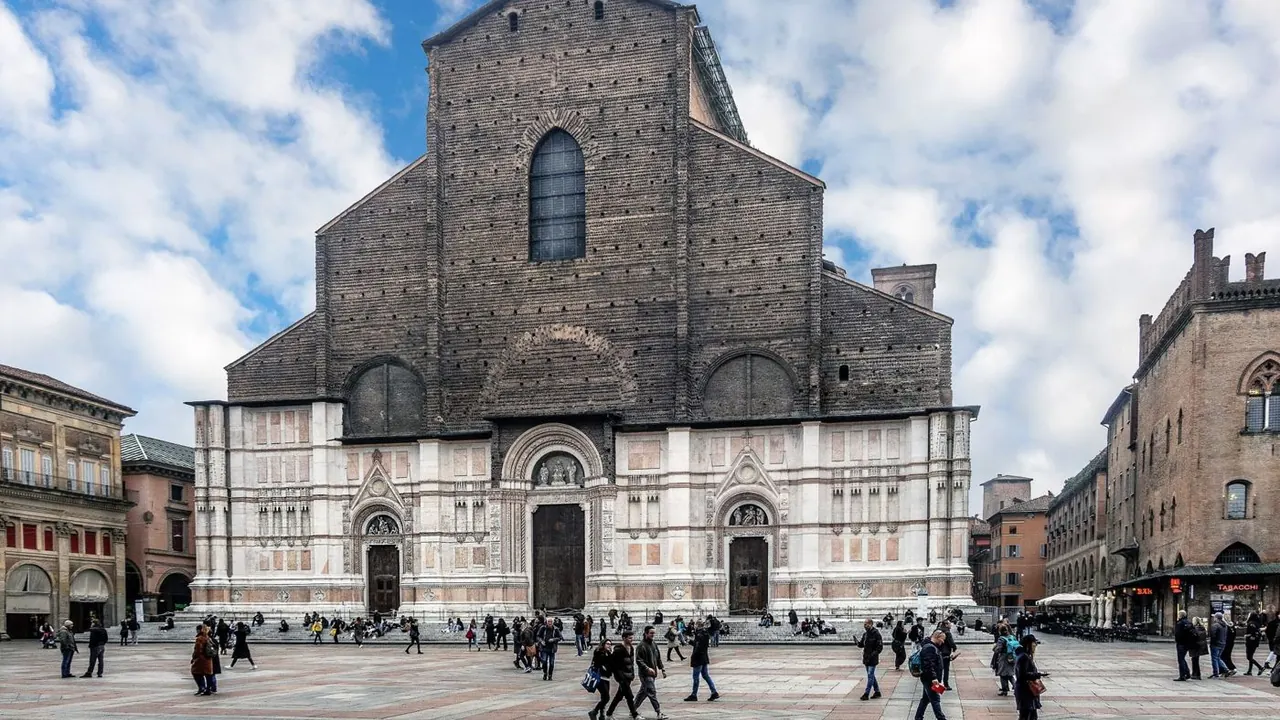
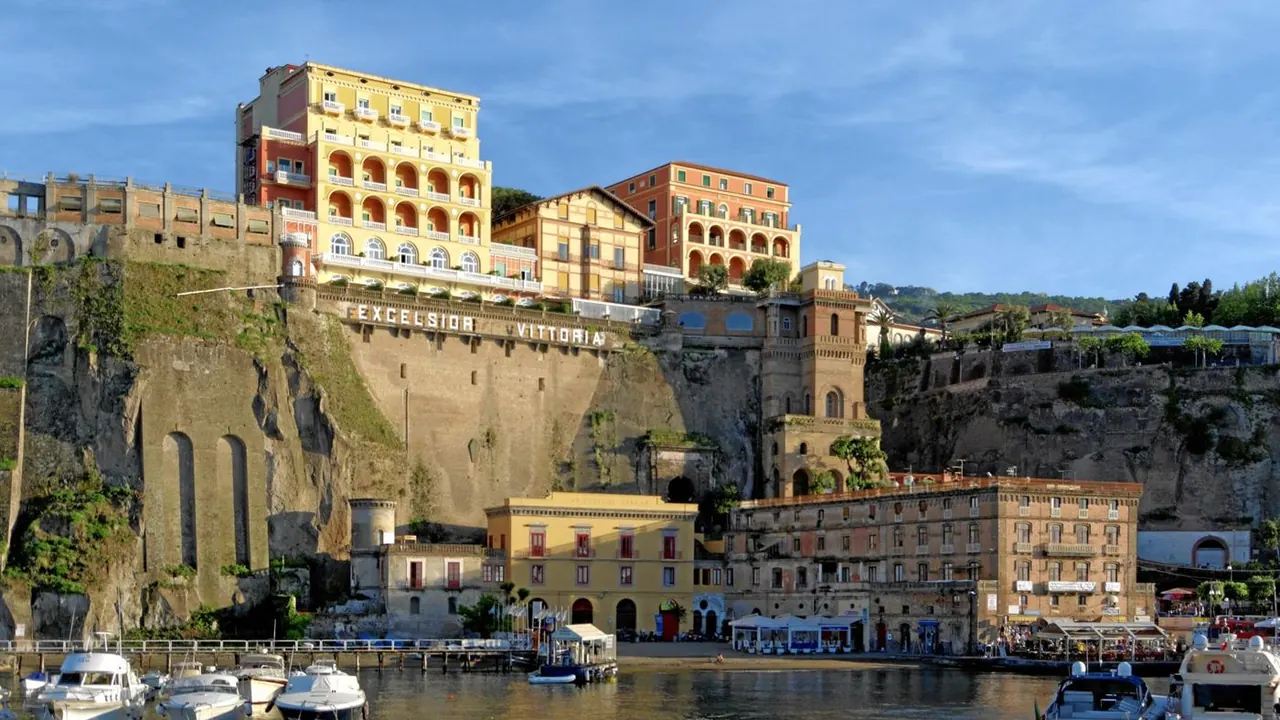
Photos: Bologna by Vanni Lazzari, CC BY-SA 4.0, cropped; Sorrento by Berthold Werner, CC BY-SA 3.0, cropped.
Bologna or Sorrento?
Our verdict in twelve categories, each scored against the same fixed benchmark cities, and the climate month by month, so you can choose for your trip.
Choose Bologna for
- culture and sights
- live music and the arts
- nightlife
Bologna suits travellers who plan a trip around the table and the streets. It has a whole medieval centre under its porticoes, the cooking of Emilia where it was born, a student evening life and a historic opera house. It is also the cheaper of the two, and its fast trains to Florence, Ravenna and Venice make it a good base for a week of moving between cities.
Choose Sorrento for
- beaches
- nature and the outdoors
- wellness
Sorrento is the one for sea, views and walking. You swim off wooden piers into deep water, hike the terraced peninsula towards Capri and take boats along the Amalfi Coast, and Pompeii is a short train ride away. The town's own sights and nights are modest and summer is expensive, so it rewards a slower trip spent mostly outdoors.
Scoreboard
Twelve categories on one fixed scale from 0 to 100. The shaded stretch is the gap between the two.
Your match
Pick a travel style or drag the sliders, and both match scores follow your weighting.
Wins on culture and sights and live music and the arts with your weighting.
Wins on beaches and nature and the outdoors with your weighting.
What matters to you?
Category by category
What the scores mean for a trip.
Beaches & swimming
Sorrento is clearly the place for swimming. Its lidos stand on piers over clear, deep water at Marina Piccola and Marina Grande, the rocky inlet of the Bagni della Regina Giovanna is a short walk away, and boats run to the coves of Capri. You get in by ladder or off the rocks rather than from sand, and space is tight in high summer.
Bologna is inland, so the sea means a day out. Rimini is about an hour away by train, where the Adriatic is shallow and warm but often green, and the shore is lined with rows of rented umbrellas.
Food & drink
Both cities cook regional Italian food where it comes from, but Bologna gives you more reason to travel for it. Fresh pasta, mortadella and ragù are its own, the lanes of the Quadrilatero still work as a food market, and Parma ham and Parmigiano come from towns close by.
Sorrento has gnocchi alla sorrentina, fish at Marina Grande, lemons in almost everything and fresh cheese from the hill dairies. The centre leans towards menus for tour groups, though, so the best meals take some finding in the back lanes and the hill villages.
Culture & sights
Here Bologna is far ahead. Its red-brick centre is one of the most complete medieval cities in Italy, with the UNESCO-listed porticoes, Piazza Maggiore, the Two Towers, Santo Stefano and the old university buildings. That is enough for two or three full days.
Sorrento's own sights, mainly the cathedral, the cloister of San Francesco and the Museo Correale, fill a gentle day. The area's great history lies outside the town.
Nightlife
Bologna's students give it a real night out. Crowds gather outside the cheap bars of Piazza Verdi, the taverns along Via del Pratello stay open late, and wine bars follow the aperitivo. It is informal, though, and it empties in August.
In Sorrento an evening means a stroll along Corso Italia and a drink on a terrace over the bay, with piano bars and a club or two in summer. The last trains and ferries leave early, so for a proper night in Naples or on Capri you have to stay over.
Nature & outdoors
Sorrento has by far the more striking landscape. Behind the town a limestone ridge of lemon and olive terraces drops to the sea, trails lead to Punta Campanella and Ieranto, Monte Faito and the Path of the Gods are nearby, and Vesuvius stands across the bay. Boat and kayak trips let you see the coast from the water.
Bologna's countryside is gentler: the walk up to San Luca, the Colli Bolognesi and the gypsum caves of the Parco dei Gessi. Its standout is the Via degli Dei, a walk of several days over the Apennines to Florence.
Day trips
Both are excellent bases, but for very different outings. From Bologna, fast and regional trains reach a string of art cities: Florence in about half an hour, Ravenna's mosaics, Ferrara, Modena and Parma, with Venice and Verona further along the line.
From Sorrento the outings are ancient sites and the sea: Pompeii and Herculaneum on the Circumvesuviana, Capri by ferry, Positano and Amalfi by boat in summer, and Naples within an hour. Choose Bologna for cities and paintings, Sorrento for ruins and islands.
Good for families
Neither city is built around children, but Bologna is the easier of the two. Its centre is flat and largely free of traffic, the porticoes give shade, and the Mirabilandia theme park and the shallow water at Rimini are within reach for a day.
Children often love Sorrento's boat trips and Pompeii. The swimming, though, is in deep water off piers and rocks, and many hotels sit on steep lanes with no pavements, so with small children a hotel pool matters.
Getting around
Both centres are small, flat and easy to walk, and neither is a place for a car. The difference comes when you leave town. Bologna's station is at the edge of the old town with fast trains in every direction, and the porticoes keep walking pleasant in sun or rain.
From Sorrento the Circumvesuviana train is crowded and prone to delays, and the Amalfi buses crawl round the hairpins in summer. Ferries are often the most comfortable option, and hotels up in the hills rely on shuttles or taxis.
Shopping & style
Bologna offers more variety. There is food to take home from the Quadrilatero delicatessens, high-street chains on Via dell'Indipendenza, a small cluster of luxury fashion around the Galleria Cavour, and markets and vintage shops in the university quarter.
Sorrento's shops sell mostly lemon-themed souvenirs, but it has some real local crafts: intarsia woodwork, sandals made to measure, linen and cameos. For fashion, people go to Naples or Capri.
Affordability
Bologna is easier on the budget. Its trattorias and aperitivo cost less than in Italy's main tourist cities, most sights are churches and squares that are free to enter, and you can walk almost everywhere. Rooms are the expensive part, especially during the big trade fairs.
In summer Sorrento charges resort rates for sea-view rooms, lidos and boat trips. Trains, buses and pizza in the back lanes are fairly priced, and hotel rates drop a lot in spring and late autumn.
Live music & performing arts
Bologna has a real music scene. The historic Teatro Comunale stages opera, ballet and concerts, the city holds the UNESCO title of City of Music, there are basement jazz clubs and student gigs, and in summer Piazza Maggiore fills with concerts and outdoor film screenings.
Sorrento has shows of Neapolitan song and tarantella put on for visitors, and chamber concerts in the San Francesco cloister in summer. For opera you go to the Teatro di San Carlo in Naples, about an hour away.
Wellness & relaxation
Sorrento is a little better for unwinding. It has clifftop hotel spas and pools over the bay and the calm of villa gardens and lemon groves, and the thermal gardens of Ischia are a ferry ride away. It is most restful in spring and autumn, when the centre is quieter.
In Bologna, relaxing means a long lunch under the arcades or a hotel spa. The spring-fed pools of Castel San Pietro Terme and the old spa town of Porretta Terme are close, but the noisy university quarter and the heavy summer heat make the city less restful.
When should you go?
Pick your month. The climate figures are measured averages, not a forecast.
Bologna in July
Sorrento in July
Daytime high, °C
Rainfall in the month, mm
Where the figures come from
Bologna has no rain gauge within 25 km of the centre, so its rainfall comes from a gridded climate dataset read at the city rather than from a gauge further away.
Bologna's sunshine is measured 82 km from the centre, at Cervia.
Sorrento has no rain gauge within 25 km of the centre, so its rainfall comes from a gridded climate dataset read at the city rather than from a gauge further away.
Sorrento's sunshine is measured 54 km from the centre, at Grazzanise.
Temperature and rainfall are climate normals, averaged over the years shown. Bologna: 1991-2020 normals, Bologna / Borgo Panigale (5.5 km from centre). Sorrento: 2005-2025 (sunshine 1991-2020, rainfall 1991-2020) normals, Capri (17 km from centre).
Bologna has the harsher climate of the Po plain. Winters are raw, around 7°C by day in January, and July and August reach 32°C with heavy humidity, which makes long walks through the streets hard work. May and early June are the best months for sightseeing, and late September is good again, although autumn is Bologna's wettest season and the dull, short days of November and December bring little sun.
Sorrento is milder all year, at about 13°C in January, with noticeably more winter sunshine, and its summer is almost dry. The sea is warm enough to swim from June to October and reaches 26°C in August, so for a beach trip it is the obvious choice. Rain builds through autumn and peaks at 151mm in November. Spring and early autumn suit walking best, because the exposed trails are very hot in midsummer.
Which traveller are you?
For a culture and arts trip, Bologna is the clear pick. Its arcaded medieval centre, the Archiginnasio and the Pinacoteca fill two or three days, and the Teatro Comunale and the basement jazz clubs give the evenings a substance Sorrento cannot match.
On an outdoors trip, Sorrento wins easily. Coastal paths lead to Punta Campanella and the bay of Ieranto, the Path of the Gods and Vesuvius are close, and kayaks and small boats reach coves that Bologna's gentle hills cannot rival.
For a food and nightlife trip, choose Bologna. Tagliatelle al ragù and tortellini come from its own kitchens, the Quadrilatero feeds the aperitivo habit, and students keep Piazza Verdi and Via del Pratello busy late, while Sorrento goes quiet early.
Before you go
| Measure | Bologna | Sorrento |
|---|---|---|
| Official language | Italian | Italian |
| Currency | Euro (EUR) | Euro (EUR) |
| Sockets | CFL230 V, 50 Hz | CFL230 V, 50 Hz |
| Driving side | Right | Right |
| Time zone | UTC+1, UTC+2 in summer | UTC+1, UTC+2 in summer |
| Emergency number | 112 | 112 |
| Elevation | 54 m | 50 m |
| Main airport | Bologna Guglielmo Marconi Airport (BLQ)6 km from centre98 non-stop destinations | Naples International Airport (NAP)30 km from centre131 non-stop destinations |
| Public holidays this year | 13 days | 13 days |
By the numbers
| Measure | Bologna | Sorrento |
|---|---|---|
| City population | 387,971 | 15,407 |
| People per km² | 2,754 | 1,541 |
| Museums within 10 km | 68 | 6 |
| UNESCO World Heritage sites within 50 km | 3 | 5 |
| Swim season, months above 21 °C | - | 5 months |
Where else could you go?
Every comparison below shares a destination with this one, so you can follow Bologna or Sorrento somewhere new.