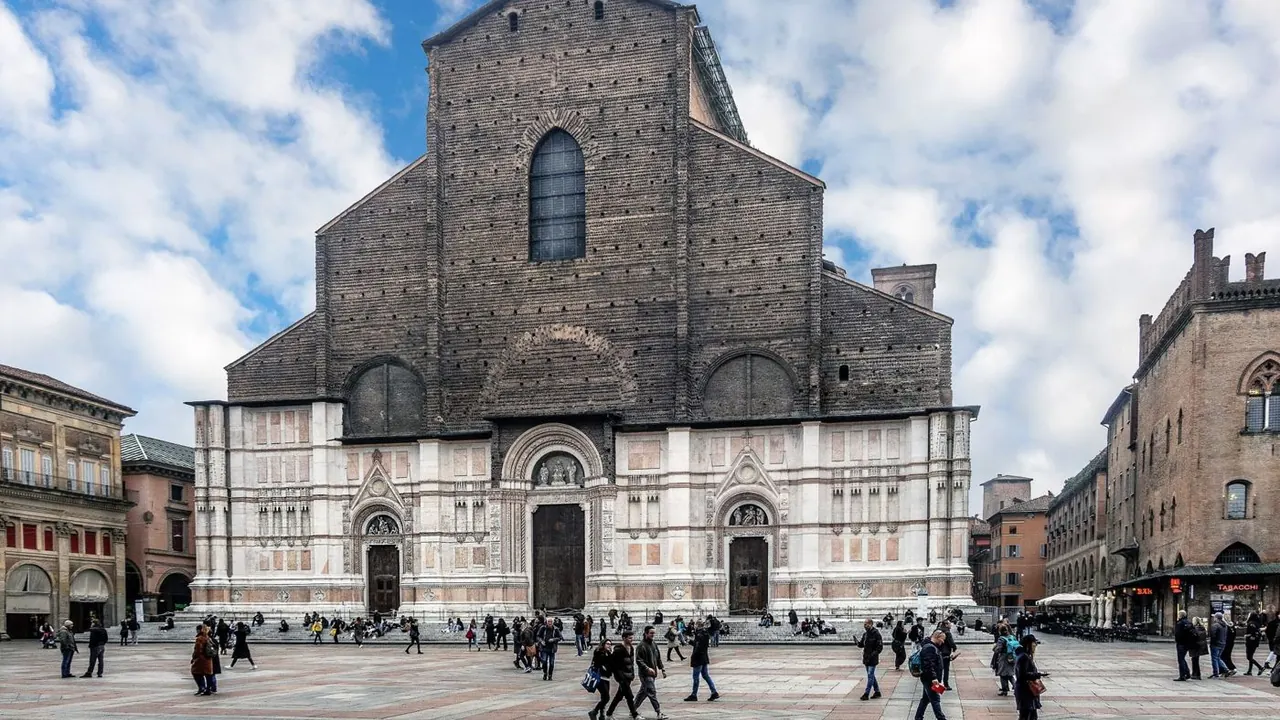
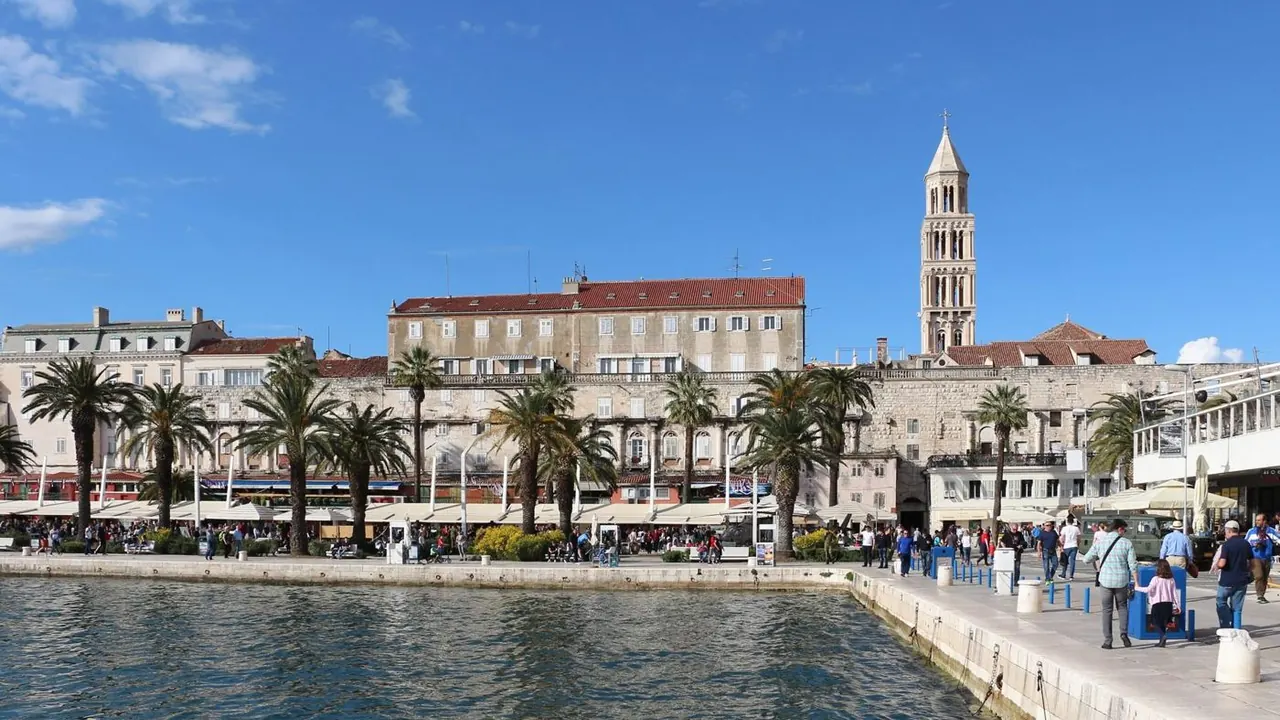
Photos: Bologna by Vanni Lazzari, CC BY-SA 4.0, cropped; Split by Bernard Gagnon, CC BY-SA 4.0, cropped.
Bologna or Split?
Our verdict in twelve categories, each scored against the same fixed benchmark cities, and the climate month by month, so you can choose for your trip.
Choose Bologna for
- food and drink
- shopping
- live music and the arts
Bologna is for travellers who plan their days around the table and the train timetable. It has the deeper food culture, the larger and more complete historic centre, and one of the best rail connections in Italy, so a week here can take in Florence, Ravenna and Parma without changing hotels. It works all year except in high summer, when the plain is hot and the city goes quiet.
Choose Split for
- beaches
- nature and the outdoors
- families
Split makes more sense when the sea and the outdoors matter more than museums and menus. You can swim within walking distance of a Roman palace, take a ferry to the islands, and hike or raft in the limestone country behind the coast. It suits a warm-weather trip of swimming, island days and evenings on the waterfront, and has less to offer once the season ends.
Scoreboard
Twelve categories on one fixed scale from 0 to 100. The shaded stretch is the gap between the two.
Your match
Pick a travel style or drag the sliders, and both match scores follow your weighting.
Wins on food and drink and shopping with your weighting.
Wins on beaches and nature and the outdoors with your weighting.
What matters to you?
Category by category
What the scores mean for a trip.
Beaches & swimming
Bologna is on the Po plain, so a swim means a day trip. Rimini and the Romagna Riviera are about an hour away by train, with shallow, often greenish water and long rows of rented umbrellas.
In Split the sea is part of everyday life. You can walk from the palace to the sandy shallows of Bačvice or to the pine-shaded pebble coves around Marjan, and the islands offer quieter swimming. Most of the shore is pebble or concrete, but the water is clear, and it stays warm into early October.
Food & drink
Food is one of the main reasons to visit Bologna. Tagliatelle al ragù, tortellini in brodo and pasta rolled by hand in shop windows are the local standard, and Parmigiano and Parma ham are made close by. The Quadrilatero market lanes and the aperitivo hour fill the gaps between meals.
Split's Dalmatian cooking is simpler and based on the sea: grilled fish, black risotto, and peka ordered ahead in the konobas of Varoš. It is lighter in hot weather than Emilian cooking, but many menus inside the palace are aimed at summer visitors, and good meals take more searching.
Culture & sights
Bologna's appeal is a whole city: a large brick medieval centre with UNESCO-listed porticoes, the Two Towers, the seven churches of Santo Stefano, the anatomical theatre in the Archiginnasio and the Pinacoteca's Bolognese painting. There is enough to fill two or three full days.
Split has one extraordinary monument rather than a wide spread. Diocletian's Palace is still a lived-in neighbourhood, with a cathedral that was once the emperor's mausoleum and vaulted cellars below. The Meštrović Gallery adds a good museum, but most visitors finish the sights sooner than in Bologna.
Nightlife
Taken over the whole year, Bologna offers more nights out. Its large student population fills Piazza Verdi and Via Petroni, and Via del Pratello's taverns stay busy until late. The style is cheap and informal, and the clubs are out of town.
Split peaks in summer, with bars spilling out into the palace alleys and clubs by Bačvice running into the early hours. From October to May it shrinks to a few bars. The two cities have opposite rhythms: Bologna goes quiet in August, just when Split is at its loudest.
Nature & outdoors
Split is better placed for the outdoors, between bare limestone mountains and an island-filled sea. Marjan's forest trails start from the edge of the old town, and Mosor, Biokovo, the rafting and canyoning of the Cetina at Omiš, and the waterfalls of Krka are all within about an hour. Kayaking and sailing among the islands add the sea.
Bologna's outdoors is gentler: the arcaded climb to San Luca, the green Colli Bolognesi, and the gypsum caves of the Parco dei Gessi. Walkers can start the Via degli Dei to Florence from Piazza Maggiore, but the land to the north is flat farmland.
Day trips
Bologna is one of the best bases in Europe for day trips. Florence is barely half an hour by fast train, and Ravenna's mosaics, Ferrara, Modena and Parma are all easy rail trips, with Venice and Verona within reach. You can see a different art city every day without moving hotel.
Split's outings are coastal and maritime: Trogir and Šibenik for UNESCO-listed old towns, Salona and Klis close by, and ferries to Hvar and Brač. They are lovely, but they rely on boats and buses, and they need more planning outside summer.
Good for families
The two are about equally suited to children, and in both there is little made specifically for them. Bologna's flat, largely car-free centre and shady porticoes are easy with a pushchair. Climbing the Asinelli tower is a fun outing, but the beach or the Mirabilandia theme park means a day trip.
Split has paddling built in, with the shallow water at Bačvice, Marjan for running about and a ferry ride that children tend to love. Its polished stone streets and many steps are harder on small legs and buggies.
Getting around
Bologna is the easier city to get around. Its centre is flat, compact and sheltered by arcades, and the main station is at the edge of the old town, with fast trains across northern Italy. There is no metro, but you will rarely need one.
Split's core is just as walkable, and its ferry port, bus station and railway station sit together at the harbour. Local buses are basic, though, and the coast road is slow in summer. A car helps for trailheads inland, and the palace's steps make heavy luggage awkward.
Shopping & style
Bologna gives you more to browse. The Quadrilatero delicatessens are ideal for buying aged Parmigiano, mortadella and balsamic vinegar to take home, the Galleria Cavour has a small luxury cluster, and the Montagnola market and the antiques fair in Piazza Santo Stefano add some variety.
In Split, the palace shops are mostly souvenirs, lavender and ties, and Marmontova has the usual chains. The Pazar market by the east gate is the best place to look around, and Dalmatian olive oil and wine are what to take home.
Affordability
Overall costs are similar, but what pushes them up is different. In Bologna, eating out is the good news, with trattorias and aperitivo food cheaper than in Italy's main tourist cities. Rooms are what cost, especially when a large trade fair fills the city.
In Split the season decides the price. July and August bring Western European room rates and fish priced by weight on the Riva, and ferry fares add up for families. In May, June, late September and winter it is far cheaper to stay.
Live music & performing arts
Bologna has the fuller calendar. The Teatro Comunale stages opera, ballet and concerts through its season, small basement jazz clubs play most nights, and students keep the indie and rock venues busy. In summer there are free concerts and films in Piazza Maggiore.
Split's highlights are seasonal and tied to the setting. The Summer Festival puts opera in the Peristyle courtyard, and klapa singers fill the domed vestibule of the palace. The Croatian National Theatre runs a season, but outside summer there is much less on.
Wellness & relaxation
Neither city has a bathing tradition of its own, and spa time mostly means hotel spas. Bologna has real thermal water close by, at Castel San Pietro Terme twenty minutes away and the old spa town of Porretta Terme in the Apennines.
Split has the sea and fjaka, the Dalmatian habit of long, idle coffees on the Riva. The pine woods of Marjan and the islands are the quieter places to find it, because the old town is loud in midsummer.
When should you go?
Pick your month. The climate figures are measured averages, not a forecast.
Bologna in July
Split in July
Daytime high, °C
Rainfall in the month, mm
Where the figures come from
Bologna has no rain gauge within 25 km of the centre, so its rainfall comes from a gridded climate dataset read at the city rather than from a gauge further away.
Bologna's sunshine is measured 82 km from the centre, at Cervia.
Temperature and rainfall are climate normals, averaged over the years shown. Bologna: 1991-2020 normals, Bologna / Borgo Panigale (5.5 km from centre). Split: 1991-2020 normals, Split / Marjan (0.9 km from centre).
Bologna is at its best from April to early June, when the days are mild and dry enough for long walks under the porticoes. September is warm and pleasant too, but it is also when the rain returns: November and October are the wettest months, at about 95mm and 91mm, with September behind them. July and August reach around 32°C on a humid plain, which makes sightseeing tiring, and winters are cold and grey, near 7°C at midday in January.
Split has milder winters and more sunshine than Bologna in every month, but its best months follow the sea. The Adriatic is warm enough for swimming from June, reaches about 25°C in August and stays pleasant through September into early October. High summer is as hot as in Bologna, though a swim takes the edge off the heat. Late autumn is the wet season, with November the rainiest month at about 117mm. For walking and hiking, May suits both cities best, and late September works well too if you can live with the odd wet day.
Which traveller are you?
On a beach and sun trip, Split wins easily. Bačvice and the Marjan coves are a short walk from the old town, and ferries reach Brač and Hvar. Bologna is inland, and its nearest sea is a train ride away among rows of sunbeds.
For a food and nightlife trip, Bologna is the better choice. The fresh pasta, mortadella and Quadrilatero delicatessens make every meal worth planning, and the student quarter keeps bars and late taverns busy for most of the year, not just in summer.
On an outdoors trip, Split has far more within reach: the forest trails of Marjan, ridge hikes on Mosor, rafting in the Cetina canyon, Krka's waterfalls and sea kayaking. Bologna has gentle hill walks and the Via degli Dei, with flat farmland to the north.
Before you go
| Measure | Bologna | Split |
|---|---|---|
| Official language | Italian | Croatian |
| Currency | Euro (EUR) | Euro (EUR) |
| Sockets | CFL230 V, 50 Hz | CF230 V, 50 Hz |
| Driving side | Right | Right |
| Time zone | UTC+1, UTC+2 in summer | UTC+1, UTC+2 in summer |
| Emergency number | 112 | 112 |
| Elevation | 54 m | 0 m |
| Main airport | Bologna Guglielmo Marconi Airport (BLQ)6 km from centre98 non-stop destinations | Split Saint Jerome Airport (SPU)12 km from centre69 non-stop destinations |
| Public holidays this year | 13 days | 14 days |
By the numbers
| Measure | Bologna | Split |
|---|---|---|
| City population | 387,971 | 160,577 |
| People per km² | 2,754 | - |
| Museums within 10 km | 68 | 11 |
| UNESCO World Heritage sites within 50 km | 3 | 4 |
| Swim season, months above 21 °C | - | 4 months |
Where else could you go?
Every comparison below shares a destination with this one, so you can follow Bologna or Split somewhere new.