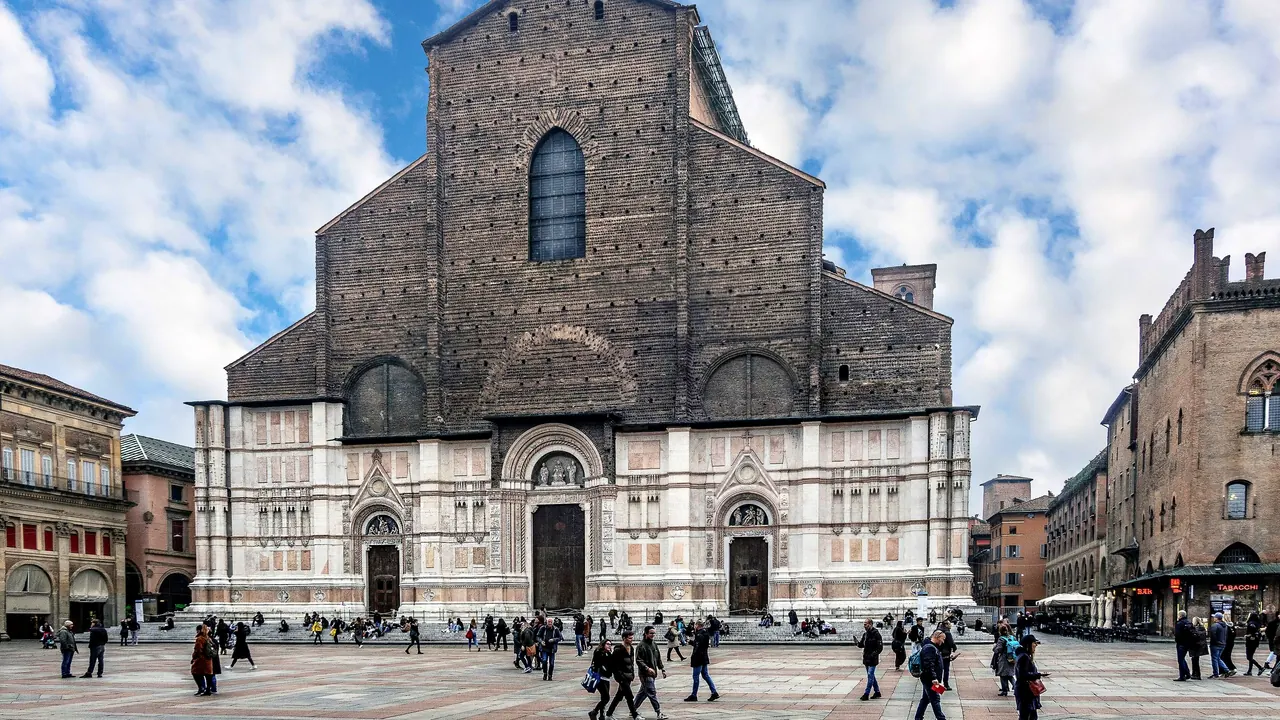
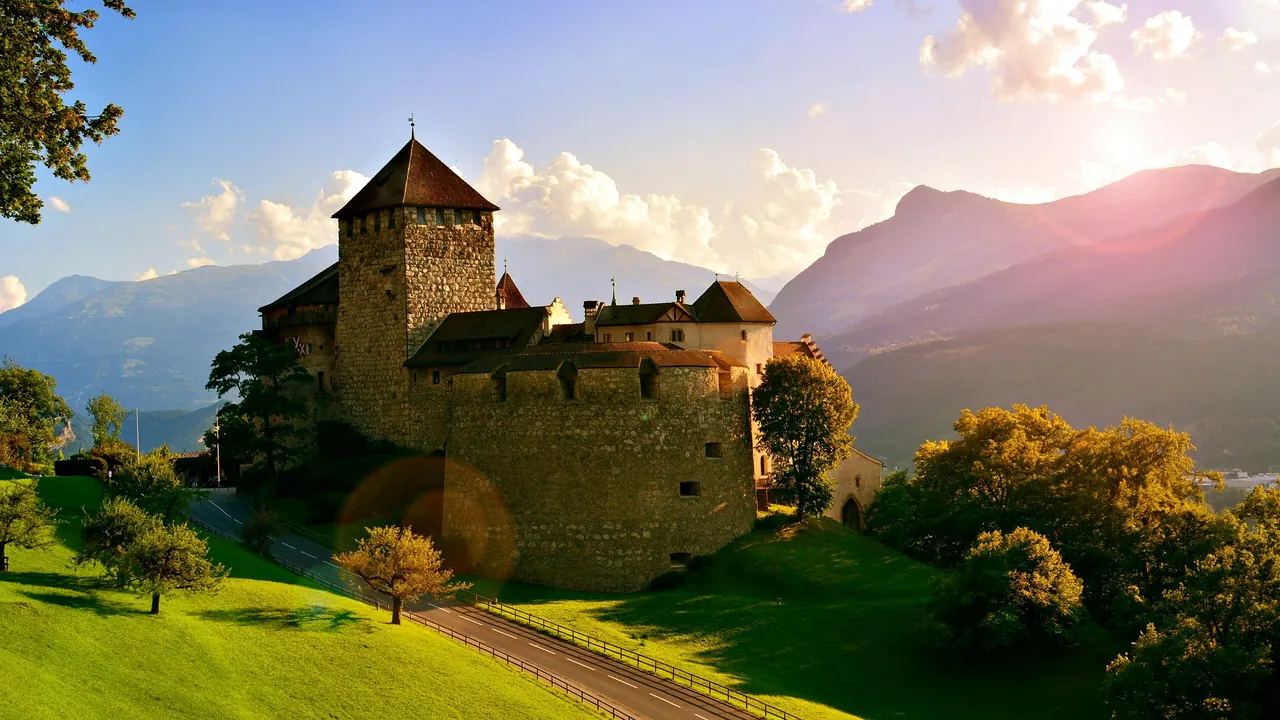
Photos: Bologna by Vanni Lazzari, CC BY-SA 4.0, cropped; Vaduz by Justin LaBerge, CC BY 2.0, cropped.
Bologna or Vaduz?
Our verdict in twelve categories, each scored against the same fixed benchmark cities, and the climate month by month, so you can choose for your trip.
Choose Bologna for
- food and drink
- nightlife
- culture and sights
Bologna suits travellers who plan their days around the table and the street. Its brick medieval centre, the arcaded porticoes, the old university and the market lanes of the Quadrilatero give you a full city to explore, and the evenings carry on with aperitivo, student bars and jazz. The central station puts Florence, Ravenna, Verona and Venice within easy reach by train, and eating and drinking cost noticeably less than in Vaduz.
Choose Vaduz for
- nature and the outdoors
- wellness
Vaduz is for people who want mountains and quiet. Trails climb from the edge of town through vineyards and forest to the Rätikon peaks, Malbun offers gentle skiing, and the Bad Ragaz thermal baths sit just across the Rhine. The town itself is a day's sightseeing, the evenings end early and everything is expensive, so it works best as a calm Alpine base for walkers, ideally with a car.
Scoreboard
Twelve categories on one fixed scale from 0 to 100. The shaded stretch is the gap between the two.
Your match
Pick a travel style or drag the sliders, and both match scores follow your weighting.
Wins on food and drink and nightlife with your weighting.
Wins on nature and the outdoors and wellness with your weighting.
What matters to you?
Category by category
What the scores mean for a trip.
Beaches & swimming
Neither place is for swimmers, but Bologna can at least reach the sea. Rimini and the Romagna Riviera are about an hour away by train, with warm, shallow Adriatic water and rows of organised lidos for a summer day out.
Vaduz has no sea at all, and the Rhine is not for swimming, so the choice is the municipal open-air pools or a drive to the Walensee or Lake Constance. The lake water there stays cooler and the season is short.
Food & drink
Food is one of the clearest differences between the two. Bologna is a main reason to travel for food in Italy, with ragù, tortellini in brodo, mortadella and Parmigiano from nearby towns, old osterie, and market stalls in the Quadrilatero and the Mercato delle Erbe. Its weakness is that nearly everything is Emilian.
Vaduz offers solid Alpine cooking such as Käsknöpfle, rösti and autumn game in hotel dining rooms and hill inns, but it has no market culture and little choice. The highlight is the wine from the prince's estate below the castle, which is worth trying alongside a single good dinner.
Culture & sights
Bologna's centre is a sight in its own right: miles of UNESCO-listed porticoes, Piazza Maggiore with San Petronio, the Two Towers, the seven churches of Santo Stefano and the anatomical theatre of the Archiginnasio. Seeing it properly takes two or three days.
Vaduz fits into a single day. Its strength is modern art, in the Kunstmuseum and the Hilti Art Foundation, plus the National Museum and the Postage Stamp Museum. The castle above town is closed to visitors and is something to look at rather than go inside.
Nightlife
Bologna's large student population keeps the evenings busy. Crowds stand outside the cheap bars around Piazza Verdi, Via del Pratello stays open late and wine bars fill after aperitivo. Clubbing means a taxi out of the centre, and August is quiet.
Vaduz has almost nothing after dinner apart from a few wine bars and hotel lounges on the Städtle, and its young people go to Feldkirch or Zurich for a night out.
Nature & outdoors
Vaduz has far more mountain scenery. Trails leave the edge of town through vineyards and beech forest, Triesenberg and Malbun are half an hour above the valley, and the Rätikon peaks offer high ridge walks and the exposed Fürstensteig. In winter there is skiing at Malbun, with larger Swiss resorts within an hour.
Bologna has softer outdoors. You can walk up to San Luca, follow the paths of the Colli Bolognesi or visit the gypsum caves of the Parco dei Gessi, and the Via degli Dei sets off for Florence. Its summer heat makes spring and autumn the seasons for walking.
Day trips
Both are good bases, but Bologna's rail junction makes outings easy. Florence is about half an hour by fast train, Ravenna's mosaics and Ferrara's walls are about an hour or less, and Modena, Parma, Verona and Venice are all straightforward by train.
From Vaduz you can reach a smaller set of towns: Feldkirch, St Gallen's abbey library, Appenzell, Chur and the shore of Lake Constance. With no station in town, these trips usually involve a change at Buchs or Sargans or need a car.
Good for families
Neither town is built around children, though Bologna is easier. Its flat, largely car-free centre, shady porticoes and simple pasta-and-gelato meals help, and Mirabilandia and the Rimini beach are close for a day out.
Vaduz is very safe and calm but has no attractions aimed at children. It works for families who are happy outdoors, at the summer pools, on gentle walks above Triesenberg or on the beginner slopes at Malbun.
Getting around
Both centres are small, flat and best seen on foot. Bologna has the advantage of its central station at the edge of the old town, with trains across northern Italy, and buses that reach the hills.
Vaduz's pedestrian Städtle takes a few minutes to cover, and its tidy bus network goes as far as Malbun. Without a railway station, though, anything beyond the valley means a change or a hire car.
Shopping & style
In Bologna, most of what visitors take home is food: mortadella, aged Parmigiano and balsamic vinegar from the Quadrilatero. There are also chain stores on Via dell'Indipendenza, a small group of luxury shops around Galleria Cavour, the Montagnola market and vintage shops in the university quarter.
Vaduz has a handful of shops selling watches, jewellery and souvenirs on the Städtle, along with its famous stamps and a bottle of local wine. Serious shoppers go to Zurich.
Affordability
Bologna costs much less day to day. Trattoria meals and aperitivo are cheaper than in Italy's main tourist cities, most sights are free churches and squares, and only hotel rooms are expensive, especially during trade fairs.
Vaduz follows Swiss prices for everything from a room to a simple lunch, and with few hotels there is little at the budget end. Staying across the border in Austria is the usual way to save.
Live music & performing arts
Bologna offers a much fuller programme. It has opera, ballet and symphony concerts at the historic Teatro Comunale, basement jazz clubs most nights, student indie gigs and free summer concerts and film screenings in Piazza Maggiore. Its UNESCO City of Music title reflects this.
Liechtenstein's calendar is small. There is the theatre in nearby Schaan, a short orchestral season, a summer classical festival in Vaduz and occasional church concerts. You will find something over a week, but not much choice.
Wellness & relaxation
The two are broadly level, and in both places the best thermal water is just outside town. From Bologna you can reach the spring-fed pools of Castel San Pietro Terme or the old spa valley of Porretta Terme, and the city's idea of relaxing is a long lunch under the porticoes. The noisy university quarter and the summer heat work against that.
Vaduz is calm by nature, with quiet streets, mountain views and early nights. Bad Ragaz, across the Rhine, has centuries-old thermal baths fed from the Tamina gorge, and pairing them with gentle hill walks makes for a restful stay.
When should you go?
Pick your month. The climate figures are measured averages, not a forecast.
Bologna in July
Vaduz in July
Daytime high, °C
Rainfall in the month, mm
Where the figures come from
Bologna has no rain gauge within 25 km of the centre, so its rainfall comes from a gridded climate dataset read at the destination rather than from a gauge further away.
Bologna's sunshine is measured 82 km from the centre, at Cervia.
Vaduz's temperatures are measured 51 km from the centre, at Sigmarszell-Zeisertsweiler.
Vaduz has no rain gauge within 25 km of the centre, so its rainfall comes from a gridded climate dataset read at the destination rather than from a gauge further away.
Temperature and rainfall are climate normals, averaged over the years shown. Bologna: 1991-2020, 14 years observed normals, Bologna / Borgo Panigale (5.5 km from centre). Vaduz: 1991-2020 normals, Sigmarszell-Zeisertsweiler (51.3 km from centre).
Bologna is at its best in May and in September, when the days are warm and sunny without the full weight of summer. July and August climb to around 32°C and turn humid on the plain, which is hard going for long walks, though the porticoes give shade. The rain arrives in October and November, at roughly 95mm a month, and winters are cool and grey but rarely harsh.
Vaduz runs cooler all year, and its summer highs of about 24°C are comfortable for walking and hiking. It also has the opposite rain pattern, with the wettest months in high summer, around 126mm in August, so mountain days may need to work around showers. June to early autumn is the hiking season and winter belongs to the ski slopes, while Bologna gets more sunshine in every month.
Which traveller are you?
On an outdoors trip, Vaduz is the better choice. Mountain trails start right from town, the Rätikon ridges and the Fürstensteig are half an hour up the road, and the Rhine dam path is good cycling, whereas Bologna offers mostly gentle hill walks.
For a food and nightlife trip, Bologna wins easily. You get hand-rolled tagliatelle and tortellini, the Quadrilatero delicatessens and an aperitivo ritual, then student bars on Via Petroni and late taverns on Via del Pratello. Vaduz has hearty inns, local Pinot Noir and an early bedtime.
On a tight budget, Bologna goes much further. Trattoria meals, aperitivo with food and wine by the glass are fairly cheap, the churches and squares are free, and the centre is walkable. In Vaduz, Swiss price levels affect every meal and every room.
Before you go
| Measure | Bologna | Vaduz |
|---|---|---|
| Official language | Italian | German |
| Currency | Euro (EUR) | Swiss Franc (CHF) |
| Sockets | CFL230 V, 50 Hz | CJ230 V, 50 Hz |
| Driving side | Right | Right |
| Time zone | UTC+1, UTC+2 in summer | UTC+1, UTC+2 in summer |
| Emergency number | 112 | 112 |
| Elevation | 54 m | 455 m |
| Main airport | Bologna Guglielmo Marconi Airport (BLQ)6 km from centre98 non-stop destinations | Zürich Airport (ZRH)81 km from centre226 non-stop destinations |
| Public holidays this year | 13 days | 21 days |
By the numbers
| Measure | Bologna | Vaduz |
|---|---|---|
| Population | 387,971 | 5,668 |
| People per km² | 2,754 | 328 |
| Museums within 10 km | 68 | 7 |
| UNESCO World Heritage sites within 50 km | 3 | 3 |
Where else could you go?
Every comparison below shares a destination with this one, so you can follow Bologna or Vaduz somewhere new.