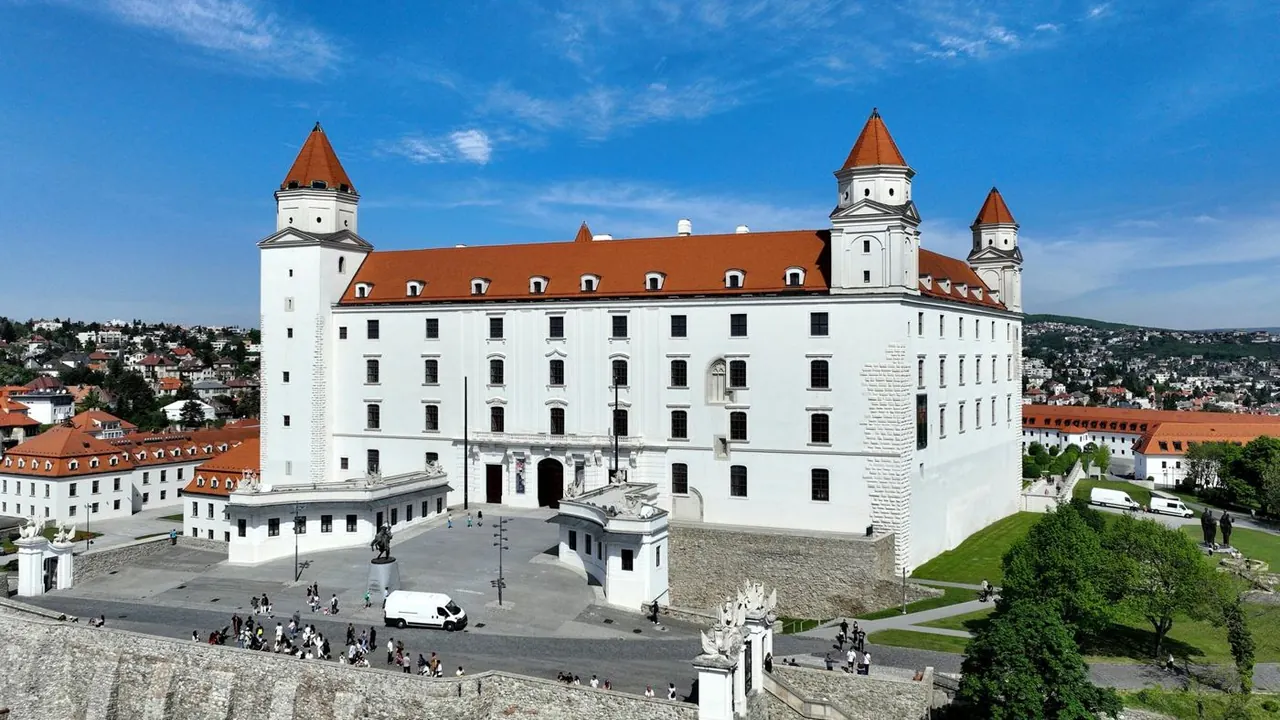
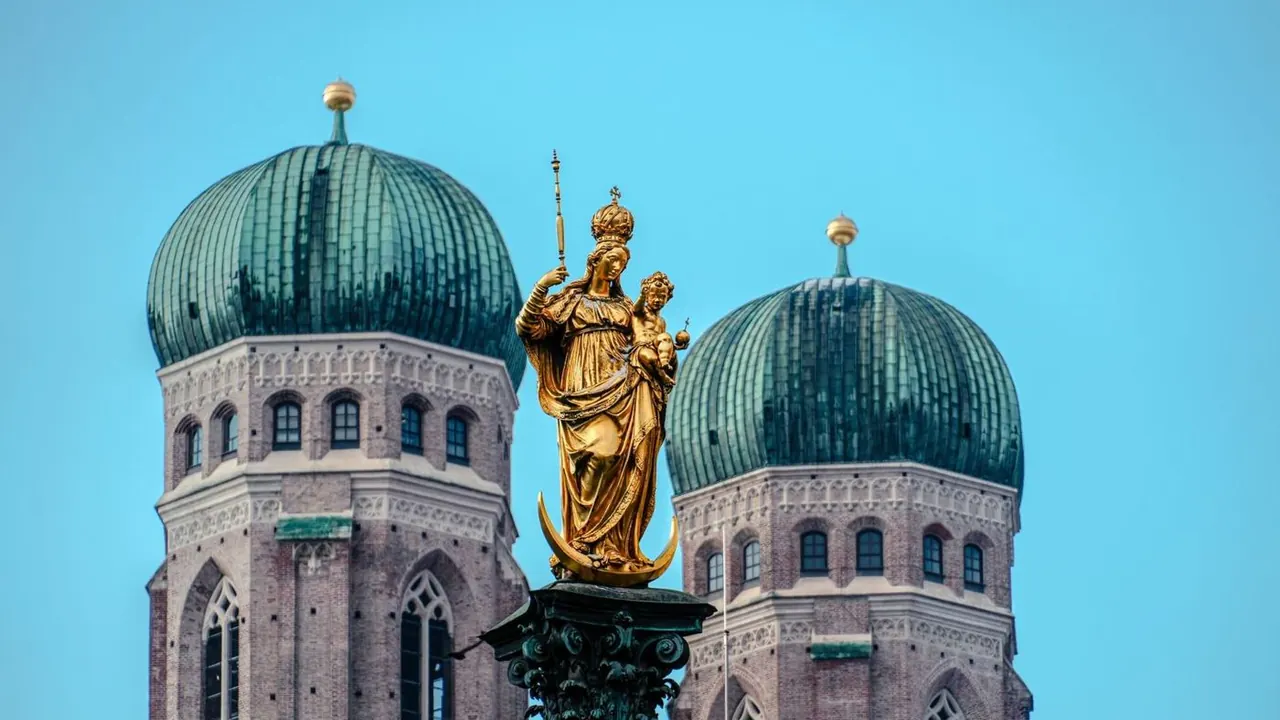
Photos: Bratislava by C.Stadler/Bwag, CC BY-SA 4.0, cropped; Munich by 0xd1ma, Pexels License.
Bratislava or Munich?
Our verdict in twelve categories, each scored against the same fixed benchmark cities, and the climate month by month, so you can choose for your trip.
Choose Bratislava for
- prices
Bratislava suits a short, inexpensive break for travellers who like a small old town they can learn in a day, an evening of local wine, and the option of hopping to Vienna or the Small Carpathian vineyards. It is calm, easy on the budget and quick to settle into, though it gives you less to do the longer you stay.
Choose Munich for
- families
- shopping
- live music and the arts
Munich is the stronger choice for almost everything else. Its great art collections and world-class opera, the Alps on the horizon, its lakes and its fast transport make it a city for a full week, with children or without. The price is the main drawback: rooms and restaurant meals cost a good deal more, so it rewards those who can spend more.
Scoreboard
Twelve categories on one fixed scale from 0 to 100. The shaded stretch is the gap between the two.
Your match
Pick a travel style or drag the sliders, and both match scores follow your weighting.
Wins on prices with your weighting.
Wins on families and shopping with your weighting.
What matters to you?
Category by category
What the scores mean for a trip.
Beaches & swimming
Neither city is a place for a beach vacation, but Munich makes more of summer water. Locals sunbathe on the Isar's gravel banks at the Flaucher, and the Starnberger See and Ammersee have lawns, jetties and clear alpine water within an S-Bahn ride.
In Bratislava, the Danube is too fast and too busy with barges for swimming, so bathing means the sandy lake at Zlate piesky, reached by tram, or the Senec lakes further out. The water is pleasantly warm in high summer, but the season is short and weekends are crowded.
Food & drink
Munich's eating revolves around beer. You can sit in the great brewery halls and chestnut-shaded beer gardens with a picnic, have white sausage before noon, snack your way round the Viktualienmarkt and pick from a solid tier of starred restaurants. It has more depth and more occasions to eat well.
Bratislava's trump card is wine. The Small Carpathian vineyards start at the city's edge, and wine bars pour Veltliner and Frankovka you will rarely find abroad, alongside bryndzove halusky and roast duck in Old Town pubs. Beyond Slovak cooking the choice is thin, and the best meals are found away from the main squares.
Culture & sights
This is one of the widest gaps between the two. Bratislava's appeal is a compact, well-kept baroque old town where Hungarian kings were crowned in St Martin's Cathedral, with the castle, the Blue Church and the ruins of Devin, all seen comfortably in a day or two.
Munich has royal collections of European rank. The Kunstareal groups the Alte Pinakothek's old masters with modern art, Greek sculpture and the Blue Rider painters, while the Residenz, Nymphenburg and the Deutsches Museum could each fill a morning. A culture-led visit here lasts days, not hours.
Nightlife
Munich offers more range at night. Evenings often begin and end in a beer hall, but the Glockenbachviertel has cocktail and gay bars, Schwabing has student pubs, and a few serious techno clubs run until morning, while Oktoberfest takes over the city each autumn.
Bratislava's night out is a pub crawl through a few Old Town streets, loud on Friday and Saturday with students and weekend groups, stag parties included, and quiet the rest of the week. Expect a lively bar crawl rather than clubbing.
Nature & outdoors
Munich has the Alps. Trains reach Garmisch-Partenkirchen, the Zugspitze and Tegernsee in about an hour or two for proper mountain hiking in summer and skiing in winter, and the city itself has the vast English Garden, the Eisbach surfers and cycle paths along the Isar.
Bratislava's outdoors is gentler and closer to home. Forest trails climb from Koliba to Kamzik and along the vine-covered Little Carpathians, the Danube floodplain forests and cycle route lead into Austria, and Cunovo has whitewater rafting. These are pleasant hills rather than mountains, and the Tatras are a full day away.
Day trips
Both are excellent bases, with Munich slightly ahead for sheer choice. Bratislava's prize is Vienna, about an hour by train or a boat ride up the Danube, plus the Small Carpathian wine villages, Trnava and Austrian and Hungarian sights across two nearby borders.
From Munich, the list is longer and more varied: Augsburg, Nuremberg and Regensburg by fast train, Salzburg and Innsbruck across the border, the fairy-tale castle of Neuschwanstein, and painted alpine villages such as Oberammergau.
Good for families
Munich is much better set up for children. A large zoo along the Isar meadows, hands-on sections in the Deutsches Museum, a transport museum, an aquarium, beer gardens with playgrounds and summer lake beaches give a family plenty to do, and Legoland is within reach by car.
Bratislava is safe and calm, and its mostly pedestrian Old Town with bronze statues to spot is easy with a pushchair. The Kamzik chairlift, the zoo, the lake at Zlate piesky and the Senec water park fill a short stay, but there is little more after that.
Getting around
Both centres are walkable, but Munich is easier once you leave the old town. Its U-Bahn, S-Bahn and trams reach the museums, Nymphenburg, the airport and the lakes quickly, and the flat city is made for cycling.
Bratislava's main sights lie within a twenty-minute walk, apart from a short, steep climb to the castle. Without a metro, trams and buses are slower for trips across the river or out to the edges, and the wine villages are easier to reach by car.
Shopping & style
Munich is a proper shopping city. Maximilianstrasse has the luxury houses, Kaufingerstrasse has the department stores, Glockenbach and Schwabing have independent boutiques, and you can buy dirndls and lederhosen from specialist tailors along with fine food at the centuries-old Dallmayr.
Bratislava's shopping is modest. Its malls carry international chains, and the things worth taking home are folk crafts such as Modra majolica and blue-print cloth from the state craft centre, plus a few bottles of Small Carpathian wine. For serious fashion, locals take the train to Vienna.
Affordability
This is the one area where Bratislava clearly comes out ahead. A modest budget covers a central room, good pub meals, cheap local wine and beer and transport, and only the main squares and riverside complexes charge Western prices.
Munich is Germany's most expensive city, and you feel it most in hotel rooms, which become very dear during Oktoberfest and the big trade fairs. Beer-garden picnics, free parks and lakes and token Sunday museum entry help, but the overall bill is far higher.
Live music & performing arts
Munich is one of Europe's great music cities. The Bavarian State Opera on Max-Joseph-Platz is among the world's leading companies, three orchestras of real standing play in the Herkulessaal and the Prinzregententheater, and the rococo Cuvilliés Theatre stages chamber opera.
Bratislava offers solid opera and ballet at the Slovak National Theatre and concerts by the Slovak Philharmonic in the Reduta, and tickets are easy to come by. It makes a pleasant evening rather than a reason to visit, and for a major international programme people go to Vienna.
Wellness & relaxation
Munich has a real bathing culture of its own. The Art Nouveau Müller'sches Volksbad has vaulted pools and a Roman-style steam bath, public saunas hold infusion rituals, and the huge thermal complex at Erding is about forty minutes away.
Bratislava has no thermal baths in town, so relaxing there means cafes, the riverbank and quiet forest paths. For proper bathing, take a day out to the Senec water park or the historic spa town of Piestany, about an hour away by train.
When should you go?
Pick your month. The climate figures are measured averages, not a forecast.
Bratislava in July
Munich in July
Daytime high, °C
Rainfall in the month, mm
Where the figures come from
Bratislava has no rain gauge within 25 km of the centre, so its rainfall comes from a gridded climate dataset read at the city rather than from a gauge further away.
Bratislava's sunshine is measured 56 km from the centre, at Wien / Hohe Warte.
Temperature and rainfall are climate normals, averaged over the years shown. Bratislava: 1991-2020 normals, Bratislava Ivanka (8.6 km from centre). Munich: 1991-2020 normals, München (1.9 km from centre).
Both cities have cold, grey winters, with daytime highs of only a few degrees from December to February, so winter visits come down to museums, concert halls and Christmas markets rather than long walks. Spring warms up in step, and May and September are the most comfortable months for exploring on foot in either city.
Summer is where they part. Bratislava runs warmer and drier, with July highs around 27°C, about 82mm of rain and more sunshine, and July and August are the only reliable months for its lakes. Munich peaks nearer 25°C but is much wetter from May to August, with June bringing about 121mm, mostly in thundery downpours. Its alpine lakes stay fresh even then, and the period from June to early September is when lake days work best.
Which traveller are you?
On a tight budget, Bratislava is the easier city. Beer, wine, trams and museum tickets cost little, pub lunch menus are cheap, and central rooms are reasonably priced. Munich's hotels are dear all year and get far dearer at trade-fair time.
For a culture and arts trip, Munich is in another league. The Alte Pinakothek, the Residenz and the Deutsches Museum fill several days, and the Bavarian State Opera and three serious orchestras give you a top-class programme in the evenings.
On a family trip with children, Munich offers far more. The Hellabrunn zoo, the hands-on museums, beer gardens with playgrounds and summer lake days keep a week varied, while Bratislava is pleasant and safe but runs out of children's outings after a few days.
Before you go
| Measure | Bratislava | Munich |
|---|---|---|
| Official language | Slovak | German |
| Currency | Euro (EUR) | Euro (EUR) |
| Sockets | CE230 V, 50 Hz | CF230 V, 50 Hz |
| Driving side | Right | Right |
| Time zone | UTC+1, UTC+2 in summer | UTC+1, UTC+2 in summer |
| Emergency number | 112 | 112 |
| Elevation | 152 m | 519 m |
| Main airport | M. R. Štefánik Airport (BTS)8 km from centre70 non-stop destinations | Munich Airport (MUC)29 km from centre210 non-stop destinations |
| Public holidays this year | 15 days | 12 days |
By the numbers
| Measure | Bratislava | Munich |
|---|---|---|
| City population | 480,902 | 1,505,036 |
| People per km² | 1,308 | 4,844 |
| Museums within 10 km | 22 | 74 |
| UNESCO World Heritage sites within 50 km | 2 | 1 |
Where else could you go?
Every comparison below shares a destination with this one, so you can follow Bratislava or Munich somewhere new.