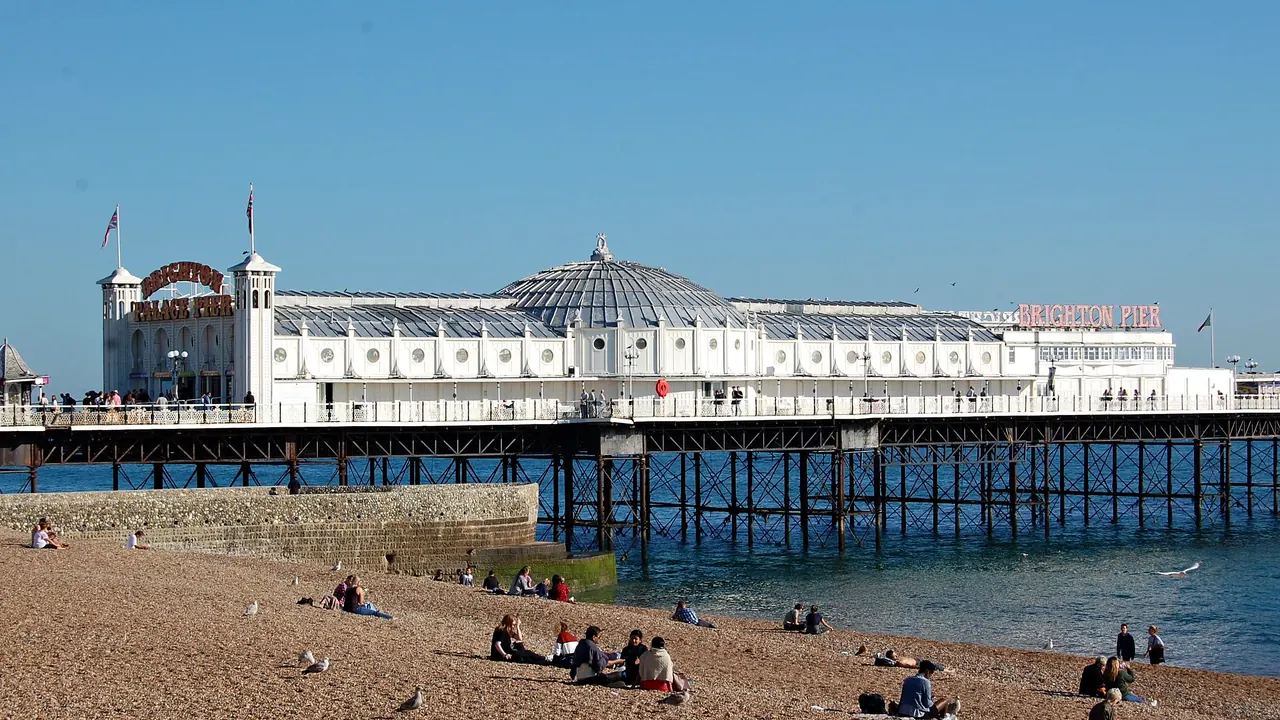
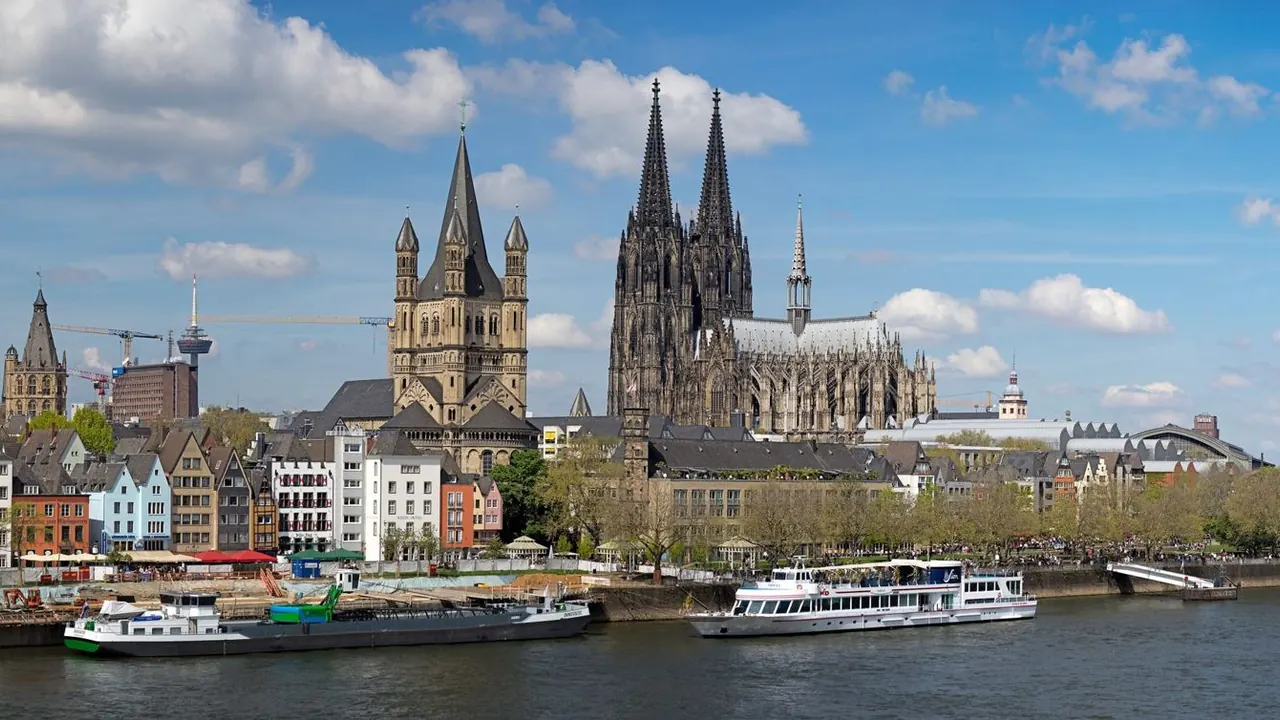
Photos: Brighton by Hassocks5489, CC0; Cologne by Jörg Braukmann, CC BY-SA 4.0, cropped.
Brighton or Cologne?
Our verdict in twelve categories, each scored against the same fixed benchmark cities, and the climate month by month, so you can choose for your trip.
Choose Brighton for
- beaches
- nature and the outdoors
- food and drink
Brighton suits a traveller who wants the sea in view, open hills behind the town and a lively night out, all within a compact centre. The shingle beach is better for sitting than swimming. Even so, the chalk downland at the city's edge and the Seven Sisters cliffs give it the stronger outdoors, and with London an hour away by train you can fit a second trip inside the first.
Choose Cologne for
- wellness
- culture and sights
- prices
Pick Cologne for a trip built around great buildings, museums and concerts. The cathedral, the Romanesque churches, Museum Ludwig and the Philharmonie give it more depth on culture and the stage. It is also easier on the budget and kinder to families, with the zoo and Phantasialand, and its saunas and thermal baths make winding down part of the stay. There is no sea, though, only lakes on the edge of the city.
Scoreboard
Twelve categories on one fixed scale from 0 to 100. The shaded stretch is the gap between the two.
Your match
Pick a travel style or drag the sliders, and both match scores follow your weighting.
Too close to call, 2 points apart
Wins on beaches and nature and the outdoors with your weighting.
Wins on wellness and culture and sights with your weighting.
What matters to you?
Category by category
What the scores mean for a trip.
Beaches & swimming
Neither is a beach destination, but Brighton at least has the sea. Its steep shingle beach runs from the Marina to Hove, and the Channel reaches about 17°C late in summer. On a warm day the seafront is where the town gathers, even if most people sit rather than swim.
Cologne has no coast at all, and the Rhine is unsafe for bathing. People swim instead in the flooded gravel pits on the edge of town, such as Fühlinger See and Otto-Maigler-See. Their water is warmer than the Channel and they make a pleasant afternoon, but they are never the point of a trip.
Food & drink
The two eat about as well as each other, in very different ways. Brighton's strength is variety from small independent kitchens across the North Laine, the Lanes and Kemptown. It has long been known for vegetarian and vegan cooking, its coffee is serious, and seafood comes from stalls under the seafront arches.
Cologne is more about one ritual done well: the Brauhaus, where the Köbes keeps the small glasses of Kölsch coming alongside sauerbraten and Himmel un Ääd. Beyond that, Ehrenfeld's Turkish and Middle Eastern cooking is the best reason to leave the Altstadt. Neither city has much fine dining.
Culture & sights
Cologne has much more to see. Beyond the cathedral and its Shrine of the Three Kings, there are twelve Romanesque churches and Roman remains. Its museums carry real weight, from Pop Art at Museum Ludwig to the old masters of the Wallraf-Richartz and the religious art at Kolumba. The catch is that most of the townscape is post-war, so you go from building to building rather than strolling a historic quarter.
Brighton reverses that balance. The Royal Pavilion is its one great sight, and the rest is atmosphere: the Regency crescents of Kemptown and Hove, the alleys of the Lanes and the two piers. It fills a day or two of looking around rather than a list of sights.
Nightlife
Both cities go out a lot, and both have long-established gay scenes, in Kemptown and around Rudolfplatz. Brighton's nights feel like a seaside weekend away, with clubs in the seafront arches and West Street running late. Students keep its pubs full on weeknights too, though Saturdays bring the stag and hen groups.
In Cologne a night starts in the brewhouses over Kölsch, then moves on to the Belgian Quarter's bars or the old factory clubs of Ehrenfeld. It is quieter midweek, but it has Carnival, when the whole city celebrates in costume for days on end.
Nature & outdoors
Brighton has the more striking outdoors on its doorstep. The South Downs National Park starts at the city's edge, and Devil's Dyke and the South Downs Way are a short bus ride away. The chalk cliffs of the Seven Sisters and Beachy Head are among the finest coastal scenery in southern England, and you can windsurf or sail off the seafront.
Cologne is flat, and makes up for it with the Grüngürtel parks and long cycle paths along the Rhine. The wooded hills of the Siebengebirge and the crater lakes of the Eifel are both within an hour. It is good walking country, but gentler, and you have to travel further to reach it.
Day trips
Both make excellent bases, and the difference is in the kind of outing. From Brighton the big one is London, an hour away by train. After that come the historic towns of Sussex: Lewes, Arundel, Rye, Battle and cathedral Chichester, plus country houses that are easier to reach by car.
From Cologne the fast trains open up several countries. Bonn, Düsseldorf, Aachen and the palaces at Brühl are all close. The castles of the Rhine Gorge are a longer ride south, and Maastricht, Liège and Brussels make easy days across the border.
Good for families
Cologne is the easier city with children. Its zoo, the Chocolate Museum, the cable car over the Rhine to the Rheinpark playgrounds and, above all, Phantasialand at Brühl add up to several full days. Children are also welcome in brewhouses and cafés. Carnival is the time to avoid.
Brighton offers a traditional English seaside day: rides on the pier, the Victorian aquarium, Volk's Electric Railway and paddling at Hove Lagoon. The cold shingle beach and the rowdy weekend nights in the centre hold it back.
Getting around
Both centres are easy on foot, but the ground differs. In Brighton the walk from the station down to the sea is short and downhill, with a steady climb back up and steep streets in Kemptown. Beyond the centre it relies on a frequent bus network.
Cologne is flat, its station stands beside the cathedral, and trams, the Stadtbahn and the S-Bahn reach the outer districts. The network is harder to read than Brighton's buses and can be crowded. In neither city do you need a car.
Shopping & style
Neither is a luxury destination, and they suit different shoppers. Brighton is for browsing: vintage clothes, records and retro furniture in the North Laine, and jewellers and antique dealers in the Lanes.
Cologne is a big high-street city, with Schildergasse and Hohe Strasse full of chains and department stores. Independent design shops line Ehrenstrasse and the Belgian Quarter. It also has Eau de Cologne from its historic perfume houses and the Christmas markets in Advent.
Affordability
Cologne is the cheaper stay. Brewhouse meals cost less than in most capitals and the cathedral is free to enter. Hotel rooms jump in price during the trade fairs and Carnival, but outside those times a visit stays moderate.
Brighton's rooms are expensive, especially on summer weekends, and eating and drinking cost what they do across the south of England. In its favour, the beach, the piers and the Downs are free, and a midweek or winter stay is much easier on the budget.
Live music & performing arts
Cologne has more going on stage. There are opera and drama at Offenbachplatz and the Gürzenich and WDR orchestras at the Philharmonie. Early music fills the Romanesque churches, and a long tradition of electronic music and jazz plays out in Ehrenfeld and the Südstadt. Together they put something on most nights of the year.
Brighton peaks in May, when the Festival and the largest fringe in England take over the town. The rest of the year it relies on the Dome, the Theatre Royal, comedy clubs and small music rooms, with Glyndebourne's summer opera close by.
Wellness & relaxation
Cologne is the better place to unwind. German sauna culture, with large sauna landscapes, steam rooms and cold plunges, is part of an ordinary weekend there. The Rheinpark thermal bath looks across the river at the cathedral, and Aachen's hot springs are close.
Brighton has no bathing tradition beyond its year-round sea swimmers and the seafront saunas where they warm up. Its restful side is a quiet midweek walk past Hove's beach huts or a day in the villages of the Downs.
When should you go?
Pick your month. The climate figures are measured averages, not a forecast.
Brighton in July
Cologne in July
Daytime high, °C
Rainfall in the month, mm
Where the figures come from
Brighton has no rain gauge within 25 km of the centre, so its rainfall comes from a gridded climate dataset read at the city rather than from a gauge further away.
Brighton's sunshine is measured 37 km from the centre, at London Gatwick Airport.
Temperature and rainfall are climate normals, averaged over the years shown. Brighton: 1999-2020 (sunshine 1981-2010, rainfall 1991-2020) normals, Shoreham Airport (10.3 km from centre). Cologne: 1991-2020 (sunshine 1981-2010) normals, Köln-Stammheim (5.4 km from centre).
Brighton is a summer town with a short season. Highs reach only about 20°C in July and August, and the Channel is warmest, around 17°C, in August and September, so a swim is possible but bracing. May to September is the sunniest and driest stretch. From October the rain builds to over 100mm a month by December, and winters are mild but wet and grey.
Cologne is warmer in summer, with highs around 25°C in July and August, good weather for river walks and afternoons by the lakes. Summer is also its wettest season, though, so expect showers. Its winters are a little colder than on the Sussex coast but noticeably drier. April, May and September are comfortable for walking the streets in both cities.
Which traveller are you?
On a beach and sun trip, Brighton is the only real option of the two. Its shingle seafront runs the length of town, with lifeguards in summer and fish and chips by the water. Cologne offers only gravel-pit lakes on its outskirts.
For a culture and arts trip, Cologne gives you more to fill the days: the cathedral, twelve Romanesque churches, Museum Ludwig and the Wallraf-Richartz, then opera or an orchestra at the Philharmonie in the evening. Brighton has the Royal Pavilion and its May festival, but less depth.
On a relaxing and wellness trip, Cologne is the better choice. It has German sauna landscapes, a thermal bath in the Rheinpark facing the cathedral, and the old spa town of Aachen close by. Brighton offers mostly dawn sea swims and a few day spas.
Before you go
| Measure | Brighton | Cologne |
|---|---|---|
| Official language | English | German |
| Currency | Pound Sterling (GBP) | Euro (EUR) |
| Sockets | G230 V, 50 Hz | CF230 V, 50 Hz |
| Driving side | Left | Right |
| Time zone | UTC, UTC+1 in summer | UTC+1, UTC+2 in summer |
| Emergency number | 112 or 999 | 112 |
| Elevation | 22 m | 59 m |
| Main airport | London Gatwick Airport (LGW)37 km from centre224 non-stop destinations | Cologne Bonn Airport (CGN)15 km from centre115 non-stop destinations |
| Public holidays this year | 8 days | 11 days |
By the numbers
| Measure | Brighton | Cologne |
|---|---|---|
| City population | 134,293 | 1,025,523 |
| People per km² | 1,624 | 2,532 |
| Museums within 10 km | 11 | 40 |
| UNESCO World Heritage sites within 50 km | 0 | 3 |
| Swim season, months above 21 °C | None | - |
Where else could you go?
Every comparison below shares a destination with this one, so you can follow Brighton or Cologne somewhere new.
- Dusseldorfvs Cologne
- Londonvs Brighton
- Maastrichtvs Cologne
- Oxfordvs Brighton
- Frankfurtvs Cologne
- Cambridgevs Brighton