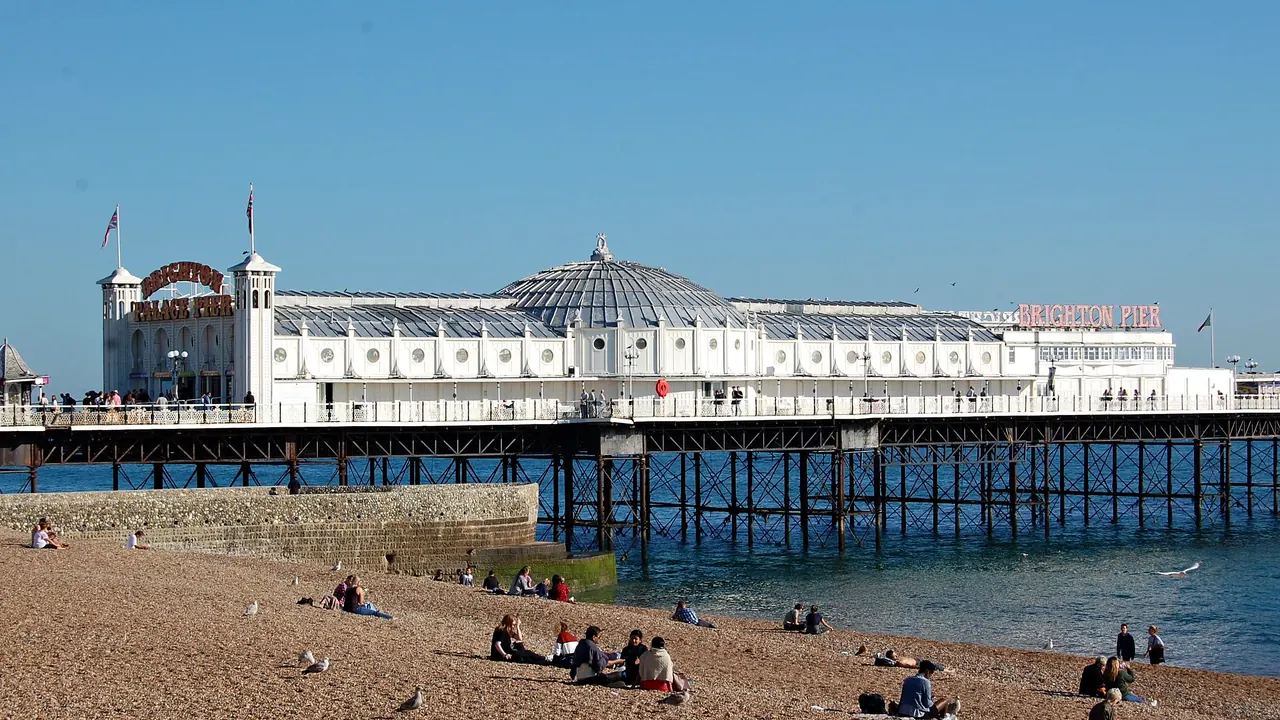
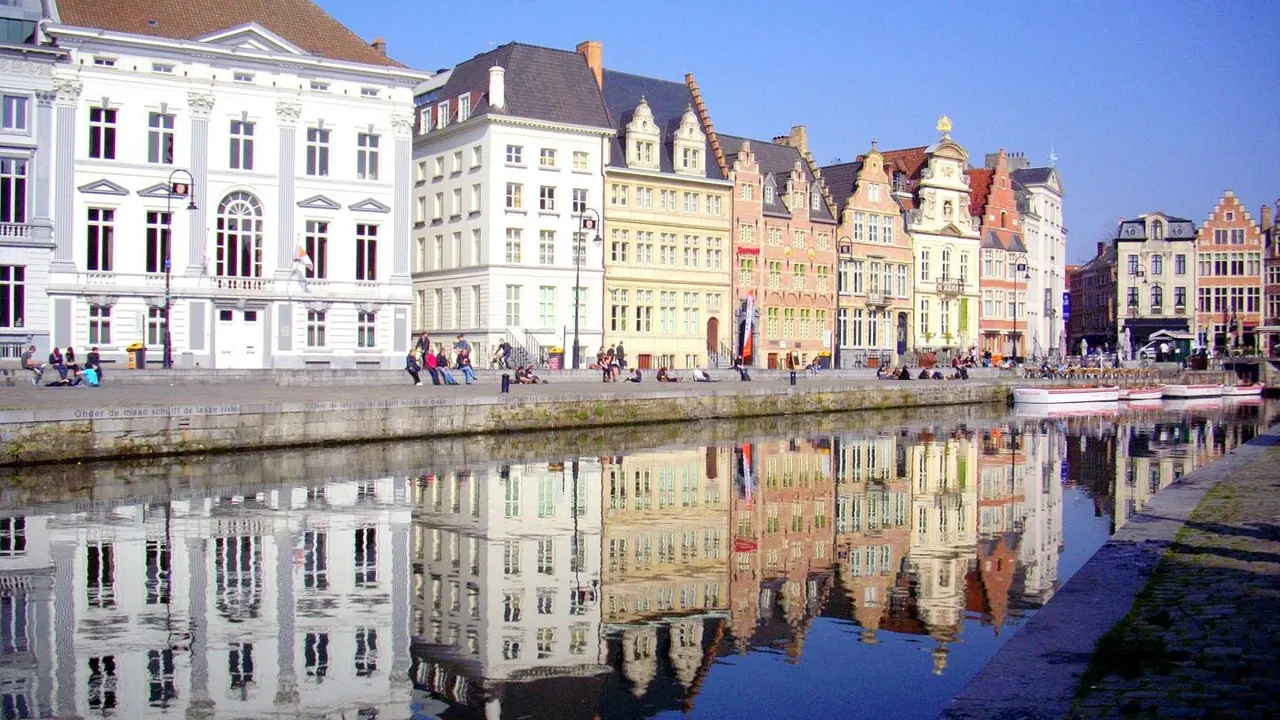
Photos: Brighton by Hassocks5489, CC0; Ghent by ykeiko, CC BY-SA 3.0, cropped.
Brighton or Ghent?
Our verdict in twelve categories, each scored against the same fixed benchmark cities, and the climate month by month, so you can choose for your trip.
Choose Brighton for
- nature and the outdoors
- beaches
- families
Brighton suits a traveller who wants the sea, the hills and a lively night out, all from one walkable base. The South Downs begin at the edge of town and the Seven Sisters cliffs are close by. The pier and seafront keep children busy, and the pubs, clubs and Kemptown's LGBTQ+ scene make it the livelier of the two after dark. It is a place for wandering and being outdoors rather than for sightseeing.
Choose Ghent for
- culture and sights
- day trips
- food and drink
If your idea of a good trip is great paintings, medieval streets and serious beer, Ghent is the stronger choice. The van Eyck altarpiece, the Gravensteen and the guildhalls of the Graslei give it far more sights than Brighton has. Flemish cooking and old brown cafés feed you better, and Bruges, Brussels and Antwerp are each a short train ride away.
Scoreboard
Twelve categories on one fixed scale from 0 to 100. The shaded stretch is the gap between the two.
Your match
Pick a travel style or drag the sliders, and both match scores follow your weighting.
Too close to call, 2 points apart
Wins on nature and the outdoors and beaches with your weighting.
Wins on culture and sights and day trips with your weighting.
What matters to you?
Category by category
What the scores mean for a trip.
Beaches & swimming
Neither city is a swimming destination, but Brighton at least has a beach on its doorstep. A long shingle strand runs from the Marina to Hove and becomes the town's living room on warm days, with lifeguards in season and quieter stretches under the cliffs at Rottingdean.
Ghent has no coast of its own. The wide sands and dunes from De Panne to Knokke are about an hour away by train and coastal tram. They are softer underfoot than Brighton's pebbles, but they make a day out rather than part of the stay. In town, the local place to swim is the lake at the Blaarmeersen with its sandy shore.
Food & drink
The main difference at the table is that Ghent has a cuisine of its own and Brighton does not. Waterzooi, beef stewed in dark beer, mussels with frites and grey shrimp croquettes give a meal in Ghent a sense of place. The brown cafés of the Vrijdagmarkt and the Patershol pour long lists of Trappist, lambic and abbey beers.
Brighton's strength is variety: small independent kitchens across the North Laine, the Lanes and Kemptown, serious coffee, and fish and chips or oysters on the seafront, with Sussex sparkling wine on the lists. Both have a long-standing reputation for vegetarian cooking.
Culture & sights
Ghent is a medieval city with sights to match. It has the van Eyck brothers' altarpiece, one of the founding works of European painting, as well as the moated Gravensteen and the guildhalls along the Leie. Its museums run from the Flemish masters at the Museum of Fine Arts to contemporary work at the SMAK.
Brighton has one sight of that rank, the Royal Pavilion, with its Indian domes and chinoiserie rooms. Beyond it, the pleasure lies in the Regency crescents, the two piers and the alleys of the Lanes. They make for a day or two of wandering rather than a list of museums.
Nightlife
Brighton goes out harder, and does so every night of the week. Clubs in the seafront arches and on West Street stay open until the small hours, and Kemptown has one of Britain's oldest and largest LGBTQ+ scenes. The catch is the stag and hen crowd on weekend nights.
Evenings in Ghent are more about beer than dancing. The student bars of the Overpoort run late in term time and the old cafés around the Vrijdagmarkt suit long conversations, but there are few clubs and they are small. The exception is July, when the Gentse Feesten turns the centre into a ten-day street party.
Nature & outdoors
Brighton has real landscape behind it. The chalk grassland of the South Downs begins at the city's edge, and Devil's Dyke and the South Downs Way are a bus ride away. The white cliffs of the Seven Sisters and Beachy Head are close enough for an afternoon, and the sea adds windsurfing and paddleboarding.
The country around Ghent is flat and farmed. Riverside paths along the Leie to Sint-Martens-Latem and the Bourgoyen-Ossemeersen wetland are good for cycling and birdwatching, but there is nothing to climb and little scenery that makes you stop and stare.
Day trips
Both cities make excellent bases, but Ghent's neighbours are closer and there are more of them. Bruges is under half an hour by train, Brussels about the same and Antwerp under an hour. Mechelen, Leuven, the Ypres battlefields and even Lille are also within easy reach, and none of them needs a car.
Brighton's great card is London, about an hour away by fast train. Closer to home are the castle towns of Lewes and Arundel, Chichester's cathedral, medieval Rye and the battlefield at Battle. The country houses and gardens of the Weald are easier to reach by car.
Good for families
Brighton is built for a children's day at the seaside. There are rides and arcades on the Palace Pier, one of the oldest aquariums in the world, Volk's Electric Railway along the beach and paddling at Hove Lagoon. Shingle and cold water limit the sandcastles, and the centre is best avoided late on weekend nights.
Ghent is calm and safe, with cars kept out of most of the centre. The Gravensteen's battlements and the canal boats please most ages, and the House of Alijn has old toys and games. After that the city runs short of things for children, and the cobbles are hard on pushchairs.
Getting around
Brighton is a town of slopes and Ghent a flat one, and that shapes every walk. In Brighton the stroll down from the station to the sea is easy, but the way back is a steady climb, and Kemptown and the streets above the centre are steep. A dense bus network covers Hove and the edge of the Downs, and the seafront promenade is the one place for an easy bike ride.
Ghent's compact centre has no hills at all. Locals get about by bicycle on bike lanes and bike streets across the city, and rental bikes are easy to find. Trams cover the twenty-minute stretch from Gent-Sint-Pieters station into the centre, and wet cobbles are the only hazard underfoot. In either city a car is more of a burden than a help.
Shopping & style
A browser in the North Laine can spend a whole Saturday in its grid of narrow streets, among vintage clothes, records, comics and retro furniture. A few minutes away, the old alleys of the Lanes add jewellers and antique dealers. Most of what you find here is something to keep, and for an afternoon of rummaging Brighton has a slight edge.
Ghent's best buys go home in a suitcase to be eaten or drunk: chocolate, cuberdons, the city's strong mustard and Belgian beer. Its markets make a good morning out, with the weekend flea market at Sint-Jacobs and the Sunday flowers on the Kouter, and independent fashion lines the Serpentstraat. Neither city has luxury streets, so anyone after big-name fashion should look elsewhere.
Affordability
Both are expensive, and neither works as a budget trip. In Brighton the room is the main cost. It is steepest on summer weekends and much kinder midweek or in winter, while the beach, the piers and the Downs cost nothing.
Ghent's hotels are more moderately priced for most of the year, except during the Gentse Feesten, but sit-down dinners with Belgian beer add up. Frites stands, bakeries and set lunches help, and several of its churches are free to enter.
Live music & performing arts
Brighton's stage life comes to a head in one burst each year, while Ghent's rests on opera, early music and serious theatre. Every May the Brighton Festival and England's largest fringe fill theatres, churches and pubs with theatre, comedy and street performance for weeks, and comedy and small-venue gigs carry on through the rest of the year. Glyndebourne's summer opera is twenty minutes away in the Downs.
Ghent leans towards the classical. It has opera and ballet at the nineteenth-century opera house, early music at De Bijloke in a medieval hospital, and NTGent's bold theatre, though most of it is in Dutch. Its big moment is the free stages of the Gentse Feesten in July.
Wellness & relaxation
In Brighton, rest means cold water. In Ghent it means quiet gardens. Brighton's ritual is the hardy crowd that swims in the Channel at dawn all year round and warms up afterwards in the seafront saunas. Out of season, midweek walks past Hove's lawns and beach huts give the town its calm.
Ghent slows down in the enclosed courtyards of the beguinages, along the Leie and the Coupure canal, and on quiet Sundays once the day-trippers have left. Neither city has thermal baths or spas worth building a vacation around, only a few hotel and day spas.
When should you go?
Pick your month. The climate figures are measured averages, not a forecast.
Brighton in July
Ghent in July
Daytime high, °C
Rainfall in the month, mm
Where the figures come from
Brighton has no rain gauge within 25 km of the centre, so its rainfall comes from a gridded climate dataset read at the city rather than from a gauge further away.
Brighton's sunshine is measured 37 km from the centre, at London Gatwick Airport.
Ghent has no rain gauge within 25 km of the centre, so its rainfall comes from a gridded climate dataset read at the city rather than from a gauge further away.
Ghent's sunshine is measured 45 km from the centre, at Vlissingen.
Temperature and rainfall are climate normals, averaged over the years shown. Brighton: 1999-2020 (sunshine 1981-2010, rainfall 1991-2020) normals, Shoreham Airport (10.3 km from centre). Ghent: 2009-2025 (sunshine 1991-2020, rainfall 1991-2020) normals, Melle / Kalverhaag (10.1 km from centre).
Both cities have mild, changeable weather, and neither is ever too hot for walking the streets. Ghent warms up faster and runs warmer. By July and August afternoons reach about 23°C, against 20°C in Brighton, and Ghent gets noticeably more sunshine. Summer is also when Ghent gets a good share of its rain. Brighton has its driest stretch from spring through July and saves its heavy rain for October to December, when months of more than 100mm are normal.
For the beach, only July to September make sense in either place, and the sea stays cool. The Channel off Brighton tops out around 17°C, and the North Sea on Ghent's coast is slightly warmer. Winter is grey in both. Ghent is the colder, with January highs around 6°C, while Brighton's milder seafront still makes a good brisk walk between showers. Late spring and early autumn suit sightseeing in either city.
Which traveller are you?
For a culture and arts trip, Ghent is the clear pick. The Ghent Altarpiece in St Bavo's, the Museum of Fine Arts, the Gravensteen and the UNESCO-listed belfry and beguinages fill several days. Brighton's Royal Pavilion is one great sight surrounded by streets to stroll.
On an outdoors trip, Brighton wins easily. The South Downs Way and Devil's Dyke are a bus ride away for walking and mountain biking, the Seven Sisters cliffs are close, and kitesurfing and paddleboarding go on off the seafront. Ghent's flat farmland offers pleasant cycling and little more.
On a family trip with young children, Brighton has more that is made for them: rides on the Palace Pier, the Victorian aquarium and Volk's Electric Railway along the beach. Ghent's car-free centre and castle are easy wins, but its zoo and theme parks are elsewhere.
Before you go
| Measure | Brighton | Ghent |
|---|---|---|
| Official language | English | French, German, Dutch |
| Currency | Pound Sterling (GBP) | Euro (EUR) |
| Sockets | G230 V, 50 Hz | CE230 V, 50 Hz |
| Driving side | Left | Right |
| Time zone | UTC, UTC+1 in summer | UTC+1, UTC+2 in summer |
| Emergency number | 112 or 999 | 112 |
| Elevation | 22 m | 12 m |
| Main airport | London Gatwick Airport (LGW)37 km from centre224 non-stop destinations | Brussels Airport (BRU)56 km from centre191 non-stop destinations |
| Public holidays this year | 8 days | 14 days |
By the numbers
| Measure | Brighton | Ghent |
|---|---|---|
| City population | 134,293 | 272,657 |
| People per km² | 1,624 | 1,728 |
| Museums within 10 km | 11 | 30 |
| UNESCO World Heritage sites within 50 km | 0 | 5 |
| Swim season, months above 21 °C | None | None |
Where else could you go?
Every comparison below shares a destination with this one, so you can follow Brighton or Ghent somewhere new.