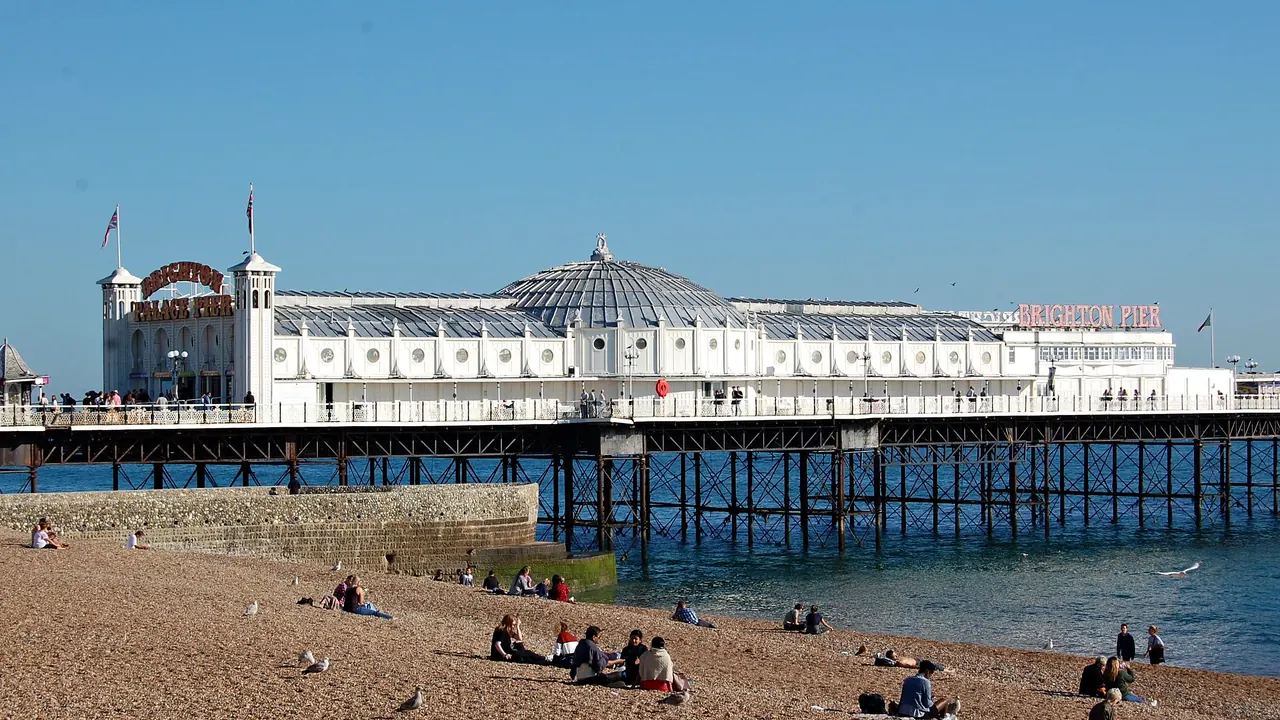
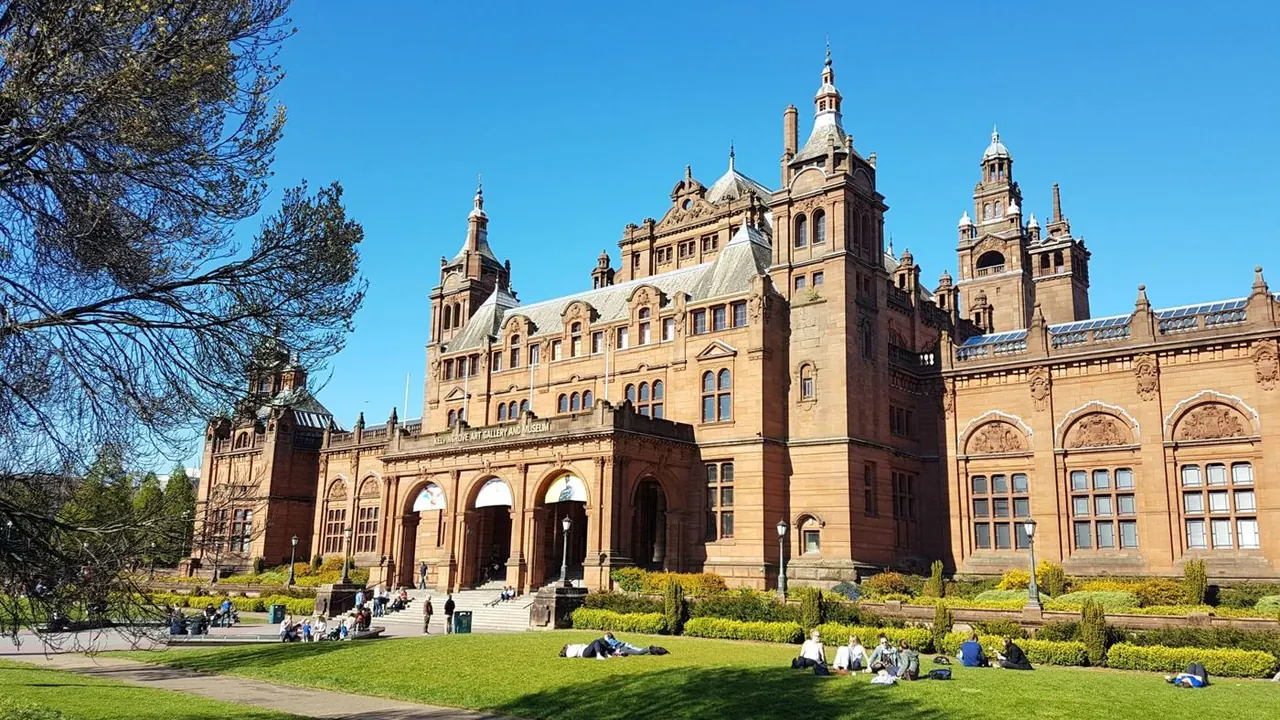
Photos: Brighton by Hassocks5489, CC0; Glasgow by Stinglehammer, CC BY-SA 4.0, cropped.
Brighton or Glasgow?
Our verdict in twelve categories, each scored against the same fixed benchmark cities, and the climate month by month, so you can choose for your trip.
Choose Brighton for
- beaches
- getting around
- day trips
Brighton suits a trip built around the seaside and an easy pace. The station, the Lanes, the Pavilion and the pier are all within walking distance, and in summer the shingle beach is the centre of town. London is an hour away by train if you want big sights for a day. Choose it for a short break with a sea view, Kemptown's long-established LGBTQ+ scene, or children who want piers and arcades, as long as you can live with the room prices.
Choose Glasgow for
- culture and sights
- live music and the arts
- prices
Glasgow gives you more to see and hear for less money. Its free civic museums, Mackintosh buildings and Victorian sandstone streets make for deeper sightseeing. Its gig circuit and resident opera, ballet and orchestras fill the evenings, and Loch Lomond and the edge of the Highlands put real hills within easy reach. Pack waterproofs, and don't count on a beach.
Scoreboard
Twelve categories on one fixed scale from 0 to 100. The shaded stretch is the gap between the two.
Your match
Pick a travel style or drag the sliders, and both match scores follow your weighting.
Too close to call, 1 point apart
Wins on beaches and getting around with your weighting.
Wins on culture and sights and live music and the arts with your weighting.
What matters to you?
Category by category
What the scores mean for a trip.
Beaches & swimming
Brighton has a real town beach. Shingle runs the whole seafront from the Marina to Hove, lifeguards cover the central stretches in season, and on a calm late-summer day the Channel is swimmable, if bracing. It is still steep pebble with a short season, but it is right on your doorstep.
Glasgow has no beach of its own. The nearest sand is an hour away by train at Largs, Troon or Ayr on the Firth of Clyde, where the water is colder still. A day there means a promenade walk with an ice cream rather than a swim.
Food & drink
Neither city has a cuisine of its own, and both eat well for their size, so the difference is in what you go looking for. Brighton is the place for vegetarian and vegan cooking, serious coffee in the North Laine, oysters and whelks from the seafront arches, and Sussex sparkling wine.
Glasgow's strengths are its curry houses, its cafés and chip shops founded by Italian families, and modern Scottish cooking with west coast seafood and Highland beef along Finnieston. Its pubs also pour a far deeper range of whisky. In both cities the top end is small, and the good meals are in the neighbourhoods rather than on the main streets.
Culture & sights
Glasgow gives you far more to see. Kelvingrove and the Burrell are major collections, both free, and the Hunterian and the Riverside Museum add more. With Mackintosh's buildings, the cathedral and the Necropolis on top, that comes to two or three full days.
Brighton has one outstanding sight in the Royal Pavilion, plus the museum next door, the Booth Museum and the Regency crescents of Kemptown and Hove. That is a day or two of wandering and looking at buildings, where Glasgow is a proper museum city.
Nightlife
Both are serious places for a night out, and the difference is in character. Brighton offers range and history: one of Britain's oldest LGBTQ+ scenes in Kemptown, clubs in the seafront arches, and gentler pubs and craft-beer rooms in the North Laine. Stag and hen groups make West Street rowdy at weekends.
Glasgow's pubs are louder and friendlier, and its underground techno and house nights in basement clubs draw DJs from across Europe. Most clubs close around 3am, so a Glasgow night starts early and is packed into fewer hours.
Nature & outdoors
Glasgow has wilder country on its doorstep. Loch Lomond is about forty minutes away with Ben Lomond above it, the Trossachs lie just beyond, the West Highland Way starts on the city's edge, and Arran's peaks are a ferry ride off the coast.
Brighton's outdoors is gentler: the chalk grassland of the South Downs from Devil's Dyke, the Seven Sisters cliffs to the east, and windsurfing and sailing off the seafront. It is lovely country for walking and the water, but it has nothing like Glasgow's lochs and mountains.
Day trips
Both are strong bases, each with a capital about an hour away by train: London from Brighton, Edinburgh from Glasgow. Brighton's other day trips are small historic towns such as Lewes, Arundel, Rye and Battle, plus vineyard tastings and Weald gardens, all close and easy.
Glasgow's list is more varied. It has castles at Stirling and Culzean, Linlithgow Palace and the mill village of New Lanark. There are also island days by ferry to Bute or Arran, which take longer but feel more like a real journey.
Good for families
Both cities work with children, in different ways. Brighton is the classic seaside day: pier rides and arcades, the Victorian aquarium, Volk's Electric Railway and paddling at Hove Lagoon. The shingle and cold sea rule out sandcastles, though.
Glasgow relies on its free museums, with trams and a tall ship at the Riverside, a Spitfire in Kelvingrove and the Science Centre, which also make it the safer bet on a wet day. It has no zoo or aquarium in town, and both centres have steep streets for pushchairs.
Getting around
Brighton is easier on foot. The station, the North Laine, the Lanes, the Pavilion and the sea are all within about fifteen minutes' walk of each other, and a single dense bus network with contactless fares covers the rest. The only catch is the climb back up from the seafront.
Glasgow's grid-plan centre is walkable too, but the city is bigger and its transport is more patchy. The Subway is one small circular line, buses come from several companies with separate fares, and you will rely on suburban trains for the South Side and the coast.
Shopping & style
Glasgow is the bigger shopping trip. It has the pedestrian loop of Buchanan, Sauchiehall and Argyle Streets with its department stores, Princes Square for more upmarket fashion, jewellers in the Argyll Arcade, and vintage shops and bookshops off Byres Road.
Brighton has no department stores or luxury streets, but it is hard to beat for odd finds: vintage clothes, records, comics and retro furniture across the North Laine, and antiques and jewellery in the Lanes. Go to Glasgow for the big names, and to Brighton for browsing.
Affordability
Glasgow is the cheaper of the two, mostly because rooms cost less and nearly all its major museums are free, so a day of sightseeing can cost very little. Curry houses and pub lunches help too, though rooms jump in price when a big concert or football match is on.
Brighton's rooms are expensive, especially on summer weekends, and nights out on the seafront add up. The beach, the piers, the Lanes and the Downs cost nothing, and going midweek or in winter makes rooms much cheaper. In both cities, train fares are the cost to watch if you plan several day trips.
Live music & performing arts
Glasgow is the stronger music city all year round. It has the Barrowland Ballroom and a deep circuit of small venues, folk sessions in pubs, and Celtic Connections in winter. Scottish Opera, Scottish Ballet and two major orchestras are based in the city.
Brighton's high point is May, when the Brighton Festival and England's largest fringe take over the city, and its comedy and small-venue gig scene is good all year. Glyndebourne's opera, a short drive away, is a summer treat. Outside festival season, though, Glasgow has far more on on any given night.
Wellness & relaxation
Neither is a place to come for treatments, and both rely on hotel and day spas. Their small bathing traditions differ. Brighton has its year-round dawn sea swimmers and the seafront saunas they warm up in, while Glasgow's Victorian Turkish baths in the West End mostly serve members.
For calm, Brighton's answer is a quiet midweek on Hove's lawns or in the villages of the Downs. Glasgow's is its big parks, or a trip out to the lochs.
When should you go?
Pick your month. The climate figures are measured averages, not a forecast.
Brighton in July
Glasgow in July
Daytime high, °C
Rainfall in the month, mm
Where the figures come from
Brighton has no rain gauge within 25 km of the centre, so its rainfall comes from a gridded climate dataset read at the city rather than from a gauge further away.
Brighton's sunshine is measured 37 km from the centre, at London Gatwick Airport.
Glasgow has no rain gauge within 25 km of the centre, so its rainfall comes from a gridded climate dataset read at the city rather than from a gauge further away.
Glasgow's sunshine is measured 57 km from the centre, at Edinburgh Airport.
Temperature and rainfall are climate normals, averaged over the years shown. Brighton: 1999-2020 (sunshine 1981-2010, rainfall 1991-2020) normals, Shoreham Airport (10.3 km from centre). Glasgow: 1991-2020 (sunshine 1981-2010) normals, Glasgow Airport (11.5 km from centre).
Brighton is the drier and sunnier of the two all year. From June to September daytime highs are around 20°C, the warmest it gets, and the Channel reaches 17°C in August and September, the best window for a swim. Spring and summer are the dry months. From October the rain builds to over 100mm a month through to December, and winter days are short, grey and cool, better for brisk seafront walks than for the beach.
Glasgow follows a similar curve but is cooler and much wetter. July and August peak at about 19°C, comfortable for a day on foot, and May is usually the brightest month, with less rain than high summer. The sea off the Clyde coast stays cold even at its warmest. From October to January it rains heavily, with January the wettest month at 141mm, so winter there is for museums, gigs and pubs rather than the hills.
Which traveller are you?
For a beach and sun trip, Brighton is the only real option of the two. The shingle starts at the bottom of the street, summers are drier and sunnier, and the Channel is swimmable in late summer, while Glasgow's nearest sand is an hour away.
On a culture and arts trip, Glasgow is the clear choice. Free collections at Kelvingrove and the Burrell, Mackintosh buildings, and resident opera, ballet and orchestras fill both days and evenings. Brighton has the Pavilion and a busy May festival.
On a tight budget, Glasgow goes further. Rooms are generally cheaper, the big museums cost nothing, and curry houses and pub lunches keep meals affordable. Brighton's summer-weekend rooms can use up a small budget quickly.
Before you go
| Measure | Brighton | Glasgow |
|---|---|---|
| Official language | English | English |
| Currency | Pound Sterling (GBP) | Pound Sterling (GBP) |
| Sockets | G230 V, 50 Hz | G230 V, 50 Hz |
| Driving side | Left | Left |
| Time zone | UTC, UTC+1 in summer | UTC, UTC+1 in summer |
| Emergency number | 112 or 999 | 112 or 999 |
| Elevation | 22 m | 21 m |
| Main airport | London Gatwick Airport (LGW)37 km from centre224 non-stop destinations | Glasgow Airport (GLA)11 km from centre95 non-stop destinations |
| Public holidays this year | 8 days | 10 days |
By the numbers
| Measure | Brighton | Glasgow |
|---|---|---|
| City population | 134,293 | 626,410 |
| People per km² | 1,624 | 190 |
| Museums within 10 km | 11 | 29 |
| UNESCO World Heritage sites within 50 km | 0 | 2 |
| Swim season, months above 21 °C | None | None |
Where else could you go?
Every comparison below shares a destination with this one, so you can follow Brighton or Glasgow somewhere new.
- Edinburghvs Glasgow
- Londonvs Brighton
- St Andrewsvs Glasgow
- Oxfordvs Brighton
- Cambridgevs Brighton
- Bathvs Brighton