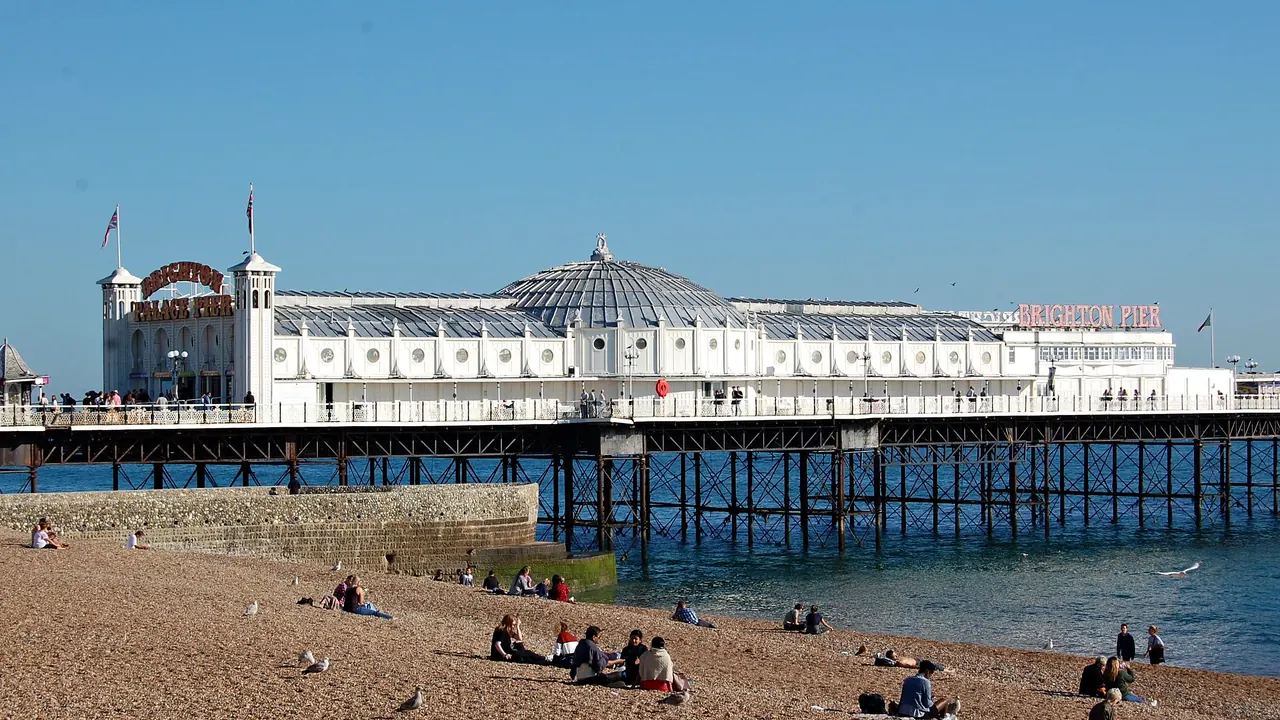
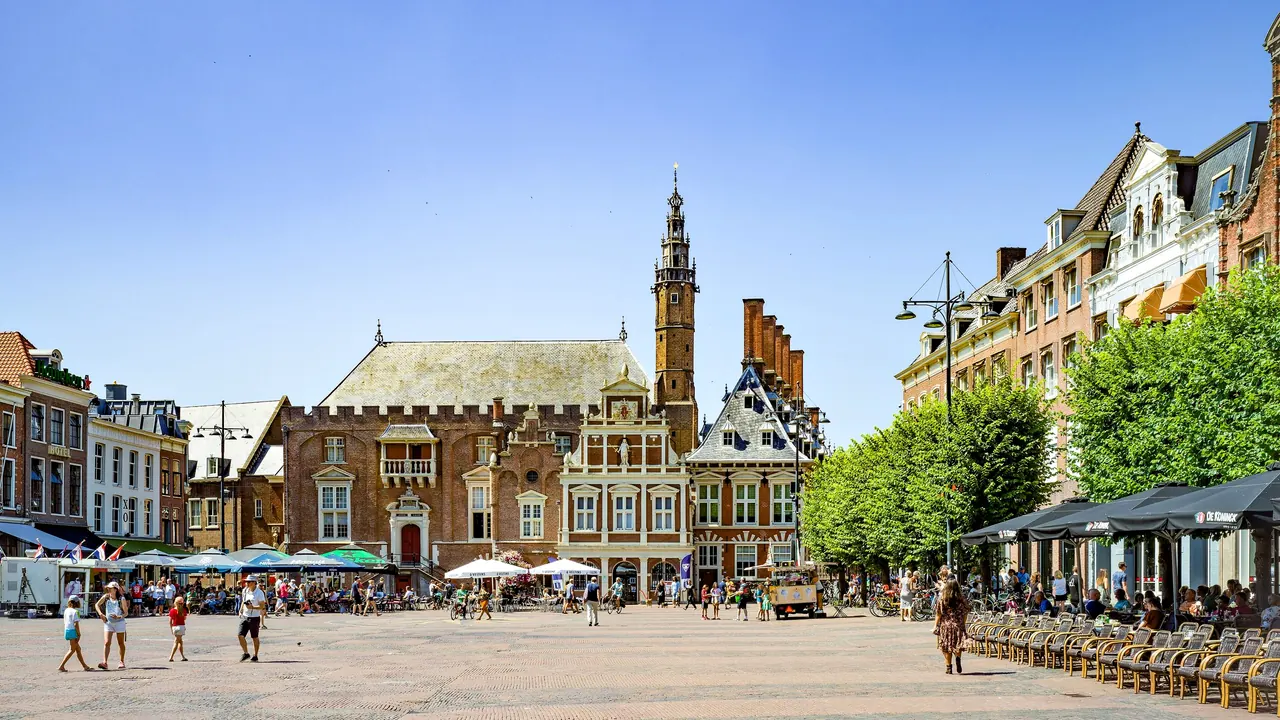
Photos: Brighton by Hassocks5489, CC0; Haarlem by Moroder, CC BY-SA 4.0, cropped.
Brighton or Haarlem?
Our verdict in twelve categories, each scored against the same fixed benchmark cities, and the climate month by month, so you can choose for your trip.
Choose Brighton for
- nightlife
- live music and the arts
- food and drink
Brighton is the pick for a lively, sociable seaside break. Its evenings are a real draw, from Kemptown's long-established LGBTQ+ scene to the clubs in the seafront arches. It also has more on stage, a better spread of independent kitchens and cafés, and a proper bucket-and-spade seafront with a pier, an aquarium and Volk's Railway for children. Add the South Downs on the edge of town and London an hour away, and it suits travellers who want plenty going on.
Choose Haarlem for
- wellness
- culture and sights
- day trips
Haarlem rewards a quieter, more reflective trip. Its intact Golden Age centre, with St Bavo, the Frans Hals Museum, Teylers and the hidden hofjes, gives it the deeper sightseeing of the two. Nights are calm, the pace is slow and the dunes begin at the edge of town. Because Amsterdam, Leiden, The Hague and Delft are all so close, it also makes a slightly better base for anyone who wants to see a lot of the country while sleeping somewhere peaceful.
Scoreboard
Twelve categories on one fixed scale from 0 to 100. The shaded stretch is the gap between the two.
Your match
Pick a travel style or drag the sliders, and both match scores follow your weighting.
Wins on nightlife and live music and the arts with your weighting.
Wins on wellness and culture and sights with your weighting.
What matters to you?
Category by category
What the scores mean for a trip.
Beaches & swimming
Neither is a swimming destination, but Brighton's beach plays the bigger part in a visit. Its shingle runs right along the town's seafront, with lifeguards in season and a year-round community of dawn swimmers. Expect steep pebbles, though, not sand.
Haarlem has the sand, but you have to travel for it: a short train ride to Zandvoort or a bike ride through the dunes to Bloemendaal aan Zee. Once there you get long, open beaches with summer pavilions and wind off the North Sea, better for walking than for lounging.
Food & drink
Brighton eats better. Small independent kitchens fill the North Laine, the Lanes and Kemptown, and the city is known for vegetarian and vegan cooking and good coffee. Oysters and whelks from the arches and Sussex sparkling wine add a local note.
Haarlem's food is solid rather than exciting: brown cafés, bistros on the side streets, and herring, cheese and kibbeling at the Saturday market on the Grote Markt. Its strength is beer, with a long brewing history and a good craft tap scene.
Culture & sights
Haarlem has more to see. Its whole centre of gables, canals and courtyard almshouses survives, and it holds two serious collections in the Frans Hals Museum and Teylers, along with the great Gothic bulk of St Bavo and the Corrie ten Boom House.
Brighton has one outstanding sight, the Royal Pavilion, with its Indian domes and chinoiserie interiors. Around it, Regency crescents, the piers and the old Lanes make a good walk, but there is less depth once you have done the palace and the museum next door.
Nightlife
This is the widest gap between the two. Brighton's universities, young population and long role as London's weekend escape keep its bars full every night. Kemptown has one of Britain's oldest LGBTQ+ scenes, and West Street and the seafront arches run into the small hours, rowdy with stag and hen groups on weekends.
Haarlem's evenings are terrace drinks and brown cafés around the Grote Markt and the Botermarkt, friendly and finished long before dawn. There is almost no clubbing, so anyone after that heads to Amsterdam.
Nature & outdoors
Brighton has slightly more varied country on its doorstep. The chalk downland of the South Downs begins at the city's edge, with walking and mountain biking along the South Downs Way, and the white cliffs of the Seven Sisters and Beachy Head are within easy reach. Watersports off the seafront round it out.
Haarlem's outdoors is flat. It has the dunes, woods and small lakes of Zuid-Kennemerland, with grazing Highland cattle and fallow deer, and in spring the bulb fields turn the polders into stripes of colour. It is lovely by bike, though it has no hills or cliffs.
Day trips
Both are excellent bases, and Haarlem has a slight edge in how much lies close by. Amsterdam is a quarter of an hour away, and Leiden, The Hague, Delft, Utrecht and Rotterdam all fit into easy days, with Alkmaar, Zaanse Schans and Keukenhof added on.
Brighton's big asset is London an hour away by train. The rest is Sussex at a gentler pace: Lewes, Arundel, Chichester, Rye and Battle, plus vineyards and Wealden country houses that are easier to reach by car.
Good for families
Brighton gives children more that is made for them. It has the rides on the Palace Pier, the Victorian aquarium, Volk's Electric Railway and paddling at Hove Lagoon. The drawbacks are shingle instead of sand and a centre best avoided late on weekend nights.
Haarlem is relaxed and easy with children, small, flat and largely car-free, with dunes to run in and Teylers' fossils to look at. But it has no zoo, aquarium or theme park, so families often borrow Amsterdam's attractions.
Getting around
Both are easy without a car, but in different ways. Brighton is a walking and bus city. The centre is compact, but the climbs back up to the station and Kemptown are steep, and frequent buses cover Hove and the edge of the Downs.
Haarlem is flat and built for bikes, with separate paths running straight out to the dunes and the beach. Trains to Amsterdam, Leiden and Zandvoort take minutes, and one card works across the whole system.
Shopping & style
They are about level, and in neither place will big-name luxury shopping justify the trip. Brighton's North Laine leans alternative, with vintage clothes, records, comics and retro furniture, while the Lanes add jewellery and antiques. Haarlem is more polished, with design shops, independent fashion, bookshops and delis on streets such as Gierstraat and Kleine Houtstraat, and flower and cheese stalls on market days.
Affordability
Neither is cheap, and the cost comes mostly from beds. Brighton's rooms are dearest on summer weekends and much easier midweek and in winter. Haarlem has too few hotels for the demand, so they fill early in tulip season and summer. In both, the free pleasures of walking, beaches and countryside help balance things, while train fares for day trips add up.
Live music & performing arts
Brighton has more going on. The Brighton Festival and England's largest fringe take over the city every May, the Dome and the Theatre Royal run all year, there is a deep live-music and comedy circuit, and Glyndebourne opera is close by.
Haarlem is smaller and more classical. The Philharmonie and the Stadsschouwburg carry the programme, though much of the theatre is in Dutch. Its distinctive draw is organ music on St Bavo's great Müller instrument and the long-running international organ festival.
Wellness & relaxation
Haarlem is the more restful stay. Its quiet canals and courtyards after dark set a slow pace, and the Dutch habit of large sauna and day-spa complexes gives you somewhere to unwind in the wider region.
Brighton's version of a ritual is the dawn sea swim followed by a seafront sauna. Otherwise, calm means coming midweek out of season or heading up into the Downs.
When should you go?
Pick your month. The climate figures are measured averages, not a forecast.
Brighton in July
Haarlem in July
Daytime high, °C
Rainfall in the month, mm
Where the figures come from
Brighton has no rain gauge within 25 km of the centre, so its rainfall comes from a gridded climate dataset read at the city rather than from a gauge further away.
Brighton's sunshine is measured 37 km from the centre, at London Gatwick Airport.
Haarlem has no rain gauge within 25 km of the centre, so its rainfall comes from a gridded climate dataset read at the city rather than from a gauge further away.
Haarlem's sunshine is measured 49 km from the centre, at De Bilt.
Temperature and rainfall are climate normals, averaged over the years shown. Brighton: 1999-2020 (sunshine 1981-2010, rainfall 1991-2020) normals, Shoreham Airport (10.3 km from centre). Haarlem: 1991-2020 normals, Amsterdam Airport Schiphol (12.7 km from centre).
The two climates are close cousins, mild and damp, with a short summer that suits the beach. Both are at their warmest in July and August. Haarlem gets a little warmer, reaching about 22°C against Brighton's 20°C, and the North Sea off Zandvoort reaches about 19°C, slightly warmer than the Channel's 17°C. Neither is ever too hot for walking the streets, so late spring through early autumn is comfortable sightseeing weather in both. May and June are bright in each place, and a little sunnier on the Dutch side.
Where they differ is when the rain comes. Haarlem gets wetter from midsummer onwards and is at its wettest in October, around 109mm, so its spring months, with the bulb fields in flower, are the driest and most dependable. Brighton keeps a drier summer and early autumn, then turns wet from October to December. Winters are grey in both, and Haarlem's are a few degrees colder.
Which traveller are you?
For a food and nightlife trip, Brighton is the clear choice. Its pubs, cocktail bars and clubs stay busy every night of the week, and the North Laine and Kemptown pack in independent kitchens and serious coffee. In Haarlem, a big night usually means taking the train to Amsterdam.
On a relaxing and wellness trip, Haarlem suits better. Its canals and almshouse courtyards fall quiet after dark, lingering on café terraces is normal, and Dutch sauna culture is within reach. Brighton's restful side mostly shows midweek out of season, and its summer weekends get loud.
For a culture and arts trip built around museums and historic streets, choose Haarlem. You have the Frans Hals Museum, Teylers' oval room and St Bavo's organ, all in a centre that survived intact. Brighton is stronger for theatre and festivals, but beyond the Pavilion it has fewer sights.
Before you go
| Measure | Brighton | Haarlem |
|---|---|---|
| Official language | English | Dutch |
| Currency | Pound Sterling (GBP) | Euro (EUR) |
| Sockets | G230 V, 50 Hz | CF230 V, 50 Hz |
| Driving side | Left | Right |
| Time zone | UTC, UTC+1 in summer | UTC+1, UTC+2 in summer |
| Emergency number | 112 or 999 | 112 |
| Elevation | 22 m | 2 m |
| Main airport | London Gatwick Airport (LGW)37 km from centre224 non-stop destinations | Amsterdam Airport Schiphol (AMS)12 km from centre287 non-stop destinations |
| Public holidays this year | 8 days | 11 days |
By the numbers
| Measure | Brighton | Haarlem |
|---|---|---|
| City population | 134,293 | 162,543 |
| People per km² | 1,624 | 5,064 |
| Museums within 10 km | 11 | 28 |
| UNESCO World Heritage sites within 50 km | 0 | 5 |
| Swim season, months above 21 °C | None | None |
Where else could you go?
Every comparison below shares a destination with this one, so you can follow Brighton or Haarlem somewhere new.
- Amsterdamvs Haarlem
- The Haguevs Haarlem
- Utrechtvs Haarlem
- Rotterdamvs Haarlem
- Londonvs Brighton
- Oxfordvs Brighton