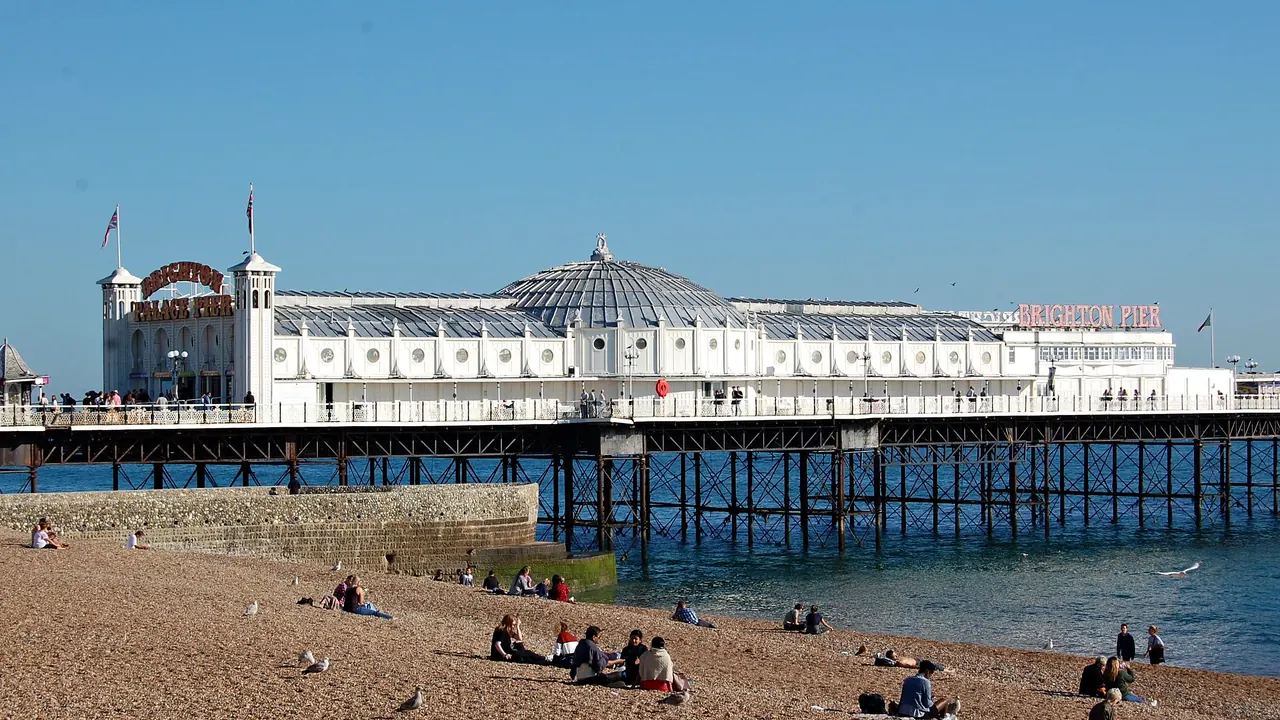
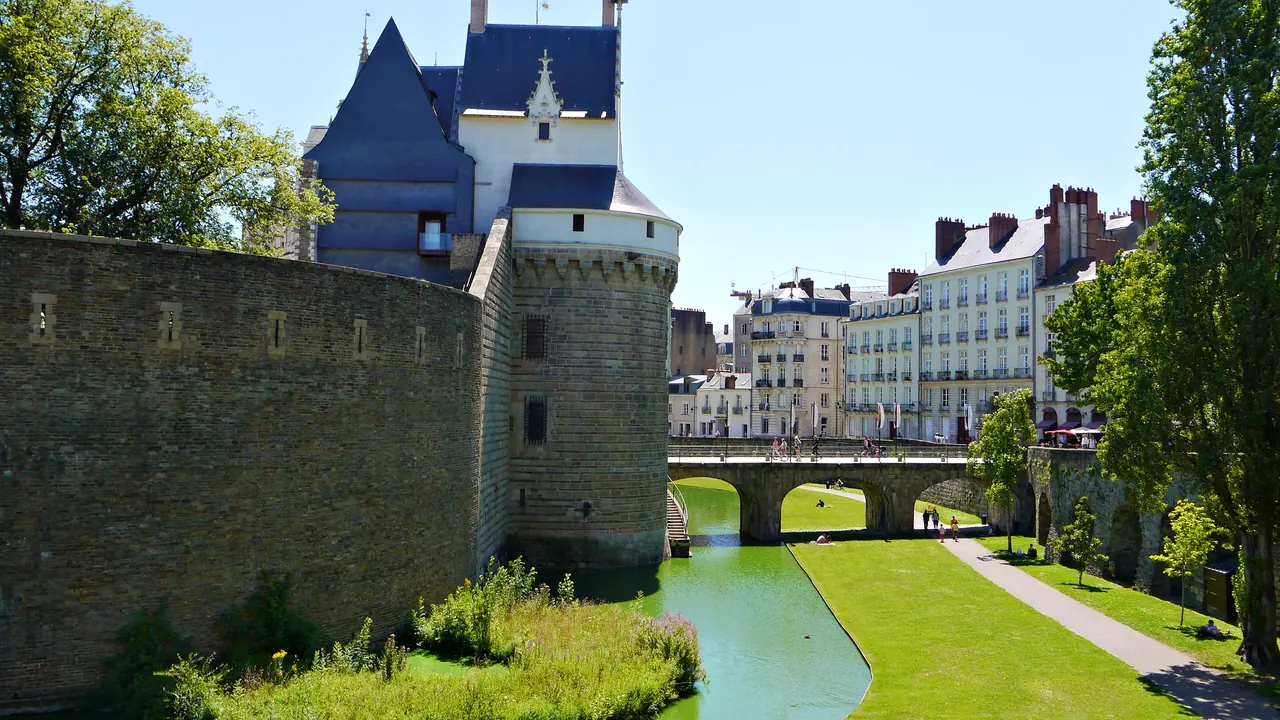
Photos: Brighton by Hassocks5489, CC0; Nantes by Carole44, CC BY-SA 3.0, cropped.
Brighton or Nantes?
Our verdict in twelve categories, each scored against the same fixed benchmark cities, and the climate month by month, so you can choose for your trip.
Choose Brighton for
- nightlife
- nature and the outdoors
- day trips
Brighton suits travellers who want an English seaside town with a big night out attached. The pubs, clubs and long-running LGBTQ+ scene of Kemptown keep going all week. The chalk hills of the South Downs start at the edge of town, and London is close enough for a day by train. Rooms cost more, and the beach is shingle, but for a lively, walkable base with plenty of trips on the doorstep it is the stronger pick.
Choose Nantes for
- prices
- culture and sights
- wellness
Nantes is the better choice for a calmer, more cultured stay in a French regional city. It has a moated ducal château, a Gothic cathedral and a frank history museum. The cooking is rooted in the lower Loire, with beurre blanc and Muscadet. Summers are warmer and sunnier, hotels are easier on the budget, and sandy Atlantic bays are within reach for a beach day.
Scoreboard
Twelve categories on one fixed scale from 0 to 100. The shaded stretch is the gap between the two.
Your match
Pick a travel style or drag the sliders, and both match scores follow your weighting.
Too close to call, 1 point apart
Wins on nightlife and nature and the outdoors with your weighting.
Wins on prices and culture and sights with your weighting.
What matters to you?
Category by category
What the scores mean for a trip.
Beaches & swimming
Neither is a swimming destination, but the sea plays a different part in each. In Brighton the beach is the town's own seafront, so you can sit on it every evening. It is steep shingle, though, and the Channel stays cold.
Nantes has no beach of its own. The reward for an hour on the train is soft sand at La Baule or the coves around Pornic, with slightly warmer Atlantic water. Pick Brighton for the sea on your doorstep and Nantes for a proper sandy beach day.
Food & drink
The eating is equally good in both, but different in character. Brighton's strength is its spread of small independent kitchens, serious coffee and a long tradition of vegetarian and vegan cooking, plus fish and chips and oysters on the seafront. It has no cooking of its own, though.
Nantes does. Beurre blanc was born here and is poured over pike-perch. You also get coast oysters, buckwheat galettes and Muscadet from vineyards just outside town, and the Talensac market shows off the region's produce. Each has its local wine, Sussex sparkling against crisp Muscadet.
Culture & sights
Nantes has the deeper list of sights. The moated château houses a well-made city museum that is open about the slave trade. Add the Gothic cathedral with the tomb of Francis II, a fine art museum, the leaning merchant houses of Ile Feydeau, the abolition memorial and the Jules Verne museum, and you have two or three full days.
Brighton has one sight of real fame, the Royal Pavilion, with its Indian domes and chinoiserie rooms. After that it is the Regency crescents of Kemptown and Hove, the piers and the Lanes, a town for strolling and looking up at buildings rather than visiting collections.
Nightlife
Brighton is the clear winner after dark, and for many visitors the night out is the point of the trip. Pubs and bars are full every night of the week, the clubs on West Street and under the seafront arches run into the small hours, and Kemptown has one of Britain's oldest LGBTQ+ scenes. Weekends can get rowdy with stag and hen groups.
Nantes is friendly and livelier than its size suggests, with terraces packed into the Bouffay lanes and late bars in the old dock warehouses on the Ile de Nantes. Still, it is a regional city's night out, and quiet midweek outside term.
Nature & outdoors
Brighton has the better outdoors. The South Downs National Park begins at the city's edge, with chalk grassland, Devil's Dyke and the South Downs Way for walking and mountain biking. The white cliffs of the Seven Sisters and Beachy Head are a short trip east, and windsurfing and paddleboarding go on off the seafront.
Nantes has flat, watery country instead. It suits gentle days: boating or canoeing on the Erdre, cycling the Loire à Vélo route through vineyards, birdwatching in the Brière marshes and walking the rocky Côte Sauvage. Expect no hills.
Day trips
Brighton has the edge, mainly because London is about an hour away by fast train. Around it, Sussex adds Lewes and Arundel with their castles, Chichester's cathedral and Roman palace, medieval Rye and the Norman Conquest battlefield at Battle.
Nantes is also a fine base. It has walled Guérande above its salt marshes, Angers and the Apocalypse Tapestry, the Loire châteaux around Saumur, Italianate Clisson in the Muscadet country, and Vannes on the Gulf of Morbihan. What it cannot match is a world capital as an easy day out.
Good for families
Both are good with children, and the difference is in how the days are spread out. In Brighton the whole outing sits along one seafront. The pier, the old aquarium, Volk's railway and the paddling at Hove Lagoon are all within walking distance of each other, so a family needs no car and no plan. What it cannot give children is sand or warm water, and the centre late on weekend nights is no place for them.
Nantes has one attraction that outshines anything on Brighton's front, the giant mechanical elephant of the Machines de l'Ile. The Jardin des Plantes playgrounds fill the quieter hours. Its real advantage is what lies a drive away: calm sandy beaches at La Baule and Pornic, a safari park and the Puy du Fou theme park. Brighton suits a few easy days with everything close at hand, while Nantes gives a summer week with a car more variety.
Getting around
Both centres are compact enough to walk, and neither needs a car in town. Brighton's walk down to the sea is easy, but the climb back to the station and up into Kemptown is steep, and buses fill the gaps.
Nantes is flat, so walking and cycling are easier. Three tram lines and river shuttles across the Loire make it simple to follow. By train, Brighton puts London about an hour away, while Paris is about two hours from Nantes.
Shopping & style
Brighton is the more rewarding place to browse. The North Laine's narrow streets are full of vintage clothing, records, retro furniture and comics, and the Lanes add jewellers and antique dealers in the old alleys.
Nantes is pleasant rather than a draw. The three-level Passage Pommeraye is its showpiece, Rue Crébillon has the chains and a department store, and the best souvenirs are edible: salted-butter biscuits, Guérande salt and Muscadet. Neither city has much luxury retail.
Affordability
Nantes is the cheaper stay. Hotels are priced like any French regional city, rooms are usually easy to find, and set lunch menus keep eating out reasonable. Only the coast gets pricier in high summer.
Brighton's rooms are the big cost, especially on summer weekends when Londoners and party groups fill them. Midweek and winter stays are kinder. Once you are there, the beach, the piers, the Lanes and the Downs cost nothing.
Live music & performing arts
Both put on more than their size suggests, but at different times and in different styles. Brighton peaks in May, when the Brighton Festival and the Fringe take over theatres, pubs and pop-up spaces. The rest of the year brings strong comedy, gigs in rooms above pubs, and Glyndebourne's summer opera nearby.
Nantes leans classical. La Folle Journée packs short concerts into a few winter days, the regional opera plays at the Théâtre Graslin, and the Lieu Unique offers contemporary dance and theatre. Its tradition of giant street puppets brings performance out into public squares.
Wellness & relaxation
Neither is a place for a restful vacation, but Nantes has slightly more to offer. The French seawater cure of thalassotherapy has long-established centres at La Baule and Pornic, about an hour away, and the city's own pace is unhurried.
Brighton has no bathing tradition beyond a few spas and the dawn sea swimmers warming up in seafront saunas. Its calm comes from quiet out-of-season walks past Hove's beach huts, or from heading into the villages of the Downs.
When should you go?
Pick your month. The climate figures are measured averages, not a forecast.
Brighton in July
Nantes in July
Daytime high, °C
Rainfall in the month, mm
Where the figures come from
Brighton has no rain gauge within 25 km of the centre, so its rainfall comes from a gridded climate dataset read at the city rather than from a gauge further away.
Brighton's sunshine is measured 37 km from the centre, at London Gatwick Airport.
Temperature and rainfall are climate normals, averaged over the years shown. Brighton: 1999-2020 (sunshine 1981-2010, rainfall 1991-2020) normals, Shoreham Airport (10.3 km from centre). Nantes: 1991-2020 normals, Nantes (6.6 km from centre).
Both cities share the same basic rhythm: mild, fairly dry summers, and a wet stretch from October to December, when each gets around 100mm a month. Summer is where they part. Brighton's afternoons top out around 20°C in July and August. That is pleasant for the promenade and the Downs but rarely hot, and the Channel only reaches about 17°C by late summer. Nantes warms to about 25°C in high summer and gets noticeably more sunshine from spring to autumn, while the Atlantic off its coast reaches about 19°C.
Neither city is ever too hot for walking the streets, so June to September suits both. May and September are the sweet spot for long days out without peak-summer warmth. Winter is grey and damp in each, a little milder in Nantes, and better for museums, pubs and concerts than for the coast.
Which traveller are you?
For a food and nightlife trip, Brighton is the livelier choice. Bars and clubs run every night of the week, from West Street and the seafront arches to Kemptown's LGBTQ+ venues, and the independent kitchens of the North Laine keep the eating varied.
On a culture and arts trip, Nantes gives you more to see. You get the Château des Ducs de Bretagne and its history museum, the cathedral, the Musée d'Arts and the merchant façades of Ile Feydeau, against Brighton's single star, the Royal Pavilion.
For a trip on a tight budget, Nantes stretches your money further. Hotels are easy to find at regional French prices, set lunches are good value and trams cost little. Brighton's rooms are expensive, especially on summer weekends.
Before you go
| Measure | Brighton | Nantes |
|---|---|---|
| Official language | English | French |
| Currency | Pound Sterling (GBP) | Euro (EUR) |
| Sockets | G230 V, 50 Hz | CE230 V, 50 Hz |
| Driving side | Left | Right |
| Time zone | UTC, UTC+1 in summer | UTC+1, UTC+2 in summer |
| Emergency number | 112 or 999 | 112 |
| Elevation | 22 m | 2 m |
| Main airport | London Gatwick Airport (LGW)37 km from centre224 non-stop destinations | Nantes Atlantique Airport (NTE)8 km from centre97 non-stop destinations |
| Public holidays this year | 8 days | 11 days |
By the numbers
| Measure | Brighton | Nantes |
|---|---|---|
| City population | 134,293 | 327,734 |
| People per km² | 1,624 | 5,027 |
| Museums within 10 km | 11 | 11 |
| UNESCO World Heritage sites within 50 km | 0 | 0 |
| Swim season, months above 21 °C | None | None |
Where else could you go?
Every comparison below shares a destination with this one, so you can follow Brighton or Nantes somewhere new.
- Londonvs Brighton
- Oxfordvs Brighton
- Cambridgevs Brighton
- Bathvs Brighton
- Bristolvs Brighton
- Cardiffvs Brighton