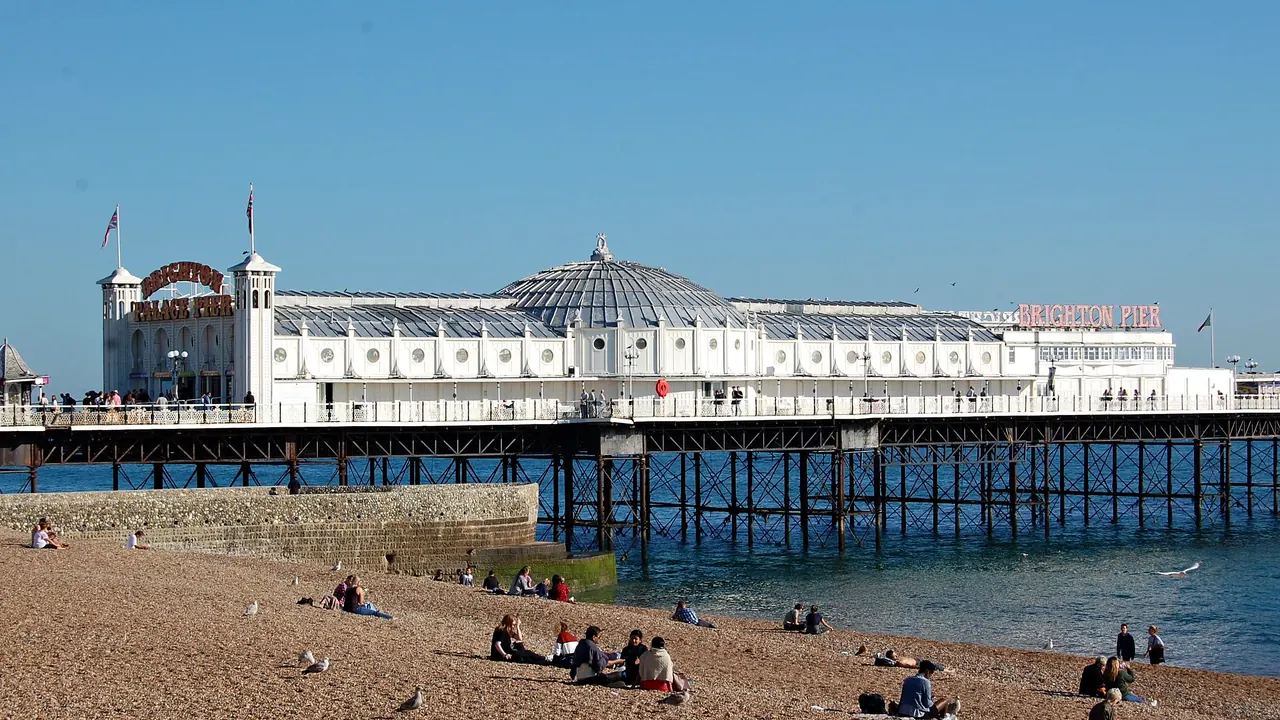
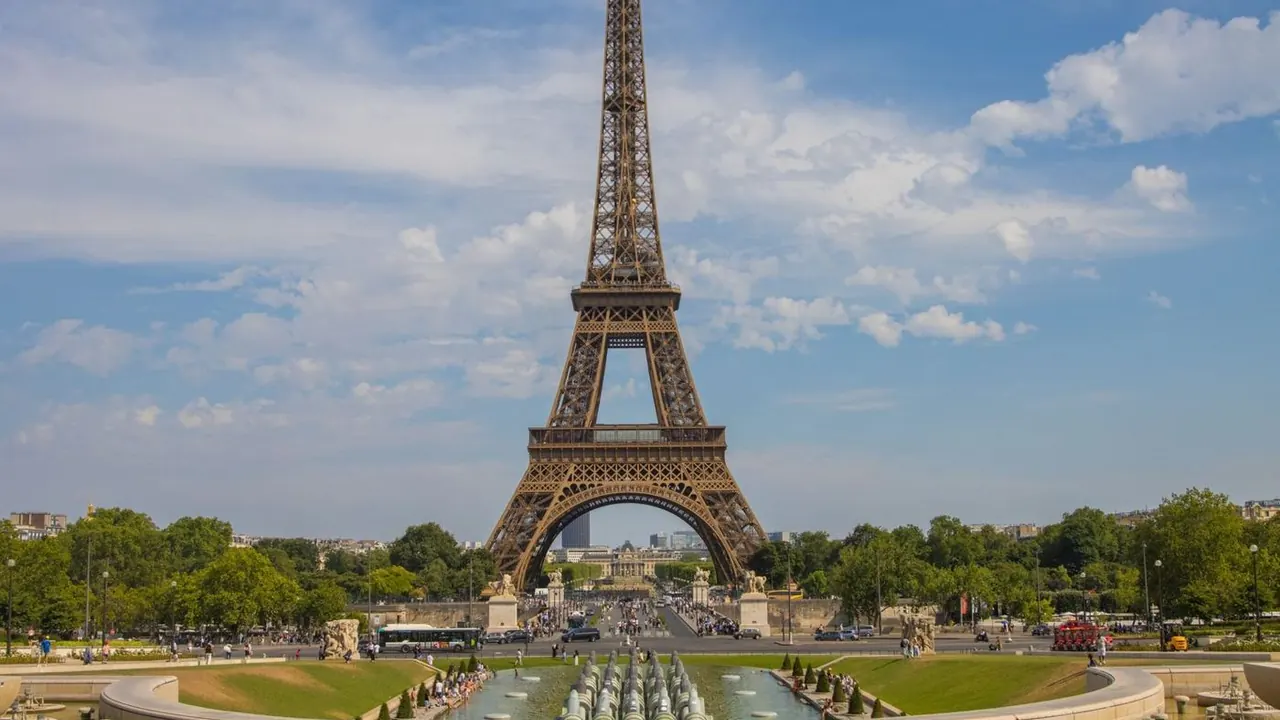
Photos: Brighton by Hassocks5489, CC0; Paris by Efrem Efre, Pexels License.
Brighton or Paris?
Our verdict in twelve categories, each scored against the same fixed benchmark cities, and the climate month by month, so you can choose for your trip.
Choose Brighton for
- beaches
- nature and the outdoors
- prices
Brighton suits a looser, more outdoor trip: a seafront to walk, the South Downs on the edge of town, pubs and clubs that fill every night, and the North Laine for browsing odd independent shops. It works well for a weekend by the sea with long walks on the chalk cliffs, a lively LGBTQ+ scene in Kemptown and London an hour up the line. It is also the slightly cheaper place to stay, though neither comes cheap.
Choose Paris for
- culture and sights
- shopping
- food and drink
Paris is the choice when the city itself is the reason for the trip. The museums, the Gothic churches and the Haussmann boulevards are in a different league, and so are the bistros, the markets, the department stores and the opera. Anyone who wants to eat, shop and see world-famous art in one stay, with Versailles or Champagne as a day out, will find Brighton thin by comparison.
Scoreboard
Twelve categories on one fixed scale from 0 to 100. The shaded stretch is the gap between the two.
Your match
Pick a travel style or drag the sliders, and both match scores follow your weighting.
Wins on beaches and nature and the outdoors with your weighting.
Wins on culture and sights and shopping with your weighting.
What matters to you?
Category by category
What the scores mean for a trip.
Beaches & swimming
Brighton at least has a real seafront: steep shingle running from the Marina to Hove, lifeguards on the central stretches in summer and a cold Channel that is swimmable on calm days. It is better for sitting by the sea than for a proper beach vacation, but the sea is a few minutes' walk from anywhere in the centre.
Paris has only the summer sand laid out along the riverbanks and swimming spots in the Bassin de la Villette and the Seine, plus its handsome public pools. For salt water you need a train of about two hours to Normandy.
Food & drink
Paris is one of the great places in the world to eat, from zinc-counter bistros and neo-bistros in the 11th to haute cuisine, with neighbourhood markets such as Aligre and couscous in Belleville and pho in the 13th. Even an ordinary bakery breakfast is part of the trip.
Brighton eats well for an English town, with its vegetarian and vegan kitchens, serious coffee in the North Laine, seafront oysters and fish and chips, and Sussex sparkling wine. It has no cuisine of its own, though, and very little at the top end.
Culture & sights
Brighton's culture comes down to one great eccentric building, the Royal Pavilion, plus the Regency crescents of Kemptown and Hove and a wander through the Lanes. It fills a day or two.
Paris can fill weeks. The Louvre, the Orsay, the Pompidou and a string of smaller museums sit within walking distance of Notre-Dame, the Sainte-Chapelle and the UNESCO-listed Seine embankments, so a visitor here plans around booking and queues rather than running out of things to see.
Nightlife
Both cities are good for going out, but Paris offers more range: wine bars and canal-side drinking around Oberkampf and Belleville, cocktail bars in South Pigalle and house and techno clubs running until dawn. The tone is chic, and the door can be selective.
Brighton's night is louder and more casual, powered by students and weekenders from London. Kemptown's long-established LGBTQ+ scene is its strongest card, and West Street gets rowdy with stag and hen parties at weekends.
Nature & outdoors
Brighton has real countryside on its doorstep. The South Downs National Park starts at the edge of the city, with Devil's Dyke and the South Downs Way a short bus ride away for walking and mountain biking. The Undercliff Walk follows the chalk to Rottingdean, and about forty minutes east the white cliffs of the Seven Sisters and Beachy Head make a memorable day on foot. Off the seafront there is windsurfing, kitesurfing and sailing.
Paris gives you parks and woods instead: the Buttes-Chaumont, the Bois de Vincennes and, a train ride out, the boulders and trails of Fontainebleau. It is pleasant for gentle walking and cycling, but the Île-de-France has no mountains or coast to match the Downs and the sea.
Day trips
Brighton's great asset is London, about an hour away by fast train, so a day in a world capital comes free with a seaside base. Closer to home, Lewes is a quarter of an hour by train, and Arundel, Rye and Battle are easy outings in Sussex.
Paris still reaches further. Versailles, Fontainebleau, Chartres and Giverny are all within about an hour, and fast trains go to the Champagne houses of Reims, Rouen's old town and the Loire châteaux. On a long stay you could spend as many days out of the city as in it.
Good for families
Brighton gives children an old-fashioned seaside day: pier rides and arcades, the Victorian aquarium, Volk's Electric Railway and paddling at Hove Lagoon. The compact centre is easy with a pushchair, but the shingle is poor for sandcastles.
Paris has far more to fill a family trip, with Disneyland and Parc Astérix close by, the Cité des Sciences, the Jardin des Plantes galleries and the carousels and toy boats of the Luxembourg. Daily logistics are harder, with stairs in the metro and small hotel rooms.
Getting around
Brighton is small enough that the station, the Lanes, the Pavilion and the seafront are all within about fifteen minutes' walk of each other, and buses cover Hove and the edge of the Downs. The catch is the steep climb back up from the sea.
Paris covers far more ground with the same ease. Its centre is one of the best places anywhere to explore on foot, and the dense metro and RER bring almost everything within easy reach, Versailles and the airports included. Expect long station corridors, packed trains at rush hour and pickpockets on the tourist lines. A car is more trouble than it is worth in either city.
Shopping & style
Brighton is for browsing: vintage clothes, records, comics and retro furniture in the North Laine, and jewellers and antique dealers in the Lanes. Big-name fashion is missing.
Paris has everything Brighton lacks and its own independents too. The luxury houses line Avenue Montaigne and the Faubourg Saint-Honoré, Le Bon Marché and Galeries Lafayette are sights in themselves, and the covered passages, the Saint-Ouen flea market and the bouquinistes add antiques and old prints. Cheese, chocolate and mustard make easy things to take home.
Affordability
Neither is a budget destination, but Brighton is easier on the wallet. Rooms are dear on summer weekends and noticeably cheaper midweek and in winter. Once you are there, the beach, piers and Downs are free, though train fares for day trips add up.
Paris hotels are costly and small, and museum tickets and terrace drinks stack up quickly. Savings come from bakeries, markets, lunchtime set menus, the city's free museum collections and staying in the outer arrondissements.
Live music & performing arts
Brighton punches above its size. Every May the Festival and the largest fringe in England take over the town, the Dome and the Theatre Royal run all year, and Glyndebourne's opera is close by in the Downs. Small music and comedy rooms fill the rest of the calendar.
Paris works on another scale, with the Palais Garnier's ballet, the Opéra Bastille, the Philharmonie, church concerts in the Sainte-Chapelle and jazz cellars in Saint-Germain. Much of its theatre is in French, which matters less for music and dance.
Wellness & relaxation
In Brighton, rest happens outdoors and has little to do with treatments. The dawn sea swimmers warm up in seafront saunas, midweek walks past Hove's beach huts are quiet, and the Downs villages offer real calm. Summer weekends are anything but restful.
Paris has a little more for a pampering afternoon, thanks to a hammam culture brought by its North African communities. The tiled steam rooms and mint tea at the Grande Mosquée are the best known, and there are hotel spas too, along with an hour with a book in the Luxembourg gardens. Still, neither city makes a proper wellness break.
When should you go?
Pick your month. The climate figures are measured averages, not a forecast.
Brighton in July
Paris in July
Daytime high, °C
Rainfall in the month, mm
Where the figures come from
Brighton has no rain gauge within 25 km of the centre, so its rainfall comes from a gridded climate dataset read at the city rather than from a gauge further away.
Brighton's sunshine is measured 37 km from the centre, at London Gatwick Airport.
Temperature and rainfall are climate normals, averaged over the years shown. Brighton: 1999-2020 (sunshine 1981-2010, rainfall 1991-2020) normals, Shoreham Airport (10.3 km from centre). Paris: 1991-2020 (sunshine 1961-1990) normals, Paris-Montsouris (4.6 km from centre).
Brighton is a summer place. Daytime highs only reach about 20°C in July and August, and the Channel is at its warmest, around 17°C, in August and September, so swimming is for the hardy even then. June to August brings the most sunshine and fairly modest rain. From October the weather turns wet and grey, with November and December the rainiest months, and winter suits bracing seafront walks rather than lingering outside.
Paris has warmer summers, reaching about 26°C in July and August. That is pleasant for terraces and evening walks by the Seine, though long days of sightseeing can feel warm. Rain is spread more evenly through the year and is lighter in winter than on the Sussex coast, with May the wettest month. Spring and early autumn are the most comfortable for walking the city. Winters are cold in both, but Paris is drier.
Which traveller are you?
On a culture and arts trip, Paris is the clear pick. The Louvre, the Orsay and the Sainte-Chapelle sit alongside two opera houses and the Philharmonie, while Brighton has the Royal Pavilion, a busy May festival and not much more in the way of big collections.
For an outdoors trip, Brighton is the better base. The South Downs Way and Devil's Dyke are a short bus ride away, the Seven Sisters cliffs are close, and the sea is right there for kitesurfing and paddleboarding. Paris offers parks and the Fontainebleau woods.
On a shopping trip, Paris wins easily, with couture flagships on Avenue Montaigne, Galeries Lafayette, the Marais designers and the Saint-Ouen flea market. Brighton's North Laine is fun for vintage and records, but it has no luxury streets or grand department stores.
Before you go
| Measure | Brighton | Paris |
|---|---|---|
| Official language | English | French |
| Currency | Pound Sterling (GBP) | Euro (EUR) |
| Sockets | G230 V, 50 Hz | CE230 V, 50 Hz |
| Driving side | Left | Right |
| Time zone | UTC, UTC+1 in summer | UTC+1, UTC+2 in summer |
| Emergency number | 112 or 999 | 112 |
| Elevation | 22 m | 27 m |
| Main airport | London Gatwick Airport (LGW)37 km from centre224 non-stop destinations | Charles de Gaulle International Airport (CDG)22 km from centre277 non-stop destinations |
| Public holidays this year | 8 days | 11 days |
By the numbers
| Measure | Brighton | Paris |
|---|---|---|
| City population | 134,293 | 2,103,778 |
| People per km² | 1,624 | 19,960 |
| Museums within 10 km | 11 | 251 |
| UNESCO World Heritage sites within 50 km | 0 | 5 |
| Swim season, months above 21 °C | None | - |
Where else could you go?
Every comparison below shares a destination with this one, so you can follow Brighton or Paris somewhere new.
- Londonvs Brighton
- Oxfordvs Brighton
- Cambridgevs Brighton
- Bathvs Brighton
- Bristolvs Brighton
- Lillevs Paris