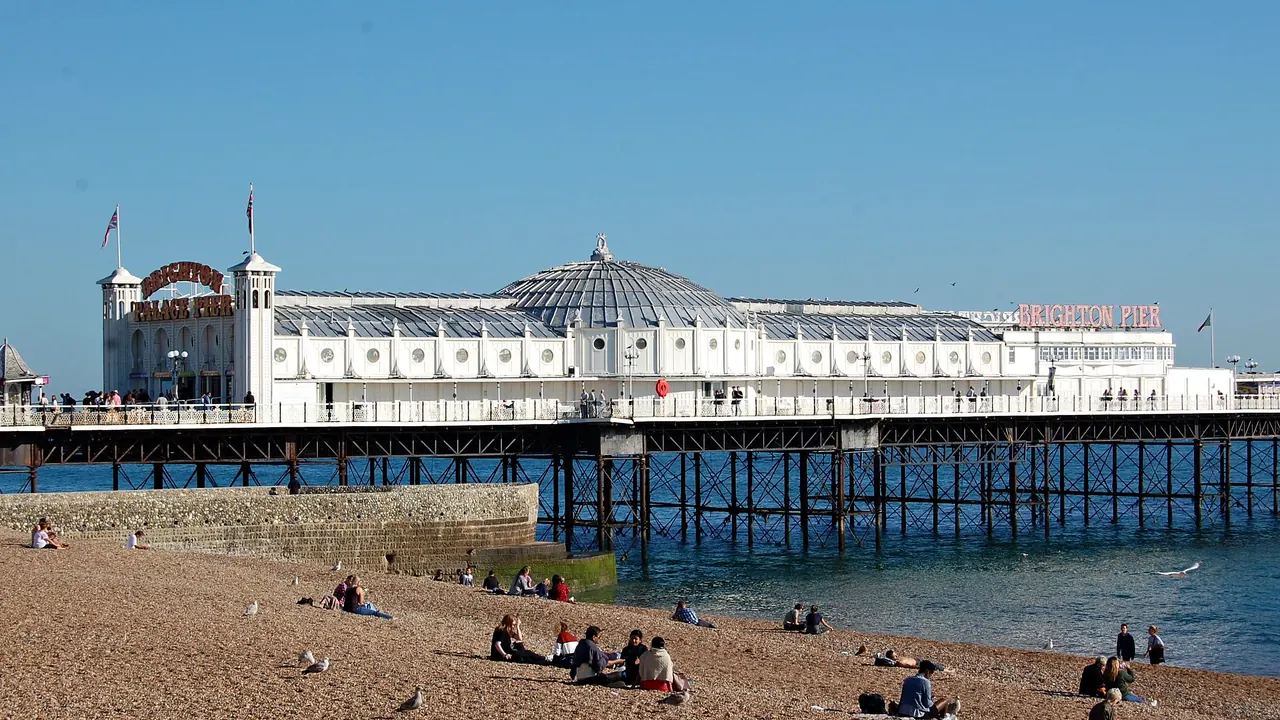
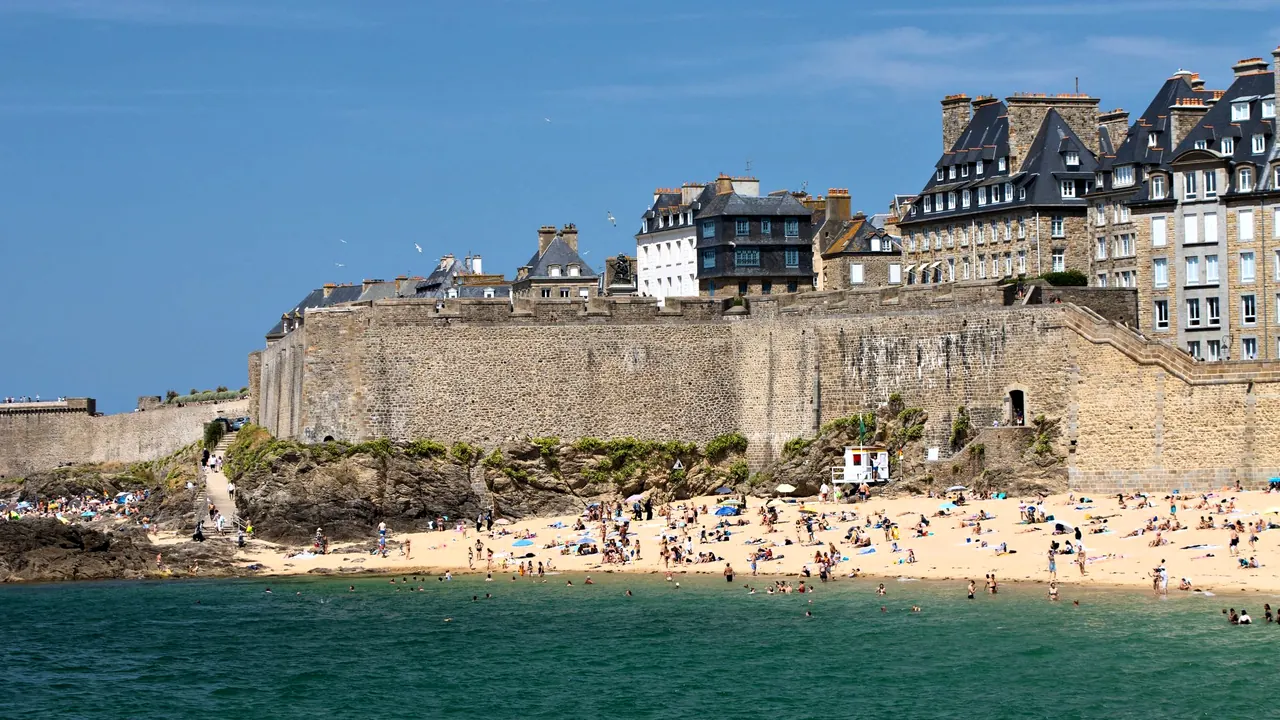
Photos: Brighton by Hassocks5489, CC0; Saint-Malo by Efrem Efre, Pexels License.
Brighton or Saint-Malo?
Our verdict in twelve categories, each scored against the same fixed benchmark cities, and the climate month by month, so you can choose for your trip.
Choose Brighton for
- nightlife
- live music and the arts
- shopping
Pick Brighton for a lively few days where the evenings matter as much as the days. It has the bars and clubs of Kemptown and West Street, a full programme of gigs, comedy and theatre, and the independent shops and cafés of the North Laine. It is also the easier base without a car, with London and the Sussex towns a train ride away.
Choose Saint-Malo for
- wellness
- beaches
- prices
Saint-Malo suits a slower seaside break. Its sandy beaches, tidal sea pool and walks out to the island forts beat Brighton's shingle, and the thalasso centre on the Sillon gives it a restful side that Brighton lacks. Evenings are quiet, so come for oysters, galettes and long walks on the ramparts rather than a night out.
Scoreboard
Twelve categories on one fixed scale from 0 to 100. The shaded stretch is the gap between the two.
Your match
Pick a travel style or drag the sliders, and both match scores follow your weighting.
Wins on nightlife and live music and the arts with your weighting.
Wins on wellness and beaches with your weighting.
What matters to you?
Category by category
What the scores mean for a trip.
Beaches & swimming
Neither is a swimming destination, because both face the same cool Channel. The difference is underfoot. Brighton's seafront is steep shingle all the way from the Marina to Hove. It is good for sitting and watching the sea but awkward for lying out or paddling, and the nearest sand is a drive away.
Saint-Malo has proper sand. The Grand Plage du Sillon runs for about 3km, low tide doubles the size of the beaches and opens a walk out to the island forts, and the sea pool at Bon-Secours lets you swim whatever the tide is doing. Dinard's more sheltered beaches are a short boat ride away.
Food & drink
Brighton has the wider choice. Its independent kitchens in the North Laine, the Lanes and Kemptown cover vegetarian and vegan cooking and serious coffee, and the pubs serve roasts with Sussex ales and sparkling wine. The top end is small, though.
Saint-Malo's strength is narrower and more regional: buckwheat galettes with cider, kouign-amann, and oysters from Cancale eaten by the harbour wall. The crêperies inside the walls are uneven, so the better meals are in Saint-Servan and towards Cancale, and there is little beyond Breton cooking.
Culture & sights
Brighton has the stronger single sight in the Royal Pavilion, George IV's domed and lavishly eccentric palace, with the museum next door. The Booth Museum and the Regency crescents of Kemptown and Hove are enough for a second day.
In Saint-Malo, the walled town is the sight. You walk the full circuit of the ramparts, see the cathedral and the castle keep, and cross to Chateaubriand's grave on the Grand Bé at low tide. The corsair history lives more in street names and statues than in collections, and most of the granite houses were rebuilt after 1944, so there is less to fill a second day.
Nightlife
This is where the two differ most. Brighton is built for going out. Students, weekend visitors from London and Kemptown's LGBTQ+ scene fill the bars every night, and the clubs in the seafront arches run into the small hours. West Street can be rowdy at weekends, but Hove and the North Laine offer calmer evenings.
Saint-Malo goes to bed early. A typical night is a drink after dinner in the wine bars and Irish-style pubs inside the walls, livelier only on summer weekends. For clubs you have to go to Rennes.
Nature & outdoors
Both give easy access to good walking, but of different kinds. Brighton has hills behind it. The chalk grassland of the South Downs begins at the edge of town, Devil's Dyke and the South Downs Way are good for walking and mountain biking, and the Seven Sisters cliffs lie to the east.
Saint-Malo's outdoors is all coast. The GR34 path follows cliffs and headlands in both directions, tides of up to about 13m reshape the bay twice a day, and the Rance estuary suits kayaking. Inland, though, there is only flat farmland.
Day trips
Both are fine bases, and the real difference is how you travel. From Brighton most outings are by train: London in about an hour, Lewes in a quarter of an hour, and Arundel, Chichester and Rye along the coast.
Saint-Malo has the single great excursion in Mont-Saint-Michel, as well as Dinan, Cancale and Rennes. Dinard by boat and Rennes by train are easy, but most of the rest, the Mont included, needs a car. In summer, ferries also go to Jersey and the Chausey islands.
Good for families
Brighton keeps children busy with seaside amusements, while Saint-Malo gives them sand and adventure. Brighton's Palace Pier has rides and arcades, and the Victorian aquarium, Volk's Electric Railway and paddling at Hove Lagoon fill the rest of the day. The shingle is no good for sandcastles, though, and the centre is no place for children late on weekend nights.
In Saint-Malo, children dig on wide beaches, jump into the Bon-Secours sea pool, hear corsair stories on the ramparts and walk out to the island forts at low tide, with the Grand Aquarium for a wet day. Parents need to keep an eye on the tide tables, because the sea comes in fast over the causeways.
Getting around
Brighton is easier without a car. The station, the Lanes, the Pavilion and the seafront are all within walking distance, a dense bus network covers the rest, and direct trains run to London and the Sussex towns. The walk back up to the station is a steep climb, though.
Saint-Malo's walled town and promenade are easy on foot, and there are local buses, a boat to Dinard and fast trains to Rennes and Paris. Beyond the town the buses thin out, so the countryside sights mostly mean driving.
Shopping & style
Brighton is the more rewarding place to browse. The vintage clothing, record shops and retro furniture of the North Laine and the jewellers and antique dealers of the Lanes are worth an afternoon in themselves, and the chains are on Western Road.
Saint-Malo's shops lean towards Breton souvenirs and food: striped sailor tops, salted-butter caramels, cider and faience, plus the markets in town and in Saint-Servan. For anything beyond that you go to Rennes.
Affordability
Neither is cheap, and the costs fall in similar places. In both, rooms are dearest in high summer and much easier to afford out of season. In Brighton, summer weekends are the most expensive time, and train fares add up if you take several day trips.
Saint-Malo is a little easier on a budget thanks to its food. A galette with cider and the set lunch menus are fair value, but seafood platters and summer rooms inside the walls are not.
Live music & performing arts
Brighton has performances all year. The Dome and the Theatre Royal host concerts and drama, pub back rooms and seafront venues support a deep live-music and comedy circuit, and in May the Festival and Fringe take over the city. Glyndebourne's summer opera is close by.
Saint-Malo's performance life comes in bursts: La Route du Rock, the Étonnants Voyageurs literary festival and Quai des Bulles. Between them, the town theatre and the concerts in the cathedral make a modest programme, and for opera you go to Rennes.
Wellness & relaxation
For rest, Saint-Malo has a real tradition to build a stay around. The thalasso centre on the Sillon beach offers heated seawater pools and hydrotherapy, Dinard has the same tradition across the estuary, and out of season there are low-tide walks on empty sand.
Brighton has a few day spas and its dawn sea swimmers with their seafront saunas, but nothing comparable. Its calm moments are midweek walks along Hove's lawns or a day in the villages of the Downs.
When should you go?
Pick your month. The climate figures are measured averages, not a forecast.
Brighton in July
Saint-Malo in July
Daytime high, °C
Rainfall in the month, mm
Where the figures come from
Brighton has no rain gauge within 25 km of the centre, so its rainfall comes from a gridded climate dataset read at the city rather than from a gauge further away.
Brighton's sunshine is measured 37 km from the centre, at London Gatwick Airport.
Saint-Malo has no rain gauge within 25 km of the centre, so its rainfall comes from a gridded climate dataset read at the city rather than from a gauge further away.
Saint-Malo's sunshine is measured 68 km from the centre, at Rennes.
Temperature and rainfall are climate normals, averaged over the years shown. Brighton: 1999-2020 (sunshine 1981-2010, rainfall 1991-2020) normals, Shoreham Airport (10.3 km from centre). Saint-Malo: 2002-2020 (sunshine 1991-2020, rainfall 1991-2020) normals, Dinard (7.9 km from centre).
Both towns face the Channel and share a short summer. In Brighton, July and August are the warm months, with highs around 20°C and the sunniest skies, and the sea is at its least cold from August into September. Saint-Malo is a touch warmer, reaching about 22°C, with water near 18°C in late summer. It also keeps its sunshine much better into September, when Brighton has already turned greyer.
In both towns the rain arrives in October, and the wettest stretch runs through November and December at around 100mm a month. Winter highs stay in single figures in Brighton and around 10°C in Saint-Malo, which is cold but fine for brisk walks on the seafront or the ramparts. From April, spring is pleasant for walking in both, and slightly sunnier on the Breton side.
Which traveller are you?
For a food and nightlife trip, Brighton is the clear choice. Its pubs, cocktail bars and clubs in the seafront arches stay busy every night, Kemptown has a long-established LGBTQ+ scene, and the North Laine's independent kitchens offer far more range than Saint-Malo's crêperies.
On a relaxing and wellness trip, Saint-Malo wins easily. The thalasso centre on the Sillon beach has heated seawater pools and treatments, and out of season the empty sands at low tide make for calm days that Brighton's busy weekends rarely allow.
For a beach and sun trip, Saint-Malo is the better of two cool-water options. It has long sandy beaches, a tidal sea pool at Bon-Secours and a sunnier late summer. Brighton has steep shingle, which suits sitting with chips more than lying out.
Before you go
| Measure | Brighton | Saint-Malo |
|---|---|---|
| Official language | English | French |
| Currency | Pound Sterling (GBP) | Euro (EUR) |
| Sockets | G230 V, 50 Hz | CE230 V, 50 Hz |
| Driving side | Left | Right |
| Time zone | UTC, UTC+1 in summer | UTC+1, UTC+2 in summer |
| Emergency number | 112 or 999 | 112 |
| Elevation | 22 m | 0 m |
| Main airport | London Gatwick Airport (LGW)37 km from centre224 non-stop destinations | Rennes-Saint-Jacques Airport (RNS)68 km from centre15 non-stop destinations |
| Public holidays this year | 8 days | 11 days |
By the numbers
| Measure | Brighton | Saint-Malo |
|---|---|---|
| City population | 134,293 | 47,439 |
| People per km² | 1,624 | 1,296 |
| Museums within 10 km | 11 | 3 |
| UNESCO World Heritage sites within 50 km | 0 | 2 |
| Swim season, months above 21 °C | None | None |
Where else could you go?
Every comparison below shares a destination with this one, so you can follow Brighton or Saint-Malo somewhere new.
- Londonvs Brighton
- Oxfordvs Brighton
- Cambridgevs Brighton
- Nantesvs Saint-Malo
- Bathvs Brighton
- Bristolvs Brighton