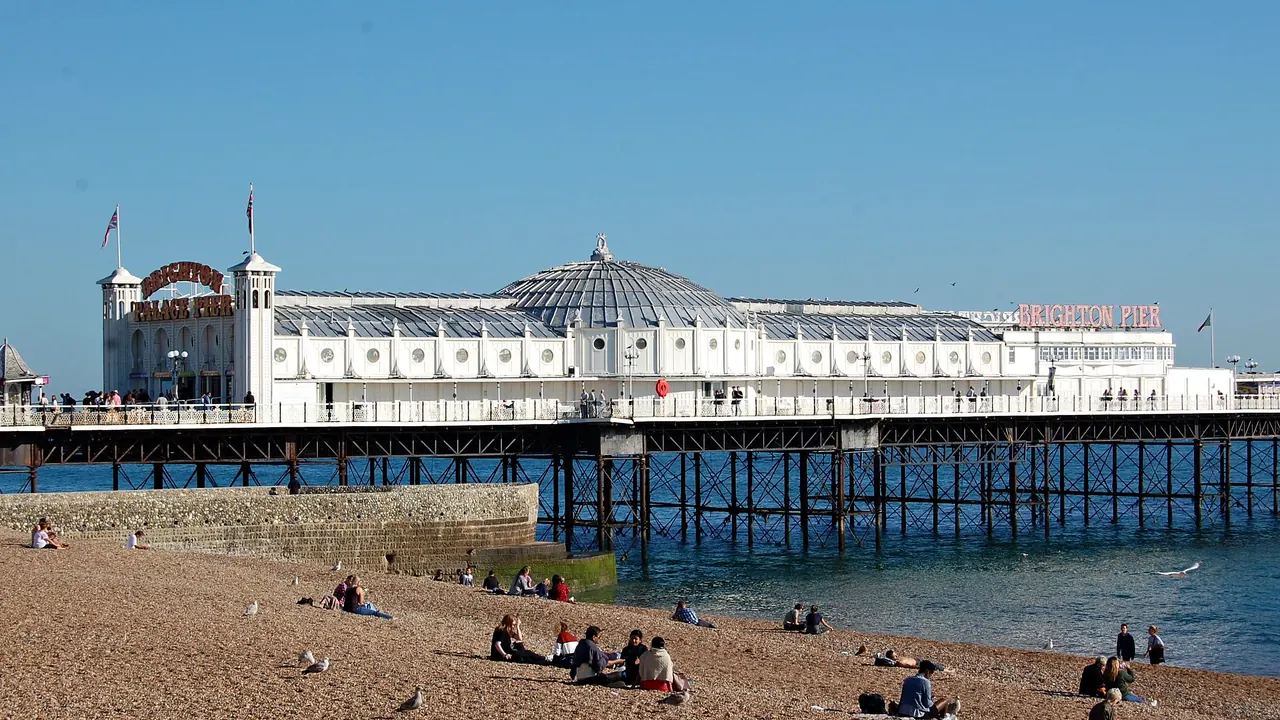
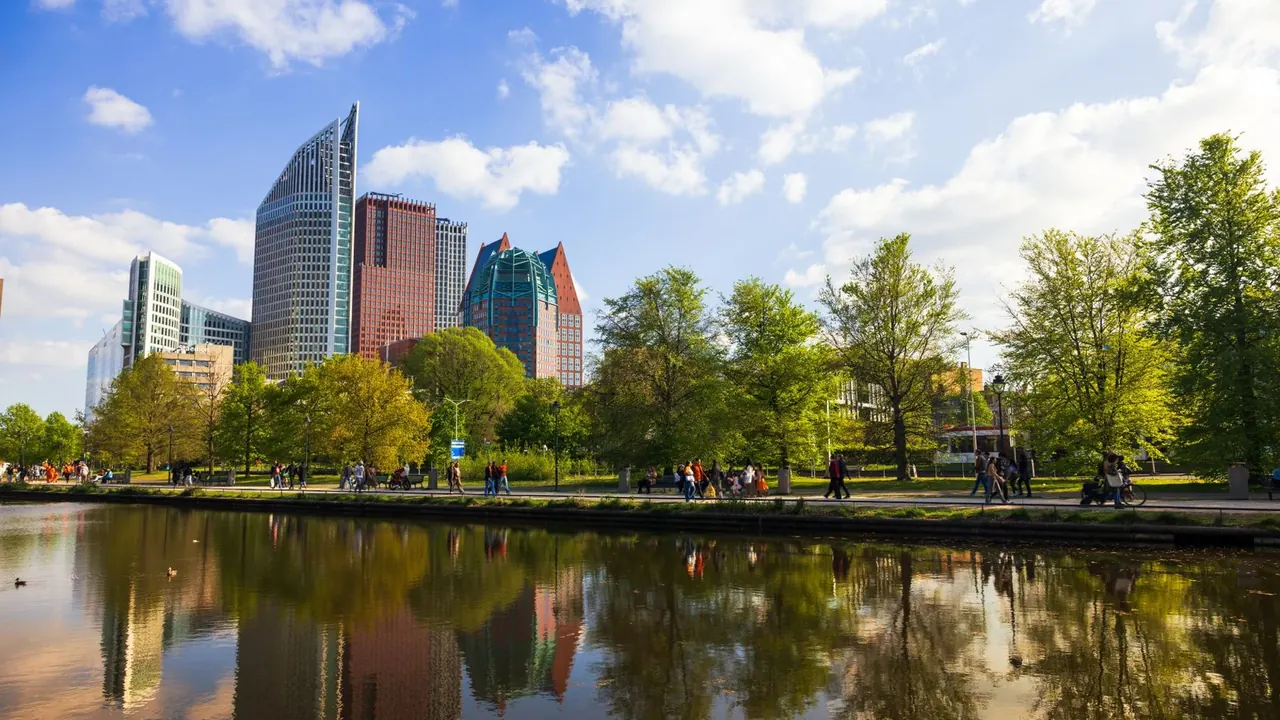
Photos: Brighton by Hassocks5489, CC0; The Hague by Bráulio jardim, Pexels License.
Brighton or The Hague?
Our verdict in twelve categories, each scored against the same fixed benchmark cities, and the climate month by month, so you can choose for your trip.
Choose Brighton for
- nightlife
- nature and the outdoors
- food and drink
Brighton is the pick for travellers who want their evenings to count. Its pubs, bars, seafront clubs and long-established LGBTQ+ scene in Kemptown give it a nightlife The Hague can't match. It also has more small independent kitchens, the South Downs and the Seven Sisters within easy reach, and a May festival season. It suits a lively weekend or a week of walking by day and going out by night, as long as you don't mind shingle and a bit of mess on Saturday nights.
Choose The Hague for
- culture and sights
- wellness
- families
The Hague rewards a calmer, more cultured trip. The Mauritshuis, the Binnenhof and the Peace Palace give it more to see. It is easier with children, and Dutch sauna complexes make unwinding simple. Delft, Leiden, Rotterdam and Amsterdam are all close by train, so it is also the better base for seeing a whole country while sleeping somewhere quiet.
Scoreboard
Twelve categories on one fixed scale from 0 to 100. The shaded stretch is the gap between the two.
Your match
Pick a travel style or drag the sliders, and both match scores follow your weighting.
Too close to call, level with your weighting
Wins on nightlife and nature and the outdoors with your weighting.
Wins on culture and sights and wellness with your weighting.
What matters to you?
Category by category
What the scores mean for a trip.
Beaches & swimming
These two are about level as beach towns, and both are let down by cold water. The ground underfoot is what differs. Brighton has a long run of steep shingle beside the piers, which suits sitting with chips more than lying out. The quieter coves under the cliffs at Rottingdean and Saltdean are still pebbly.
Scheveningen has the wide sandy beach Brighton lacks. It is a short tram ride from the centre and lined with summer pavilions, and the dunes behind Kijkduin are calmer. In either city a swim is a brisk dip on a warm day, not the point of the trip.
Food & drink
Brighton eats a little better and with more range. Small independent kitchens fill the North Laine, the Lanes and Kemptown. It has a long-standing name for vegetarian cooking and serious coffee, plus oysters and whelks from the seafront arches and Sussex sparkling wine on most lists.
The Hague's strength is narrower but distinctive. Its Indonesian cooking, from a full rijsttafel to plates of rendang, is among the best outside Indonesia. Away from that, the brown cafés of the Denneweg and the herring carts are pleasant without matching Brighton's variety.
Culture & sights
The Hague has much more to see. The Mauritshuis alone, with Girl with a Pearl Earring, outweighs most small cities. It is joined by the medieval Binnenhof, the Peace Palace, the Kunstmuseum's Mondrians, Escher's palace and Panorama Mesdag, enough for two or three full days.
Brighton has one sight of that standing, the Royal Pavilion, with its domes and chinoiserie interiors. After that it comes down to the Regency crescents of Kemptown and Hove, the West Pier's skeleton and the alleys of the Lanes. It is a city for looking at buildings rather than visiting galleries.
Nightlife
Here Brighton is far ahead. Students, young residents and London weekenders keep pubs and bars full every night. Kemptown's LGBTQ+ scene is one of Britain's oldest, and the arches and West Street run until the small hours, with gentler craft-beer rooms in the North Laine.
An evening in The Hague means terrace drinks on the Plein, a livelier weekend crowd around the Grote Markt and beach-pavilion sundowners in summer. Anyone wanting a real club night takes the train to Rotterdam or Amsterdam.
Nature & outdoors
Brighton has the stronger outdoors. The chalk grassland of the South Downs starts at the city's edge, with walking and mountain biking along the South Downs Way and at Devil's Dyke. The white cliffs of the Seven Sisters and Beachy Head are under an hour east.
The Hague is entirely flat. Its green escapes are the dune country of Meijendel and the Westduinpark and the old Haagse Bos forest near the centre. They are best explored by bicycle along the coast, and pleasant rather than dramatic.
Day trips
Both are excellent bases, and The Hague edges ahead because so much lies so close. Delft and Leiden are a quarter of an hour away, Rotterdam and Gouda not much further, and Amsterdam, Haarlem, Utrecht, Kinderdijk's windmills and the Keukenhof bulb fields are all within the hour.
Brighton's ace is London, about an hour by fast train. Beyond that come Lewes and Arundel castles, Chichester's cathedral, medieval Rye and the battlefield at Battle. The Sussex country houses and vineyards are easier by car than by rail.
Good for families
The Hague is the easier family base. Madurodam's miniature Netherlands is made for children, and Scheveningen offers sand to dig in alongside its sea aquarium. Museon, the Duinrell water park and flat, calm streets with tram access for pushchairs make the rest simple.
Brighton gives a classic seaside day out with the Palace Pier rides, the Victorian aquarium and Volk's Electric Railway. But shingle beats sandcastles, the climb to the station is hard work with a pushchair, and the centre turns rowdy late at weekends.
Getting around
Both are easy without a car, but in different ways. Brighton is a walking city, with the station, Lanes, Pavilion and sea all close together. The hills behind the centre make the return trip a climb, and dense buses fill the gaps.
The Hague is flat and more spread out. Trams link the Binnenhof to Scheveningen and Madurodam, and separate cycle lanes make a hired bike the natural way to see it.
Shopping & style
Neither city is a destination for luxury labels, but each rewards browsing differently. Brighton's North Laine is all vintage clothing, records, retro furniture and alternative fashion, with jewellers and antique dealers in the Lanes.
The Hague is more polished. It has galleries, interior shops and boutiques along the Denneweg and Noordeinde and the 1880s glass-roofed Passage. The Haagse Markt, piled with fabrics and spices, has more character than anything in Brighton's chain-store streets.
Affordability
Both are expensive, and the savings come from timing. Brighton's rooms cost most on summer weekends and ease midweek and in winter. The Hague works the other way round in its centre: hotels fill with government travellers from Monday to Thursday and are easier to find at weekends.
Once there, Brighton's free seafront, piers and Downs keep costs down, though train fares add up over several day trips. In The Hague, Indonesian and Surinamese eateries and picnics from the Haagse Markt stretch a budget further.
Live music & performing arts
The two are broadly matched but strong in different areas. Brighton's draw is volume and variety. The May Festival and Fringe fill the town for weeks, and there is a deep circuit of pub-room gigs, comedy, the Dome and the Theatre Royal, with Glyndebourne's opera close by in summer.
The Hague's highlight is Nederlands Dans Theater at home, backed by the Residentie Orkest and early-music concerts from the Royal Conservatory. Much of its theatre is in Dutch, so non-Dutch speakers will find more to see in Brighton's comedy and gigs.
Wellness & relaxation
The Hague is the better place to unwind. Its large Dutch sauna complexes, with steam rooms, cold plunges, gardens and massage, are built for whole days, though nudity is usually the rule. The quiet streets of the diplomatic city help just as much.
Brighton has no such tradition beyond a few spas and the dawn sea swimmers warming up in seafront saunas. Its restful side shows only midweek out of season, on Hove's lawns or out in the Downs villages.
When should you go?
Pick your month. The climate figures are measured averages, not a forecast.
Brighton in July
The Hague in July
Daytime high, °C
Rainfall in the month, mm
Where the figures come from
Brighton has no rain gauge within 25 km of the centre, so its rainfall comes from a gridded climate dataset read at the city rather than from a gauge further away.
Brighton's sunshine is measured 37 km from the centre, at London Gatwick Airport.
The Hague has no rain gauge within 25 km of the centre, so its rainfall comes from a gridded climate dataset read at the city rather than from a gauge further away.
The Hague's sunshine is measured 60 km from the centre, at De Bilt.
Temperature and rainfall are climate normals, averaged over the years shown. Brighton: 1999-2020 (sunshine 1981-2010, rainfall 1991-2020) normals, Shoreham Airport (10.3 km from centre). The Hague: 1991-2020 normals, Valkenburg (13.6 km from centre).
Both cities have a mild, changeable northern summer, and July and August are the only months when lying on the beach feels natural. The Hague's North Sea warms a little more by August, to about 19°C, while the Channel off Brighton stays a degree or two cooler but holds its warmth well into September. The bigger difference is rain. Brighton's driest stretch runs from spring to midsummer. The Hague is wettest from late summer onwards, and autumn rain arrives sooner there, though The Hague gets slightly more sunshine from April to July.
Spring and early autumn are good for walking either city, with mild days and fewer wet spells in April. From October both turn grey and wet, with Brighton heaviest in November and December at around 100mm a month. Winters are cool rather than harsh, but The Hague is the colder of the two, with January highs near 6°C. Neither city is ever too hot for sightseeing.
Which traveller are you?
For a food and nightlife trip, Brighton is the clear choice. Its independent kitchens and vegetarian cooking in the North Laine and Kemptown lead into pubs, cocktail bars and late clubs on West Street. Evenings in The Hague end earlier, and its best food is mostly Indonesian.
On a culture and arts trip, The Hague offers far more. You can see Vermeer and Rembrandt at the Mauritshuis, the Mondrian collection at the Kunstmuseum and Nederlands Dans Theater on its home stage. Brighton has the Royal Pavilion and a fine May festival season, but few big collections.
For a relaxing and wellness trip, The Hague is the gentler place. Its large Dutch sauna complexes are built for spending a whole day, its residential streets are quiet and late noise is rare. Brighton's calm lasts only midweek out of season, and its spa offer is thin.
Before you go
| Measure | Brighton | The Hague |
|---|---|---|
| Official language | English | Dutch |
| Currency | Pound Sterling (GBP) | Euro (EUR) |
| Sockets | G230 V, 50 Hz | CF230 V, 50 Hz |
| Driving side | Left | Right |
| Time zone | UTC, UTC+1 in summer | UTC+1, UTC+2 in summer |
| Emergency number | 112 or 999 | 112 |
| Elevation | 22 m | 1 m |
| Main airport | London Gatwick Airport (LGW)37 km from centre224 non-stop destinations | Rotterdam The Hague Airport (RTM)16 km from centre53 non-stop destinations |
| Public holidays this year | 8 days | 11 days |
By the numbers
| Measure | Brighton | The Hague |
|---|---|---|
| City population | 134,293 | 548,320 |
| People per km² | 1,624 | 5,589 |
| Museums within 10 km | 11 | 54 |
| UNESCO World Heritage sites within 50 km | 0 | 4 |
| Swim season, months above 21 °C | None | None |
Where else could you go?
Every comparison below shares a destination with this one, so you can follow Brighton or The Hague somewhere new.
- Rotterdamvs The Hague
- Haarlemvs The Hague
- Amsterdamvs The Hague
- Utrechtvs The Hague
- Londonvs Brighton
- Antwerpvs The Hague