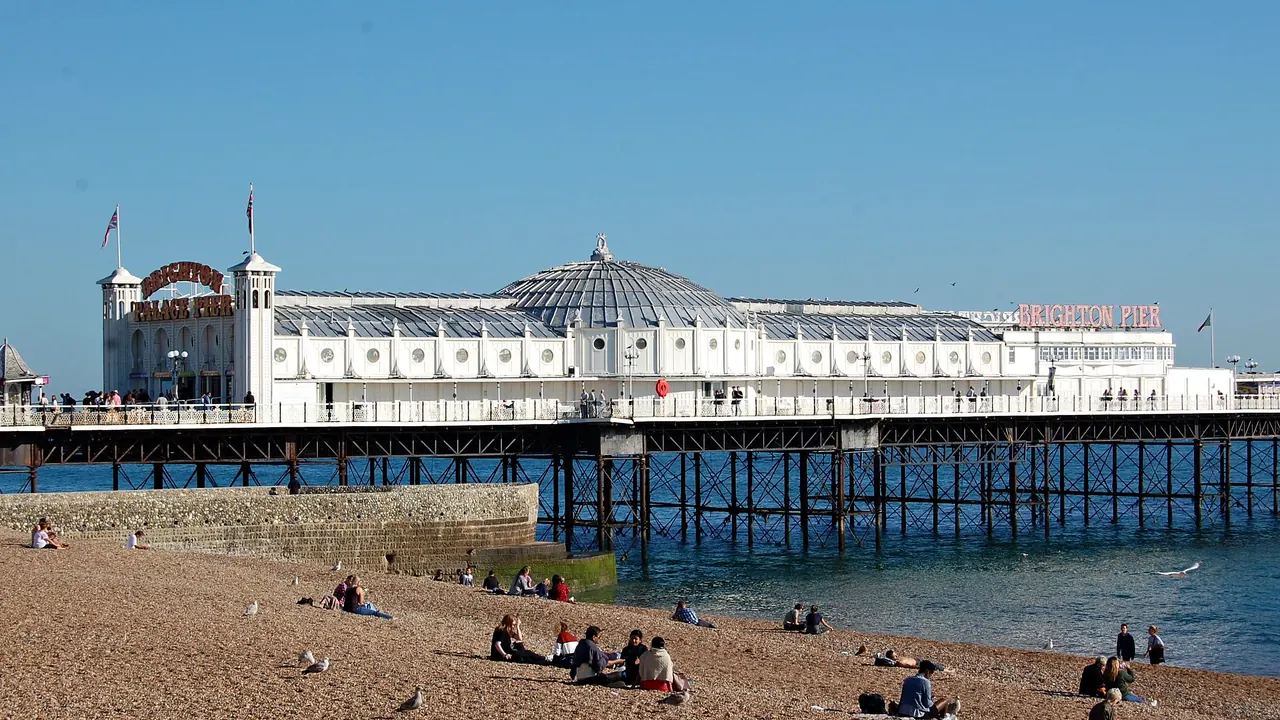
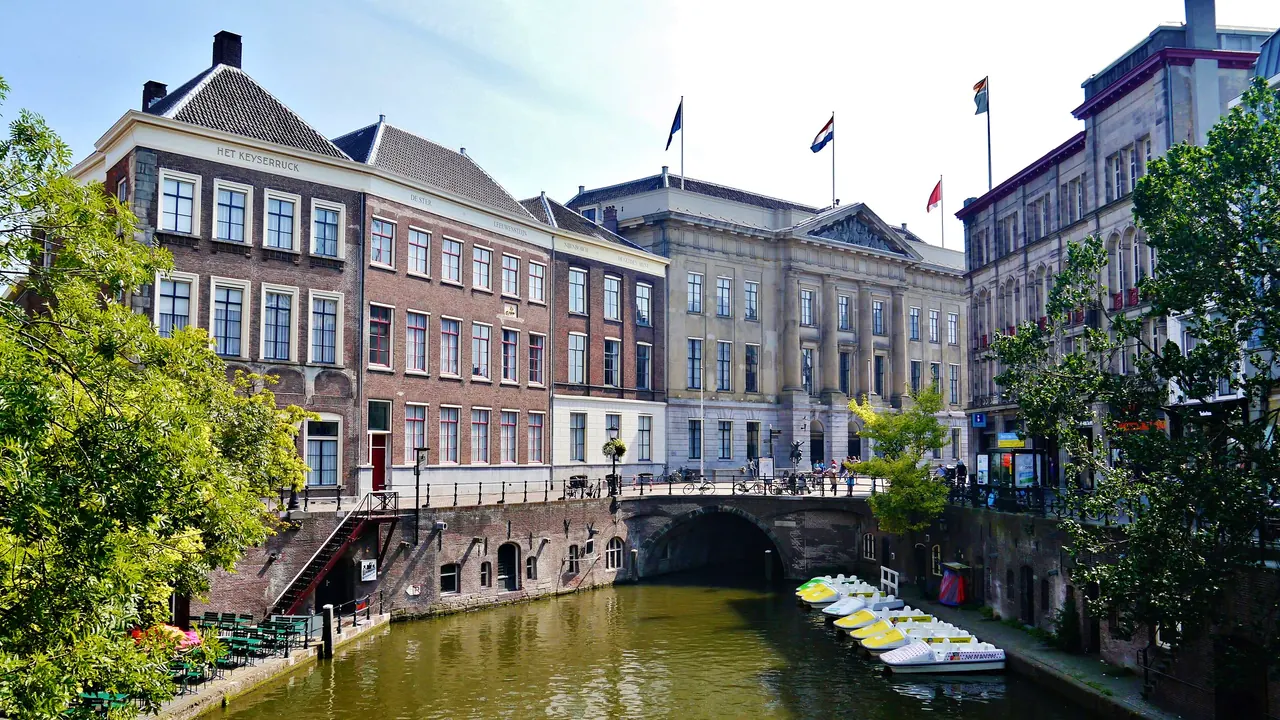
Photos: Brighton by Hassocks5489, CC0; Utrecht by Zairon, CC BY-SA 4.0, cropped.
Brighton or Utrecht?
Our verdict in twelve categories, each scored against the same fixed benchmark cities, and the climate month by month, so you can choose for your trip.
Choose Brighton for
- beaches
- nightlife
- nature and the outdoors
Brighton suits travellers who want the sea, a lively night out and real countryside close by. The long shingle seafront, the bars and clubs of West Street and Kemptown, and the South Downs a bus ride away make it the better pick for a sociable weekend or a few active days of walking and coast. The Royal Pavilion is its one grand sight.
Choose Utrecht for
- culture and sights
- getting around
- wellness
Pick Utrecht for an unhurried city stay built around history and train travel. Its medieval centre, the Dom Tower and the two-level Oudegracht give you more to see on foot, and it is easier to get around. From Utrecht Centraal most of the Netherlands is a short train ride away. Evenings are calmer, which suits anyone who would rather sit by a canal than go clubbing.
Scoreboard
Twelve categories on one fixed scale from 0 to 100. The shaded stretch is the gap between the two.
Your match
Pick a travel style or drag the sliders, and both match scores follow your weighting.
Wins on beaches and nightlife with your weighting.
Wins on culture and sights and getting around with your weighting.
What matters to you?
Category by category
What the scores mean for a trip.
Beaches & swimming
Brighton at least has a beach in town. Steep shingle runs from the Marina to Hove, lifeguards cover it in season, and on a calm late-summer day you can have a cold but proper swim. Most visitors sit on the stones rather than swim, and sand is a drive away.
Utrecht has no beach. In a hot spell people swim in the lakes on the edge of the city, and the North Sea at Zandvoort or Scheveningen is a train ride of an hour or more.
Food & drink
Brighton gives food-minded visitors more to work with. Independent kitchens are packed into the North Laine, the Lanes and Kemptown, there is a long vegetarian and vegan tradition and good coffee, seafood stalls line the seafront, and Sussex sparkling wine comes from the chalk hills.
In Utrecht the setting matters more than the cooking. Eating in the old cellars of the Oudegracht at the water's edge is the part you remember, and the Indonesian and Surinamese kitchens are something Brighton cannot match. Otherwise the food is good everyday eating rather than a reason to come.
Culture & sights
Utrecht has more to see. Its medieval centre is one of the best preserved in the Netherlands. The Dom Tower stands apart from the surviving choir and cloister, a reminder of the 1674 storm. The Centraal Museum, Catharijneconvent and the UNESCO-listed Rietveld Schröder House fill two or three days.
Brighton rests largely on one building, the Royal Pavilion, which is more extravagant than anything in Utrecht. Around it, the pleasure is in walking past the Regency crescents of Kemptown and Hove and through the Lanes, not in working through collections.
Nightlife
Brighton is the place for a big night out. Clubs in the seafront arches and on West Street stay open into the small hours, Kemptown has one of Britain's oldest LGBTQ+ scenes, and the pubs are full all week. The downside is rowdy stag and hen weekends.
Utrecht's nights are run by students and are gentler, mostly brown cafés and terraces around the Neude and along the Oudegracht. It is lovely for a summer drink by the water, but people who want to go clubbing usually take the train to Amsterdam.
Nature & outdoors
Brighton's outdoors are far better. The South Downs start at the edge of the city, with chalk ridges, Devil's Dyke and the South Downs Way, and the white cliffs of the Seven Sisters and Beachy Head are under an hour east. Off the seafront you can windsurf, kitesurf and paddleboard.
Around Utrecht the land is flat, so getting outdoors means cycling. Routes follow the Vecht past country estates and windmills, cross the polders, or take the sandy forest trails of the Utrechtse Heuvelrug. The countryside is pleasant rather than dramatic, and the Loosdrecht lakes are the place for sailing.
Day trips
Both make excellent bases. Brighton's great asset is London, about an hour away, along with Lewes, Arundel, Chichester and the medieval towns of Rye and Winchelsea. The country houses of the Weald and the vineyards on the Downs are easier to reach by car.
Utrecht comes out a little ahead because it sits at the centre of the Dutch rail network. Amsterdam is under half an hour away, and Rotterdam, The Hague, Delft, Leiden and Gouda are all simple trips. You can see a whole country without changing hotels.
Good for families
Brighton gives children the traditional English seaside, while Utrecht keeps them busy with museums in a calm, compact centre. In Brighton that means pier rides and arcades, the Victorian aquarium, Volk's Electric Railway and paddling at Hove Lagoon. The cold shingle is better for throwing stones than building sandcastles, though, and late weekend nights in the centre are rowdy.
Utrecht's draws are the Railway Museum in an old station, the Miffy museum for toddlers and the music boxes of the Speelklok, with Kasteel de Haar as a fairy-tale outing. The thing to watch with small children is the constant flow of bikes.
Getting around
Utrecht is the easier city to get around. The main station is on the edge of the old town, the streets are flat, and bikes, trams and buses all use the same tap-in card as the trains.
In Brighton you can also walk from the station to the sea, but the climb back and the steep streets of Kemptown make it harder work. Beyond the centre you rely on buses. In both cities a car is more trouble than it is worth.
Shopping & style
Brighton's shops lean alternative, Utrecht's towards design. Brighton's North Laine is the place for vintage clothing, records, comics and retro furniture, the Lanes add jewellery and antique dealers, and the covered Open Market on London Road sells local produce.
In Utrecht the small streets along the Oudegracht wharves and the Twijnstraat are better for fashion, books and homeware. Markets play a bigger part in a visit here, with the large general market on Vredenburg, flowers along the Janskerkhof and textiles by the canal. Neither city has luxury streets. The chains sit in Churchill Square in Brighton and in Hoog Catharijne, next to the station, in Utrecht.
Affordability
Neither city is cheap, and in both the room is the main cost. Brighton's rooms cost most on summer weekends and less midweek and in winter. The beach, the piers and the Downs are free, so days cost little, but train fares add up if you take several day trips.
In Utrecht the shortage of hotels in the centre keeps rooms expensive. The compact centre and rental bikes mean you spend almost nothing on transport, and cheap student lunch cafés help keep food costs down.
Live music & performing arts
Brighton's performing year peaks in May, when the Brighton Festival and the Fringe fill theatres, churches and pubs for weeks. The rest of the year the Dome and the Theatre Royal take touring shows, comedy is strong, small music rooms are everywhere, and Glyndebourne's opera is close by in summer.
Utrecht's music happens all year round at TivoliVredenburg, where classical concerts, pop and jazz share one building, often on the same evening. The Festival Oude Muziek makes it a stop for early-music lovers. There is no opera house, and theatre is mostly in Dutch, while Brighton's stages work in English.
Wellness & relaxation
Utrecht is the better place to unwind. The large Dutch sauna complexes in the green belt make a proper wellness day out, and evenings on the canal wharves and the Pandhof cloister garden make the centre restful.
Brighton's calm comes out of season, with long walks past Hove's lawns and beach huts, or a dawn swim with the year-round sea swimmers followed by a seafront sauna. Summer weekends there are anything but restful.
When should you go?
Pick your month. The climate figures are measured averages, not a forecast.
Brighton in July
Utrecht in July
Daytime high, °C
Rainfall in the month, mm
Where the figures come from
Brighton has no rain gauge within 25 km of the centre, so its rainfall comes from a gridded climate dataset read at the city rather than from a gauge further away.
Brighton's sunshine is measured 37 km from the centre, at London Gatwick Airport.
Temperature and rainfall are climate normals, averaged over the years shown. Brighton: 1999-2020 (sunshine 1981-2010, rainfall 1991-2020) normals, Shoreham Airport (10.3 km from centre). Utrecht: 1991-2020 normals, De Bilt (4.3 km from centre).
Brighton is at its best from June to September. Highs reach about 20°C and the Channel warms to 17°C by late summer, enough for a bracing swim on a calm day. May to August are the sunniest months, and summer is drier than autumn and winter, though April and May are the driest of all. From October the rain sets in properly, topping 100mm a month in November and December. Winters are grey and damp but mild rather than cold.
Utrecht swings further through the year. July and August reach about 23°C, warmer for walking and sitting on canal terraces, but winter highs drop to 6°C, colder than Brighton. Its rain is spread more evenly, and summer is one of its wetter seasons. That leaves April and May, bright, mild and drier, as the best months for cycling and sightseeing. The North Sea within reach of Utrecht warms about as much as the Channel, but it is a train ride away and not really a reason to go.
Which traveller are you?
On a food and nightlife trip, Brighton is the clear choice. It has independent kitchens in the North Laine and Kemptown, seafood on the seafront and clubs open late in the arches. Utrecht's evenings are pleasant canal-side drinks rather than big nights.
For a culture and arts trip, choose Utrecht. Its medieval centre is well preserved, the Dom Tower can be climbed, and De Stijl is at the Centraal Museum and the Rietveld Schröder House. Brighton has the remarkable Royal Pavilion but little else on that scale.
On an outdoors trip, Brighton wins easily. The South Downs begin at the edge of the city, and the Seven Sisters cliffs are close by. Windsurfing and paddleboarding happen off the seafront. Utrecht has flat cycling country and gentle forest trails.
Before you go
| Measure | Brighton | Utrecht |
|---|---|---|
| Official language | English | Dutch |
| Currency | Pound Sterling (GBP) | Euro (EUR) |
| Sockets | G230 V, 50 Hz | CF230 V, 50 Hz |
| Driving side | Left | Right |
| Time zone | UTC, UTC+1 in summer | UTC+1, UTC+2 in summer |
| Emergency number | 112 or 999 | 112 |
| Elevation | 22 m | 5 m |
| Main airport | London Gatwick Airport (LGW)37 km from centre224 non-stop destinations | Amsterdam Airport Schiphol (AMS)34 km from centre287 non-stop destinations |
| Public holidays this year | 8 days | 11 days |
By the numbers
| Measure | Brighton | Utrecht |
|---|---|---|
| City population | 134,293 | 359,370 |
| People per km² | 1,624 | 3,619 |
| Museums within 10 km | 11 | 28 |
| UNESCO World Heritage sites within 50 km | 0 | 5 |
| Swim season, months above 21 °C | None | None |
Where else could you go?
Every comparison below shares a destination with this one, so you can follow Brighton or Utrecht somewhere new.
- Amsterdamvs Utrecht
- Haarlemvs Utrecht
- Rotterdamvs Utrecht
- The Haguevs Utrecht
- Londonvs Brighton
- Antwerpvs Utrecht