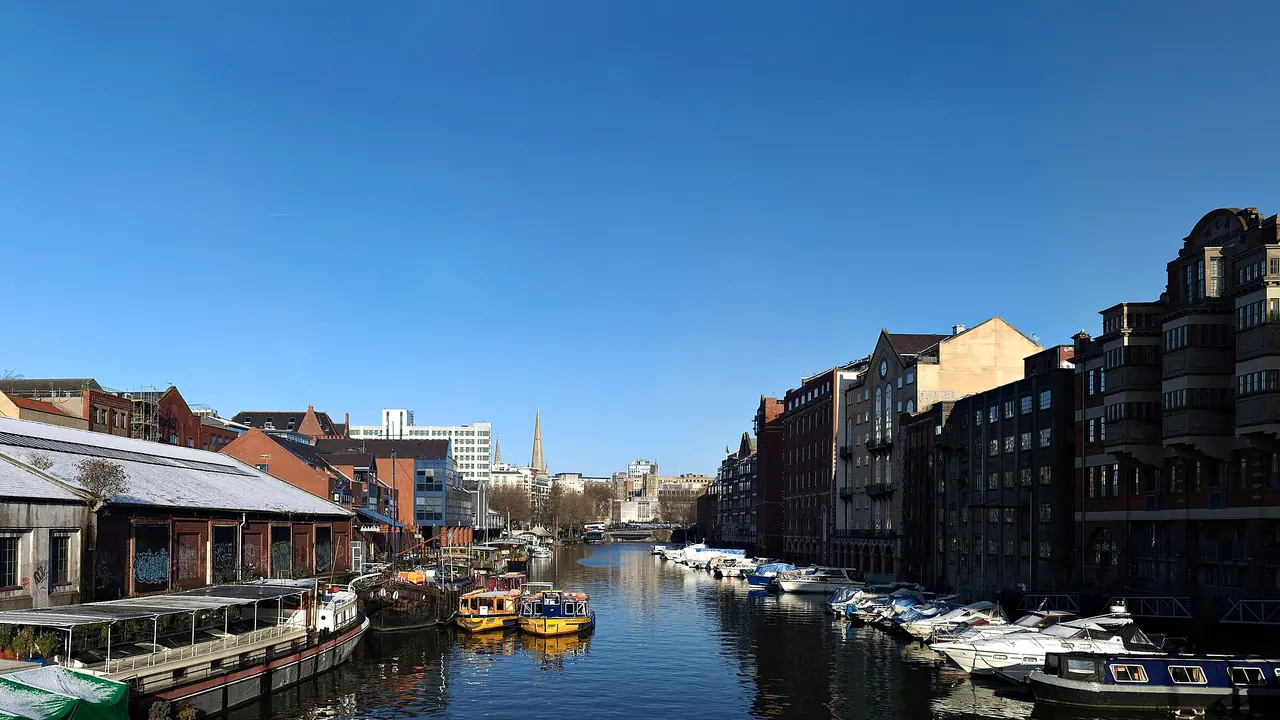
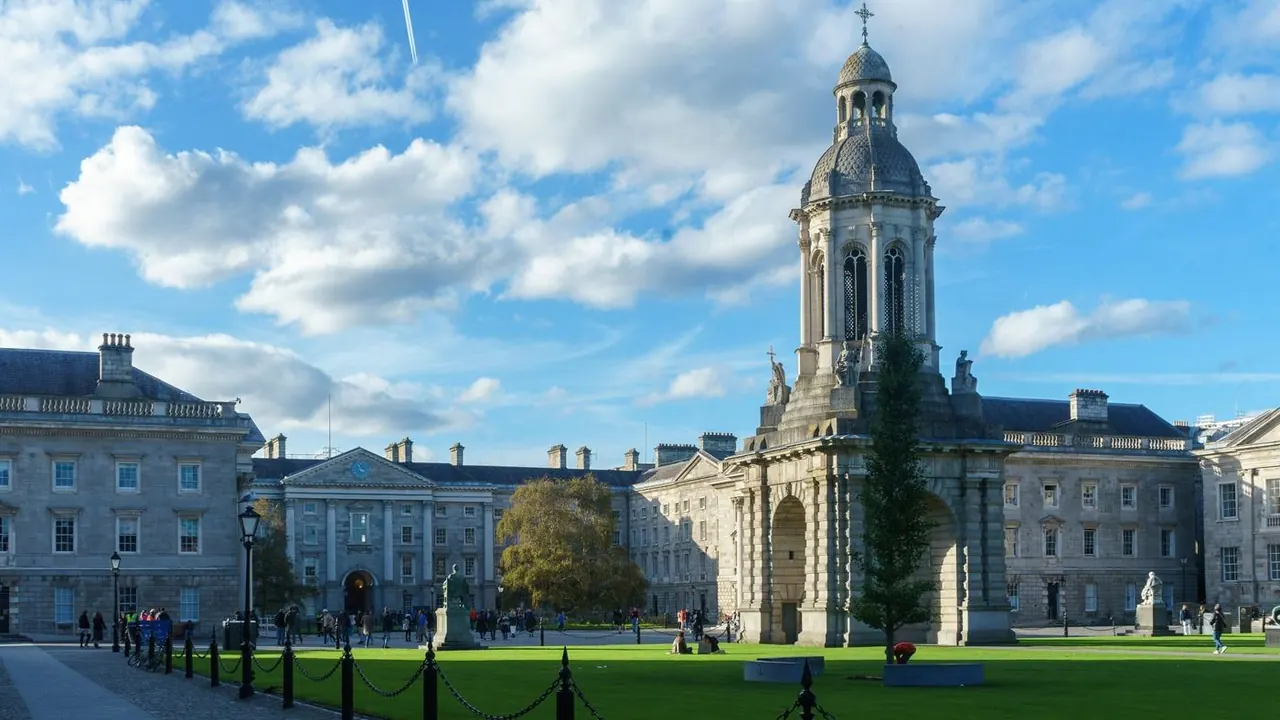
Photos: Bristol by NotFromUtrecht, CC BY-SA 3.0, cropped; Dublin by David Kernan, CC BY 4.0, cropped.
Bristol or Dublin?
Our verdict in twelve categories, each scored against the same fixed benchmark cities, and the climate month by month, so you can choose for your trip.
Choose Bristol for
- prices
- wellness
- food and drink
Bristol is the better base for a traveller who wants to range around a region and keep costs under some control. Bath is a short train ride away, and Wells, Glastonbury, the Cotswold villages and Stonehenge all fit into a day. The city adds a real club culture, a good grazing food scene built on independent places, and Bath's hot springs for a slow afternoon. It is the choice for people who see the city as a base as much as a destination.
Choose Dublin for
- beaches
- getting around
- culture and sights
Dublin rewards the visitor who wants the city itself to be the event. Its sights, from the Book of Kells to Kilmainham Gaol, sit within a flat, easy walk. The theatre has deep roots and traditional music turns up in pubs most nights. Trams and the coastal railway make the bay and its headlands simple to reach. It costs noticeably more, but for theatre, literature and an evening of pints and conversation it gives more than Bristol does.
Scoreboard
Twelve categories on one fixed scale from 0 to 100. The shaded stretch is the gap between the two.
Your match
Pick a travel style or drag the sliders, and both match scores follow your weighting.
Too close to call, level with your weighting
Wins on prices and wellness with your weighting.
Wins on beaches and getting around with your weighting.
What matters to you?
Category by category
What the scores mean for a trip.
Beaches & swimming
Neither city is a beach destination, but Dublin at least has proper sand on its doorstep. Dollymount, Sandymount and Killiney are reachable on the DART, and its year-round swimming habit, with early dips at the Forty Foot or under Dalkey, is something a visitor can join in.
Bristol faces a muddy, silt-brown estuary with one of the world's largest tidal ranges. Weston-super-Mare's sands are near, but the tide goes out so far that swimming takes planning. Clevedon's Victorian marine lake is the realistic swim, and real beaches mean a long drive into Devon, Cornwall or Gower.
Food & drink
Bristol is the more interesting place to eat, provided you like to graze. St Nicholas Market, the container kitchens on the harbourside and the bakeries and small restaurants along Gloucester Road and in Bedminster give it range and character, and West Country cider and warehouse taprooms make drinking a local experience.
Dublin's best cooking rests on excellent Irish fish, beef, lamb and cheese, served in modern bistros, but the menus rarely surprise and meals cost a lot for what arrives. Its strength is the glass rather than the plate: slow-poured stout in a Victorian pub and Irish whiskey from its own distilleries.
Culture & sights
Dublin has more to see and packs it closer together. Trinity's Long Room and the Book of Kells, the free archaeology museum and National Gallery, the Chester Beatty Library and Kilmainham Gaol make three full days, all set among Georgian squares and running with literary history from Joyce to Wilde.
Bristol's sights tell the story of a trading port and Victorian engineering. Brunel's SS Great Britain and the Clifton Suspension Bridge are the highlights, with St Mary Redcliffe, M Shed and Banksy's early street art filling in. Two or three days cover it, and neither city has truly grand monuments.
Nightlife
Both cities are good nights out, but they mean different things by it. Bristol is the clubber's city: the sound-system culture behind trip hop and drum and bass lives on in warehouses and railway arches near Temple Meads, and weekends run late.
Dublin is all about the pub, with snugs, coal fires and conversation off Grafton Street and younger late bars on Camden and Wexford Streets. Licensing laws close most venues early, so nights there rarely reach dawn.
Nature & outdoors
Dublin has the better outdoors within easy reach. Phoenix Park, with its fallow deer, sits inside the city, the cliff path at Howth looks out over seals and sea, and the granite Wicklow Mountains begin just beyond the suburbs, with Glendalough about an hour away.
Bristol's green spaces are pleasant but softer. The Downs and the climbing cliffs of the Avon Gorge, Ashton Court's deer park and the railway path to Bath are close, and the Mendips and Cheddar Gorge make good walking. For real upland, though, the Brecon Beacons and Exmoor are a couple of hours off.
Day trips
Staying in Bristol puts a whole region within a day's reach, and some of it very easily. Bath and Cardiff are short train rides, so either can be done on a whim. Wells and Glastonbury lie about an hour south, and the Cotswold villages of Castle Combe and Lacock, Stonehenge, Avebury and Salisbury all make full days, though for these you want a car or a coach tour.
Dublin's outings are fewer, but they go deep. The Neolithic passage tombs at Newgrange and Knowth in the Boyne Valley are older than the pyramids, and Glendalough's monastic site sits in a wooded Wicklow valley. Kilkenny and Belfast both work as a day out by train, but most rural sites are far easier with a tour or a hire car.
Good for families
Bristol keeps its children's attractions together on one stretch of harbour, while Dublin's best family day is out in Phoenix Park. In Bristol the SS Great Britain, a hands-on science centre with a planetarium and the aquarium are linked by little ferries, and a wildlife park lies on the northern edge. The steep hills are hard work with a pushchair, though, and there is no theme park nearby.
Dublin's flat centre is easier with small children. The zoo sits inside the park with deer to look for, Dublinia's Viking displays and the free natural history museum fill a wet afternoon, and a theme park is half an hour's drive away. Children are welcome in pubs at lunchtime too.
Getting around
Dublin is the easier city to move around. Its centre is flat, two Luas tram lines cross it, the DART runs along the bay to Howth and Dalkey, and one card covers trams, trains and buses.
Bristol's core is compact but hilly, and the climb to Clifton tires legs quickly. With no tram or metro, anything beyond the centre means buses caught in traffic, though the yellow harbour ferries are a pleasant way to get along the water.
Shopping & style
Bristol is for browsing independent streets, Dublin for buying something Irish to take home. In Bristol the long run of record shops, delis and vintage clothes on Gloucester Road, and the galleries in Clifton Village's Georgian arcades, have more character than the chain stores of Cabot Circus.
Dublin's best buys are Aran knitwear, linen, tweed and whiskey, found off Grafton Street, in the Powerscourt Townhouse and in the craft shops around Drury Street. In both cities a shopping afternoon makes a nice extra but isn't a reason to go.
Affordability
Money goes noticeably further in Bristol. It isn't cheap by British standards, and rooms climb at weekends and during events, but weekday hotels are fairly priced, the main museums and churches are free and street food keeps meals sensible.
Dublin is a hard city on a tight budget. Rooms near the centre are among the dearest in Europe, cheaper options are few, and a round in a city-centre pub soon adds up. The free national museums and gallery help, as do lunch menus and bakeries, and staying out along the DART or Luas brings the room bill down.
Live music & performing arts
Dublin has the deeper stage tradition. The Abbey, the national theatre founded by Yeats and Lady Gregory, and the Gate give serious drama a real home, the National Concert Hall houses the national symphony orchestra, and fiddle and bodhrán sessions fill pubs most nights.
Bristol has the Old Vic, the oldest continuously working theatre in the English-speaking world, plus fringe Shakespeare at the Tobacco Factory. Its real strength, though, is small venues in Stokes Croft and Old Market hosting bands, jazz and electronic acts.
Wellness & relaxation
Bristol has the better options for unwinding, largely because Bath is so close. A quarter of an hour by train brings you to rooftop pools fed by Britain's only natural hot springs, and Clifton's heated Victorian lido with its spa makes a calm half day without leaving the city.
Dublin has no bathhouses or thermal tradition, only hotel spas. Its one ritual is a cold sea dip at the Forty Foot or Seapoint, often followed by a seafront sauna, and otherwise calm means long walks in Phoenix Park.
When should you go?
Pick your month. The climate figures are measured averages, not a forecast.
Bristol in July
Dublin in July
Daytime high, °C
Rainfall in the month, mm
Where the figures come from
Bristol's station stands 178 m above the city centre, so the centre is likely a little warmer than the figures say.
Bristol has no rain gauge within 25 km of the centre, so its rainfall comes from a gridded climate dataset read at the city rather than from a gauge further away.
Bristol's sunshine is measured 43 km from the centre, at Lyneham.
Temperature and rainfall are climate normals, averaged over the years shown. Bristol: 1991-2020 normals, Lulsgate Bottom (11.8 km from centre). Dublin: 1991-2020 normals, Dublin Airport (9.3 km from centre).
The two cities share almost the same mild, temperate year. Daytime highs climb from single figures in winter to about 20°C in July and August, so neither is ever too hot to walk the streets, and the cold of December and January is damp rather than harsh. June to early September is the most comfortable stretch in both, with May and late September close behind.
The differences lie in rain and sun. Bristol gets wetter from October, with close to 97mm in November, while Dublin's autumn is wet but a little lighter. Bristol is also clearly sunnier through high summer, as Dublin's skies stay greyer from June onwards. The sea is cool in both and never warm enough for a proper beach vacation, peaking near 18°C off Bristol's estuary coast and around 15°C in the Irish Sea, which suits brisk dips rather than lazy swims.
Which traveller are you?
On a trip with a tight budget, Bristol leaves more room in the plan. Book weekday nights, eat lunch from market stalls and spend a day in Bath or Cardiff by train. In Dublin the room alone takes much of the money, however carefully you plan the days.
For a relaxing and wellness trip, Bristol is the better base, because a whole spa day in Bath fits into a stay as easily as an afternoon in a museum. In Dublin a slow day means walking the parks and the bay, not booking treatments.
On a culture and arts trip, Dublin gives the fuller itinerary. Three unhurried days on foot, with no buses or taxis needed between sights, then an evening of serious drama or a traditional session. Bristol's sights fit comfortably into a long weekend.
Before you go
| Measure | Bristol | Dublin |
|---|---|---|
| Official language | English | English, Irish |
| Currency | Pound Sterling (GBP) | Euro (EUR) |
| Sockets | G230 V, 50 Hz | G230 V, 50 Hz |
| Driving side | Left | Left |
| Time zone | UTC, UTC+1 in summer | UTC, UTC+1 in summer |
| Emergency number | 112 or 999 | 112 |
| Elevation | 11 m | 20 m |
| Main airport | Bristol Airport (BRS)11 km from centre117 non-stop destinations | Dublin Airport (DUB)9 km from centre200 non-stop destinations |
| Public holidays this year | 8 days | 11 days |
By the numbers
| Measure | Bristol | Dublin |
|---|---|---|
| City population | 472,465 | 592,713 |
| People per km² | 4,311 | 5,154 |
| Museums within 10 km | 23 | 41 |
| UNESCO World Heritage sites within 50 km | 3 | 1 |
| Swim season, months above 21 °C | None | None |
Where else could you go?
Every comparison below shares a destination with this one, so you can follow Bristol or Dublin somewhere new.