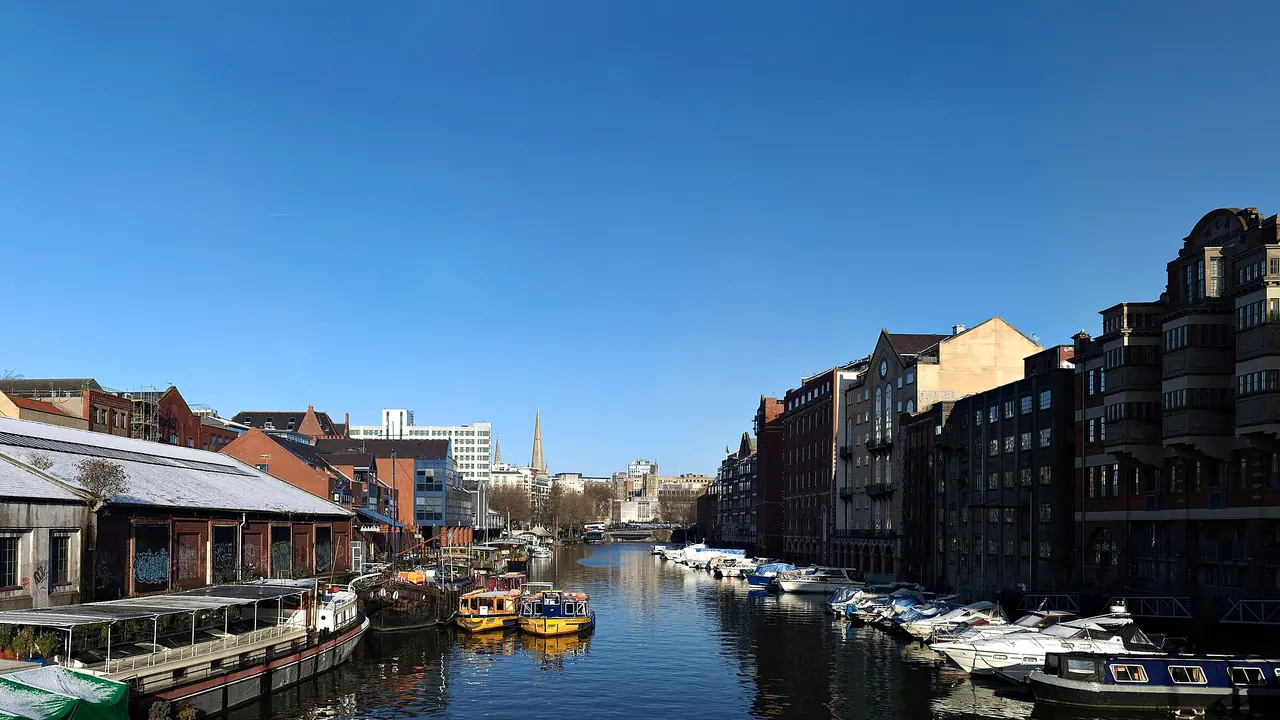
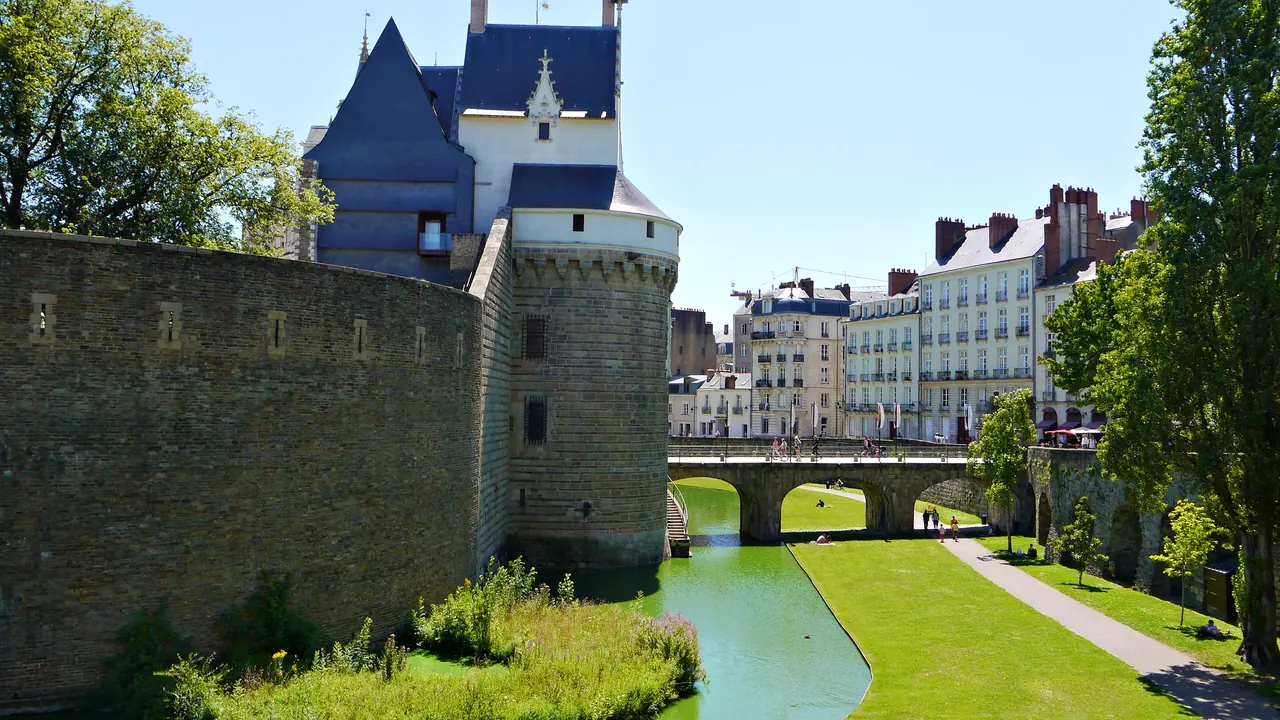
Photos: Bristol by NotFromUtrecht, CC BY-SA 3.0, cropped; Nantes by Carole44, CC BY-SA 3.0, cropped.
Bristol or Nantes?
Our verdict in twelve categories, each scored against the same fixed benchmark cities, and the climate month by month, so you can choose for your trip.
Choose Bristol for
- nightlife
- nature and the outdoors
- day trips
Bristol suits travellers who want a city with a strong character of its own after dark and a lot within easy reach by day. Its club and live music culture runs deep, the Avon Gorge and Ashton Court bring real green space to the edge of the centre, and Bath, Wells, the Cotswolds and Stonehenge make it an excellent base. Expect hills, buses and a slightly higher bill.
Choose Nantes for
- beaches
- getting around
- prices
Nantes is the easier and gentler choice, and the better one for families and anyone who wants sand in the plan. Trams and flat streets make it effortless to get around, the mechanical elephant and Puy du Fou keep children happy, and the Atlantic beaches at La Baule and Pornic are an hour away. It also has a warmer, sunnier summer and a clearer regional table built on beurre blanc and Muscadet.
Scoreboard
Twelve categories on one fixed scale from 0 to 100. The shaded stretch is the gap between the two.
Your match
Pick a travel style or drag the sliders, and both match scores follow your weighting.
Too close to call, 2 points apart
Wins on nightlife and nature and the outdoors with your weighting.
Wins on beaches and getting around with your weighting.
What matters to you?
Category by category
What the scores mean for a trip.
Beaches & swimming
Neither city is a beach destination, but Nantes at least puts real sand within reach. La Baule's sheltered bay and the coves at Pornic are about an hour by train, clean and calm enough for families, and the Atlantic warms a little more in late summer.
Bristol's shore is the brown, silty Severn estuary with a huge tidal range. Weston-super-Mare's sands are an hour away, but the tide goes out so far that swimming means careful timing. The Victorian marine lake at Clevedon, used for cold-water dips, is about as close as it gets.
Food & drink
The two eat about equally well, but in different ways. Nantes has a regional cuisine you can name: beurre blanc was born here, oysters come from the nearby coast, and Muscadet from vineyards just outside town is made to go with them. The Talensac market and the Bouffay bistros show it off.
Bristol has no dish of its own and makes up for it with range. St Nicholas Market, the harbourside container kitchens and Gloucester Road serve everything from pies to Caribbean food, and the drinking is the local part, with West Country cider and a large craft brewing scene.
Culture & sights
These two are close, and each fills two or three days. Bristol's sights are about engineering and trade: Brunel's SS Great Britain in its dry dock, the Clifton Suspension Bridge over the gorge, Georgian Clifton and the Gothic splendour of St Mary Redcliffe, plus Banksy's early street art.
Nantes has a slightly stronger historic core, built around the moated castle of the Dukes of Brittany and the cathedral, with the merchant façades of Ile Feydeau and the Jules Verne museum. Both port cities deal openly with their part in the slave trade, Bristol at M Shed and Nantes in the château museum and the riverside memorial.
Nightlife
Bristol is clearly the better night out. It has a sound-system and club culture with its own sound, with clubs in warehouses and railway arches around Temple Meads and a long-moored club boat on the harbour. Weekends run late, and Stokes Croft adds scruffy, creative bars.
Nantes is friendly and easy to join, starting in the pubs and terraces of the medieval Bouffay lanes and moving later to the old banana warehouses on the Ile de Nantes. It is a regional city's night, though, and it goes quiet midweek outside term.
Nature & outdoors
Bristol has more to do outdoors, and much of it starts in the city. The Avon Gorge has limestone cliffs for climbers, Ashton Court and Leigh Woods have trails, and the Mendips, Cheddar Gorge, Exmoor and the Brecon Beacons give real hill walking within two hours.
Nantes is flat and watery. The pleasures are gentle ones: a boat or canoe on the Erdre, the Loire à Vélo cycle route through the vineyards, birdwatching from a punt in the Brière marshes, and the cliff paths of the Côte Sauvage. Walkers who want hills will miss them.
Day trips
Both make fine bases, but Bristol has more first-rate places close by. Bath is a quarter of an hour by train, Wells and Glastonbury are about an hour away, Cardiff is just across the Severn, and the Cotswold villages, Stonehenge and Avebury all make full days out.
From Nantes the range is wider but a little further off. You can visit the salt-marsh town of Guérande, Angers and its Apocalypse Tapestry, Clisson in the Muscadet vineyards, Vannes on the Gulf of Morbihan, and Saumur and the Loire châteaux within two hours.
Good for families
Nantes is the easier city with children. The mechanical elephant and the sea-creature carousel at the Machines de l'Ile are a rare treat, the trams take a buggy without fuss, and Puy du Fou, a safari park and calm sandy beaches are all within a drive.
Bristol is welcoming too. It has the SS Great Britain, the hands-on science centre and aquarium on the harbourside, harbour ferries and a spacious wildlife park. Its steep hills are hard work with a pushchair, though, and there is no big theme park nearby.
Getting around
Nantes is much simpler to move around. The centre is flat and walkable, three tram lines and a busway make an easy network, river shuttles cross the Loire, and cycling is easy along the riverside paths.
Bristol's core around the harbour and old city is compact too, and the yellow ferries help. Beyond that, the city has no tram or metro, buses get caught in traffic, and the climb up to Clifton tires legs quickly.
Shopping & style
Shopping is a pleasant sideline in both cities and a reason to visit in neither. Bristol has the bigger mainstream offer at Cabot Circus and Broadmead, and its real character is the long independent run of Gloucester Road, with records, vintage clothes and delis.
Nantes is smaller, but the three-level Passage Pommeraye is a lovely place to browse. It also has more to take home that tastes of the region: salted-butter biscuits, berlingot sweets, Guérande salt and Muscadet.
Affordability
Nantes is the somewhat cheaper stay. Hotels are easy to find and fairly priced, the trams and flat centre keep transport costs down, and set lunch menus are good value, though the coast costs more in high summer.
Bristol is manageable rather than cheap, and its hotels climb at weekends. Free entry to most museums and churches and a walkable centre soften the bill.
Live music & performing arts
The two are level, but they suit different audiences. Bristol is the place for gigs: small venues in Stokes Croft, Old Market and on the harbour host bands, jazz and electronic acts most nights. The Georgian Bristol Old Vic and the Tobacco Factory give it strong theatre.
Nantes is better for classical music and spectacle. A regional opera company performs at the Théâtre Graslin, there is a national orchestra, and the La Folle Journée festival takes over in winter. The city is also home to giant street-theatre puppetry.
Wellness & relaxation
Bristol is a little ahead, mostly because of its neighbour. Bath's rooftop thermal pool, fed by Britain's only natural hot springs, is a quarter of an hour away by train, and the heated Victorian lido in Clifton makes a restful half day.
Nantes is the calmer city day to day, with slow afternoons by the Erdre or in the Jardin des Plantes. For proper treatment you have to travel about an hour to the old thalassotherapy centres at La Baule and Pornic.
When should you go?
Pick your month. The climate figures are measured averages, not a forecast.
Bristol in July
Nantes in July
Daytime high, °C
Rainfall in the month, mm
Where the figures come from
Bristol's station stands 178 m above the city centre, so the centre is likely a little warmer than the figures say.
Bristol has no rain gauge within 25 km of the centre, so its rainfall comes from a gridded climate dataset read at the city rather than from a gauge further away.
Bristol's sunshine is measured 43 km from the centre, at Lyneham.
Temperature and rainfall are climate normals, averaged over the years shown. Bristol: 1991-2020 normals, Lulsgate Bottom (11.8 km from centre). Nantes: 1991-2020 normals, Nantes (6.6 km from centre).
Nantes is the warmer of the two through every month, and the gap is widest in high summer, when it reaches about 25°C against Bristol's 20°C. July and August are its best months: the driest of the year, the sunniest, and the only time the Atlantic at La Baule is pleasant for a swim, at around 19°C. Bristol's summer is mild rather than warm, ideal for walking the gorge and the Cotswolds, and its local sea never really invites swimming.
Both cities turn wet and grey from October to January, with Nantes peaking at about 101mm in December, so late autumn and winter suit museums, theatres and short breaks rather than outdoor plans. Spring and September are comfortable for walking in both, though Nantes gets there a few weeks sooner and keeps more sunshine into early autumn.
Which traveller are you?
Travellers after beach and sun should look past Bristol, where the Severn is silty and the sea barely warms. Nantes has the warmer, sunnier summer, and an hour on the train brings you to proper Atlantic sand at La Baule.
A food and nightlife trip leans towards Bristol. Its evenings are the real draw: West Country cider, warehouse taprooms and clubs with a sound of their own that run late at weekends. Nantes has the more distinctive regional cooking but goes to bed earlier.
Walkers and climbers on an outdoors trip will be happier in Bristol. Rock, woodland and real upland all lie within a couple of hours, and a traffic-free path runs all the way to Bath. Nantes suits gentler days on a bike or a boat.
Before you go
| Measure | Bristol | Nantes |
|---|---|---|
| Official language | English | French |
| Currency | Pound Sterling (GBP) | Euro (EUR) |
| Sockets | G230 V, 50 Hz | CE230 V, 50 Hz |
| Driving side | Left | Right |
| Time zone | UTC, UTC+1 in summer | UTC+1, UTC+2 in summer |
| Emergency number | 112 or 999 | 112 |
| Elevation | 11 m | 2 m |
| Main airport | Bristol Airport (BRS)11 km from centre117 non-stop destinations | Nantes Atlantique Airport (NTE)8 km from centre97 non-stop destinations |
| Public holidays this year | 8 days | 11 days |
By the numbers
| Measure | Bristol | Nantes |
|---|---|---|
| City population | 472,465 | 327,734 |
| People per km² | 4,311 | 5,027 |
| Museums within 10 km | 23 | 11 |
| UNESCO World Heritage sites within 50 km | 3 | 0 |
| Swim season, months above 21 °C | None | None |
Where else could you go?
Every comparison below shares a destination with this one, so you can follow Bristol or Nantes somewhere new.
- Bathvs Bristol
- Cardiffvs Bristol
- Oxfordvs Bristol
- Londonvs Bristol
- Brightonvs Bristol
- Cambridgevs Bristol