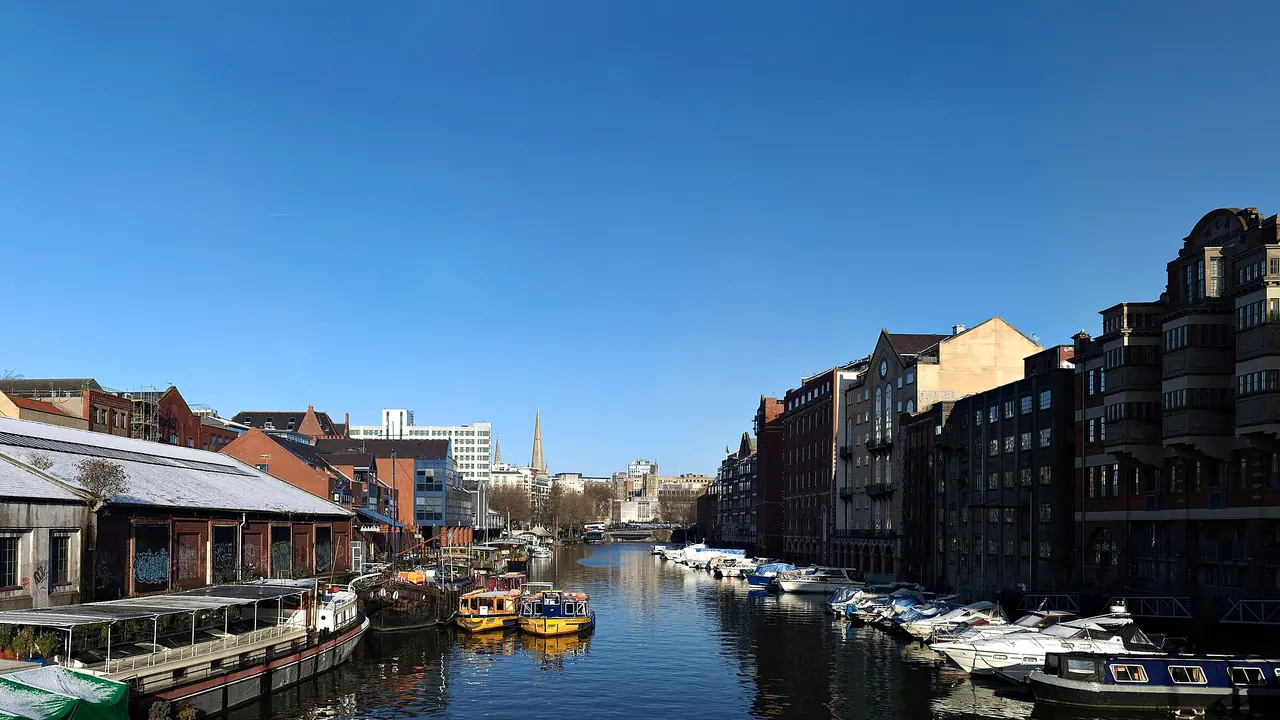
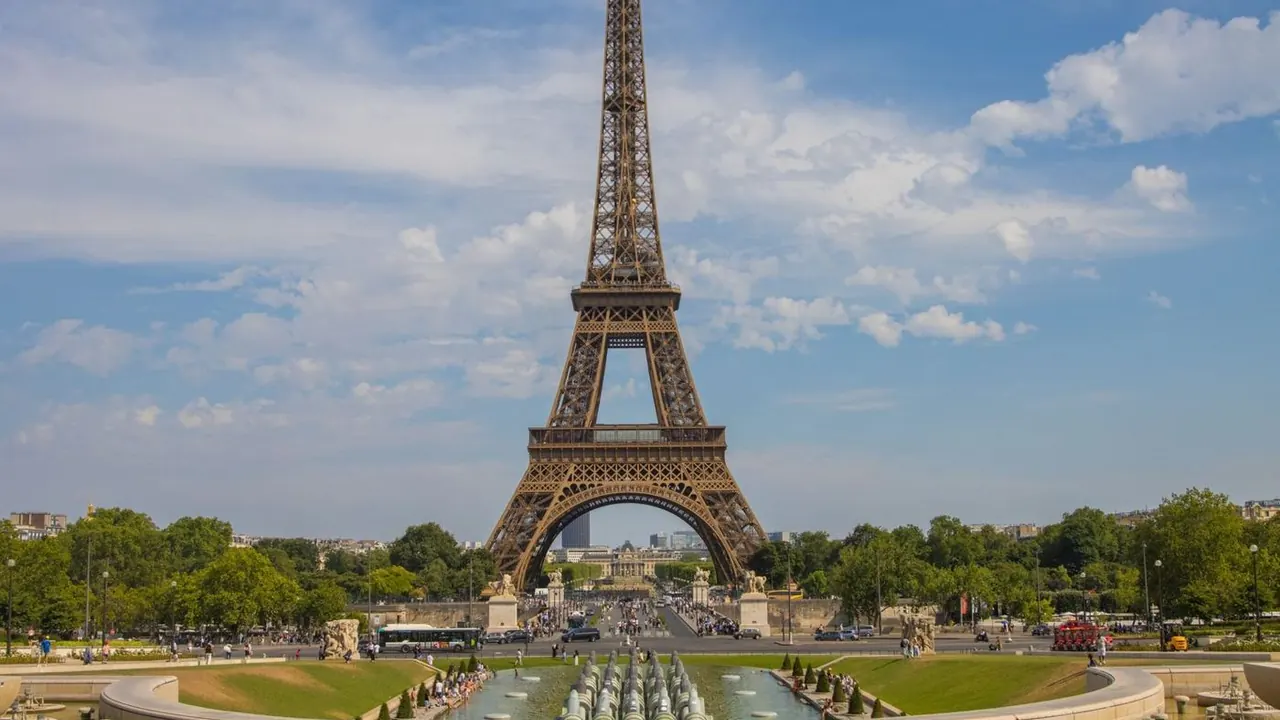
Photos: Bristol by NotFromUtrecht, CC BY-SA 3.0, cropped; Paris by Efrem Efre, Pexels License.
Bristol or Paris?
Our verdict in twelve categories, each scored against the same fixed benchmark cities, and the climate month by month, so you can choose for your trip.
Choose Bristol for
- prices
- nature and the outdoors
- beaches
Bristol suits a relaxed, slightly offbeat few days, the kind of trip where the city is a base as much as a destination. Its own sights take a couple of days, and then Bath, Wells, Cardiff and the Cotswolds are close by. It gives you easier access to green country than Paris, from the Avon Gorge to the Mendips, and a club and live music culture with its own sound. It also costs a little less, though it is not a cheap city.
Choose Paris for
- shopping
- culture and sights
- food and drink
Paris is the stronger choice for almost everything a classic city trip is built on. The museums, food, shopping and stage are among the best anywhere, and the metro and walkable centre make it easy to fit a lot into one day. Choose it if the city itself is the point and you want each day full. Bring a bigger budget and expect crowds at the famous sights.
Scoreboard
Twelve categories on one fixed scale from 0 to 100. The shaded stretch is the gap between the two.
Your match
Pick a travel style or drag the sliders, and both match scores follow your weighting.
Wins on prices and nature and the outdoors with your weighting.
Wins on shopping and culture and sights with your weighting.
What matters to you?
Category by category
What the scores mean for a trip.
Beaches & swimming
Neither city is a place for a beach trip, but Bristol at least has the sea within reach. Weston-super-Mare's sands are under an hour away, though the huge tides make swimming tricky, and the Victorian marine lake at Clevedon draws cold-water dippers.
Paris has no coast at all. In summer the riverbanks are dressed up as beaches, and you can swim at La Villette and in the Seine. The real sea is the cool Channel at Deauville, two hours away by train.
Food & drink
Bristol is a good city for grazing. You can eat your way through St Nicholas Market and the harbourside container kitchens, then drink West Country cider and craft beer in old warehouse taprooms. It has no cuisine of its own, though, and its drinking is more distinctive than its eating.
Paris works on another level. Every neighbourhood has its bakery, cheese shop and market morning, and the range runs from zinc-counter bistros and neo-bistros in the 11th to haute cuisine. There is couscous in Belleville and pho in the 13th, and pastry is an art in its own right. A food trip here never runs out of ideas.
Culture & sights
Bristol's sights tell the story of a port and of Victorian engineering: the SS Great Britain, the Clifton Suspension Bridge, St Mary Redcliffe and the M Shed. Add the Banksy-era street art and two or three days cover it well.
Paris could fill weeks. The Louvre, the Orsay, the Orangerie and the Cluny would each be the main event elsewhere, and Notre-Dame and the Sainte-Chapelle sit side by side on one island. The Haussmann streets and the Marais make even the walks between museums part of the sightseeing, but you will need to book ahead to avoid queues.
Nightlife
Bristol's nights grow out of its sound-system history. Drum and bass and dubstep play in warehouses and railway arches near Temple Meads, and Stokes Croft has scruffy, creative bars. It is smaller and rougher around the edges, and very good for music-led clubbing.
Paris offers more choice. Evenings start with wine on a terrace or bottles on the Canal Saint-Martin, and then you can try the bars of Oberkampf and Belleville, the cocktail bars of South Pigalle or the gay scene in the Marais, with house and techno until dawn. It is chic rather than wild, and the club doors can be choosy.
Nature & outdoors
Bristol has real landscape on its doorstep. The Downs open onto the cliffs of the Avon Gorge, Leigh Woods and Ashton Court have trails for walking and biking, and the Mendips, Cheddar Gorge and the Brecon Beacons offer caving and proper hill walking.
The green space in Paris is mostly designed: the Luxembourg, the Tuileries and the Buttes-Chaumont, with the two big woods at the edges of the city. Fontainebleau's boulders and forest trails are the best escape, and they are excellent, but the countryside around Paris is flat and gentle.
Day trips
Both cities make excellent bases. From Bristol, Bath is a quarter of an hour away by train, and Wells, Glastonbury, Cardiff, Stonehenge and the Cotswold villages each make a satisfying day out. Some of them are easier by car.
Paris has the longer and grander list, and fast trains reach most of it. Versailles, Fontainebleau and Chartres are each about an hour away or less, Giverny and Provins are close, and Reims, Rouen, the Loire and even Brussels make easy days out. On a long stay you could fill a week with trips alone.
Good for families
Bristol is easy-going with children. The SS Great Britain, the We The Curious science centre and the aquarium are all on the harbour and linked by little ferries, and the wildlife park and the deer at Ashton Court add more. The steep hills are hard work with a pushchair, and there is no big theme park nearby.
Paris has more to offer families. Disneyland and Parc Astérix are a short trip out, and the city has the Cité des Sciences, carousels and toy boats in the Luxembourg, and the Jardin des Plantes galleries. The cost is in daily life: stairs in the metro, cramped hotel rooms and long queues.
Getting around
Bristol's centre is small enough to walk, with harbour ferries to make it pleasant. Beyond it, there is no metro or tram, buses get stuck in traffic, and the climb up to Clifton is steep.
Paris combines one of the great walking centres with a dense metro, so you are rarely more than a few minutes from a station. The RER runs out to Versailles and the airports. The drawbacks are stairs, crowded lines at rush hour and pickpockets.
Shopping & style
In Bristol, shopping fills a pleasant afternoon. The independent record shops and vintage stores on Gloucester Road are the highlight, along with the boutiques on Park Street and the arcades of Clifton Village. Cabot Circus covers the chain stores.
Paris is a reason to travel in itself. The luxury houses line Avenue Montaigne, and Galeries Lafayette and Le Bon Marché are sights in their own right. The Marais is full of designers, the covered passages hide antique dealers, and the Saint-Ouen flea market is vast. Chocolate, cheese and mustard make the best things to carry home.
Affordability
Neither city is cheap, but Bristol is the easier one on the wallet. Most of its museums and churches are free, market food is good value, and the compact centre saves on fares. Watch for higher hotel rates at weekends.
Paris costs more almost everywhere. Hotel rooms are small and expensive, museum tickets are full price, and terrace drinks add up. Bakeries, lunchtime set menus, riverside picnics and a hotel in the outer arrondissements are the ways to soften it.
Live music & performing arts
Bristol's strength is small venues. Bands, jazz and electronic acts play most nights around Stokes Croft and Old Market, and the Georgian Old Vic, the oldest working theatre in the English-speaking world, puts on its own productions in English.
Paris offers a different scale of evening. There is ballet at the Palais Garnier, opera at the Bastille, orchestras at the Philharmonie and candlelit chamber music in the Sainte-Chapelle. You can also find jazz cellars in Saint-Germain and cabaret in Pigalle. Much of the theatre is in French, which is the main drawback for visitors.
Wellness & relaxation
Springs against steam is the real difference here. Bristol has no hot water of its own, but Bath's natural hot springs are a quarter of an hour away by train, and you can bathe in them on a rooftop above the abbey. Closer to home there is the heated Victorian lido in Clifton, and cold-water dips in the tidal pools along the coast.
Paris has steam instead. The tiled hammam at the Grande Mosquée, with mint tea afterwards, is the best known, and smaller neighbourhood hammams work the same way. Beyond that, rest in Paris comes in small doses, such as an hour in the Luxembourg gardens or a slow walk by the Seine.
When should you go?
Pick your month. The climate figures are measured averages, not a forecast.
Bristol in July
Paris in July
Daytime high, °C
Rainfall in the month, mm
Where the figures come from
Bristol's station stands 178 m above the city centre, so the centre is likely a little warmer than the figures say.
Bristol has no rain gauge within 25 km of the centre, so its rainfall comes from a gridded climate dataset read at the city rather than from a gauge further away.
Bristol's sunshine is measured 43 km from the centre, at Lyneham.
Temperature and rainfall are climate normals, averaged over the years shown. Bristol: 1991-2020 normals, Lulsgate Bottom (11.8 km from centre). Paris: 1991-2020 (sunshine 1961-1990) normals, Paris-Montsouris (4.6 km from centre).
Bristol is mild and damp all year. Summer days peak at about 20°C in July, which is pleasant for walking but never truly hot. The brightest, sunniest stretch runs from May to August. Autumn brings the heaviest rain, close to 100mm a month from October to December. The estuary water only reaches about 18°C in late summer, so swimming is for cold-water enthusiasts.
Paris is warmer and noticeably drier. June to August highs sit around 26°C, which is lovely for terraces and evening walks, though the warmest afternoons can be tiring on the pavements. May is its wettest month, and the winters in both cities are similarly chilly and grey. Spring and early autumn are the most comfortable times for long days of sightseeing in Paris, while Bristol is at its best from late spring to early September.
Which traveller are you?
On a culture and arts trip, Paris is the clear choice. The Louvre, the Orsay and the Gothic glass of the Sainte-Chapelle come first, and evenings can go to the Palais Garnier or the Philharmonie. Bristol's Brunel sites and street art fill only a couple of days.
For an outdoors trip, Bristol is better placed. You can climb on the limestone of the Avon Gorge, ride the trails at Ashton Court and cycle the old railway path to Bath, and the Mendips, Wye Valley and Brecon Beacons are close. Paris offers formal parks and Fontainebleau.
On a trip on a tight budget, Bristol is the easier fit. You can spend whole days out for nothing: on the Downs, among the deer at Ashton Court or on a street-art walk through Stokes Croft. Paris rewards planning, with the city's free permanent collections and a bottle on the canal banks instead of a bar.
Before you go
| Measure | Bristol | Paris |
|---|---|---|
| Official language | English | French |
| Currency | Pound Sterling (GBP) | Euro (EUR) |
| Sockets | G230 V, 50 Hz | CE230 V, 50 Hz |
| Driving side | Left | Right |
| Time zone | UTC, UTC+1 in summer | UTC+1, UTC+2 in summer |
| Emergency number | 112 or 999 | 112 |
| Elevation | 11 m | 27 m |
| Main airport | Bristol Airport (BRS)11 km from centre117 non-stop destinations | Charles de Gaulle International Airport (CDG)22 km from centre277 non-stop destinations |
| Public holidays this year | 8 days | 11 days |
By the numbers
| Measure | Bristol | Paris |
|---|---|---|
| City population | 472,465 | 2,103,778 |
| People per km² | 4,311 | 19,960 |
| Museums within 10 km | 23 | 251 |
| UNESCO World Heritage sites within 50 km | 3 | 5 |
| Swim season, months above 21 °C | None | - |
Where else could you go?
Every comparison below shares a destination with this one, so you can follow Bristol or Paris somewhere new.