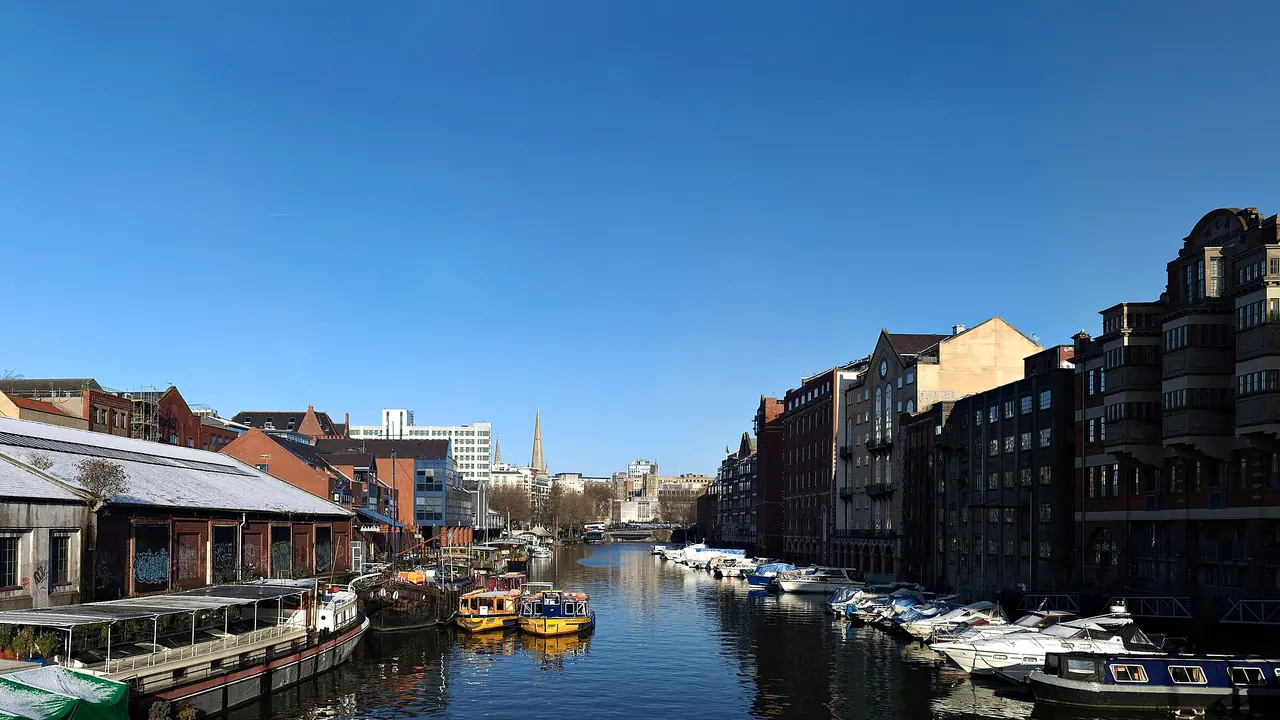
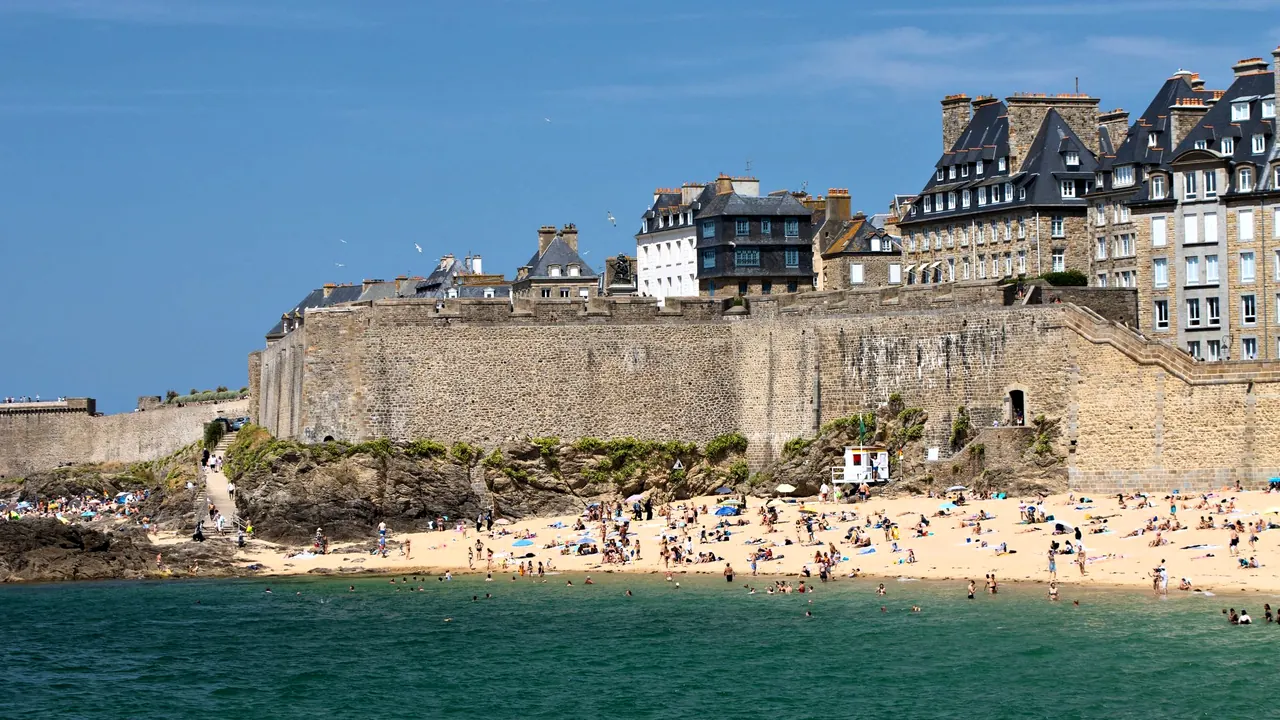
Photos: Bristol by NotFromUtrecht, CC BY-SA 3.0, cropped; Saint-Malo by Efrem Efre, Pexels License.
Bristol or Saint-Malo?
Our verdict in twelve categories, each scored against the same fixed benchmark cities, and the climate month by month, so you can choose for your trip.
Choose Bristol for
- nightlife
- live music and the arts
- shopping
Bristol is the better pick for a city trip with plenty to do after dark. It has a club and live-music culture rooted in trip hop and drum and bass, Brunel's engineering, Georgian Clifton and a stage tradition led by the Old Vic. It suits travellers who want to graze through markets and independent streets, drink cider and craft beer, and take the train to Bath or Cardiff, and who don't mind that the sea plays no part in the stay.
Choose Saint-Malo for
- beaches
- wellness
- getting around
Choose Saint-Malo for a slower seaside stay. The walled town stands right on its own beaches, low tide opens a path to the island forts, and the seawater thalasso tradition makes it an easy place to unwind. Evenings end with a drink rather than a club, and the sights fill a day rather than several. It suits couples and families who want sand, coastal walks and Mont-Saint-Michel more than a full programme.
Scoreboard
Twelve categories on one fixed scale from 0 to 100. The shaded stretch is the gap between the two.
Your match
Pick a travel style or drag the sliders, and both match scores follow your weighting.
Wins on nightlife and live music and the arts with your weighting.
Wins on beaches and wellness with your weighting.
What matters to you?
Category by category
What the scores mean for a trip.
Beaches & swimming
Bristol has no beach life to speak of. The Severn estuary is brown and silty with mud at low tide, and the nearest sand at Weston-super-Mare comes with a tide that retreats far out of reach. The marine lake at Clevedon is for a bracing dip, not a day on the sand.
Saint-Malo's beaches begin at the foot of the walls, with the long Sillon sweeping towards Paramé and small coves tucked under the ramparts. The Channel is chilly, so swims tend to be brief, but the sand, the tidal pool at Bon-Secours and the prettier coves at Dinard make July and August a real beach season.
Food & drink
Bristol offers more range. There are covered stalls at St Nicholas Market, container kitchens by the harbour, and long runs of bakeries, coffee roasters and neighbourhood restaurants on Gloucester Road and in Bedminster, all washed down with West Country cider and local craft beer. What it lacks is a dish of its own.
Saint-Malo has exactly that, in galettes with dry cider, kouign-amann and oysters eaten by the harbour wall at Cancale. The choice is narrower, though, and the crêperies inside the walls are uneven, so the better meals are in Saint-Servan or along the bay.
Culture & sights
Bristol has the longer list: the SS Great Britain in its dry dock, the Clifton Suspension Bridge over the Avon Gorge, St Mary Redcliffe, M Shed's frank account of the port's past and Banksy's early street art. Together they make two or three days of varied sightseeing.
Saint-Malo is essentially one great sight, the granite town rebuilt after 1944 inside its complete ring of ramparts, plus the low-tide walk to Chateaubriand's grave on the Grand Bé. It has plenty of atmosphere, but museum-goers will run out of things to see within a day.
Nightlife
This is where the two differ most. Bristol's sound-system heritage fills railway arches near Temple Meads and harbourside warehouses with club nights, while Stokes Croft has scruffy, creative late bars. A large student population keeps all of it busy the year round.
Saint-Malo winds down after dinner with a pub or wine bar inside the walls, and only summer weekends run late. Anyone who wants to dance has to go to Rennes.
Nature & outdoors
Both are good bases for getting outdoors, but the landscapes are quite different. Bristol's green space is inland and right on its doorstep: the Downs above the climbing cliffs of the Avon Gorge, Leigh Woods, Ashton Court's bike trails and the railway path to Bath. The Mendips and Cheddar Gorge are close, and the Brecon Beacons are within reach.
In Saint-Malo the outdoors is the sea itself. The GR34 coastal path runs out to Pointe du Grouin and the cliffs of the Emerald Coast, the tides uncover vast flats towards Mont-Saint-Michel, and the bay suits sailing, kayaking and kitesurfing. The farmland inland is flat.
Day trips
The two are about equally good as bases for outings, but the outings are of different kinds. From Bristol the train covers the cities: Bath's Roman baths and crescents are a quarter of an hour away, Cardiff's castle is under an hour, and Salisbury's cathedral is a straightforward rail trip. Wells, the tor and abbey ruins at Glastonbury, Stonehenge, Avebury and the Cotswold villages of Lacock and Castle Combe need a car, a bus or a tour. Together they add up to cathedrals, Georgian streets and ancient stones, enough English history to fill a week.
From Saint-Malo, most trips mean driving. Mont-Saint-Michel, about an hour east, is the one most visitors come for, and medieval Dinan, Cancale's oyster port and the castles at Fougères and La Latte are easiest with your own car or on a tour. The exceptions are Belle Époque Dinard, a short boat ride across the estuary, Rennes by train, and the summer ferries to Jersey and the Chausey islands.
Good for families
Both work well with children, and each has an aquarium for a rainy day. Bristol leans towards hands-on learning, with the SS Great Britain, the We The Curious science centre and a roomy wildlife park, though its steep hills are hard work with a pushchair.
Saint-Malo is a bucket-and-spade town of sandcastles, the Bon-Secours sea pool and low-tide walks to the island forts, which older children love. Parents need to watch the fast-rising tides, and the sea is cold for small swimmers.
Getting around
Saint-Malo is easier to get around on foot. The walled town is pedestrian, the promenade runs straight along the beach to Paramé, and buses and the Dinard boat cover the rest. The hard part is reaching the countryside without a car.
Bristol's centre is walkable too, and the harbour ferries are a pleasant extra. The climb to Clifton is steep, though, and with no tram or metro the buses crawl through traffic. Temple Meads makes up for some of this with quick trains for day trips.
Shopping & style
Bristol has the broader mix. The chain and department stores are in Cabot Circus and Broadmead, Gloucester Road has independent record shops, delis and vintage clothes, and boutiques line Park Street on the way up to Clifton.
Saint-Malo's shops are all about Brittany, from striped sailor tops and faience to salted-butter caramels and cheese. They are good for souvenirs, but for fashion you would head to Rennes.
Affordability
Neither is a bargain, but the costs land in different places. In Bristol, hotels climb at weekends and during events, while free museums and a walkable centre keep the rest of the bill down.
Saint-Malo is a resort priced for July and August, and it gets noticeably cheaper in spring and autumn. A galette with cider is one of the easier meals on a budget, while seafood platters add up quickly.
Live music & performing arts
Bristol has a real stage life. The Georgian Old Vic produces its own theatre, the Hippodrome takes touring musicals and ballet, and the Tobacco Factory does fringe and Shakespeare. Small venues around Stokes Croft and Old Market have bands, jazz or electronic acts most nights.
Saint-Malo's cultural calendar rests on its festivals, notably La Route du Rock for indie music, with a modest theatre season and cathedral concerts in between. Outside festival dates, expect a quiet evening.
Wellness & relaxation
Saint-Malo is made for this. The thalasso centre on the Sillon seafront has heated seawater pools and treatments, and out of season the long, empty beaches at low tide make for calm, unhurried days.
In Bristol itself there is the heated Victorian lido in Clifton and a choice of hotel spas, in a city whose mood is sociable rather than serene. Its best card is Bath's thermal springs, a short train ride away.
When should you go?
Pick your month. The climate figures are measured averages, not a forecast.
Bristol in July
Saint-Malo in July
Daytime high, °C
Rainfall in the month, mm
Where the figures come from
Bristol's station stands 178 m above the city centre, so the centre is likely a little warmer than the figures say.
Bristol has no rain gauge within 25 km of the centre, so its rainfall comes from a gridded climate dataset read at the city rather than from a gauge further away.
Bristol's sunshine is measured 43 km from the centre, at Lyneham.
Saint-Malo has no rain gauge within 25 km of the centre, so its rainfall comes from a gridded climate dataset read at the city rather than from a gauge further away.
Saint-Malo's sunshine is measured 68 km from the centre, at Rennes.
Temperature and rainfall are climate normals, averaged over the years shown. Bristol: 1991-2020 normals, Lulsgate Bottom (11.8 km from centre). Saint-Malo: 2002-2020 (sunshine 1991-2020, rainfall 1991-2020) normals, Dinard (7.9 km from centre).
Saint-Malo is the warmer and drier of the two in summer. Highs reach about 22°C in July and August, rainfall is noticeably lower, and it gets as much sunshine as Bristol or more in every month. July and August are its beach season, with the sea reaching about 18°C by August and holding there into September, though that is still cool enough to keep most swims short. Late spring and September are good months for the coastal path and the ramparts.
Bristol peaks a little lower, at about 20°C in July, which is pleasant for walking the hills and the harbourside but no help for a beach day. Both turn wet from October, when Bristol's rainfall climbs towards 97mm a month. Winters in both are mild but grey, better for museums, or in Saint-Malo for seawater pools, than for long days outdoors.
Which traveller are you?
On a beach and sun trip, Saint-Malo is the clear choice. The Grand Plage du Sillon starts at the ramparts, the Bon-Secours sea pool lets you swim at any tide, and summers are sunnier. Bristol's estuary shore is silt and mud.
For a food and nightlife trip, Bristol wins comfortably. Market stalls, harbourside container kitchens and cider houses fill the day, and warehouse clubs and late Stokes Croft bars fill the night. Saint-Malo has fine oysters and galettes, but its evenings stop at the pub.
On a relaxing and wellness trip, Saint-Malo suits better. Its seafront thalasso centre, with heated seawater pools and treatments, is the main event, and out-of-season walks on empty sand finish the job. Bristol relies on the Clifton lido and a train to Bath.
Before you go
| Measure | Bristol | Saint-Malo |
|---|---|---|
| Official language | English | French |
| Currency | Pound Sterling (GBP) | Euro (EUR) |
| Sockets | G230 V, 50 Hz | CE230 V, 50 Hz |
| Driving side | Left | Right |
| Time zone | UTC, UTC+1 in summer | UTC+1, UTC+2 in summer |
| Emergency number | 112 or 999 | 112 |
| Elevation | 11 m | 0 m |
| Main airport | Bristol Airport (BRS)11 km from centre117 non-stop destinations | Rennes-Saint-Jacques Airport (RNS)68 km from centre15 non-stop destinations |
| Public holidays this year | 8 days | 11 days |
By the numbers
| Measure | Bristol | Saint-Malo |
|---|---|---|
| City population | 472,465 | 47,439 |
| People per km² | 4,311 | 1,296 |
| Museums within 10 km | 23 | 3 |
| UNESCO World Heritage sites within 50 km | 3 | 2 |
| Swim season, months above 21 °C | None | None |
Where else could you go?
Every comparison below shares a destination with this one, so you can follow Bristol or Saint-Malo somewhere new.
- Bathvs Bristol
- Cardiffvs Bristol
- Oxfordvs Bristol
- Nantesvs Saint-Malo
- Londonvs Bristol
- Brightonvs Bristol