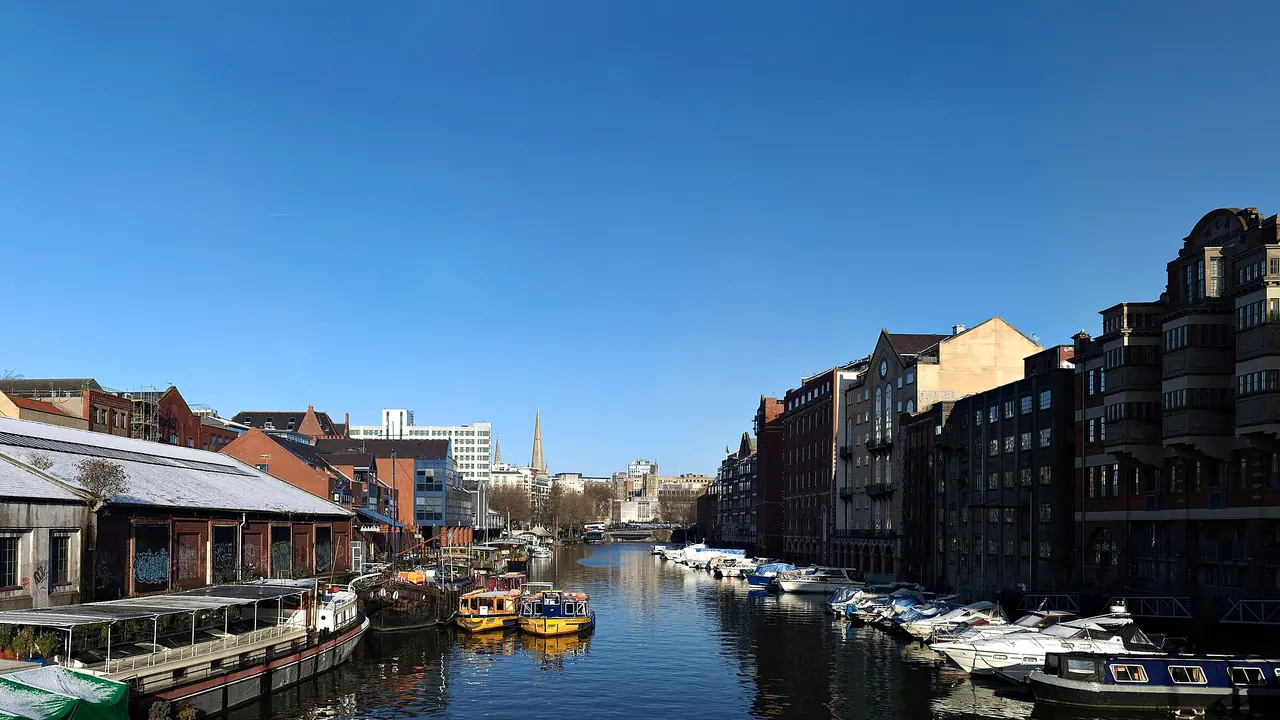
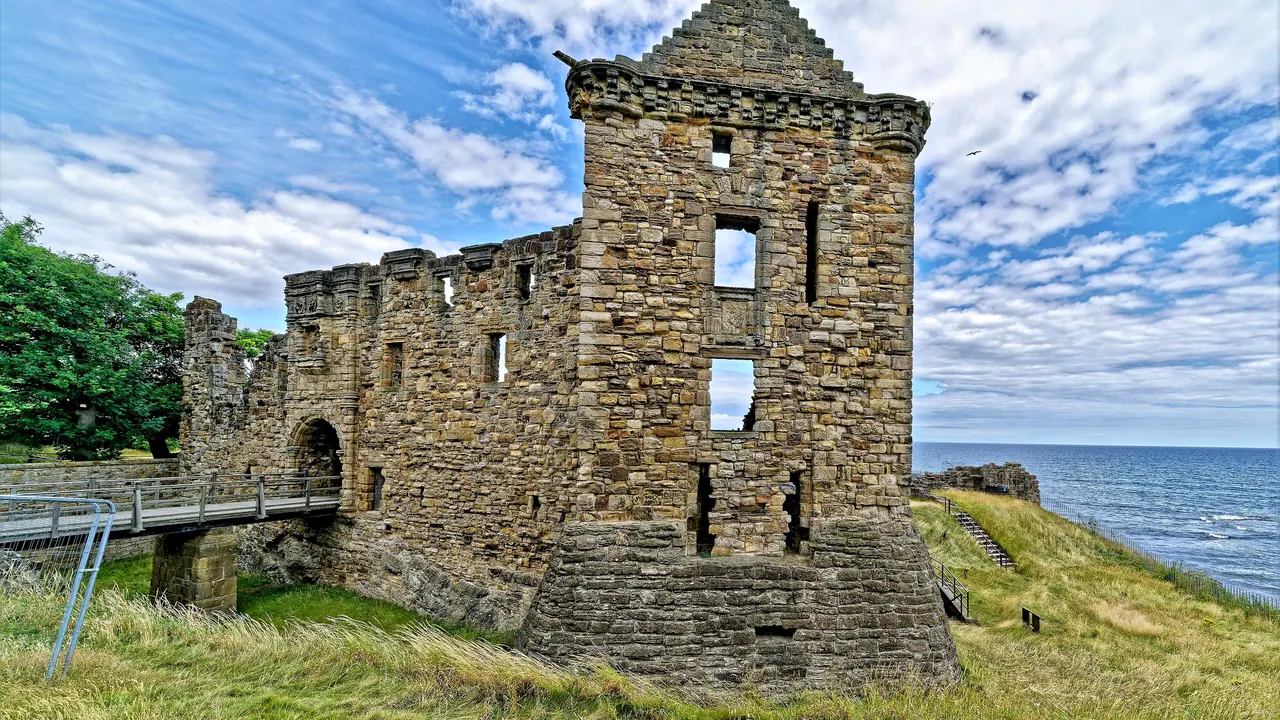
Photos: Bristol by NotFromUtrecht, CC BY-SA 3.0, cropped; St Andrews by Holger Uwe Schmitt, CC BY-SA 4.0, cropped.
Bristol or St Andrews?
Our verdict in twelve categories, each scored against the same fixed benchmark cities, and the climate month by month, so you can choose for your trip.
Choose Bristol for
- nightlife
- live music and the arts
- food and drink
Bristol is the better choice if you want a proper city with plenty going on after dark. Its club and live music scene and its independent food and cider culture give evenings a lot more range. Brunel's ship and bridge make a strong core of sights. It also works well as a base, because Bath, Wells and Cardiff are all easy train or car trips, so a week here never runs short of things to do.
Choose St Andrews for
- beaches
- getting around
St Andrews suits a slower, smaller trip built around the sea air, the golf links and a medieval town you can cross on foot in minutes. Golfers have an obvious reason to come. So does anyone who wants long walks on pale sand, cathedral ruins on the headland and East Neuk harbours down the coast, and who is happy with quiet evenings and early nights.
Scoreboard
Twelve categories on one fixed scale from 0 to 100. The shaded stretch is the gap between the two.
Your match
Pick a travel style or drag the sliders, and both match scores follow your weighting.
Wins on nightlife and live music and the arts with your weighting.
Wins on beaches and getting around with your weighting.
What matters to you?
Category by category
What the scores mean for a trip.
Beaches & swimming
Neither is a place to swim, but only St Andrews has real beaches. Bristol sits on the silty Severn estuary, where low tide shows mud. Even at Weston-super-Mare the sea goes out so far that swimming needs careful timing, so the most local people do is take a cold dip in the Victorian marine lake at Clevedon.
St Andrews has three beaches you can walk to. Long, dune-backed West Sands is the main one, sheltered East Sands by the harbour suits families, and Castle Sands sits below the cliffs. The North Sea stays cold and the wind is often up, so plan on beach walks and a quick dip rather than a day lying in the sun.
Food & drink
Bristol gives you far more choice. There are covered stalls in St Nicholas Market, container kitchens along the harbourside, and bakeries and neighbourhood restaurants on Gloucester Road and North Street. Above all there is West Country cider and a large craft brewing scene. It is a city for grazing rather than for one signature dish.
St Andrews feeds you well enough but narrowly. You get cafés, bakeries, a few restaurants cooking Fife lamb and East Neuk crab, and summer evening queues for ice cream. The best of it is out of town, with fish and chips by the harbour and smoked fish from smokehouses in the coastal villages.
Culture & sights
Bristol has more to see, and most of it comes from its days as a port and from Victorian engineering. The highlights are Brunel's SS Great Britain in its original dry dock and his Clifton Suspension Bridge over the gorge. St Mary Redcliffe, the M Shed's honest account of the slave trade and Banksy's early street art in Stokes Croft add more.
St Andrews has a smaller but evocative medieval past. You can see the ruined cathedral and climb St Rule's Tower, and the castle has a bottle dungeon and siege tunnels you can crawl through. The university dates from 1413, and golf heritage centres on the Old Course. It is charming, but you will see it all in less time than Bristol.
Nightlife
This is where the two differ most. Bristol is the city of trip hop and drum and bass. Clubs fill old warehouses and railway arches around Temple Meads, Stokes Croft has scruffy, creative late bars, and the harbour pubs suit a gentler night. Weekends run late all year.
St Andrews offers pubs, golfers' lounges and a few student haunts that only liven up during term. In summer, when most visitors come, the town goes quiet early. For a real night out, you would need to go to Dundee or Edinburgh.
Nature & outdoors
Both are good for getting outdoors, but the scenery differs. Bristol's green space starts in the city itself: climbers on the Avon Gorge cliffs, woodland and bike trails in Leigh Woods and Ashton Court, and the traffic-free railway path to Bath. Further out are the caves and cliffs of Cheddar Gorge, and Exmoor and the Brecon Beacons offer upland hiking.
St Andrews is all coast and big skies. The Fife Coastal Path passes sea stacks and caves, wading birds gather on the Eden estuary, and seals haul out below Tentsmuir's pine woods. Golf on the links is the defining activity, and the Lomond Hills give you some hill walking.
Day trips
Both make strong bases, but Bristol has the edge, because its best trips are so quick and easy by train. Bath is a quarter of an hour away and Cardiff is under an hour. Wells, Glastonbury, Cotswold villages such as Lacock, and Stonehenge with Avebury all fill a full day.
St Andrews has the pretty East Neuk harbours, Falkland Palace and Dundee's V&A, all close at hand. Edinburgh is an easy full day out. Castles such as Glamis and Stirling need a car, though, or careful planning around buses.
Good for families
Bristol has more to keep children busy. They can explore the SS Great Britain, spend a rainy day at the hands-on science centre We The Curious and the aquarium next door, and ride the little harbour ferries in between. A spacious wildlife park on the edge of the city and the deer at Ashton Court round it out. The steep hills are hard work with a pushchair.
St Andrews is gentler and small enough that older children can roam a little. They can dig sandcastles on the beaches, crawl through the castle tunnels, visit Craigtoun Park's miniature railway and try the putting green by the Old Course. It suits a relaxed few days more than a packed itinerary.
Getting around
St Andrews is the easier of the two. Its few parallel streets lead to the cathedral, and the beaches, the Old Course and the castle are all a short stroll apart. The catch is that there is no station in town, so trains mean a bus or taxi to Leuchars, about 8km away.
Bristol's centre is walkable too, and yellow ferries cross the Floating Harbour. But the climb to Clifton is steep, and with no metro or tram, the buses get stuck in traffic. Temple Meads is the advantage here, putting fast trains a walk from the centre.
Shopping & style
Independent streets are the reason to shop in Bristol. Gloucester Road is a long run of record shops, delis and vintage clothes, and Park Street climbs past fashion boutiques to the galleries and gift shops in Clifton's Georgian arcades. Cabot Circus and Broadmead cover the chains and department stores, though there is little luxury.
In St Andrews the speciality is golf: clubs, clothing and Old Course souvenirs, with cashmere, tartan and independent bookshops alongside on Market Street and South Street. It is a pleasant browse but much shallower than Bristol, and serious shoppers make the trip to Edinburgh.
Affordability
Neither is cheap, but Bristol is the easier of the two on a budget. Most of its main museums and churches are free, market stalls and street food keep meals cheap, and weekday hotel rooms are reasonable.
St Andrews has few rooms, priced for golfers and visiting university families, and prices jump during tournaments and graduation weeks. Playing the famous courses adds a large cost. Staying in the East Neuk villages is the usual way to save.
Live music & performing arts
Bristol has a real stage and music scene. The Bristol Old Vic is a working Georgian theatre from the 1760s. The Hippodrome takes touring musicals and ballet, and the Tobacco Factory stages fringe theatre and Shakespeare. Small venues host bands, jazz and electronic acts most nights.
St Andrews has the Byre Theatre, choral evenings in the university chapel and folk sessions in some pubs. It is a modest programme that fades in the summer break, so for opera or an orchestra you would need to go to Edinburgh.
Wellness & relaxation
Bristol has better places to unwind. Clifton's heated Victorian lido has a spa. Bath, a quarter of an hour away by train, lets you bathe in Britain's only natural hot springs on a rooftop above the abbey, which nothing near St Andrews can match.
St Andrews wins on atmosphere rather than facilities. It has an unhurried pace, long walks on West Sands and quiet evenings. Beyond that there are the hotel spas at the golf resorts and an icy local habit of sea dipping off East Sands.
When should you go?
Pick your month. The climate figures are measured averages, not a forecast.
Bristol in July
St Andrews in July
Daytime high, °C
Rainfall in the month, mm
Where the figures come from
Bristol's station stands 178 m above the city centre, so the centre is likely a little warmer than the figures say.
Bristol has no rain gauge within 25 km of the centre, so its rainfall comes from a gridded climate dataset read at the city rather than from a gauge further away.
Bristol's sunshine is measured 43 km from the centre, at Lyneham.
Temperature and rainfall are climate normals, averaged over the years shown. Bristol: 1991-2020 normals, Lulsgate Bottom (11.8 km from centre). St Andrews: 1991-2020 normals, Leuchars (6.5 km from centre).
The two have very similar weather, and neither ever gets warm enough for a real beach vacation. Summer highs peak at about 20°C in Bristol and a degree lower in St Andrews, so June to September is the season for both. Winters are cool rather than harsh, and you can walk around either place all year if you bring a coat. Bristol gets noticeably more summer sunshine. Its sea also warms to about 18°C in August, against 14°C in the North Sea off St Andrews, although Bristol's muddy estuary makes that warmth worth little.
The real difference is rain. Bristol is the wetter of the two, and its autumn and early winter are clearly the dampest stretch, with October to December bringing well over 90mm a month. St Andrews is drier all year, and spring is its best time for a walking trip, with April the driest month at around 43mm. It is just as windy and changeable in every season, though.
Which traveller are you?
For a food and nightlife trip, Bristol wins easily. You can graze your way through St Nicholas Market and Gloucester Road, then spend the night in warehouse clubs, live music venues and cider pubs that stay open late. St Andrews is in bed early outside term time.
On a beach and sun trip, St Andrews is the better of two weak options. West Sands and East Sands are proper sandy beaches within walking distance, good for long walks and a bracing dip. Bristol's shore is estuary mud, and the nearest real swimming beaches are a long drive away.
For golfers, St Andrews is the obvious choice. The Old Course, the Swilcan Bridge, links courses all around the town and the British Golf Museum make it a pilgrimage, and Bristol has nothing comparable. Book well ahead, because rooms are limited and the famous courses are expensive to play.
Before you go
| Measure | Bristol | St Andrews |
|---|---|---|
| Official language | English | English |
| Currency | Pound Sterling (GBP) | Pound Sterling (GBP) |
| Sockets | G230 V, 50 Hz | G230 V, 50 Hz |
| Driving side | Left | Left |
| Time zone | UTC, UTC+1 in summer | UTC, UTC+1 in summer |
| Emergency number | 112 or 999 | 112 or 999 |
| Elevation | 11 m | 24 m |
| Main airport | Bristol Airport (BRS)11 km from centre117 non-stop destinations | Edinburgh Airport (EDI)56 km from centre163 non-stop destinations |
| Public holidays this year | 8 days | 10 days |
By the numbers
| Measure | Bristol | St Andrews |
|---|---|---|
| City population | 472,465 | 16,460 |
| People per km² | 4,311 | - |
| Museums within 10 km | 23 | 5 |
| UNESCO World Heritage sites within 50 km | 3 | 0 |
| Swim season, months above 21 °C | None | None |
Where else could you go?
Every comparison below shares a destination with this one, so you can follow Bristol or St Andrews somewhere new.
- Bathvs Bristol
- Cardiffvs Bristol
- Edinburghvs St Andrews
- Oxfordvs Bristol
- Aberdeenvs St Andrews
- Glasgowvs St Andrews