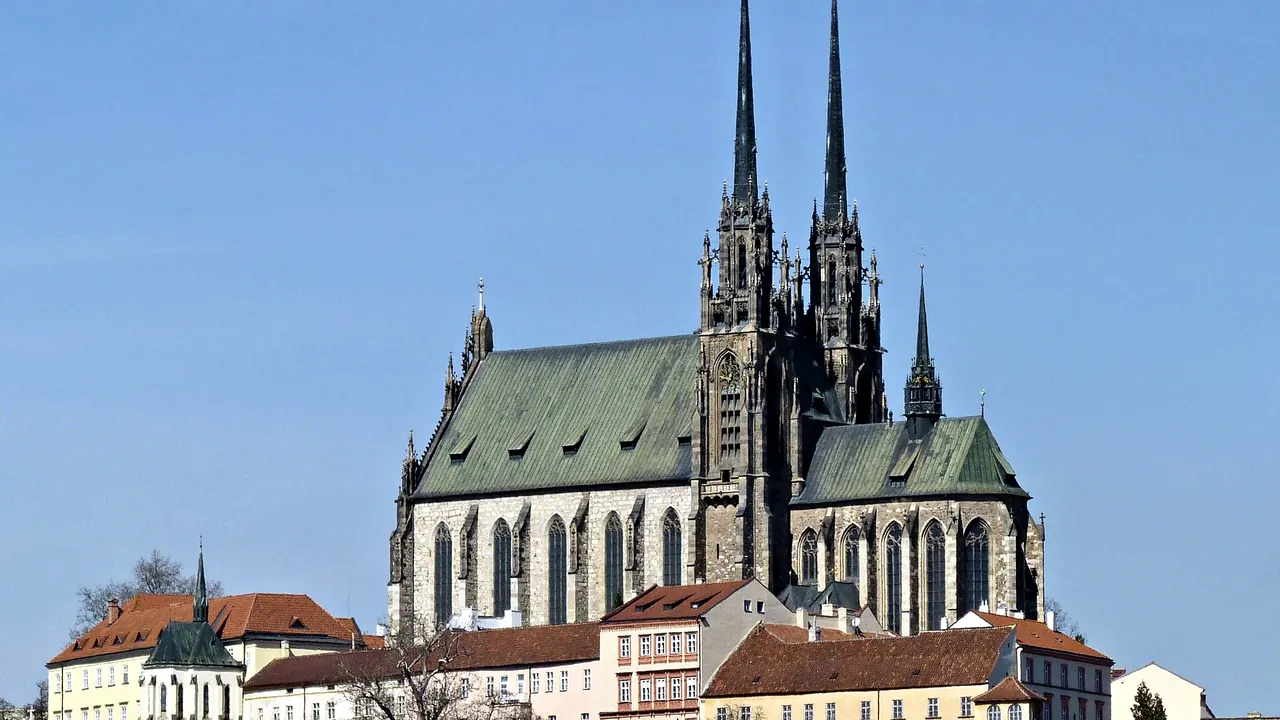
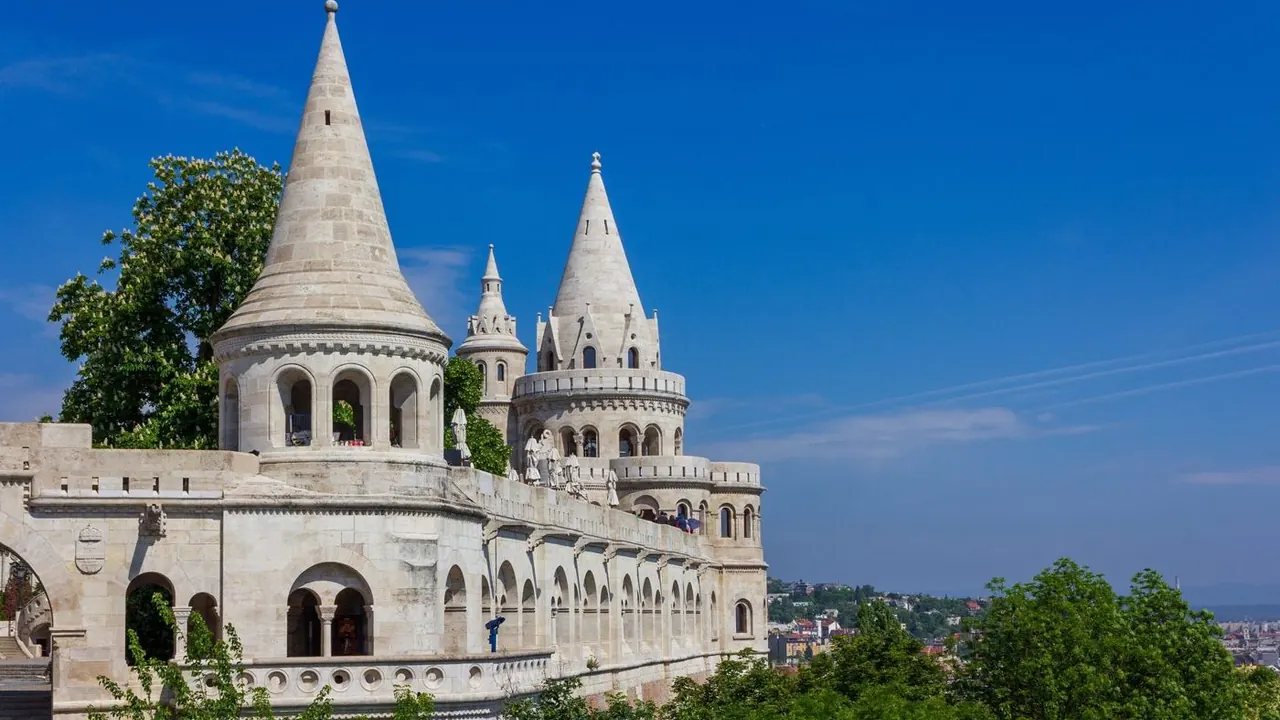
Photos: Brno by Michal Klajban, CC BY-SA 3.0, cropped; Budapest by Perituss, CC0.
Brno or Budapest?
Our verdict in twelve categories, each scored against the same fixed benchmark cities, and the climate month by month, so you can choose for your trip.
Choose Brno for
- day trips
- prices
Brno suits travellers who want a calm, inexpensive base for exploring a region. Its own sights take two or three days: Villa Tugendhat and the interwar functionalist districts, Spilberk and the crypts. After that, South Moravia opens up, with the Lednice-Valtice estate, the Moravian Karst caves, wine towns such as Mikulov and a string of UNESCO towns, all reached on the same tram-and-train ticket. Pick it for evenings over Moravian wine and careful cocktails rather than late nights out.
Choose Budapest for
- wellness
- nightlife
- culture and sights
Budapest is the bigger trip and the better choice if you want a capital to fill most of a week. The Danube panorama from Parliament to the Castle District, a stronger table, music most nights in grand halls and a lively nightlife in District VII all give it more depth. Above all, the thermal baths make it one of Europe's great places to slow down, which Brno cannot match.
Scoreboard
Twelve categories on one fixed scale from 0 to 100. The shaded stretch is the gap between the two.
Your match
Pick a travel style or drag the sliders, and both match scores follow your weighting.
Wins on day trips and prices with your weighting.
Wins on wellness and nightlife with your weighting.
What matters to you?
Category by category
What the scores mean for a trip.
Beaches & swimming
Neither city has a sea, but Budapest makes more of a hot day. The big open-air lidos, such as Palatinus on Margaret Island, have lawns and several pools. Lake Velence, under an hour by train, warms past 25°C and has small resort beaches.
In Brno, swimming means the reservoir on the Svratka, which has grassy banks but can suffer algae in hot spells. The other choice is the Nove Mlyny lakes, an hour south.
Food & drink
Budapest is the better place to eat. The Great Market Hall shows off its paprika, salami and pickles, and the old coffee houses serve Dobos and Esterházy cakes. There is also a real modern restaurant tier and a deep wine list running from Tokaji to Eger reds.
Brno's plates are plainer: svickova, goulash and dumplings in beer halls. Its strength is in the glass, with local lager, Moravian whites and Frankovka from vineyards close by, plus a specialty coffee scene that is impressive for a city its size.
Culture & sights
Budapest has the grander sights and needs several days. You get the river front from the neo-Gothic Parliament to the Royal Palace and Fishermen's Bastion, Andrássy Avenue, old masters at the Museum of Fine Arts, and the Dohány Street Synagogue. Its history comes in layers, from Ottoman tombs to Memento Park.
Brno is smaller and more specialised, and its draw is modernism. Villa Tugendhat and the functionalist villas and exhibition grounds set it apart, alongside Spilberk Castle, the cathedral and the crypts beneath the old town. Two or three days covers it.
Nightlife
Budapest is the place for a big night out. The ruin bars fill courtyard tenements in District VII, Kazinczy and Király streets stay loud past 2am at weekends, and in summer the party moves onto the Danube. Expect stag groups on Fridays and Saturdays.
Brno's evenings are smaller and more considered: cocktail bars behind unmarked doors, wine bars and student cellars around Jakubske namesti. There is little clubbing, and the city goes quiet in July and August when the students leave.
Nature & outdoors
Both cities offer gentle green country with no mountains, but the setting differs. In Budapest the woods start at the city's edge. The Buda Hills, with a chairlift and lookout towers, are half an hour from the centre, and there are cave systems formed by thermal water and the Danube Bend hikes further north.
Brno's best outdoors is a short trip away. The Moravian Karst has a boat ride along an underground river below the Macocha Abyss. To the south are the Palava limestone ridge, the Dyje valley and long cycling routes through the vineyards.
Day trips
This is where Brno pulls ahead. Within an hour or two are the Lednice-Valtice chateaux, the Austerlitz battlefield, and UNESCO towns such as Telc, Trebic, Kromeriz and Zelena Hora. Vienna and Bratislava are each about an hour and a half by train, so you can visit two capitals as day trips.
Budapest's easy outings follow the Danube Bend to Szentendre, Visegrád and Esztergom, or go to Gödöllő. Beyond those, places such as Eger and Hollókő take about two hours each way, and Tokaj or Pécs really need a night away.
Good for families
Budapest has more made for children. There is the old zoo in City Park, the Children's Railway run by schoolchildren, the Palace of Wonders, and bike carts on Margaret Island. In summer the lidos have wave pools and slides.
Brno is safe and simple, with fewer attractions aimed at children. The VIDA science centre, the hillside zoo and the Anthropos mammoths fill a couple of days, and the boat through the Punkva Caves is the outing children remember best.
Getting around
Both cities are easy to get around without a car, but in different ways. Brno's compact old town can be walked across in a quarter of an hour, and its single ticket also covers regional trains, which makes day trips simple. Budapest is bigger and relies more on transport. Tram 2 along the embankment, the little yellow carriages of metro line 1 and the river ferries all help, and the steeper Buda side has buses and a funicular.
Shopping & style
Budapest gives a shopper more to do, though it is still not a main reason to go. Herend and Zsolnay porcelain, small design boutiques in Districts V and VII, the Ecseri flea market for communist-era finds, and food gifts from the Great Market Hall are better buys than Váci utca's chains.
Brno has high-street stores on Ceska and a few vintage and design shops. Its best purchase is Moravian wine, bought straight from the cellars.
Affordability
Both are good value by European standards, and Brno is a little easier on the wallet. Pub lunch menus, beer, local wine, museum entry and transport all cost little there. The main thing to watch is the big trade fairs, which can fill hotel rooms.
Budapest's costs build up in the tourist core, around Váci utca, the Basilica and the grandest cafés. Lunch menus in residential districts and drinking where locals go keep it reasonable.
Live music & performing arts
Budapest gives a music lover more. There is the State Opera House on Andrássy Avenue, the Art Nouveau hall of the Liszt Academy and the national concert hall at Müpa, with operetta, folk ensembles and church concerts filling most nights.
Brno's stage life centres on Janacek. His operas lead the repertoire at the Janacek Theatre, the old Reduta is where the young Mozart played, and the Janacek festival is the high point of the year. It is a smaller programme, and drama there is mostly in Czech.
Wellness & relaxation
This is the widest gap between the two. Budapest sits on more than a hundred thermal springs. You can soak under the Ottoman domes at Rudas and Király, among the mosaics of the Gellért, or in the Széchenyi's outdoor pools in the snow. A half-day in the baths can shape a whole stay.
Brno has no thermal water at all. Relaxing there means a sauna at a swimming complex, a café afternoon or a walk in Luzanky park.
When should you go?
Pick your month. The climate figures are measured averages, not a forecast.
Brno in July
Budapest in July
Daytime high, °C
Rainfall in the month, mm
Temperature and rainfall are climate normals, averaged over the years shown. Brno: 1991-2020 normals, Brno / Turany (8.4 km from centre). Budapest: 1991-2020 (sunshine 1981-2010, rainfall 1981-2010) normals, Budapest Met Center (2.1 km from centre).
Brno is warm enough for an afternoon at the reservoir or the Nove Mlyny lakes from June to August, peaking at around 26°C in July and August. June and July are also its wettest months, at about 70mm each, mostly in summer showers, and August turns a little drier. Budapest is a couple of degrees warmer through the summer and reaches 28°C in August. Its rain comes earlier, in May and June, so July and August are drier and sunnier there. That makes Budapest's high summer the better bet for a day at the lidos or Lake Velence.
For walking the streets, May, June and September are the most comfortable months in Brno. Brno is also slightly sunnier than Budapest in early spring. In Budapest, May and September are the best months for walking, because high summer can feel close in the flat, paved centre of Pest. From December to February, Brno sits at about 2°C and is grey and dark, and Budapest is barely warmer. A winter visit to Budapest still makes sense, though, because the outdoor thermal pools are at their best in the cold.
Which traveller are you?
On a relaxing and wellness trip, Budapest wins easily. Its thermal baths, from the Széchenyi's steaming outdoor pools to the Ottoman domes of Rudas and Király, are part of daily life. Brno offers only swimming complexes with saunas and quiet parks.
For a food and nightlife trip, Budapest gives more. There is the Great Market Hall, Tokaji and pálinka, a serious modern restaurant tier, and then the ruin bars and late clubs of District VII. Brno's cocktail cellars are good, but its nights end earlier.
On a trip with a tight budget, Brno stretches your money further. Pub lunch menus, beer and Moravian wine all cost little. One integrated ticket covers trams and regional trains, so cheap day trips to the wine country and UNESCO towns come easily.
Before you go
| Measure | Brno | Budapest |
|---|---|---|
| Official language | Czech | Hungarian |
| Currency | Czech Koruna (CZK) | Forint (HUF) |
| Sockets | CE230 V, 50 Hz | CF230 V, 50 Hz |
| Driving side | Right | Right |
| Time zone | UTC+1, UTC+2 in summer | UTC+1, UTC+2 in summer |
| Emergency number | 112 | 112 |
| Elevation | 237 m | 117 m |
| Main airport | Brno-Tuřany Airport (BRQ)8 km from centre40 non-stop destinations | Budapest Liszt Ferenc International Airport (BUD)18 km from centre157 non-stop destinations |
| Public holidays this year | 13 days | 13 days |
By the numbers
| Measure | Brno | Budapest |
|---|---|---|
| City population | 402,739 | 1,675,777 |
| People per km² | 1,750 | 3,191 |
| Museums within 10 km | 25 | 81 |
| UNESCO World Heritage sites within 50 km | 2 | 1 |
Where else could you go?
Every comparison below shares a destination with this one, so you can follow Brno or Budapest somewhere new.
- Viennavs Brno
- Bratislavavs Brno
- Bratislavavs Budapest
- Cesky Krumlovvs Brno
- Praguevs Brno
- Viennavs Budapest