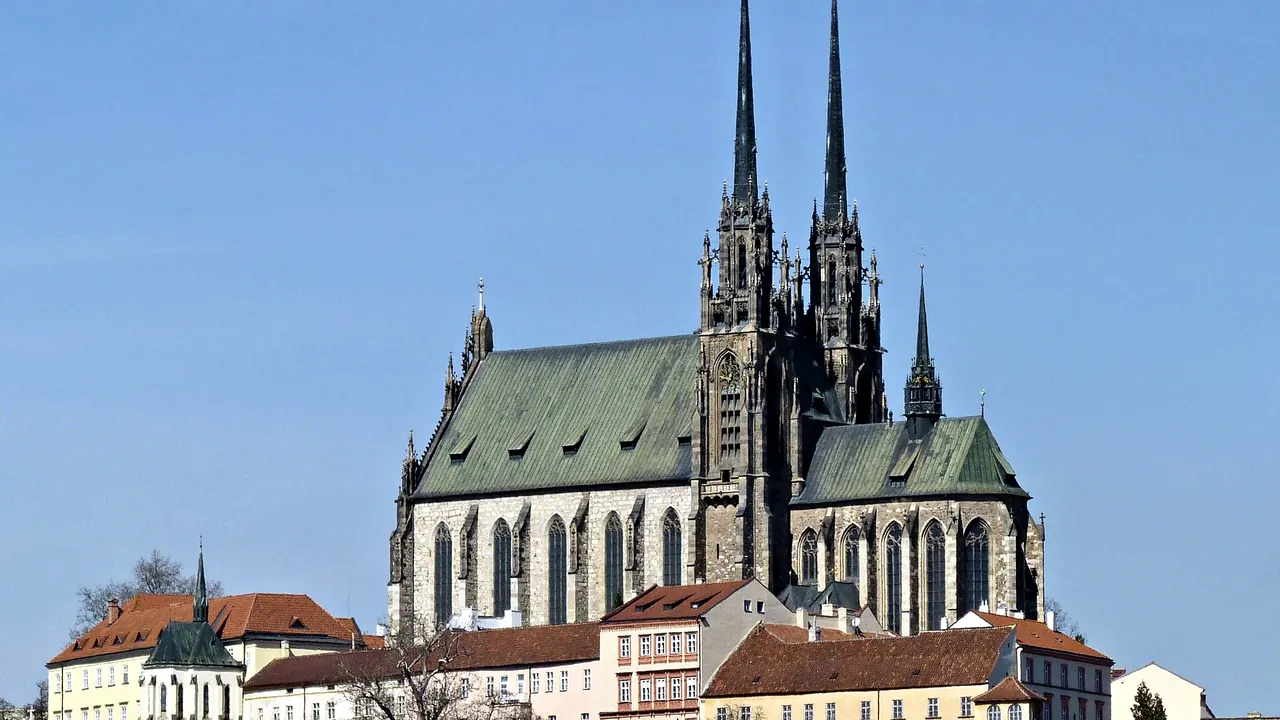
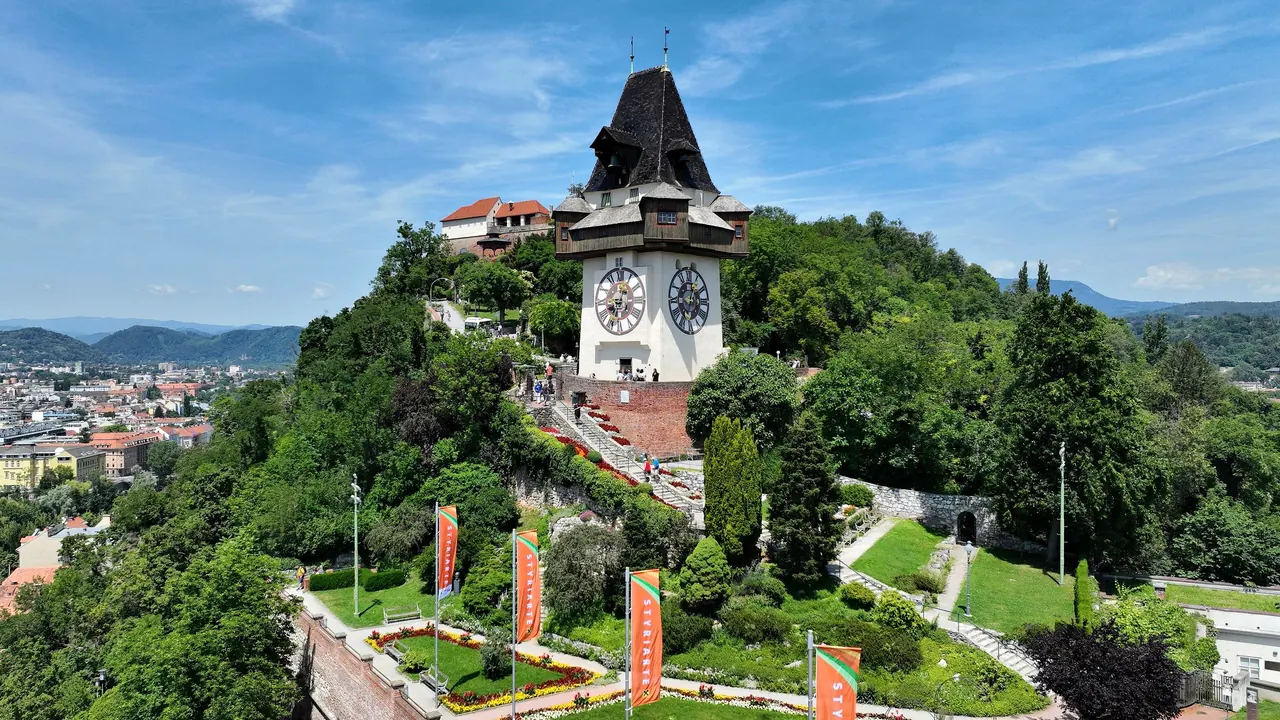
Photos: Brno by Michal Klajban, CC BY-SA 3.0, cropped; Graz by C.Stadler/Bwag, CC BY-SA 4.0, cropped.
Brno or Graz?
Our verdict in twelve categories, each scored against the same fixed benchmark cities, and the climate month by month, so you can choose for your trip.
Choose Brno for
- prices
- day trips
- nightlife
Brno suits the traveller who wants a cheap, well-connected base and plans to spend half the trip out of town. Southern Moravia puts chateaux, UNESCO towns, wine cellars and even Vienna and Bratislava within a day's reach, and the city itself rewards anyone curious about interwar modernism, Janacek's operas and an evening in a serious cocktail bar.
Choose Graz for
- wellness
- shopping
- food and drink
Graz is the better pick for a slower, prettier stay where the city is the main event. Its old town is a joy to wander, the Styrian cooking has real character, and mountains and thermal spas lie close by. Families and walkers will get more from it too, as long as they accept Austrian prices.
Scoreboard
Twelve categories on one fixed scale from 0 to 100. The shaded stretch is the gap between the two.
Your match
Pick a travel style or drag the sliders, and both match scores follow your weighting.
Wins on prices and day trips with your weighting.
Wins on wellness and shopping with your weighting.
What matters to you?
Category by category
What the scores mean for a trip.
Beaches & swimming
Neither city is a place for a beach vacation, and both offer the same kind of summer relief: freshwater swimming on the city's edge. In Brno it is the reservoir on the Svratka, which you reach by tram and river boat, although algae can spoil the water in hot spells. The Nove Mlyny lakes are an hour south.
Graz relies on former gravel pits south of town, the Schwarzlsee above all. These have jetties, kiosks and water that warms nicely by midsummer, so they feel a little more organised for a lazy afternoon.
Food & drink
Graz has the more distinctive table. Styrian cooking is built on regional produce: pumpkin seed oil on everything from salad to ice cream, cold fried chicken salad and horseradish-laced boiled pork. Farmers' markets at Kaiser-Josef-Platz and Lendplatz run six mornings a week, and Buschenschank taverns in the wine hills pour crisp Sauvignon Blanc.
Brno's plates are heavier Czech pub classics such as svickova and goulash. The city makes up for it in the glass, with Starobrno lager, Moravian Frankovka and a specialty coffee scene unusual for its size. Neither city has much range beyond its own cuisine.
Culture & sights
Graz's old town is a sight in itself. Red roofs, arcaded Renaissance courtyards and Baroque façades climb towards the Schlossberg and its clock tower, and the Landeszeughaus armoury and Schloss Eggenberg are both memorable visits. The Kunsthaus on the river adds a modern counterpoint.
Brno's appeal lies more in its specialist interests. Villa Tugendhat and the city's interwar functionalist buildings make it a pilgrimage for architecture lovers, and the Capuchin Crypt, the St James ossuary and the Mendel Museum add curiosities. Both cities can be covered in two or three days.
Nightlife
Both are student cities that go out well on a small scale and fall quiet in the summer break. Neither suits serious clubbing. The difference lies in the style of the evening. Brno's reputation rests on careful cocktail bars hidden behind unmarked doors and down cellar steps around Jakubske namesti, with cheap student cellars and Moravian wine bars alongside.
Graz is more of a pub crawl. Its Bermuda Triangle lanes around Mehlplatz spill outdoors on summer nights, and Lend across the river has the artier bars.
Nature & outdoors
Graz sits at the edge of the Alps, and you feel it. The Schöckl rises to 1,445m just outside town, with a cable car, trails and paragliders. The Gesäuse and Hochschwab offer proper alpine hiking within about two hours, and the Bärenschützklamm gorge climbs past waterfalls.
Brno's countryside is lower and gentler, with no mountains. Its highlight is underground: the Moravian Karst half an hour north, where a boat follows a river through the Punkva Caves beneath the Macocha Abyss. To the south, the Palava ridge, the Dyje valley and the vineyard cycle routes make easy, pleasant outings.
Day trips
Brno is the stronger base by a wide margin. Few cities have so many UNESCO sites within an hour or two: the Lednice-Valtice estate, Kromeriz, Trebic, Telc and Zelena Hora, with the Austerlitz battlefield even closer. Add Olomouc, the Mikulov wine country and both Vienna and Bratislava by train, and a week of excursions is easy without a car.
Graz's outings are more rural, taking in the South Styrian Wine Road, Riegersburg on its crag, Admont's monastic library and Maribor across the border. These are rewarding, but they are fewer, and most are easier with a hire car.
Good for families
Graz has more that is made for children, and its best attractions are in the centre. On the Schlossberg, families ride the lift up and come down an underground slide, and the Märchenbahn train runs through fairytale tunnels in the rock. FRida & freD in the Augarten is a dedicated children's museum.
Brno's family draws are spread further out: the VIDA science centre, the hillside zoo, which Graz lacks, the Anthropos mammoths and the cave boat in the Moravian Karst. Cobbles and hills make a pushchair harder work than on Graz's flat streets.
Getting around
Both have compact, largely pedestrianised centres and good trams on one simple ticket, so neither needs a car in town. Graz is flatter and better for cycling along the Mur, while Brno has steep streets around Spilberk and the cathedral.
The real difference shows up once you leave the city. Brno's ticket also covers regional trains across South Moravia, so the countryside is easy by rail. Around Graz, buses are sparse and a car becomes the practical choice.
Shopping & style
Graz is the more enjoyable place to browse. The Herrengasse and the sloping Sporgasse put shops in historic buildings, a grand nineteenth-century department store has views from its roof terrace, and Lend has design and vintage studios. Pumpkin seed oil, Schilcher rosé, craft chocolate and loden make good things to take home.
In Brno you will mostly find chain stores along Ceska and Masarykova. The best souvenirs are Moravian wine bought straight from the cellars and produce from the Zelny trh market.
Affordability
Brno is plainly the cheaper trip. Hotels, pub lunch menus, beer, wine, transport and museum entry all cost little by central European standards, and only cocktails and specialty coffee push the bill up.
Graz is fair for Austria but not cheap. Student lunch spots and a walkable centre help, but sit-down dinners and wine cost what you would expect in Western Europe. In both cities, big trade fairs can fill hotel rooms.
Live music & performing arts
Both punch above their size on stage, with different centres of gravity. Brno's stage life revolves around Janacek. His operas anchor the programme at the modernist Janacek Theatre, a festival bears his name, and the Reduta, where the young Mozart played, adds history.
Graz has a grander opera house, the second largest in Austria, and a wider festival year: Styriarte for early and classical music, and steirischer herbst for avant-garde work. It also has a jazz scene fed by the music university. Drama is in Czech in one city and German in the other, so music is the safer bet for visitors.
Wellness & relaxation
Graz is the better choice for unwinding, mainly because of what lies an hour east. The Styrian thermal villages, including Hundertwasser's Bad Blumau, Loipersdorf and Bad Radkersburg, welcome day visitors to large warm pools and saunas.
Brno has no springs or spa tradition within easy reach. Relaxing there means a sauna at a public pool, a long café afternoon or a walk in Luzanky park, which is calm but modest.
When should you go?
Pick your month. The climate figures are measured averages, not a forecast.
Brno in July
Graz in July
Daytime high, °C
Rainfall in the month, mm
Temperature and rainfall are climate normals, averaged over the years shown. Brno: 1991-2020 normals, Brno / Turany (8.4 km from centre). Graz: 1991-2020 normals, Graz Airport (7.9 km from centre).
The two cities share a central European rhythm. Winters sit just above freezing, summers reach about 26°C to 27°C, and the most comfortable walking weather is late May, June and September. July and August are warm enough for a swim in the local lakes and reservoirs, though neither city has a sea.
The big difference is summer rain. Graz takes about 125mm a month from June to August, almost double Brno's 70mm, so a midsummer stay in Graz needs more flexible plans. In winter it turns the other way. Graz gets close to twice Brno's sunshine from November to January, while Brno's short winter days are often grey.
Which traveller are you?
For a trip on a tight budget, Brno is the clear choice. Rooms, pub lunch menus, beer, Moravian wine and museum tickets all cost noticeably less than in Graz, and one regional ticket takes you to the day-trip towns by train.
For an outdoors trip, Graz has more to offer. You can ride the cable car up the Schöckl, cycle the Mur path or climb the Bärenschützklamm ladders, and alpine hiking is within two hours. Brno's karst caves and vineyard trails are gentler.
On a relaxing and wellness trip, Graz wins easily. The Styrian thermal villages an hour east, Bad Blumau among them, offer warm pools and saunas for a day visit. Brno has only swimming complexes and hotel spas, and the nearest proper spas are much further away.
Before you go
| Measure | Brno | Graz |
|---|---|---|
| Official language | Czech | German, Austrian Sign Language |
| Currency | Czech Koruna (CZK) | Euro (EUR) |
| Sockets | CE230 V, 50 Hz | CF230 V, 50 Hz |
| Driving side | Right | Right |
| Time zone | UTC+1, UTC+2 in summer | UTC+1, UTC+2 in summer |
| Emergency number | 112 | 112 |
| Elevation | 237 m | 353 m |
| Main airport | Brno-Tuřany Airport (BRQ)8 km from centre40 non-stop destinations | Graz Airport (GRZ)9 km from centre26 non-stop destinations |
| Public holidays this year | 13 days | 16 days |
By the numbers
| Measure | Brno | Graz |
|---|---|---|
| City population | 402,739 | 306,971 |
| People per km² | 1,750 | 2,406 |
| Museums within 10 km | 25 | 29 |
| UNESCO World Heritage sites within 50 km | 2 | 1 |
Where else could you go?
Every comparison below shares a destination with this one, so you can follow Brno or Graz somewhere new.