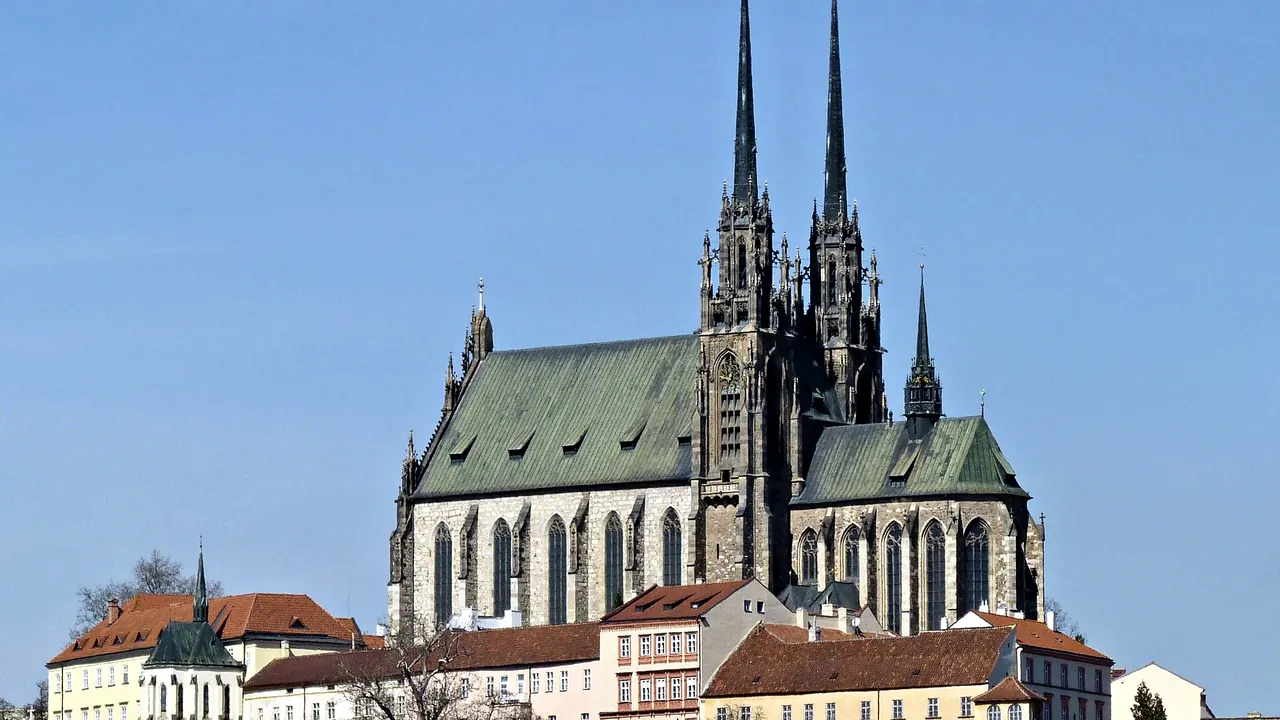
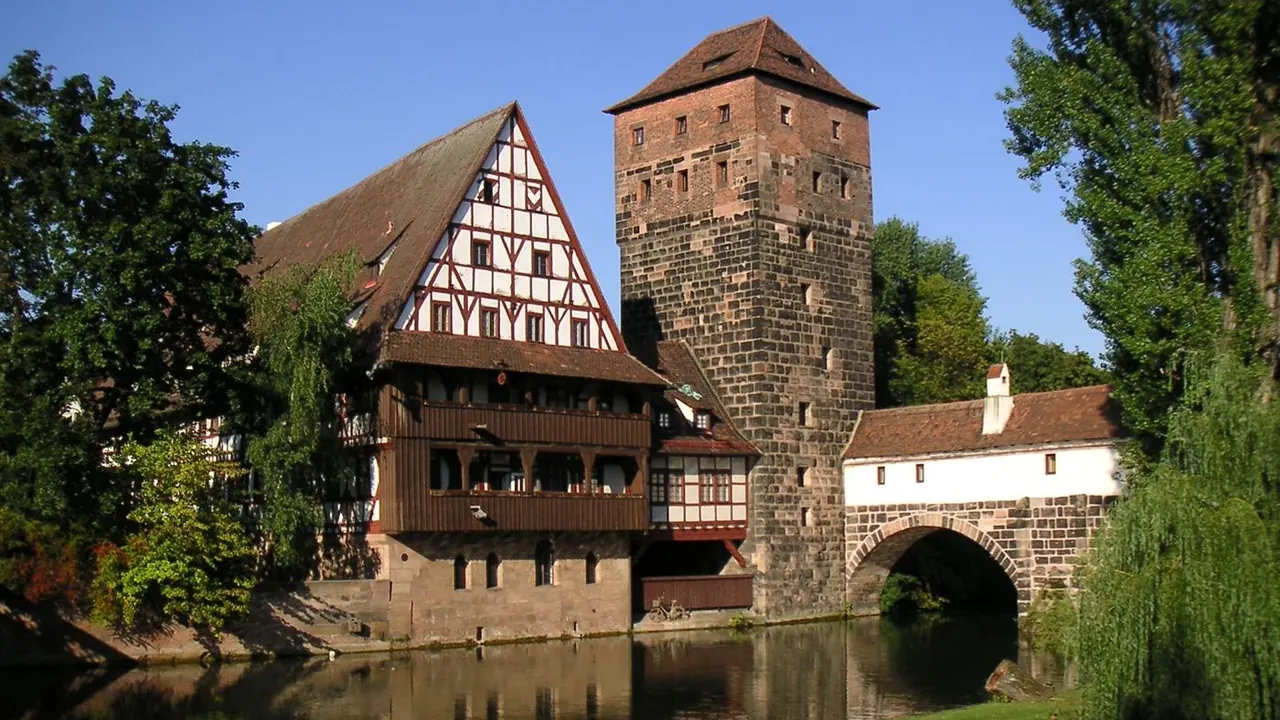
Photos: Brno by Michal Klajban, CC BY-SA 3.0, cropped; Nuremberg by Horst Gutmann, CC BY 2.0, cropped.
Brno or Nuremberg?
Our verdict in twelve categories, each scored against the same fixed benchmark cities, and the climate month by month, so you can choose for your trip.
Choose Brno for
- prices
- live music and the arts
- nightlife
Brno suits a traveller who wants a cheaper, calmer base and evenings built around a good glass: Moravian wine poured by the glass, careful cocktails in cellar bars and Janacek's operas at the theatre named after him. Its modernist heritage, led by Villa Tugendhat, is unusual, and what you save on the stay leaves more for days out to Lednice-Valtice, the Moravian Karst or Vienna.
Choose Nuremberg for
- wellness
- families
- culture and sights
Choose Nuremberg for more to see within the city itself: the walled old town under the Kaiserburg, the Germanisches Nationalmuseum, and the sobering Rally Grounds and Courtroom 600. It is also the easier trip with children, thanks to its toy and railway museums and the zoo, and it offers proper sauna and thermal bathing close by. Expect to pay more, especially during trade-fair weeks and Advent.
Scoreboard
Twelve categories on one fixed scale from 0 to 100. The shaded stretch is the gap between the two.
Your match
Pick a travel style or drag the sliders, and both match scores follow your weighting.
Wins on prices and live music and the arts with your weighting.
Wins on wellness and families with your weighting.
What matters to you?
Category by category
What the scores mean for a trip.
Beaches & swimming
Neither city is a place for a swimming vacation, and their options are similar in scale. Brno's are closer to hand: the reservoir on the Svratka is a tram and river-boat ride away, though algae can spoil the water in hot spells, and the Nove Mlyny lakes lie an hour south.
Nuremberg's best water is the Franconian Lake District, about an hour out, where the Brombachsee has small sandy strips. In town you are left with outdoor pools and leisure baths.
Food & drink
Nuremberg has the stronger food identity: finger-sized bratwurst grilled over beechwood and served on pewter plates, Schäufele with crackling, Lebkuchen made here for centuries, and a dense Franconian brewery culture of Kellerbier in beer gardens along the Pegnitz.
Brno's cooking is Czech pub fare such as svickova and dumplings, with a narrower range and little fine dining. It competes in the glass instead, with specialty coffee, serious cocktails, and Moravian whites and Frankovka from vineyards less than an hour away.
Culture & sights
Nuremberg has more to see. Its near-complete walls, the Kaiserburg, St Sebaldus and St Lorenz and Dürer's house make a full medieval ensemble, the Germanisches Nationalmuseum alone can fill a day, and the Rally Grounds and Courtroom 600 add twentieth-century history of real weight.
Brno's strength is narrower and less familiar: interwar functionalism led by Villa Tugendhat, plus Spilberk Castle, the cathedral, the Capuchin Crypt and the Mendel Museum. It is rewarding, but two or three days cover it.
Nightlife
Both are towns for bars rather than clubs, and a night out is similar in scale. Brno's speciality is the small cocktail bar behind an unmarked door or down cellar steps, with Moravian wine bars alongside. It is busiest in term time around Jakubske namesti and goes quiet in July and August.
Nuremberg's most interesting nights are in Gostenhof's small bars and alternative venues. On summer evenings students gather on its squares and riverbanks, so it stays livelier in the very months when Brno empties.
Nature & outdoors
The two are evenly matched outdoors, and their landscapes are close cousins: wooded limestone country with caves, an hour or less away. Brno's Moravian Karst has the more dramatic cave visit, a boat on an underground river below the Macocha Abyss, with the Palava hills and Podyji to the south.
Nuremberg's Franconian Switzerland is better for rock climbers and for hiking between villages, and the Reichswald begins at the city edge for easy walks and rides.
Day trips
Both are excellent bases, and the difference lies in the flavour. From Brno you reach Lednice-Valtice, the Austerlitz battlefield, a string of Moravian UNESCO towns such as Telc and Trebic, and two capitals, Vienna and Bratislava.
Nuremberg's day trips are Franconian and Bavarian: Bamberg, Regensburg on the Danube, Würzburg's Residence, the walled towns of Rothenburg and Dinkelsbühl, and Munich by fast train.
Good for families
Nuremberg makes the easier family trip, because its toy-making past gives children a whole set of sights: the Toy Museum, the railway museum, a zoo in former quarries with dolphins and manatees, and the play park at Zirndorf.
Brno is just as safe and simple to manage but has less built for children. VIDA, the zoo, Anthropos and the planetarium fill a few days, and the Punkva cave boat is the outing they will remember.
Getting around
Both have compact centres you can walk and good public transport, so neither needs a car. Brno leans on a dense tram network, and its single ticket stretches to regional trains across South Moravia, while Nuremberg adds U-Bahn lines, some of them driverless, and S-Bahn trains out to Fürth and Erlangen. Expect cobbled climbs in each, to Spilberk and the cathedral in Brno and up to the castle in Nuremberg.
Shopping & style
Nuremberg has more worth taking home: Lebkuchen in decorated tins, wooden toys and tin figures, crafts from the Handwerkerhof courtyard, and in Advent the Christkindlesmarkt, one of Germany's oldest Christmas markets.
In Brno the high street along Ceska and Masarykova is ordinary, and the best souvenirs are Moravian wine bought from the cellars and produce from Zelny trh.
Affordability
Brno is clearly the cheaper stay. Hotels, pub lunch menus, beer and wine, transport and museums all cost little, and only the coffee and cocktail bars nudge the bill up.
Nuremberg is fairly priced for Western Europe but a step higher, and the gap widens during the toy fair, other trade fairs and the Advent market, when rooms become scarce. Brno's exhibition grounds can fill hotels too, so check fair dates in either city.
Live music & performing arts
Brno has the more distinctive stage life, built around Janacek. His operas anchor the programme at the Janacek Theatre, the Mahen and the Reduta, where the young Mozart played, add historic houses, and a festival is devoted to his music.
Nuremberg's Staatstheater and two orchestras give a solid repertory season. Its summers are livelier in the open air, with free folk and world music at the Bardentreffen and a large rock festival by the Zeppelinfeld.
Wellness & relaxation
Nuremberg is the better place to unwind properly. The thermal spa with sauna gardens in Fürth is a short U-Bahn ride away and Bad Windsheim's saline pools are within an hour, though visitors should expect nude, mixed saunas.
Brno has no thermal springs, so relaxing there means swimming complexes with saunas, a few day spas and quiet hours in Luzanky park or on the Spilberk slopes.
When should you go?
Pick your month. The climate figures are measured averages, not a forecast.
Brno in July
Nuremberg in July
Daytime high, °C
Rainfall in the month, mm
Temperature and rainfall are climate normals, averaged over the years shown. Brno: 1991-2020 normals, Brno / Turany (8.4 km from centre). Nuremberg: 1991-2020 normals, Nuernberg (5.5 km from centre).
The two cities share a central European pattern: pleasantly warm from late May to mid September, and cold and grey from November to February. Brno runs a little more extreme. Its summer afternoons reach about 26°C, a degree warmer than Nuremberg, with slightly more sunshine, and its winter highs drop to around 2°C. Neither has a sea, and the reservoirs and lakes near both are only inviting from June to August.
Rain is where the two differ more. Both get their heaviest rain in summer, peaking in Nuremberg at around 77mm in July, so showers come with the warm weather. Brno's winters are notably dry, with as little as 22mm in January, while Nuremberg stays damper through autumn and winter. For walking the streets, May, June and September are the most comfortable months in either city.
Which traveller are you?
On a trip on a tight budget, Brno stretches the money furthest. Because the city ticket covers South Moravia's regional trains, days out cost little extra and a night at the opera stays affordable. Nuremberg's budget hinges on dodging fair weeks.
On a family trip with children, Nuremberg is the better choice. In Brno the grown-up sights lead and the day children remember is in the karst, whereas Nuremberg lets them plan the days around trains, toys and animals.
For a relaxing and wellness trip, Nuremberg suits better. Brno's calm comes from café afternoons and parks, and taking the waters means travelling well beyond it, whereas in Nuremberg thermal pools and sauna gardens fit into an ordinary afternoon of sightseeing.
Before you go
| Measure | Brno | Nuremberg |
|---|---|---|
| Official language | Czech | German |
| Currency | Czech Koruna (CZK) | Euro (EUR) |
| Sockets | CE230 V, 50 Hz | CF230 V, 50 Hz |
| Driving side | Right | Right |
| Time zone | UTC+1, UTC+2 in summer | UTC+1, UTC+2 in summer |
| Emergency number | 112 | 112 |
| Elevation | 237 m | 209 m |
| Main airport | Brno-Tuřany Airport (BRQ)8 km from centre40 non-stop destinations | Nuremberg Airport (NUE)5 km from centre56 non-stop destinations |
| Public holidays this year | 13 days | 12 days |
By the numbers
| Measure | Brno | Nuremberg |
|---|---|---|
| City population | 402,739 | 531,159 |
| People per km² | 1,750 | 2,848 |
| Museums within 10 km | 25 | 50 |
| UNESCO World Heritage sites within 50 km | 2 | 1 |
Where else could you go?
Every comparison below shares a destination with this one, so you can follow Brno or Nuremberg somewhere new.
- Viennavs Brno
- Bratislavavs Brno
- Munichvs Nuremberg
- Stuttgartvs Nuremberg
- Heidelbergvs Nuremberg
- Cesky Krumlovvs Brno