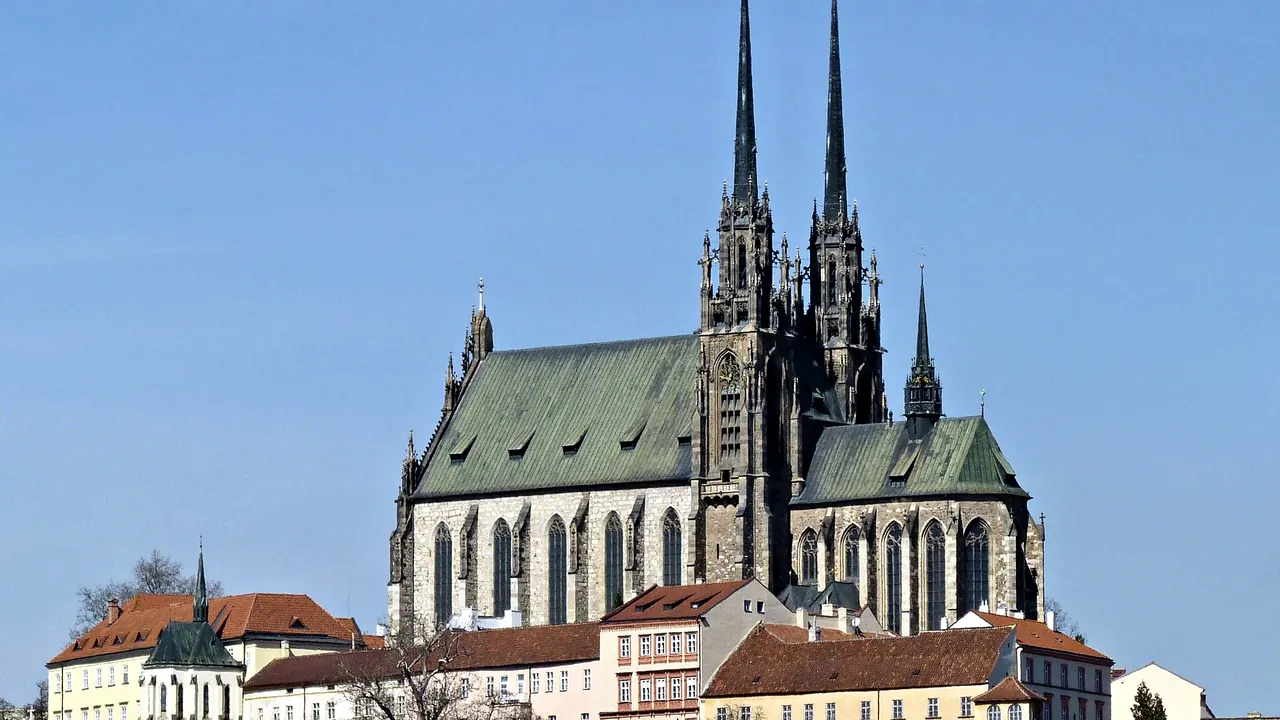
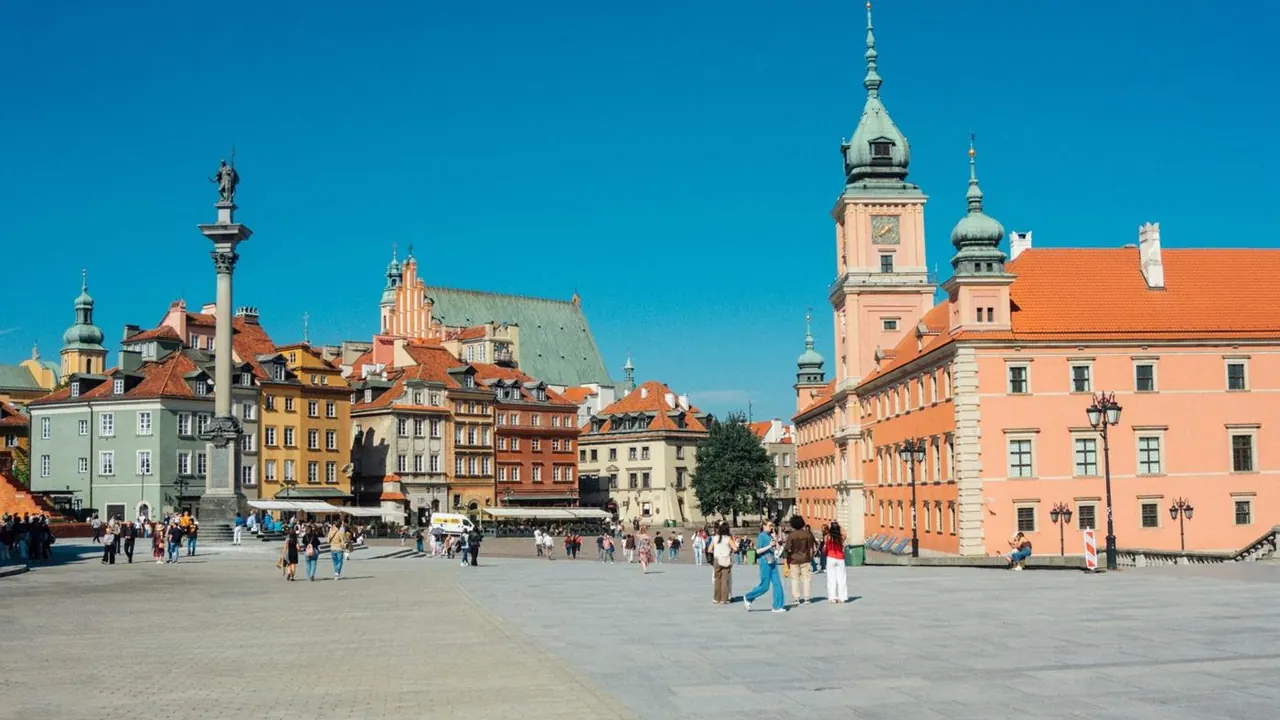
Photos: Brno by Michal Klajban, CC BY-SA 3.0, cropped; Warsaw by Raymond Petrik, Pexels License.
Brno or Warsaw?
Our verdict in twelve categories, each scored against the same fixed benchmark cities, and the climate month by month, so you can choose for your trip.
Choose Brno for
- day trips
- nature and the outdoors
- getting around
Brno suits travellers who want a calm, compact base and plan to spend much of the trip outside it. The city itself takes two or three days, built around Villa Tugendhat and its interwar architecture, but the region around it is the real draw: UNESCO chateaux and towns, the Moravian Karst caves, wine villages, and Vienna or Bratislava within reach by train. Add cheap Moravian wine and careful cocktail bars, and it makes a quiet, well-priced trip for curious travellers.
Choose Warsaw for
- shopping
- nightlife
- food and drink
Warsaw is the better pick for a city trip that stays in the city. Its history museums are some of the most affecting in Europe, it eats better and more widely, and it goes out much later, from cocktail bars to techno in Praga's old factories. Families, shoppers and anyone who wants a capital's range of music, museums and evenings will get more from it, provided they accept a spread-out city that needs the tram and metro.
Scoreboard
Twelve categories on one fixed scale from 0 to 100. The shaded stretch is the gap between the two.
Your match
Pick a travel style or drag the sliders, and both match scores follow your weighting.
Wins on day trips and nature and the outdoors with your weighting.
Wins on shopping and nightlife with your weighting.
What matters to you?
Category by category
What the scores mean for a trip.
Beaches & swimming
Neither city is a swimming destination, and both send people to reservoirs on hot days. In Brno that means the Brno Reservoir, reached by tram and river boat, with grassy banks and small beaches but a risk of algae in heatwaves, or the Nove Mlyny lakes an hour south.
Warsaw's river is the bigger summer scene. People sunbathe and drink on the sandy Vistula banks but do not swim there, and go to the Zegrze reservoir or outdoor pools for that.
Food & drink
Warsaw eats better and with more range. Its kitchens run from milk-bar pierogi and żurek at canteen counters to tasting menus built on forest mushrooms, game and fermented vegetables, with food halls in old industrial buildings and vodka served alongside herring and pickles.
Brno's plates are mostly beer-hall Czech classics such as svickova and roast pork with dumplings, and fine dining is thin. Its strength is the glass: specialty coffee, serious cocktails and Moravian whites and Frankovka from vineyards less than an hour away.
Culture & sights
Warsaw has more to see, and it hits harder. The Old Town and Royal Castle, rebuilt from paintings after 1944, the Warsaw Rising Museum and POLIN make history the centre of a stay, with Łazienki and Wilanów adding royal palaces.
Brno's appeal is narrower but distinctive: Mies van der Rohe's Villa Tugendhat and a rare spread of functionalist buildings, plus Spilberk Castle, the Capuchin Crypt's mummified monks and the abbey where Mendel founded genetics. It is covered in a couple of days, where Warsaw's museums alone can take longer.
Nightlife
Warsaw is the place for a big night. Its weekends fill Mazowiecka Street and Nowy Świat, the pavilions hide dozens of tiny bars open until morning, and Praga's courtyards and factories host techno and alternative nights. In summer the scene moves out onto the Vistula boulevards.
Brno is better at a long evening than a late one. Its cocktail bars behind unmarked doors and cellar steps are the best part, alongside wine bars and student pubs, but clubs are few and the city goes quiet in July and August when the students leave.
Nature & outdoors
Brno has the more varied countryside on its doorstep. The Moravian Karst, half an hour north, has caves, the boat ride under the 138m Macocha Abyss and wooded trails, while the Palava limestone ridge and the Dyje valley in Podyji National Park lie to the south.
Warsaw's landscape is flatter, but it has wild places very close. Kampinos National Park, with dunes, marshes and elk, starts at the edge of the suburbs, and the untamed eastern bank of the Vistula brings birdlife right up to the city.
Day trips
This is where Brno pulls far ahead. The UNESCO-listed chateaux and parkland of Lednice-Valtice are about forty-five minutes away, and Telc's Renaissance square, the palace gardens at Kromeriz, Trebic's Jewish quarter and the church at Zelena Hora, all also on the UNESCO list, are within an hour or two. Closer still is the Austerlitz battlefield at Slavkov. Olomouc and the wine towns of Mikulov and Znojmo add more options, and Vienna and Bratislava are both easy days out by train.
From Warsaw the choice runs out sooner. Łódź, Lublin, Chopin's birthplace at Żelazowa Wola and the Nieborów palace all work as day trips, but Kraków and Toruń really need an overnight stay.
Good for families
Warsaw does more for children. The Copernicus Science Centre on the riverbank can fill a whole day on its own, and summer fountain shows on the boulevards and indoor water parks in winter cover both seasons. The heavy history museums are the part to skip with young children.
Brno is calm and safe but has less aimed at children: the VIDA science centre, the hillside zoo and the Anthropos mammoths. Its standout is outside the city, the underground boat ride in the Punkva Caves.
Getting around
Both are easy to manage, in different ways. Brno's small, mostly pedestrian centre can be crossed on foot in a quarter of an hour, and one ticket covers trams and regional trains, which suits all those day trips.
Warsaw is spread out along wide post-war avenues, so you will ride more often, but two metro lines, trams, good cycle lanes and a direct airport train make that simple.
Shopping & style
Warsaw is the better bet for shopping. It has large modern malls, Polish designer labels along Mokotowska Street, and weekend flea markets selling communist-era posters, with amber, stoneware and linen to take home.
Brno has little beyond high-street chains on Ceska and a few independent shops. The best things to buy there are Moravian wine straight from the cellars and produce from the Zelny trh market.
Affordability
Both are cheap by European standards, so the difference is in where the money goes. Brno undercuts most capitals across the board, with weekday pub lunch menus, cheap beer and wine and low-cost museums.
In Warsaw, eating and drinking stay cheap, but central hotels cost more on weekdays because of business travel, so a weekend stay makes most sense. Both cities fill up during big trade fairs.
Live music & performing arts
Both have a strong musical life, each centred on its own composer. Brno's revolves around Janacek, with his operas at the core of the modernist Janacek Theatre's programme, and the tiny Reduta where the young Mozart played.
Warsaw's is larger and more varied. Opera and ballet are staged at the Grand Theatre, Chopin recitals in palaces run all year, free summer Sunday concerts are held at his monument in Łazienki, and there are cellar jazz clubs. Theatre in both cities is mostly in the local language.
Wellness & relaxation
Neither has thermal springs, but Warsaw offers a little more for unwinding. It has the leafy spa town of Konstancin-Jeziorna with its saltwater graduation tower, and the Polish sauna ritual of towel-waving taken seriously at its water parks.
Brno's wellness is limited to pools with saunas and a few spas. What it does offer is a slower everyday pace and quiet corners like Luzanky park, which suit relaxing better than brisk Warsaw.
When should you go?
Pick your month. The climate figures are measured averages, not a forecast.
Brno in July
Warsaw in July
Daytime high, °C
Rainfall in the month, mm
Temperature and rainfall are climate normals, averaged over the years shown. Brno: 1991-2020 normals, Brno / Turany (8.4 km from centre). Warsaw: 1991-2020 normals, Warszawa-Okecie (7.7 km from centre).
Brno and Warsaw share a continental climate, warm in summer and cold in winter, so their best months are much the same. From May to September the afternoons are pleasant for walking and eating outside. July and August are the warmest months, reaching about 26°C in Brno and 25°C in Warsaw, and these are the only weeks warm enough for a swim at a reservoir or lake. Summer is also the wettest season in both cities, and Warsaw's July is the wettest month in either at 83mm. Brno warms up a little earlier in spring and stays slightly drier from winter through April.
Warsaw's advantage is light. From April to September it gets clearly more sunshine than Brno, which makes long June evenings on the Vistula especially appealing. Both cities cool quickly after October, and November is chilly and grey. In December and January daytime highs stay around 2°C, which is weather for museums, concerts and cafés rather than long walks.
Which traveller are you?
For a food and nightlife trip, Warsaw is the clear choice. It has modern tasting menus, milk bars and food halls, vodka with herring, and nights that run until morning in pavilion bars and Praga's clubs. Brno's evenings are pleasant but end earlier, and its food is more limited.
On a culture and arts trip, Warsaw gives more to fill the days. The Warsaw Rising Museum and POLIN are some of Europe's strongest history museums, and the Royal Route leads to Wilanów. Brno's modernist villas and Janacek opera reward a shorter stay.
On an outdoors trip, Brno is the better base. The Moravian Karst, with its underground boat ride and forest trails, is half an hour away, and the Palava hills and cycling routes through the wine country lie to the south. Warsaw's surroundings are wild but flat.
Before you go
| Measure | Brno | Warsaw |
|---|---|---|
| Official language | Czech | Polish |
| Currency | Czech Koruna (CZK) | Zloty (PLN) |
| Sockets | CE230 V, 50 Hz | CE50 Hz |
| Driving side | Right | Right |
| Time zone | UTC+1, UTC+2 in summer | UTC+1, UTC+2 in summer |
| Emergency number | 112 | 112 |
| Elevation | 237 m | 118 m |
| Main airport | Brno-Tuřany Airport (BRQ)8 km from centre40 non-stop destinations | Warsaw Chopin Airport (WAW)8 km from centre174 non-stop destinations |
| Public holidays this year | 13 days | 14 days |
By the numbers
| Measure | Brno | Warsaw |
|---|---|---|
| City population | 402,739 | 1,862,402 |
| People per km² | 1,750 | 3,601 |
| Museums within 10 km | 25 | 117 |
| UNESCO World Heritage sites within 50 km | 2 | 1 |
Where else could you go?
Every comparison below shares a destination with this one, so you can follow Brno or Warsaw somewhere new.