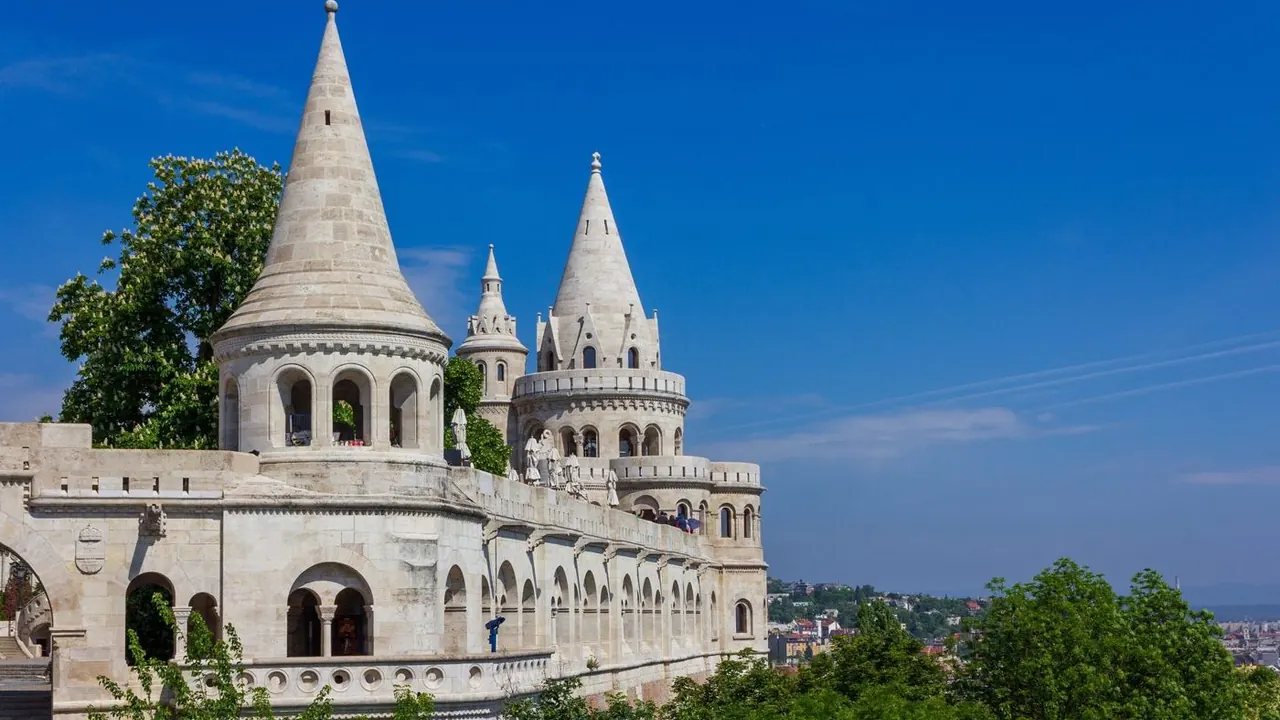
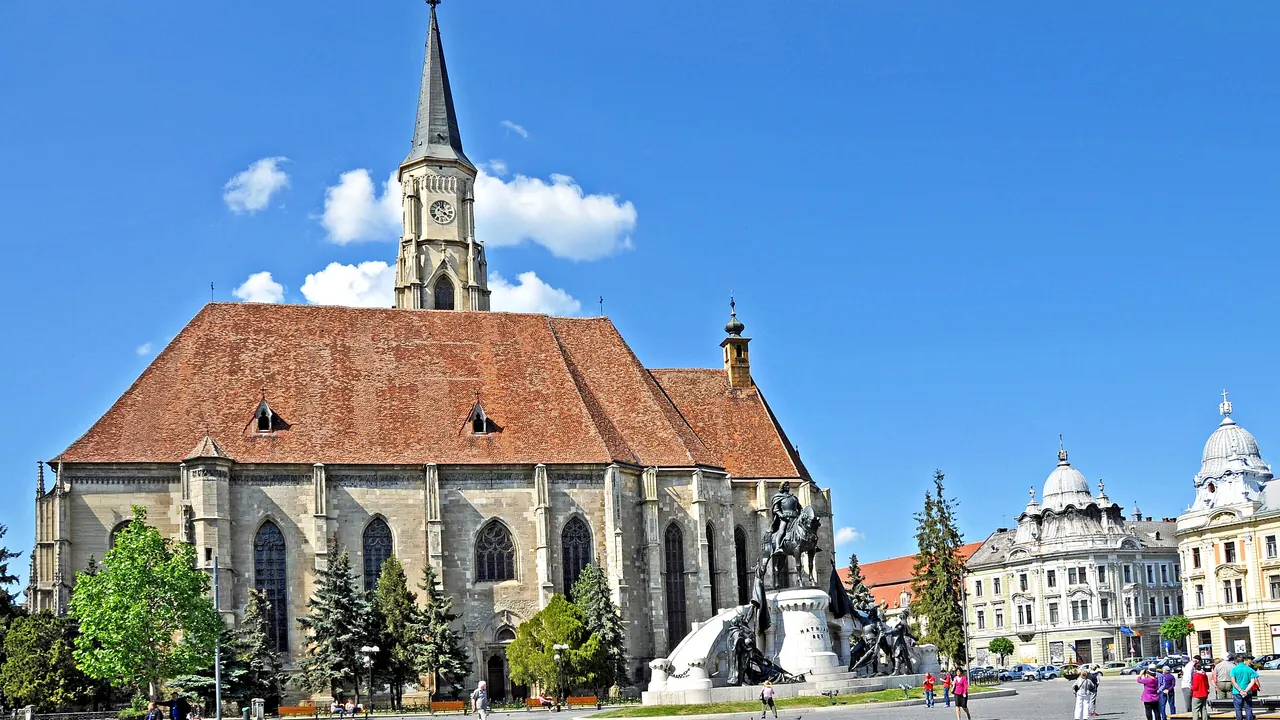
Photos: Budapest by Perituss, CC0; Cluj-Napoca by Dennis G. Jarvis, CC BY-SA 2.0, cropped.
Budapest or Cluj-Napoca?
Our verdict in twelve categories, each scored against the same fixed benchmark cities, and the climate month by month, so you can choose for your trip.
Choose Budapest for
- wellness
- culture and sights
- nightlife
Budapest is the stronger choice for most city vacations. The Danube panorama, the opera house and concert halls, the ruin bars of District VII and above all the thermal baths give you enough for a week without leaving town. Trams and the Danube Bend trains make it easy to see everything without a car, and children get plenty to do as well.
Choose Cluj-Napoca for
- prices
- nature and the outdoors
Cluj-Napoca suits a traveller who wants Transylvania more than a capital. Its centre is small, friendly and lively with students, it costs less day to day, and the Turda Gorge, the salt mine and the Apuseni Mountains are close by. Treat it as a base for a road trip with a hired car, not as a destination full of sights.
Scoreboard
Twelve categories on one fixed scale from 0 to 100. The shaded stretch is the gap between the two.
Your match
Pick a travel style or drag the sliders, and both match scores follow your weighting.
Wins on wellness and culture and sights with your weighting.
Wins on prices and nature and the outdoors with your weighting.
What matters to you?
Category by category
What the scores mean for a trip.
Beaches & swimming
Neither city has a beach, but Budapest gives a swimmer more to work with. The strand lidos such as Palatinus on Margaret Island make a full summer day out, Lake Velence is under an hour by train, and Lake Balaton can be reached for a long day.
Cluj has the outdoor salt lakes at Turda and a few reservoirs and lidos on the edge of town. These are fine for a hot afternoon, but nothing to plan a trip around.
Food & drink
The two kitchens overlap, since Hungarian cooking runs through Transylvanian food, but Budapest has more depth. You can browse the Great Market Hall, linger over Dobos cake in an Austro-Hungarian coffee house, drink Tokaji and Eger reds in District V wine bars, and book a table at one of the city's modern restaurants.
Cluj gives you hearty plates such as varză à la Cluj, sour ciorbă and papanași, along with serious specialty coffee around Piața Unirii. There is little fine dining or international food, so a few days of eating is about right.
Culture & sights
Here the gap is wide. Budapest has a UNESCO-listed river front with the Parliament on one bank and the Royal Palace and Matthias Church on the other, Andrássy Avenue running to Heroes' Square, and major collections at the Museum of Fine Arts and the National Gallery. Layers from the Ottoman tombs to Memento Park take several days to see.
Cluj is a pleasant place to sightsee on a smaller scale. You can see Gothic St Michael's Church on Piața Unirii, the national art museum in the Bánffy Palace and the open-air wooden churches of the Ethnographic Museum. A day or two covers it.
Nightlife
Budapest's ruin bars in the courtyard tenements of District VII, with the clubs on Kazinczy and Király streets and the summer party boats on the Danube, make it a nightlife destination in its own right. It can get rowdy at weekends, but you can always escape to a quieter wine bar.
Cluj's evenings depend on its students. There are terraces and cellar bars around Piața Muzeului and a few electronic clubs in old industrial spaces. It is lively in term time and goes quiet in summer, when Budapest's outdoor garden bars are at their busiest.
Nature & outdoors
Cluj has a slight edge for walkers and climbers. Turda Gorge, a limestone canyon with a riverside path and climbing routes, is under an hour away, and the Apuseni Mountains add caves, karst plateaus and shepherds' villages. In winter there is skiing on the small slopes of Băișoara. The catch is that most of it needs a car.
Budapest's outdoors is gentler but easier to reach. The cogwheel railway climbs into the oak and beech woods of the Buda Hills, and you can visit thermal caves under the city. The Danube Bend offers ridge walks and a riverside cycle path, and you can get there by train.
Day trips
Budapest has the richer list, and much of it can be reached by suburban train. Szentendre, Visegrád and Esztergom line the Danube Bend, and Gödöllő's palace makes a half-day trip. Eger's wine cellars and the village of Hollókő are about two hours away.
From Cluj, the Turda Salt Mine with its underground lake is the obvious outing. Alba Iulia's star-shaped citadel, the Bánffy Castle at Bonțida and the village of Rimetea round out the list. Slow trains make a car close to essential, and Sighișoara and Sibiu are better visited with an overnight stay.
Good for families
Budapest gives children far more to do. There is the Art Nouveau zoo in City Park, the Children's Railway run by uniformed schoolchildren, the Palace of Wonders science centre and the wave pools of the summer lidos. Trams make getting around with a pushchair easy.
Cluj is safe and easy to manage but has fewer outings for children. The underground Ferris wheel and play areas of the Turda Salt Mine are the highlight, along with rowing boats in Central Park. It works better as one stop on a longer family trip.
Getting around
Both centres are flat and easy to walk, but Budapest's public transport goes much further. The tram along the Danube embankment past Parliament works as a sightseeing ride, the trams on the Grand Boulevard run all night, and continental Europe's oldest underground still runs its little yellow carriages beneath Andrássy Avenue. A funicular and river ferries take you over to Buda, and taxis are cheap after dark.
In Cluj nearly everything is within a short walk of Piața Unirii, and buses and trolleybuses cover the rest of the city. Rush-hour traffic is heavy, though, and getting out of town by train or bus is slow. A hired car pays off in Cluj in a way it never would in Budapest.
Shopping & style
Budapest is no great shopping city, but it has more to buy. You will find Herend and Zsolnay porcelain, paprika and Tokaji from the Great Market Hall, design boutiques in Districts V and VII, and communist-era finds at the Ecseri flea market.
In Cluj, the best buys are Transylvanian crafts rather than shops. Look for embroidered blouses, painted ceramics and woodwork from folk-art fairs and the ethnographic museum's shop, and visit the Christmas market on Piața Unirii in December.
Affordability
Cluj is the cheaper of the two. A central room, a sit-down lunch and local beer all cost less there, even though it is one of Romania's pricier cities. The exception is festival time, when rooms sell out.
Budapest is still good value next to Western capitals, with cheap trams and wine and plenty of mid-range rooms close to the centre. Bills grow in the tourist core around Váci utca and in the grand cafés.
Live music & performing arts
Budapest is the better city for a night of music. You can see opera in the neo-Renaissance State Opera House, hear orchestras in the Art Nouveau hall of the Liszt Academy or at Müpa's national concert hall, and find church concerts most evenings. Operetta and Hungarian folk dance add to the programme.
Cluj does a lot for its size because it has two cultures. Romanian and Hungarian opera companies share the city with the Transylvania State Philharmonic, so there is a full season. Its real strength is summer, when some of Eastern Europe's largest electronic and pop festivals fill the stadium area and a nearby castle estate, with jazz and film in the parks. In both cities most plays are in the local language, so music and dance work best for visitors.
Wellness & relaxation
This is where the two cities differ most. Budapest sits on more than a hundred hot springs, and an afternoon moving between the outdoor pools of Széchenyi, the mosaics of the Gellért and the Ottoman domes of Rudas and Király can be the main reason for the trip.
Cluj has no bathing tradition of its own. There are hotel spas and day spas, and at Turda you can breathe the salt-mine air or float in the salt lakes in summer. For quiet, the Botanical Garden is a better bet.
When should you go?
Pick your month. The climate figures are measured averages, not a forecast.
Budapest in July
Cluj-Napoca in July
Daytime high, °C
Rainfall in the month, mm
Temperature and rainfall are climate normals, averaged over the years shown. Budapest: 1991-2020 (sunshine 1981-2010, rainfall 1981-2010) normals, Budapest Met Center (2.1 km from centre). Cluj-Napoca: 1991-2020 normals, Cluj-Napoca (2.4 km from centre).
Budapest is most comfortable for walking the streets in May and September, when days are warm without being hot, and its rain is spread fairly evenly through the year. From June to August it is lido weather, with July and August around 27°C, so the strand pools on Margaret Island are at their best then and long sightseeing walks are better in the morning or evening. Cluj warms in much the same way and is just as hot in July and August, which is right for an afternoon in the salt lakes at Turda. Its wettest stretch runs from May to July, with about 90mm in June, so walks in the hills around it are better in April and from September into October.
Winter is harder in Cluj, where January days barely get above freezing at around 1°C, while Budapest reaches about 4°C. That makes a January soak in Budapest's steaming outdoor pools a better plan than a January walk round Cluj. Both cities have long, bright days from May to August, and Cluj gets a little more sun in March and October, which helps if you want to walk in spring or autumn.
Which traveller are you?
On a relaxing and wellness trip, Budapest wins easily. Its thermal baths are part of everyday life, from the outdoor pools of Széchenyi to the Ottoman domes of Rudas, and they can fill whole afternoons. Cluj can offer only hotel spas and the salty air of Turda.
For a culture and arts trip, Budapest offers far more. The Parliament, the Castle District, the Museum of Fine Arts and evening concerts at the Liszt Academy or the State Opera fill several days. Cluj's compact centre and ethnographic museum take only a day or two.
On a trip on a tight budget, Cluj stretches the money further. Central rooms, lunch menus and local beer all cost less, and an evening at the Romanian or Hungarian opera is a bargain. In Budapest, eating lunch menus in residential districts narrows the gap.
Before you go
| Measure | Budapest | Cluj-Napoca |
|---|---|---|
| Official language | Hungarian | Romanian |
| Currency | Forint (HUF) | Romanian Leu (RON) |
| Sockets | CF230 V, 50 Hz | CF230 V, 50 Hz |
| Driving side | Right | Right |
| Time zone | UTC+1, UTC+2 in summer | UTC+2, UTC+3 in summer |
| Emergency number | 112 | 112 |
| Elevation | 117 m | 356 m |
| Main airport | Budapest Liszt Ferenc International Airport (BUD)18 km from centre157 non-stop destinations | Avram Iancu Cluj International Airport (CLJ)7 km from centre53 non-stop destinations |
| Public holidays this year | 13 days | 17 days |
By the numbers
| Measure | Budapest | Cluj-Napoca |
|---|---|---|
| City population | 1,675,777 | 286,598 |
| People per km² | 3,191 | 1,640 |
| Museums within 10 km | 81 | 6 |
| UNESCO World Heritage sites within 50 km | 1 | 0 |
Where else could you go?
Every comparison below shares a destination with this one, so you can follow Budapest or Cluj-Napoca somewhere new.
- Sibiuvs Cluj-Napoca
- Bratislavavs Budapest
- Brasovvs Cluj-Napoca
- Viennavs Budapest
- Brnovs Budapest
- Grazvs Budapest