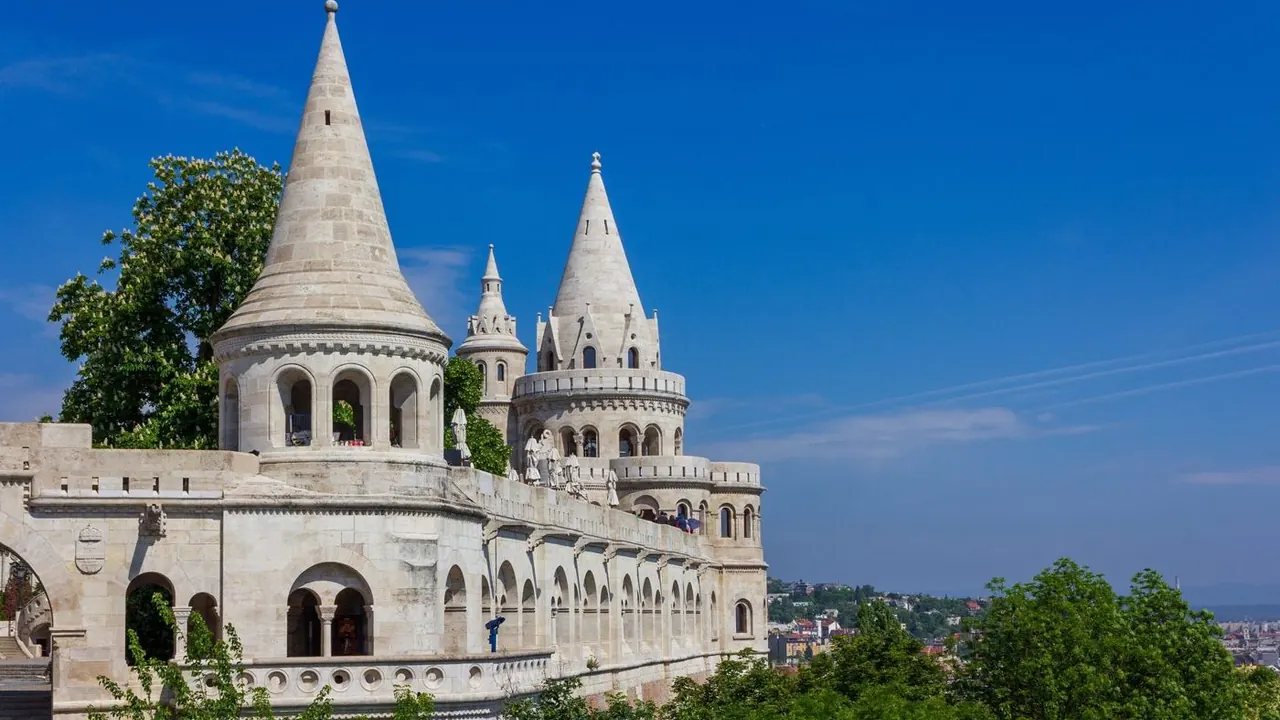
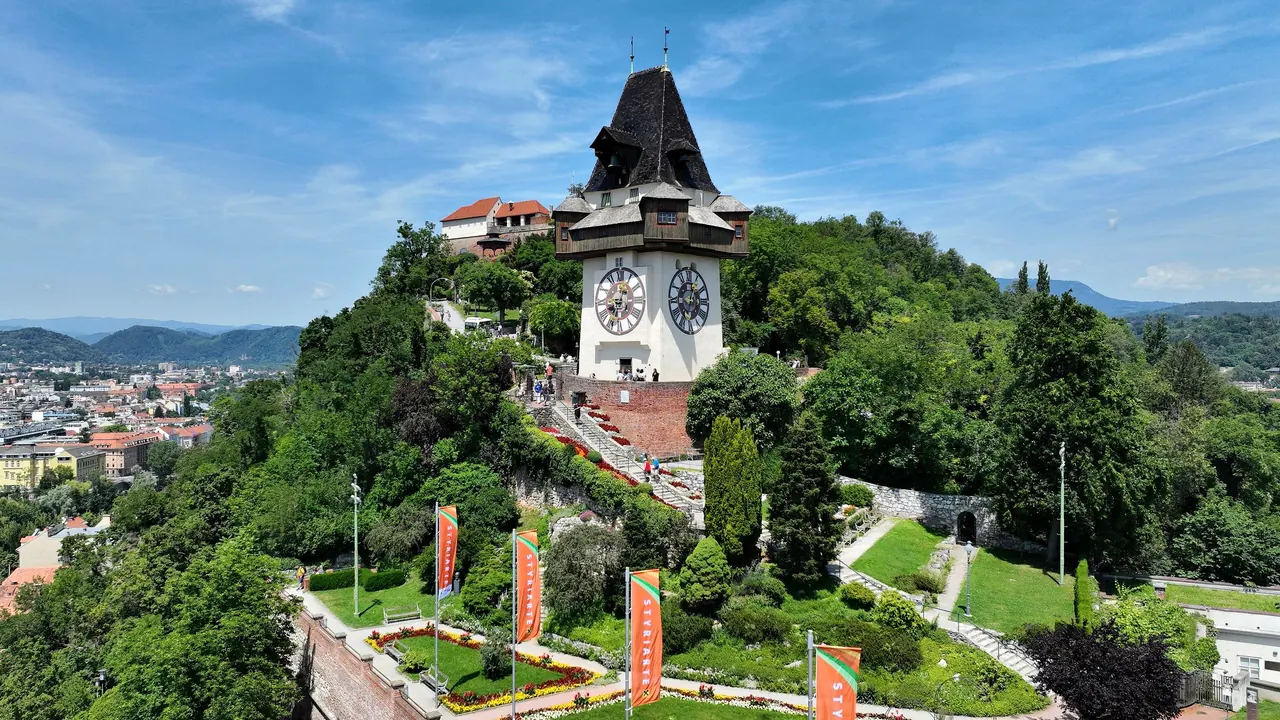
Photos: Budapest by Perituss, CC0; Graz by C.Stadler/Bwag, CC BY-SA 4.0, cropped.
Budapest or Graz?
Our verdict in twelve categories, each scored against the same fixed benchmark cities, and the climate month by month, so you can choose for your trip.
Choose Budapest for
- wellness
- nightlife
- prices
Budapest suits travellers who want a big capital with plenty to fill every day and night. The Danube panorama, the palaces and great museums, the Ottoman and Art Nouveau thermal baths, the opera and concert halls and the ruin bars of the old Jewish Quarter add up to a richer trip. It also costs noticeably less than Graz, so a long weekend can easily stretch to five days.
Choose Graz for
- nature and the outdoors
- getting around
Graz is the better pick for a calmer, smaller trip where the countryside matters as much as the city. Its compact old town and castle hill take two or three unhurried days. After that the Schöckl, the gorges and the South Styrian wine hills are close by, with proper alpine walking within reach. Come for good walking, pumpkin seed oil and white wine, and quiet evenings rather than late ones.
Scoreboard
Twelve categories on one fixed scale from 0 to 100. The shaded stretch is the gap between the two.
Your match
Pick a travel style or drag the sliders, and both match scores follow your weighting.
Wins on wellness and nightlife with your weighting.
Wins on nature and the outdoors and getting around with your weighting.
What matters to you?
Category by category
What the scores mean for a trip.
Beaches & swimming
Neither city has a beach, but Budapest makes summer bathing much easier. Its open-air lidos, with Palatinus on Margaret Island as the classic, fill whole days with lawns and several pools. Shallow Lake Velence is under an hour by train, and Lake Balaton can be reached for a long day.
In Graz, swimming means the old gravel-pit lakes south of the city, such as the Schwarzlsee, or Stubenbergsee in the eastern hills. They are pleasant for a hot afternoon, but there is less choice and the water is cooler than at Velence.
Food & drink
The two are on a par for eating, but the flavours are very different. Budapest cooks rich and paprika-red, with goulash, paprikash and lángos. It has the tiled Great Market Hall, Habsburg-era coffee houses serving Dobos cake, a serious modern restaurant scene and a broad wine list that runs from Tokaji to pálinka.
Graz is about the Styrian larder: pumpkin seed oil on everything, even ice cream, cold fried chicken salad, and farmers' markets every morning except Sunday. Its best wine experience is outside town, at the Buschenschank taverns in the southern vineyards. Neither city offers much beyond its own regional cooking.
Culture & sights
Budapest is in a different league for sightseeing. The UNESCO-listed river front pairs the Parliament with the Castle District, Andrássy Avenue leads to Heroes' Square, and the Museum of Fine Arts, the National Gallery and the Dohány Street Synagogue need several days on their own.
Graz is more compact and more intimate. Its well-kept old town of arcaded courtyards climbs to the Schlossberg clock tower. The seventeenth-century Landeszeughaus armoury and Schloss Eggenberg are its standouts, with the Kunsthaus adding a modern contrast. Two or three days covers it.
Nightlife
Going out is one of Budapest's big draws. Ruin bars fill crumbling courtyards in District VII, Kazinczy and Király streets stay loud past 2am, and in summer the party moves to garden bars and boats on the Danube. The flip side is rowdy stag groups at weekends.
Graz offers relaxed bar-hopping around the Bermuda Triangle lanes and the artier bars of Lend, powered by its students. There are only a few late clubs, and the town goes quiet during the summer break.
Nature & outdoors
Graz has the better outdoors. Its home mountain, the Schöckl, rises to 1,445m on the edge of town, with a cable car, trails and paragliders. The Bärenschützklamm gorge and the South Styrian wine hills are close, and the limestone peaks of the Gesäuse and Hochschwab offer real alpine hiking within about two hours.
Budapest has the forested Buda Hills, caves carved by thermal water and the ridges of the Danube Bend. These make for good walking and cycling, but the land is low and gentle, with no mountains.
Day trips
Both cities have plenty of good outings, but they are of different kinds. From Budapest, the Danube Bend towns of Szentendre, Visegrád and Esztergom are easy by suburban train. Further out are Eger's castle and wine cellars, the village of Hollókő and Pannonhalma Abbey, mostly history and Baroque towns reached by rail.
Graz's trips lead into the countryside: the South Styrian Wine Road, Riegersburg castle on its volcanic crag, the Lipizzaner stud at Piber and the vast library at Admont Abbey. Maribor in Slovenia is an hour by train. For most of the rest, a hire car makes life much easier.
Good for families
Both work about equally well with children, in different ways. Budapest has more big attractions: a historic zoo with Art Nouveau animal houses, the Children's Railway run by schoolchildren, a hands-on science centre and summer lidos with wave pools. The trade-offs are metro stairs, crowded pavements and noisy weekend nights.
Graz is smaller, calmer and simpler to manage. Its highlights sit inside the Schlossberg: a lift up, a long underground slide down and the Märchenbahn fairytale train. There is also a dedicated children's museum in the Augarten. With no zoo or theme park, a longer stay means trips out to Herberstein or Stübing.
Getting around
Budapest is a city you ride through, while Graz is one you mostly walk. Budapest's sights are spread along two banks of a wide river, so trams and the short metro come into play most days. The tram along the Danube embankment doubles as a sightseeing ride past Parliament. Flat Pest is easy on foot, but the Castle District sits on a steep hill, reached by funicular, bus or a climb.
Graz's centre is small, flat and largely pedestrianised, so you can walk between the Hauptplatz, the cathedral and the Kunsthaus in minutes. The only real climb, the Schlossberg, has a lift and a funicular, and cycling along the Mur is easy. Getting around only gets harder once you leave the city, where buses become sparse.
Shopping & style
Neither city is a shopping destination, but Budapest has a bit more to find. Herend and Zsolnay porcelain, small Hungarian design boutiques in Districts V and VII, communist-era finds at the Ecseri flea market and paprika and Tokaji from the Great Market Hall make for better browsing than chain-heavy Váci utca.
Graz has the historic Herrengasse and Sporgasse, plus vintage and design shops in Lend. Its best souvenirs are edible: pumpkin seed oil, Schilcher rosé and regional brandies, along with traditional loden from specialist shops.
Affordability
Budapest is noticeably cheaper. Public transport, wine and ordinary coffee houses cost little, and good mid-range rooms near the centre are easy to find. Costs only climb in the tourist core around Váci utca and the Basilica.
Graz has normal Austrian prices: fair, but not cheap, especially for sit-down dinners and wine. Thanks to its students, there are still good-value lunch menus and bakeries, and a walkable centre plus combined museum tickets help keep costs down.
Live music & performing arts
Budapest is one of Europe's great music cities. The State Opera House on Andrássy Avenue, the Art Nouveau hall of the Liszt Academy and the national concert hall at Müpa mean there is classical music most nights, along with operetta and folk dance.
Graz does very well for its size. Its opera house is the second largest in Austria, and the Styriarte and steirischer herbst festivals bring early music and avant-garde work. The music university feeds a strong jazz scene. In both cities, spoken theatre is in the local language, so visitors are mostly there for the music.
Wellness & relaxation
This is the biggest difference between the two. Budapest sits on more than a hundred hot springs, and bathing is part of daily life. You can soak in Széchenyi's outdoor pools in the snow, under Gellért's mosaics or beneath the sixteenth-century Ottoman domes of Rudas and Király, all a tram ride from your hotel.
Graz has no bathing culture of its own. To get a proper soak, you travel about an hour east to Styria's spa villages, such as Bad Blumau with its Hundertwasser design or Loipersdorf. In town, relaxing means the Stadtpark gardens and the shady Schlossberg paths.
When should you go?
Pick your month. The climate figures are measured averages, not a forecast.
Budapest in July
Graz in July
Daytime high, °C
Rainfall in the month, mm
Temperature and rainfall are climate normals, averaged over the years shown. Budapest: 1991-2020 (sunshine 1981-2010, rainfall 1981-2010) normals, Budapest Met Center (2.1 km from centre). Graz: 1991-2020 normals, Graz Airport (7.9 km from centre).
The two cities have almost the same temperatures through the year. Summer afternoons peak around 28°C and winter days barely get above freezing, with highs near 4°C in December and January. Lake swimming works from June to August in both. May and September are the most comfortable months for walking the streets. Midsummer is warm but rarely too hot for sightseeing.
Rain is where they differ. Budapest has fairly dry, very sunny summers, and even its wettest month, June, brings only about 66mm. Graz gets far more summer rain, with over 120mm in each month from June to August, so expect some wet afternoons on hikes in the hills. In winter the pattern flips a little: Graz gets more sunshine than Budapest from November to February. Still, Budapest's steaming outdoor baths make a cold winter visit worth it in a way Graz cannot match.
Which traveller are you?
On a relaxing and wellness trip, Budapest is the clear choice. Its thermal baths are inside the city, from the palatial Széchenyi to the domed Ottoman pools of Rudas and Király. Graz's spa villages are an hour's drive east.
For a food and nightlife trip, Budapest offers more. The ruin bars and late clubs of District VII run well past 2am, wine bars pour Tokaji and Eger reds, and drinks are cheap. Graz's student bars are friendly but small, and they go quiet in summer.
On an outdoors trip, Graz wins. It has the Schöckl and its cable car on the edge of town, the ladders of the Bärenschützklamm, wine-hill walks and alpine hiking in the Gesäuse. Budapest's Buda Hills and Danube Bend are pleasant but gentle.
Before you go
| Measure | Budapest | Graz |
|---|---|---|
| Official language | Hungarian | German, Austrian Sign Language |
| Currency | Forint (HUF) | Euro (EUR) |
| Sockets | CF230 V, 50 Hz | CF230 V, 50 Hz |
| Driving side | Right | Right |
| Time zone | UTC+1, UTC+2 in summer | UTC+1, UTC+2 in summer |
| Emergency number | 112 | 112 |
| Elevation | 117 m | 353 m |
| Main airport | Budapest Liszt Ferenc International Airport (BUD)18 km from centre157 non-stop destinations | Graz Airport (GRZ)9 km from centre26 non-stop destinations |
| Public holidays this year | 13 days | 16 days |
By the numbers
| Measure | Budapest | Graz |
|---|---|---|
| City population | 1,675,777 | 306,971 |
| People per km² | 3,191 | 2,406 |
| Museums within 10 km | 81 | 29 |
| UNESCO World Heritage sites within 50 km | 1 | 1 |
Where else could you go?
Every comparison below shares a destination with this one, so you can follow Budapest or Graz somewhere new.