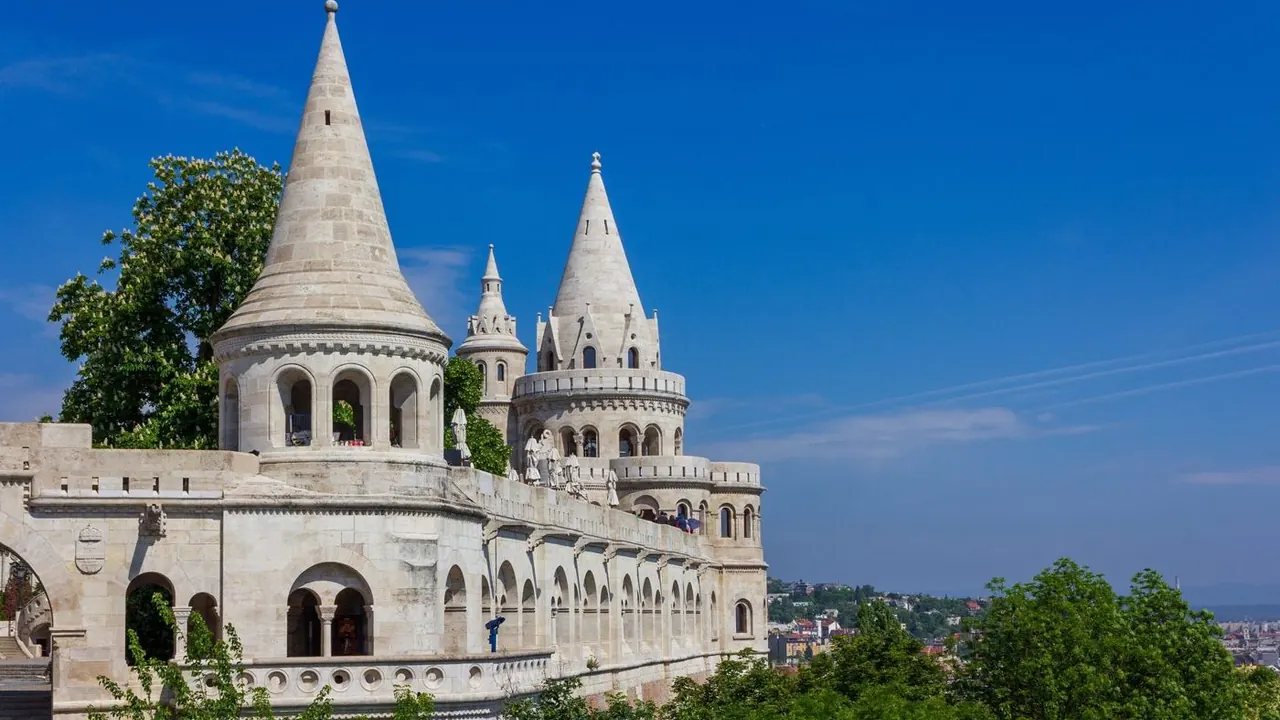
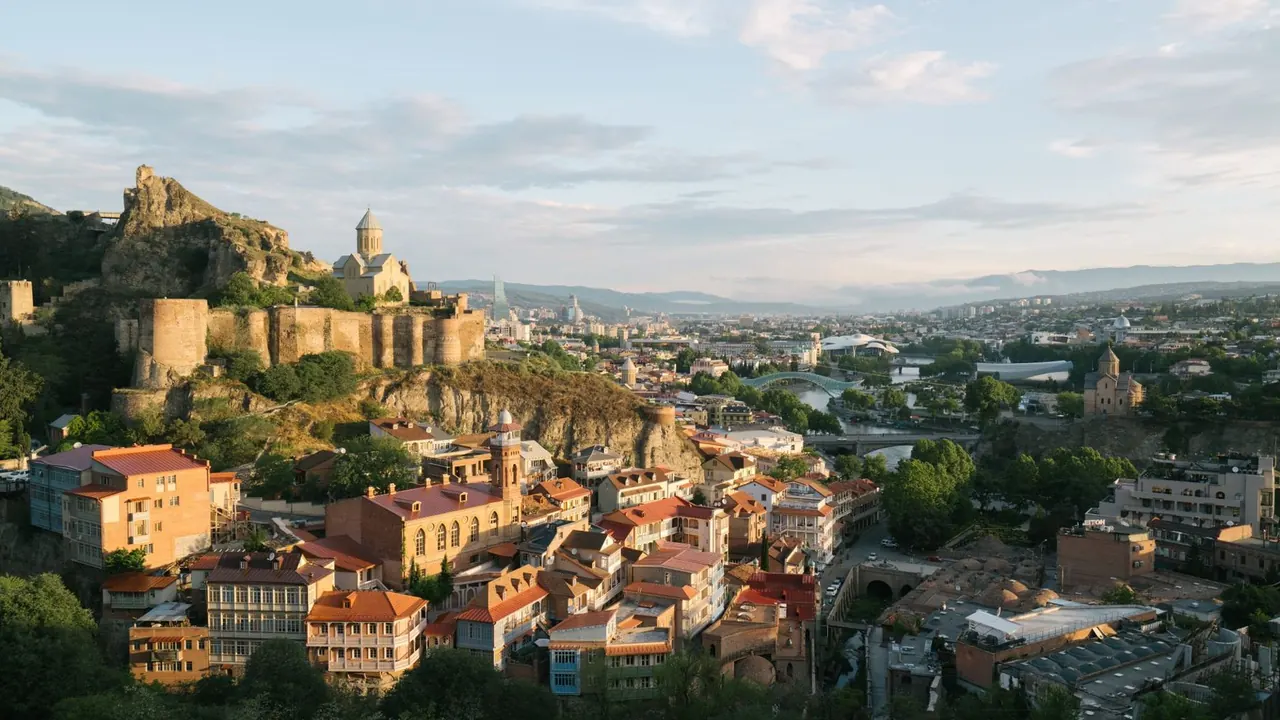
Photos: Budapest by Perituss, CC0; Tbilisi by ArtHouse Studio, Pexels License.
Budapest or Tbilisi?
Our verdict in twelve categories, each scored against the same fixed benchmark cities, and the climate month by month, so you can choose for your trip.
Choose Budapest for
- wellness
- getting around
- live music and the arts
Budapest suits travellers who want a grand capital with everything to hand. It has the Danube panorama, old-master galleries and an opera house and concert halls with music most nights. Above all it has the thermal baths, which no other city matches. Trams and a simple metro make it easy for families and for a short stay, and the summer lidos make up for the lack of a coast.
Choose Tbilisi for
- prices
- food and drink
- day trips
Pick Tbilisi if you would rather eat and drink your way through a place and have your money go further. Georgian food and qvevri wine are reason enough to come, and the outings, to Mtskheta, the Kakheti wine country and the road into the Caucasus, are stronger. In return, expect steep cobbles, rough pavements and fewer famous sights.
Scoreboard
Twelve categories on one fixed scale from 0 to 100. The shaded stretch is the gap between the two.
Your match
Pick a travel style or drag the sliders, and both match scores follow your weighting.
Wins on wellness and getting around with your weighting.
Wins on prices and food and drink with your weighting.
What matters to you?
Category by category
What the scores mean for a trip.
Beaches & swimming
Neither city is for a beach trip, but Budapest copes better in summer. Its big open-air lidos, Palatinus on Margaret Island above all, make a full day out with lawns and several pools. The shallow, warm water of Lake Velence is under an hour away by train.
Tbilisi offers only places to cool off, such as the Tbilisi Sea reservoir, Turtle Lake and hotel pools. The Black Sea is about five hours away, so reaching it is a separate trip, while Lake Balaton is close enough to Budapest for a long day.
Food & drink
Tbilisi is the stronger place to eat, because Georgian cooking is the discovery here. You get khinkali dumplings, Adjarian khachapuri, walnut and pomegranate sauces, shoti bread from clay ovens and the toastmaster-led supra. The amber qvevri wines in the bars of Sololaki come from one of the oldest wine traditions anywhere.
Budapest is heavier and more familiar, with goulash, paprikash, lángos and layered cakes in the old coffee houses, plus Tokaji and Eger reds. It has more fine dining than Tbilisi. In both cities the choice narrows quickly once you look beyond the local cuisine.
Culture & sights
Budapest has more for the sightseer. Its UNESCO-listed river front pairs the Parliament with the Castle District and Fishermen's Bastion. Andrássy Avenue leads to Heroes' Square, and the Museum of Fine Arts, the Dohány Street Synagogue and Memento Park take several days to see properly.
Tbilisi is smaller and older in its layers. It has sixth-century Anchiskhati, carved wooden balconies below Narikala and the Colchian gold of the National Museum. It rewards a few days of wandering rather than a list of famous sights.
Nightlife
Budapest gives more choice on any night of the week. The ruin bars of District VII, the cocktail and wine bars of Kazinczy and Király streets and the summer terraces and party boats on the Danube keep the centre busy, though it can get rowdy at weekends.
Tbilisi's reputation rests on its techno clubs in old industrial and Soviet buildings. They have strict doors and dancing until well after dawn. Away from those weekend nights, the courtyard bars of Marjanishvili and the wine bars of Sololaki make for quieter evenings.
Nature & outdoors
The two are level, but the landscapes are very different. In Budapest, the Buda Hills with their cogwheel railway, chairlift and thermal caves sit within half an hour of the centre. The Danube Bend adds gentle ridge walks and a long riverside cycle path.
Tbilisi has its own forested hills and national park on the edge of town. Its real strength is the Greater Caucasus about two hours north, with skiing at Gudauri in winter and high-mountain hiking and paragliding in summer.
Day trips
Tbilisi has the better outings. Mtskheta's cathedral and hilltop Jvari Monastery are half an hour away. Kakheti's walled Sighnaghi and qvevri cellars, the rock-cut town of Uplistsikhe and the cave monastery of David Gareja each make a memorable day.
Budapest's Danube Bend towns of Szentendre, Visegrád and Esztergom are easy by suburban train. Eger and Hollókő are about two hours out. These trips are pleasant, but they are gentler and more alike than Georgia's mix of monasteries, wine country and desert.
Good for families
Budapest is the easier city with children. It has one of Europe's oldest zoos, the Children's Railway run by schoolchildren, the Palace of Wonders science centre and lidos with slides. The trams make getting about with a pushchair straightforward.
In Tbilisi, children are welcome everywhere, and the funicular to the Mtatsminda Ferris wheel is a real treat. Steep cobbles, underpasses with stairs, aggressive traffic and summer heat make the days harder, though, and there are no science centres or theme parks.
Getting around
Budapest is far simpler to get around. Central Pest is flat, and one tram line runs along the Danube embankment past Parliament, so it doubles as a sightseeing ride. The boulevard trams run through the night. The short metro is easy to learn, and its oldest line still runs the little yellow carriages of continental Europe's first underground.
Tbilisi's centre can be walked, but often uphill and on broken pavements. Its small metro has deep stations and does not reach the hillside districts, and the minibuses are hard for a visitor to follow. Most people end up using cheap ride-hailing instead.
Shopping & style
Neither city is worth a trip for shopping alone, but Budapest has a little more range. Herend and Zsolnay porcelain, a short run of luxury labels on Andrássy Avenue, the Great Market Hall and the antiques at Ecseri flea market give it more depth.
Tbilisi is best for Georgian things to take home. Look for Soviet relics and carpets at the Dry Bridge market, cloisonné enamel jewellery, felt, and qvevri wine and chacha. A few local designers have boutiques in Vera.
Affordability
Tbilisi is clearly the cheaper stay. A generous meal with wine, guesthouses, metro rides and taxis all cost little, and most churches are free. Only Old Town boutique hotels and cocktail bars come close to European prices.
Budapest is cheaper than most Western capitals, with low-cost transport and wine. Its tourist core and grand cafés raise the bill, so lunch menus in the residential districts matter more there.
Live music & performing arts
For an evening of music, Budapest is the stronger city. The State Opera House, the Art Nouveau hall of the Liszt Academy and the national concert hall at Müpa give it a full classical programme on most nights. Operetta and folk dance add to it.
Tbilisi's highlights are more distinctive but less frequent. You can hear ancient polyphonic singing in church, watch the athletic national dance troupes, or see the poetic puppet plays of the Gabriadze theatre, which need no translation. Most nights, though, the choice is limited.
Wellness & relaxation
Both cities grew up over hot springs, but Budapest is in a class of its own. More than a hundred springs feed the steaming outdoor pools of the Széchenyi, the mosaics of the Gellért and the Ottoman domes of Rudas and Király. An afternoon of soaking can set the pace of a whole stay.
Tbilisi's sulphur baths at Abanotubani offer a more private ritual: your own hot pool and a vigorous kisi scrub. Beyond that, the city's traffic and steep streets give little rest.
When should you go?
Pick your month. The climate figures are measured averages, not a forecast.
Budapest in July
Tbilisi in July
Daytime high, °C
Rainfall in the month, mm
Temperature and rainfall are climate normals, averaged over the years shown. Budapest: 1991-2020 normals, Budapest Met Center (2.1 km from centre). Tbilisi: 1991-2020 normals, Tbilisi (13.8 km from centre).
Budapest is at its warmest from June to August, with highs around 27°C and long sunny days, which is the season for the open-air lidos and Lake Velence. Summer is also when most of the rain falls, mostly as showers between May and July. May and September are the most comfortable months for walking, and winters are cold and grey, with highs near 4°C, though the outdoor thermal pools are at their best then.
Tbilisi runs hotter and drier. In July and August the valley reaches about 32°C, which makes the steep streets hard work by midday. June is its wettest month. April to May and September to October are the months to go, and its winters are milder than Budapest's, so it also suits a cool-season trip.
Which traveller are you?
On a relaxing and wellness trip, Budapest is the better choice. You can try a different bathhouse each afternoon, spend hours moving between pools and finish in a coffee house. In Tbilisi a bath is one memorable hour, and afterwards you are back among traffic and hills.
On a trip on a tight budget, Tbilisi lets you eat out twice a day, drink wine with every meal and cross town by car without counting the cost. In Budapest the same money only stretches that far if you eat away from the centre.
On a family trip with children, Budapest lets you plan a different outing for each day, get there by tram with little fuss and spend the hottest days at the pool. Tbilisi gives children a warmer welcome, but there is less to do and each outing takes more effort.
Before you go
| Measure | Budapest | Tbilisi |
|---|---|---|
| Official language | Hungarian | Georgian |
| Currency | Forint (HUF) | Lari (GEL) |
| Sockets | CF230 V, 50 Hz | CF220 V, 50 Hz |
| Driving side | Right | Right |
| Time zone | UTC+1, UTC+2 in summer | UTC+4 |
| Emergency number | 112 | 112 |
| Elevation | 117 m | 575 m |
| Main airport | Budapest Liszt Ferenc International Airport (BUD)18 km from centre157 non-stop destinations | Tbilisi International Airport (TBS)15 km from centre64 non-stop destinations |
| Public holidays this year | 13 days | 17 days |
By the numbers
| Measure | Budapest | Tbilisi |
|---|---|---|
| City population | 1,675,777 | 1,331,485 |
| People per km² | 3,191 | 1,849 |
| Museums within 10 km | 81 | 29 |
| UNESCO World Heritage sites within 50 km | 1 | 1 |
Where else could you go?
Every comparison below shares a destination with this one, so you can follow Budapest or Tbilisi somewhere new.