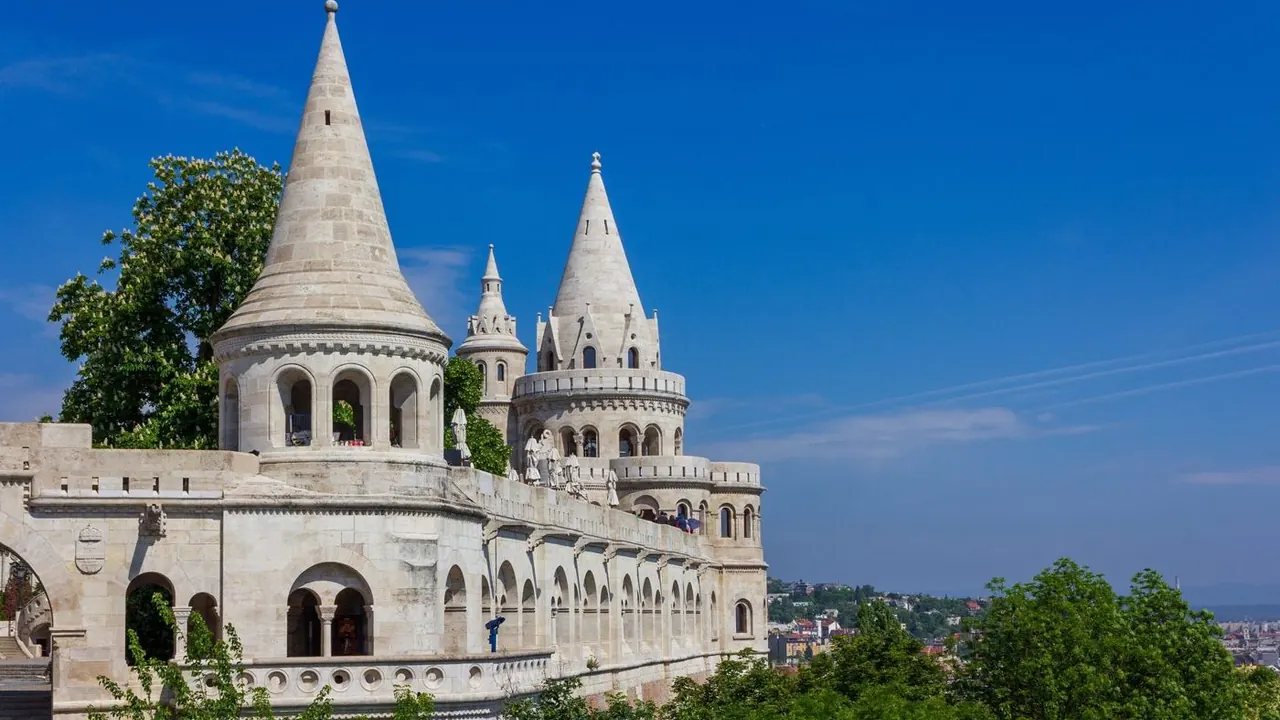
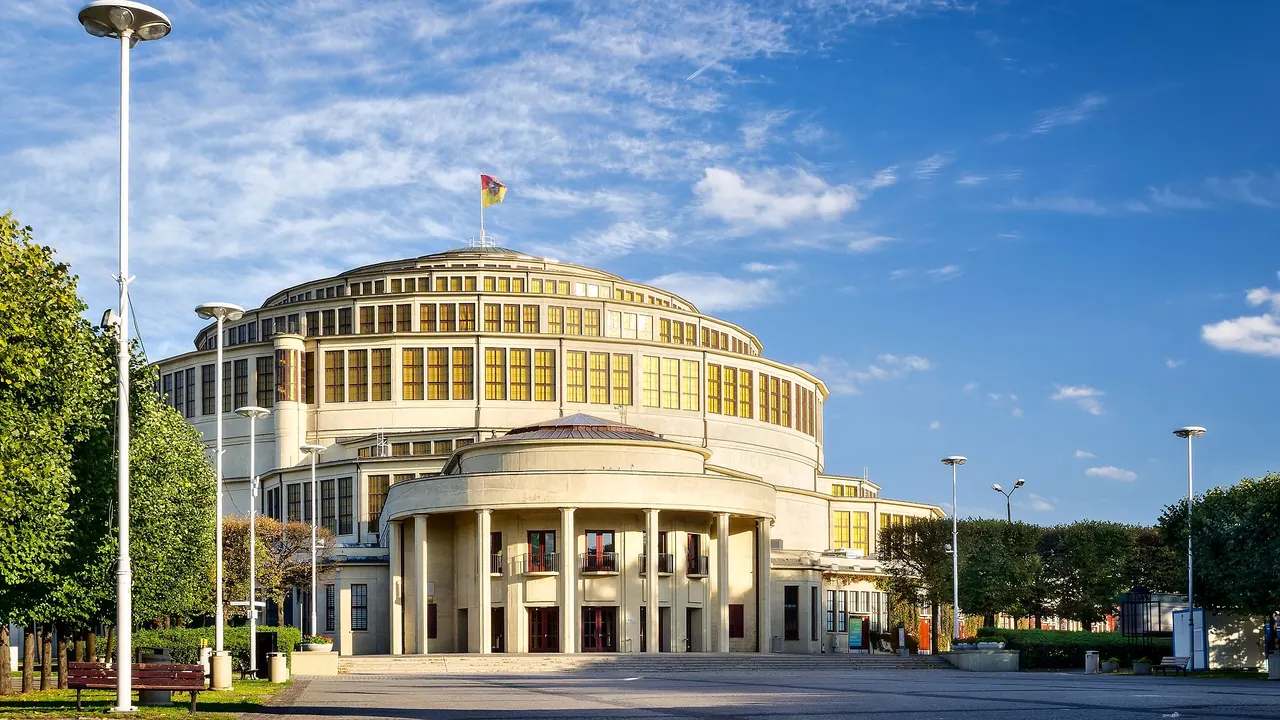
Photos: Budapest by Perituss, CC0; Wroclaw by Jar.ciurus, CC BY-SA 3.0 PL, cropped.
Budapest or Wroclaw?
Our verdict in twelve categories, each scored against the same fixed benchmark cities, and the climate month by month, so you can choose for your trip.
Choose Budapest for
- wellness
- nightlife
- live music and the arts
Budapest suits travellers who want a capital with a lot going on. It has the Danube panorama of Parliament and Castle Hill, opera and concerts most nights, and ruin bars in the old Jewish Quarter. Above all it has the thermal baths, which no other city in Europe matches. It rewards a stay of several days and works in any season, because the outdoor pools steam even in snow.
Choose Wroclaw for
- prices
Wroclaw is the better pick for a smaller, cheaper and gentler trip. The Market Square, the cathedral island and the riverside lie close together on flat ground, rooms and meals cost noticeably less, and the student bars give the evenings life without the scale of a capital. It also makes a sensible base for driving out to the castles of Lower Silesia and the Sudetes hills.
Scoreboard
Twelve categories on one fixed scale from 0 to 100. The shaded stretch is the gap between the two.
Your match
Pick a travel style or drag the sliders, and both match scores follow your weighting.
Wins on wellness and nightlife with your weighting.
Wins on prices with your weighting.
What matters to you?
Category by category
What the scores mean for a trip.
Beaches & swimming
Neither city is a beach destination, but Budapest gives a swimmer far more to work with. Its summer lidos, with lawns and several pools, fill a whole day. The shallow, warm water of Lake Velence is under an hour away by train, and Balaton can be reached for a long day out.
Wroclaw's sandy Oder beaches are for deckchairs and a drink rather than a swim, so getting in the water means a public pool or a drive to a lake in the countryside. The Baltic is too far for anything but a separate trip.
Food & drink
Budapest is the stronger place to eat. Paprika-red goulash, fisherman's soup and lángos, the salami and dried peppers of the Great Market Hall, and the layered cakes of the old coffee houses make eating part of the sightseeing. Hungarian wine from Tokaj, Eger and Balaton is a real find.
Wroclaw feeds you well rather than memorably, with pierogi, żurek in a bread bowl, roast duck, cheap milk-bar lunches and a few modern Polish bistros. Its drinking leans towards beer in cellar brewpubs and craft taps rather than wine.
Culture & sights
Budapest has the grander set piece. Parliament faces the Royal Palace and the Fishermen's Bastion across the Danube, Andrássy Avenue runs out to Heroes' Square, and the Museum of Fine Arts and the National Gallery hold serious collections. Add the Dohány Street Synagogue, the Art Nouveau buildings and Memento Park, and the city fills several days.
Wroclaw's sights are smaller in scale and quicker to see. They centre on the vast Market Square with its Gothic Town Hall, the brick churches of Ostrów Tumski and the concrete Centennial Hall. Its post-war rebuilding and the Racławice Panorama give it a story of its own, and the bronze dwarfs add a playful hunt.
Nightlife
Budapest's nights are bigger and go on later. The ruin bars of District VII fill whole tenement courtyards, Kazinczy and Király streets add late clubs, and summer brings party boats and terraces along the Danube, though the centre can turn rowdy at weekends.
Wroclaw's night out is lively for its size but depends on its students. People drift between bars in the Ruska Street courtyard passage and the cellars around the Market Square, and the club scene is modest. Things go quieter between university terms.
Nature & outdoors
The outdoors is close to even here, but it takes a different shape. Budapest has forested hills inside the city. The Buda Hills are reached by cogwheel railway and chairlift, with thermal caves beneath, and the ridges and riverside cycle path of the Danube Bend are an hour north. It is all gentle walking.
Wroclaw is flat, and its green space comes from the river islands, Szczytnicki Park and the botanical garden. For height you head further out, to the lone peak of Ślęża or, about two hours away, the Karkonosze and the sandstone Table Mountains, which offer proper hiking and winter skiing that Budapest lacks.
Day trips
Budapest has the easier and richer choice of outings. Szentendre, Visegrád and Esztergom line the Danube Bend within reach of a suburban train, and Gödöllő's palace is a half-day. At around two hours, Eger's castle and wine cellars and the village of Hollókő widen the choice.
Lower Silesia has plenty of castles and churches, and the highlights are Książ above its wooded gorge and the wooden Churches of Peace. A car makes the difference there, because combining several stops in a day by train is awkward.
Good for families
Both cities work well with children, in different ways. Budapest has more to fill the days, from the City Park zoo and the Children's Railway to summer lidos with wave pools, but metro stairs and loud weekends in District VII need some planning.
Wroclaw is the calmer base, flat and largely car-free around the Market Square, and its big draws are the dwarf hunt and the shark tunnel in the zoo's Afrykarium. Once those are done, the list runs short.
Getting around
Budapest is easier to get around. Central Pest is flat and walkable, trams circle the Grand Boulevard round the clock, and tram 2 doubles as a sightseeing ride along the river. The short metro, the ferries and cheap taxis cover the rest, including hilly Buda.
Wroclaw's centre is compact and largely pedestrianised, so walking does most of the work, and bikes are popular along the river. Further out the trams are slow at rush hour, and the countryside sights are easier by car.
Shopping & style
Budapest gives a shopper more to do, though not a great deal. Herend and Zsolnay porcelain, Hungarian design boutiques in Districts V and VII, a few luxury labels on Andrássy Avenue and the Ecseri flea market are better hunting than the souvenir shops of Váci utca.
Wroclaw is mostly malls and chains, though the 1930s Renoma building is worth a look for its ceramic facade. The buys to look for are Bolesławiec stoneware, amber and the vintage finds of Nadodrze.
Affordability
Wroclaw is the cheaper stay. Central hotels, milk-bar lunches, beer, trams and museums all cost little, and only the Market Square terraces and busy summer weekends push prices up.
Budapest is still good value beside Western capitals, with cheap transport and wine, but it costs more overall, and the streets around Váci utca and the Basilica charge extra. Eating set lunch menus in residential districts narrows the gap.
Live music & performing arts
Budapest is the stronger music city. With the State Opera House on Andrássy Avenue, the Art Nouveau hall of the Liszt Academy and the national concert hall at Müpa, there is classical music most nights, and operetta and the folk ensembles add something local.
Wroclaw has a respectable programme for its size: the National Forum of Music, the opera house near the moat, and festivals such as Wratislavia Cantans and Jazz on the Oder. In both cities spoken theatre is in the local language, so visitors come for the music.
Wellness & relaxation
This is where the two cities are furthest apart. Budapest sits on more than a hundred hot springs, and an afternoon moving between the pools of the Széchenyi, the mosaics of the Gellért or the Ottoman domes of Rudas and Király is a reason to come in itself.
Wroclaw has no bathing tradition of its own, only hotel spas and an indoor aquapark with saunas. To take the waters you travel an hour or more to the old spa towns of Lower Silesia, such as Szczawno-Zdrój.
When should you go?
Pick your month. The climate figures are measured averages, not a forecast.
Budapest in July
Wroclaw in July
Daytime high, °C
Rainfall in the month, mm
Temperature and rainfall are climate normals, averaged over the years shown. Budapest: 1991-2020 (sunshine 1981-2010, rainfall 1981-2010) normals, Budapest Met Center (2.1 km from centre). Wroclaw: 1991-2020 (rainfall 1961-1990) normals, Wroclaw Copernicus Airport (10.5 km from centre).
Both cities have a continental climate, cold in winter and warm in summer, but Budapest runs a little warmer and drier through the summer. Its highs reach about 28°C in August, warm enough for the open-air lidos from June to early September, and July is its sunniest month. Rain is spread fairly evenly through the year, with a modest rise in May and June. Late April, May and September are the most comfortable months for long days on foot.
Wroclaw is a few degrees cooler at the height of summer, and summer is also its wettest season, with rain peaking at around 83mm in July, so June to August mix warm spells with showers. May and September suit walking the old town best. December and January are the coldest months in both cities, with daytime highs of about 4°C and little sun, and November and February are only a few degrees milder. In the cold months Budapest's hot baths give it the clear advantage.
Which traveller are you?
On a relaxing and wellness trip, choose Budapest and build each day around the water: a long soak, a sauna and a cold plunge, then an unhurried afternoon in a coffee house. It works just as well in winter. In Wroclaw, unwinding mostly means cafés and the river islands.
For a food and nightlife trip, Budapest makes a full evening of it. Start with a market lunch, move on to a wine bar in District V, and finish late in the courtyards of District VII, though weekends can be rowdy. Wroclaw suits a beer-led night between cellars, best during term time.
On a trip on a tight budget, Wroclaw lets a modest sum cover a central room and eating out every day without much counting. Budapest can work on the same money, but it takes more planning: lean on the trams, local wine and the baths, and keep the grand cafés for a single treat.
Before you go
| Measure | Budapest | Wroclaw |
|---|---|---|
| Official language | Hungarian | Polish |
| Currency | Forint (HUF) | Zloty (PLN) |
| Sockets | CF230 V, 50 Hz | CE50 Hz |
| Driving side | Right | Right |
| Time zone | UTC+1, UTC+2 in summer | UTC+1, UTC+2 in summer |
| Emergency number | 112 | 112 |
| Elevation | 117 m | 111 m |
| Main airport | Budapest Liszt Ferenc International Airport (BUD)18 km from centre157 non-stop destinations | Copernicus Wrocław Airport (WRO)11 km from centre84 non-stop destinations |
| Public holidays this year | 13 days | 14 days |
By the numbers
| Measure | Budapest | Wroclaw |
|---|---|---|
| City population | 1,675,777 | 673,531 |
| People per km² | 3,191 | 2,299 |
| Museums within 10 km | 81 | 42 |
| UNESCO World Heritage sites within 50 km | 1 | 2 |
Where else could you go?
Every comparison below shares a destination with this one, so you can follow Budapest or Wroclaw somewhere new.
- Bratislavavs Budapest
- Viennavs Budapest
- Brnovs Wroclaw
- Praguevs Wroclaw
- Dresdenvs Wroclaw
- Krakowvs Wroclaw