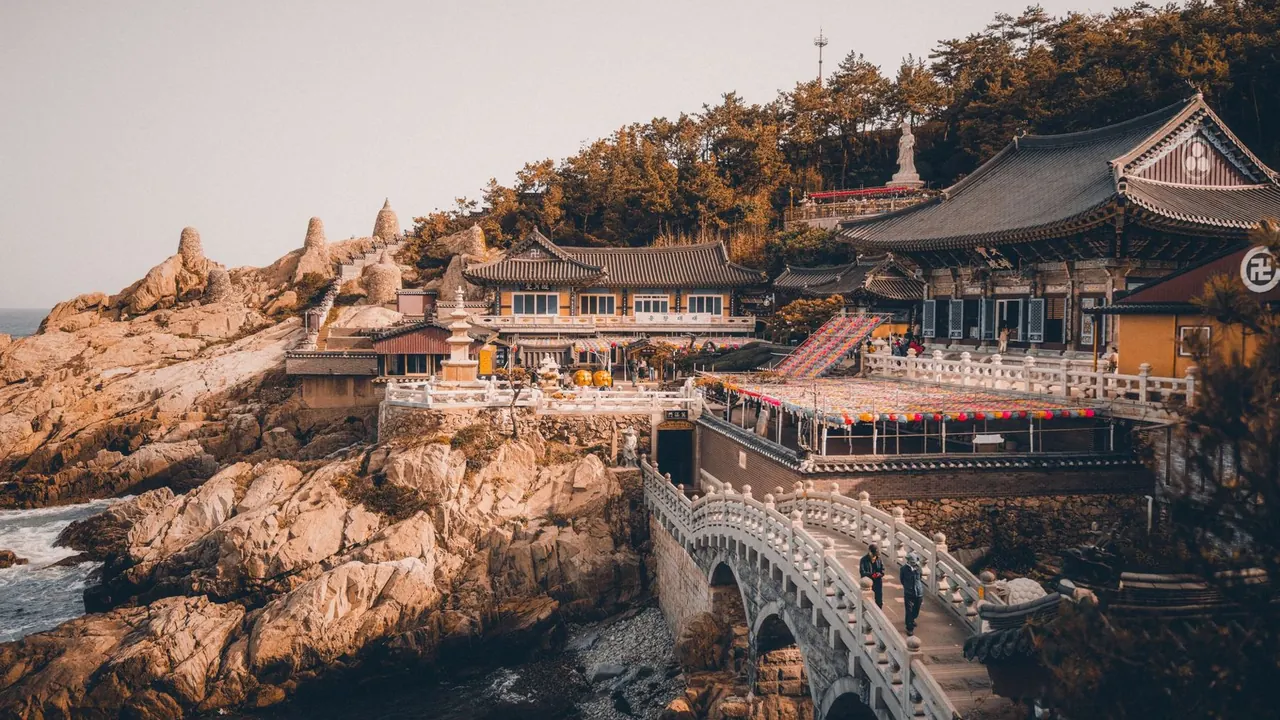
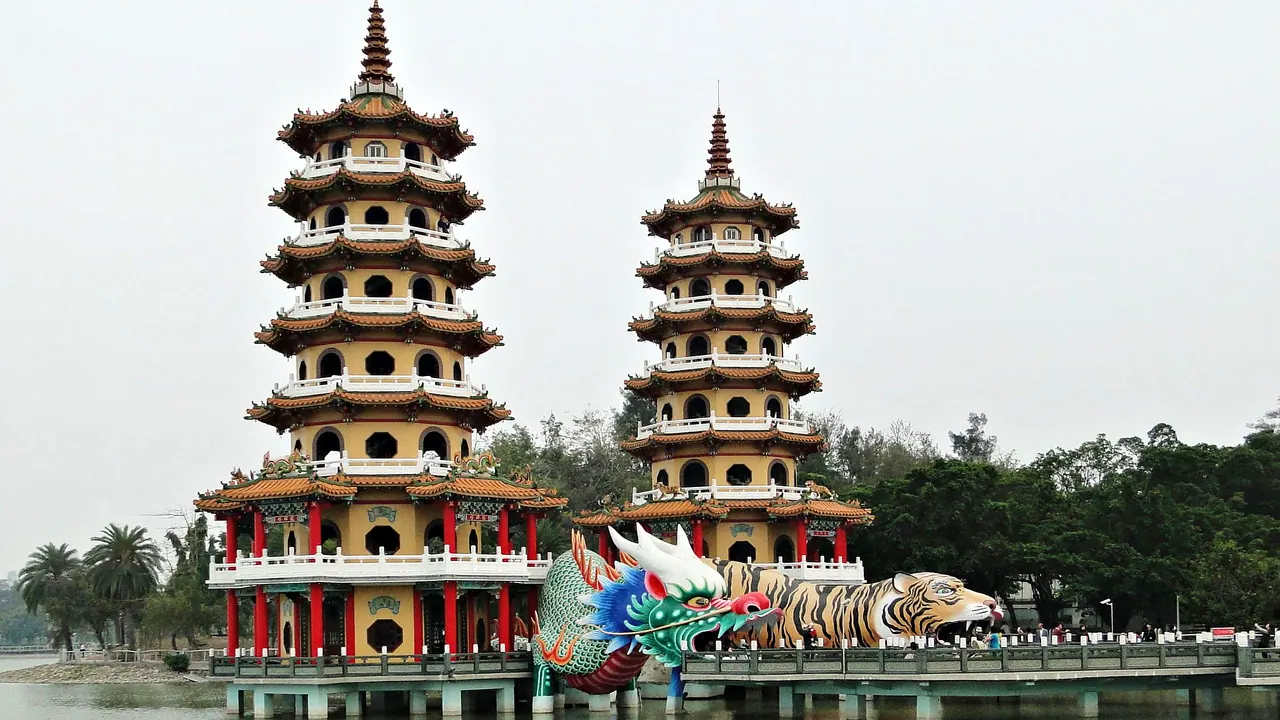
Photos: Busan by Andrea De Santis, Pexels License; Kaohsiung by Bernard Gagnon, CC BY-SA 3.0, cropped.
Busan or Kaohsiung?
Our verdict in twelve categories, each scored against the same fixed benchmark cities, and the climate month by month, so you can choose for your trip.
Choose Busan for
- wellness
- beaches
- nightlife
Busan suits travellers who want a city that works across several kinds of days. Its sandy beaches sit inside the city, mountain trails and cliff paths start from metro stations, and the hot-spring bathhouses of Dongnae and the big jjimjilbang halls make it the easier place to rest. The bar crawls of Seomyeon and Gwangalli and the run to Gyeongju round it off. Come in summer for the sea or in spring and autumn for walking.
Choose Kaohsiung for
- prices
- live music and the arts
- culture and sights
Kaohsiung is the choice for a cheaper, slower trip built around eating and the warmth of a southern winter. Night markets, morning congee stalls and seafood on Cijin cost little. Weiwuying gives it a far stronger stage than Busan, and Tainan's temples and forts are close by. Don't expect much swimming or many big nights out. It works best from autumn to spring, when Busan is cold.
Scoreboard
Twelve categories on one fixed scale from 0 to 100. The shaded stretch is the gap between the two.
Your match
Pick a travel style or drag the sliders, and both match scores follow your weighting.
Wins on wellness and beaches with your weighting.
Wins on prices and live music and the arts with your weighting.
What matters to you?
Category by category
What the scores mean for a trip.
Beaches & swimming
Busan is the beach city of the two. Haeundae's broad arc of sand, Gwangalli under the lit bridge and the calmer surf beach at Songjeong are all reached by metro or bus, and in late summer swimming is easy. The catch is that the season is short and the main beaches are packed at its peak.
Kaohsiung has warmer water but far less swimming. Cijin's dark sand is used for kites and sunsets, and the small bay at Sizihwan opens only in season. The best water is on Xiaoliuqiu, a road-and-ferry trip away, and it is better for snorkelling with turtles than for a beach day.
Food & drink
The two are equally good for eating, and both lean on the sea, but they feel different. In Busan you choose live fish downstairs at Jagalchi and eat it raw upstairs, and the local staples are hearty: pork-bone soup at any hour, icy milmyeon noodles and fishcake skewers.
Kaohsiung's cooking is sweeter and built around snacking. The day starts with milkfish congee at a market stall and ends at Ruifeng with oyster omelettes and mango shaved ice. Neither city is the place for fine dining, though Kaohsiung has a bit more Japanese and modern Taiwanese cooking.
Culture & sights
Both are port cities with little old townscape and enough sights for two or three days, but the themes differ. Busan's strongest sights are its temples, Beomeosa on the mountain and Haedong Yonggungsa on the sea rocks, along with the Korean War, told at the UN Memorial Cemetery and in the painted refugee houses of Gamcheon.
Kaohsiung tells more of a colonial and modern story. There are the pagodas around Lotus Pond, the red-brick British consulate above the harbour, the converted warehouses of Pier-2 and even a metro station decorated with a vast glass ceiling.
Nightlife
Busan is clearly the better place for a night out. Dinner turns into soju rounds and karaoke as a matter of course, Seomyeon stays busy into the early hours, and the student streets and Gwangalli's beachfront bars give plenty of choice.
Kaohsiung's evenings are quieter and centre on food. The local way to drink is beer and shared stir-fries late into the night. Beyond that there are a few craft bars around Pier-2, a drink by the Love River and a small club cluster that only fills at weekends.
Nature & outdoors
Busan offers more and makes it easier to reach. You can walk from a metro station onto Geumjeongsan's fortress ridges or along the Igidae sea cliffs, and the Galmaetgil trail links Taejongdae and the Oryukdo islets. The Yeongnam Alps are about an hour inland.
Kaohsiung has a macaque-filled hill in Shoushan beside the harbour and odd landscapes within an hour or two, such as the mudstone badlands of Moon World and the butterfly valleys of Maolin. Its long, humid summer cuts down the hours when walking is pleasant.
Day trips
Both have a historic city half an hour away by fast train, and Busan's pick is slightly richer. Gyeongju alone fills a long day with Silla tombs, Bulguksa and Seokguram. Haeinsa, the Jinhae cherry blossom and even a ferry to Tsushima in Japan add range.
From Kaohsiung, Tainan's Dutch forts and countless temples make an excellent outing. The giant Buddha at Fo Guang Shan and the umbrella-making town of Meinong are gentler options, but the Kenting peninsula is closer to a separate stay than a day out.
Good for families
Busan gives children more to do. There are swimmable city beaches in summer, a large aquarium on the Haeundae seafront, a theme park and luge at Gijang, and the slow sky-capsule rail along the coast. The steps up to Gamcheon and the temples are the main strain.
Kaohsiung is just as friendly but takes more planning. The science museum, the Cijin ferry and the light rail please children. Pavements crowded with parked scooters, busy junctions and the long hot season mean midday is usually spent indoors.
Getting around
The two are much alike: clean, cheap transport with English signs, one card for everything and no need for a car. Busan's metro reaches further, linking the old port, Seomyeon and Haeundae, but the city is long and hilly, so crossing it takes nearly an hour.
Kaohsiung's two metro lines and harbour light rail are calm but leave gaps. Bike-share and taxis fill them, while scooters on the pavements and the heat make walking the last stretch harder.
Shopping & style
Busan has more to offer shoppers, and on a larger scale. The vast department stores at Centum City, Seomyeon's underground arcades and Korean skincare on every street are the draw, along with the old market lanes of Gukje and the dried seafood stalls around Jagalchi.
Kaohsiung's shopping is mostly in malls, plus youth fashion in the small streets of Xinjuegang. The things to take home are edible: tea, pineapple cakes and mullet roe.
Affordability
Kaohsiung is clearly the cheaper city. Night-market meals, noodle shops and transport cost very little, and comfortable business hotels are fairly priced most of the year.
Busan is mid-range. Soup restaurants and markets are cheap and the coastal walks are free, but live seafood sold by weight and beachfront hotels in high summer push a trip's costs up quickly.
Live music & performing arts
Kaohsiung has the stronger stage, almost entirely thanks to Weiwuying. Its wave-roofed complex holds an opera house, a concert hall and a playhouse, with visiting orchestras, dance and the city's own symphony. At temple festivals you may still catch glove puppetry and Taiwanese opera.
Busan has a good classical hall in Citizens' Park and musicals in Korean, but little else for theatre lovers. The film festival in autumn and the big summer rock and K-pop shows are its high points.
Wellness & relaxation
Here Busan is far ahead. Dongnae has been a hot-spring district for more than a thousand years, Haeundae has springs of its own, and the jjimjilbang complexes let you scrub, soak and even sleep over. Temple stays and seafront walks add quieter ways to slow down.
Kaohsiung has no thermal water within the city. What it offers is cheap, skilled foot and body massage on ordinary streets, and its nearest hot springs need an overnight trip.
When should you go?
Pick your month. The climate figures are measured averages, not a forecast.
Busan in July
Kaohsiung in July
Daytime high, °C
Rainfall in the month, mm
Where the figures come from
Kaohsiung has no rain gauge within 25 km of the centre, so its rainfall comes from a gridded climate dataset read at the city rather than from a gauge further away.
Temperature and rainfall are climate normals, averaged over the years shown. Busan: 1991-2020 normals, Pusan (9.7 km from centre). Kaohsiung: 1991-2020 normals, Kaohsiung International Airport (6.4 km from centre).
Busan has four clear seasons. Swimming is really only good in July and August, when the sea reaches about 26°C. Those are also the wettest months, with July bringing around 352mm of rain. Spring and autumn are the best times to walk the streets and hills, with October warm, dry and sunny. In winter daytime highs fall to around 8°C, but the skies stay bright.
Kaohsiung is warm all year. Even January reaches about 24°C, and the sea never gets properly cold. From November to April it is dry and comfortable, which is exactly when Busan is chilly. From May to September it is hot and very wet, with August rainfall near 480mm, so summer there means early mornings, air-conditioned afternoons and an eye on the weather.
Which traveller are you?
For a beach and sun trip, choose Busan in July or August. Haeundae, Gwangalli and Songjeong are proper sandy city beaches you can swim from. Kaohsiung's sea is warmer, but currents and lifeguard rules leave Cijin as a beach for walking more than swimming.
For a relaxing and wellness trip, Busan is the clear pick. Dongnae and Haeundae have real hot springs, and the jjimjilbang halls offer scrubs, saunas and long soaks. Kaohsiung has skilled street massage, but its nearest hot springs are a long drive away.
On a trip on a tight budget, Kaohsiung goes further. Market breakfasts, night-market dinners, low metro and bike-share fares, fairly priced business hotels and free temples and parks keep daily costs lower than in Busan, where beachfront hotels and seafood sold by weight add up.
Before you go
| Measure | Busan | Kaohsiung |
|---|---|---|
| Official language | Korean, Korean Sign Language | Taiwanese Sign Language, Amis, Taiwanese Hokkien, Rukai, Bunun, Kanakanavu, Standard Taiwanese Mandarin, Paiwan, Yami, Atayal, Saaroa, Kavalan, Tsou, Seediq, Puyuma, Saisiyat, Sakizaya, Taiwanese Hakka, Truku, Matsu dialect, Kinmen dialect, Wuqiu dialect |
| Currency | Won (KRW) | New Taiwan Dollar (TWD) |
| Sockets | CF220 V, 60 Hz | AB110 V, 60 Hz |
| Driving side | Right | Right |
| Time zone | UTC+9 | UTC+8 |
| Emergency number | Police 112, ambulance 119, fire 119 | 110 or 112 or 119 |
| Elevation | 30 m | 9 m |
| Main airport | Gimhae International Airport (PUS)12 km from centre49 non-stop destinations | Kaohsiung International Airport (KHH)7 km from centre35 non-stop destinations |
| Public holidays this year | 18 days | - |
By the numbers
| Measure | Busan | Kaohsiung |
|---|---|---|
| City population | 3,453,198 | 2,713,032 |
| People per km² | 4,486 | 919 |
| Museums within 10 km | 7 | 20 |
| UNESCO World Heritage sites within 50 km | 3 | 0 |
| Swim season, months above 21 °C | 4 months | 12 months |
Where else could you go?
Every comparison below shares a destination with this one, so you can follow Busan or Kaohsiung somewhere new.
- Tainanvs Kaohsiung
- Gyeongjuvs Busan
- Fukuokavs Busan
- Nagasakivs Busan
- Taipeivs Kaohsiung
- Hiroshimavs Busan