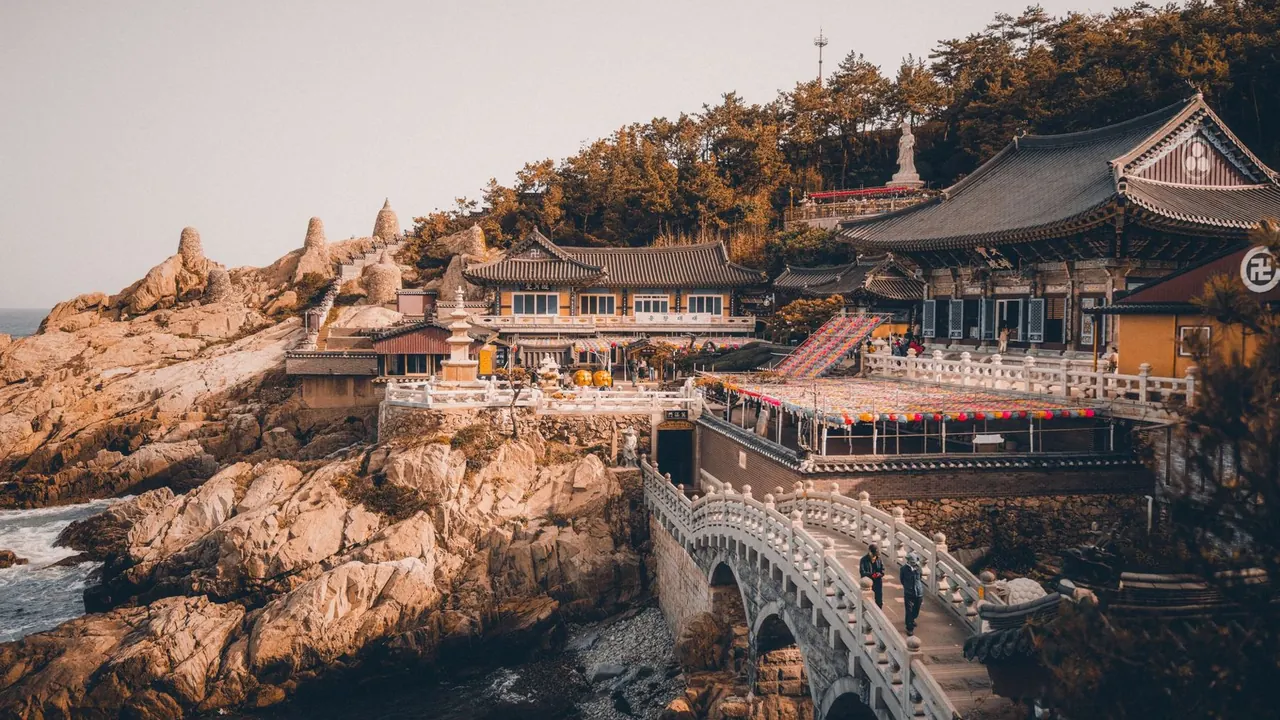
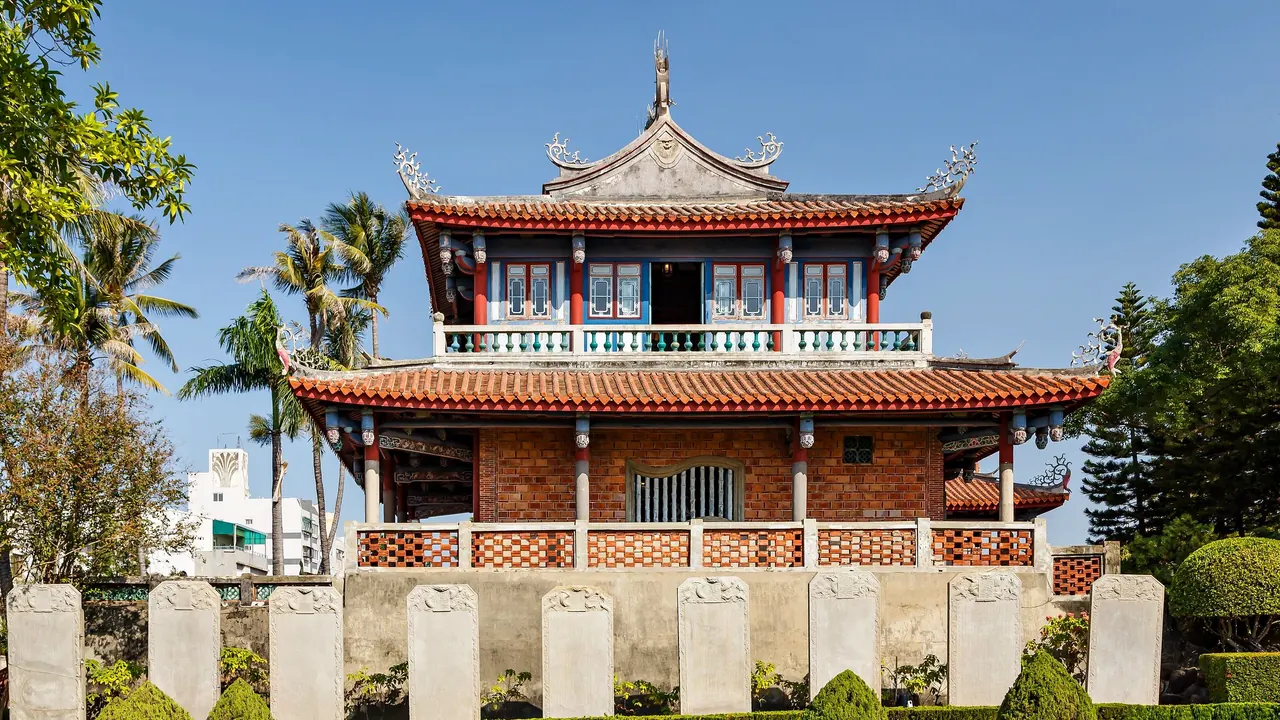
Photos: Busan by Andrea De Santis, Pexels License; Tainan by CEphoto, Uwe Aranas, CC BY-SA 3.0, cropped.
Busan or Tainan?
Our verdict in twelve categories, each scored against the same fixed benchmark cities, and the climate month by month, so you can choose for your trip.
Choose Busan for
- beaches
- getting around
- wellness
Busan is the choice for a summer trip that mixes city and sea. It has beaches you can swim from inside the city, cliff walks and mountain hikes reachable by metro, real hot-spring bathhouses and a sociable night out that runs late. It is also easier with children and easier to get around, and Gyeongju makes an outstanding day out.
Choose Tainan for
- prices
- culture and sights
- food and drink
For travellers who plan their days around eating and old streets, Tainan is the better fit. Its snack culture is a reason to go in itself, and its compact old core holds temples, forts and Japanese-era buildings from centuries of Taiwanese history. It also costs less day to day. Expect plenty of taxis, early nights and a coast for watching the sunset rather than for swimming.
Scoreboard
Twelve categories on one fixed scale from 0 to 100. The shaded stretch is the gap between the two.
Your match
Pick a travel style or drag the sliders, and both match scores follow your weighting.
Wins on beaches and getting around with your weighting.
Wins on prices and culture and sights with your weighting.
What matters to you?
Category by category
What the scores mean for a trip.
Beaches & swimming
Busan has real beaches inside the city: the broad arc of sand at Haeundae, Gwangalli beneath the lit-up bridge and the quieter Songjeong, where beginners learn to surf. All of them are a metro or bus ride away. The swimming season is short, roughly July to early September, and Haeundae is packed in those weeks.
Tainan's coast west of Anping is grey sand, lagoons and sandbars. The Golden Coast and Yuguang Island are better for an evening walk than a swim, because the currents are strong and bathing is often banned. The sea there stays warm for longer, but a hotel pool is the realistic place to swim.
Food & drink
Both cities are worth eating your way through, but Tainan is the one people travel to for its food alone. Its snacks run from beef soup and milkfish porridge at breakfast to danzai noodles, coffin bread and shaved ice. Many come from stalls that have made one dish for generations, and the city is best enjoyed on a slow day of grazing around the temples and night markets.
Busan's strength is narrower and comes from the sea: live seafood chosen at Jagalchi and eaten upstairs, milky dwaeji gukbap at any hour, icy milmyeon and fishcake on skewers. Neither city offers much international or high-end dining.
Culture & sights
Tainan packs more history into a small area. Two centuries as Taiwan's capital left the Confucius Temple, Chihkan Tower, the Anping forts and hundreds of temples full of incense. Japanese-era buildings and the European paintings of the Chimei Museum add to them, and the city suits days of wandering from one courtyard to the next.
Busan grew quickly after the Korean War and has little old townscape, so its sights are scattered highlights. These include Beomeosa in the hills, Haedong Yonggungsa on the rocks above the sea, the painted lanes of Gamcheon and the UN Memorial Cemetery. Two or three days is enough to see them.
Nightlife
Busan offers a proper night out. Seomyeon's blocks of pubs and its few clubs stay busy into the early hours, and the beachfront bars at Gwangalli look across at the bridge. The Korean habit of rounds of soju followed by karaoke keeps the night going, especially in summer.
In Tainan the evening is about dinner and the night markets, perhaps followed by a quiet cocktail or whisky in a townhouse bar near Shennong Street. Most of the city is asleep by midnight, and anyone who wants clubs takes the train to Kaohsiung.
Nature & outdoors
Busan has both mountains and sea within reach of the metro. You can hike past the fortress walls on Geumjeongsan or climb Jangsan for views over the harbour, then follow the Galmaetgil trail along the Igidae cliffs and around the Taejongdae headland. The high ridges of the Yeongnam Alps are about an hour inland.
Tainan's outdoors is flat and watery: boat rides through the mangroves at Sicao, salt pans, and black-faced spoonbills spending the winter at Qigu. It is gentle and interesting, but there are no real mountains within easy reach, and the summer heat limits time outside to the early morning.
Day trips
Busan has the stronger excursion in Gyeongju, the ancient Silla capital, with its royal tombs, Bulguksa and Seokguram, about half an hour away by fast train. Tongdosa, the printing blocks at Haeinsa, the cherry blossom at Jinhae and even a ferry to Tsushima in Japan add range.
Tainan's best outing is Kaohsiung, under an hour away, with Foguangshan and the umbrella-making town of Meinong beyond it. Chiayi is the gateway to the Alishan forest railway, and the old streets of Yanshui and Xinhua are closer still. These are good options, but none quite matches Gyeongju.
Good for families
Busan is made for a family summer. It has beaches inside the city, an aquarium on the Haeundae seafront, a theme park and luge track at Gijang, and the slow sky-capsule rail along the coast. The effort comes from the hills, the steps and the long distances, and late spring or early autumn is kinder than August.
Tainan is safe and warm towards children, and the night-market games, the Anping forts and the Tree House can fill a few days. Little is built for children, though. Pavements crowded with scooters and the heat make it harder going, and the zoo and theme park are in Kaohsiung.
Getting around
Busan's metro, with English signs and a single tap card, links Nampo-dong, Seomyeon and Haeundae, so nobody needs a car. The catch is the length of the city, with nearly an hour between its far ends.
Tainan has no metro, the buses are slow, and the high-speed rail station sits well outside town. You can walk the old core, weaving between parked scooters, but Anping and the Chimei Museum mean a taxi. Most visitors rely on ride-hailing and the bike-share.
Shopping & style
Busan is the place for a big shopping day. Centum City has enormous department stores, Seomyeon has long underground arcades of cheap fashion, and Korean skincare is sold on every main street. The market lanes of Gukje cover the rest.
Tainan is smaller in scale and more personal. The townhouse shops around Shennong and Zhengxing streets sell independent design, ceramics, tea and indigo-dyed cloth, and the 1930s Hayashi Department Store is a sight in itself. It is good for a thoughtful souvenir, much less so for fashion or volume.
Affordability
Busan is the more expensive of the two, though transport is where it saves you money. The metro and buses reach most sights cheaply, and the temples, markets and coastal paths cost almost nothing to visit. The costs climb with rooms, especially on the Haeundae and Gwangalli seafronts in July and August, and with imported drinks. Staying in Seomyeon or near the station outside high summer keeps a trip reasonably priced.
In Tainan it works the other way round. Guesthouses and hotels cost clearly less than in Taipei, and eating at stalls and night markets barely dents the budget. Getting around is what Busan does more cheaply: with no metro, taxis and ride-hailing add up over a stay. The townhouse cocktail bars and the few upmarket restaurants charge Western prices, so the savings come from eating and sleeping simply.
Live music & performing arts
Neither city is worth travelling to for the stage, but Busan has more formal evenings. There are orchestral and chamber concerts at Busan Concert Hall, traditional Korean music at the Busan Cultural Center and touring musicals at Munhyeon. The Busan Cinema Center is the main home of the city's film festival every autumn.
Tainan's most memorable performances happen on the street. On festival days, Taiwanese opera and glove puppetry are staged in front of the temples, and processions bring drum troupes and the Eight Generals. For orchestra, opera or dance, the city relies on Kaohsiung.
Wellness & relaxation
Busan is one of the better cities for a long soak. Dongnae has been a spa district since the Silla era, Haeundae has its own springs, and the spa complex in Centum City adds themed saunas and overnight jjimjilbang halls. Temple stays in the hills offer a quieter kind of rest.
Tainan's hot springs are at Guanziling, an unusual grey mud spring about an hour away each way. In town the choice is foot reflexology, massage and slow afternoons in tea rooms, while scooter noise and heat work against real rest.
When should you go?
Pick your month. The climate figures are measured averages, not a forecast.
Busan in July
Tainan in July
Daytime high, °C
Rainfall in the month, mm
Where the figures come from
Tainan has no rain gauge within 25 km of the centre, so its rainfall comes from a gridded climate dataset read at the city rather than from a gauge further away.
Temperature and rainfall are climate normals, averaged over the years shown. Busan: 1991-2020 normals, Pusan (9.7 km from centre). Tainan: 1949-2025, 35 years observed (rainfall 1991-2020) normals, Tainan Tw-Afb (4.7 km from centre).
Busan has four clear seasons. The beaches come into their own in July and August, when the sea reaches 26°C. July is also the wettest month at 352mm, though, and August is hot and humid. May and October are best for walking the coast and the hills, mild and fairly sunny. Winter is dry and bright but cold, at around 8°C by day in January.
Tainan is warm all year round, with January still near 23°C. Its best season is the opposite of Busan's: from October to April it is dry and comfortable for walking the old town. From May to September the heat is constant and the rain is heavy, peaking near 588mm in August. In those months Busan is the better choice.
Which traveller are you?
On a beach and sun trip, Busan is the clear pick from July to early September. Haeundae, Gwangalli and Songjeong are proper swimming beaches inside the city. Tainan's grey shore with its strong currents is for sunset walks, and swimming there is often forbidden.
For a relaxing and wellness trip, Busan again has the edge. Dongnae's spring-fed bathhouses, the saunas and overnight jjimjilbang halls of Centum City and the temple stays in the hills beat Tainan's massage parlours and its mud springs, which are an hour away.
On a trip on a tight budget, Tainan stretches the money further. A day grazing on beef soup, danzai noodles and shaved ice costs very little, most temples are free and rooms are cheap. In Busan, beachfront hotels and seafood sold by weight add up.
Before you go
| Measure | Busan | Tainan |
|---|---|---|
| Official language | Korean, Korean Sign Language | Taiwanese Sign Language, Amis, Taiwanese Hokkien, Rukai, Bunun, Kanakanavu, Standard Taiwanese Mandarin, Paiwan, Yami, Atayal, Saaroa, Kavalan, Tsou, Seediq, Puyuma, Saisiyat, Sakizaya, Taiwanese Hakka, Truku, Matsu dialect, Kinmen dialect, Wuqiu dialect |
| Currency | Won (KRW) | New Taiwan Dollar (TWD) |
| Sockets | CF220 V, 60 Hz | AB110 V, 60 Hz |
| Driving side | Right | Right |
| Time zone | UTC+9 | UTC+8 |
| Emergency number | Police 112, ambulance 119, fire 119 | 110 or 112 or 119 |
| Elevation | 30 m | 1 m |
| Main airport | Gimhae International Airport (PUS)12 km from centre49 non-stop destinations | Kaohsiung International Airport (KHH)48 km from centre35 non-stop destinations |
| Public holidays this year | 18 days | - |
By the numbers
| Measure | Busan | Tainan |
|---|---|---|
| City population | 3,453,198 | 1,849,762 |
| People per km² | 4,486 | 844 |
| Museums within 10 km | 7 | 17 |
| UNESCO World Heritage sites within 50 km | 3 | 0 |
| Swim season, months above 21 °C | 4 months | 12 months |
Where else could you go?
Every comparison below shares a destination with this one, so you can follow Busan or Tainan somewhere new.