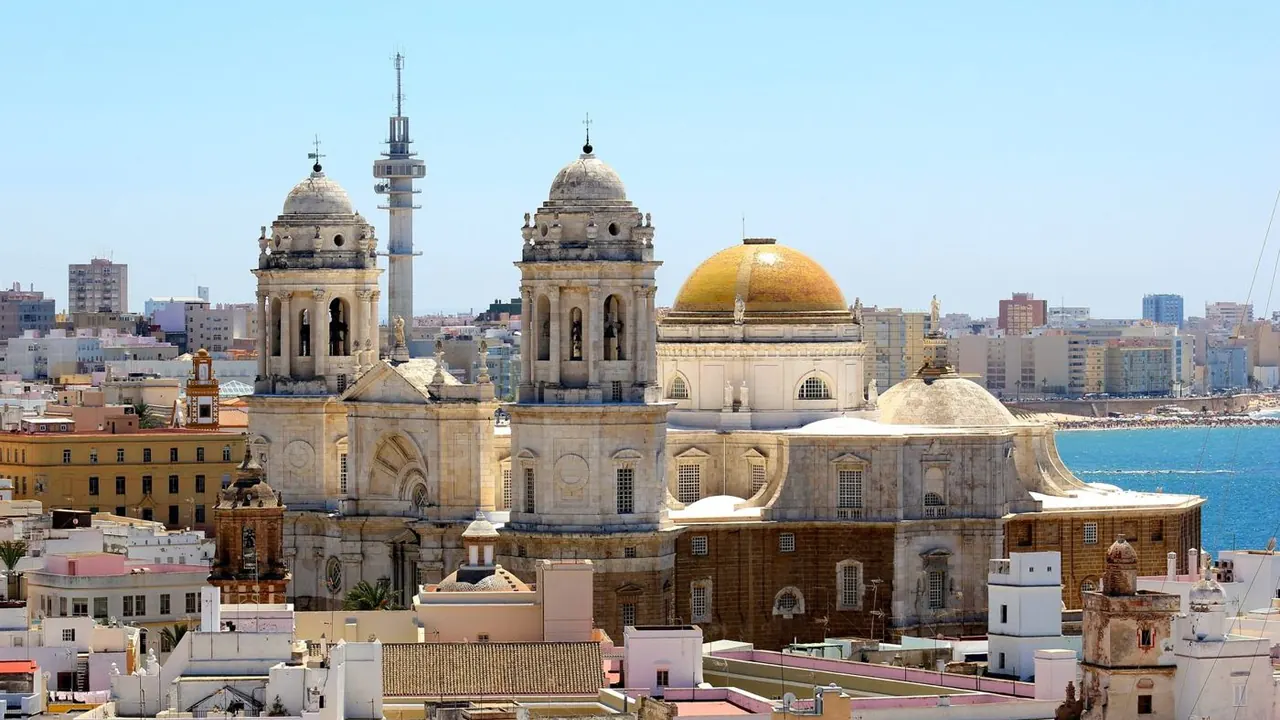
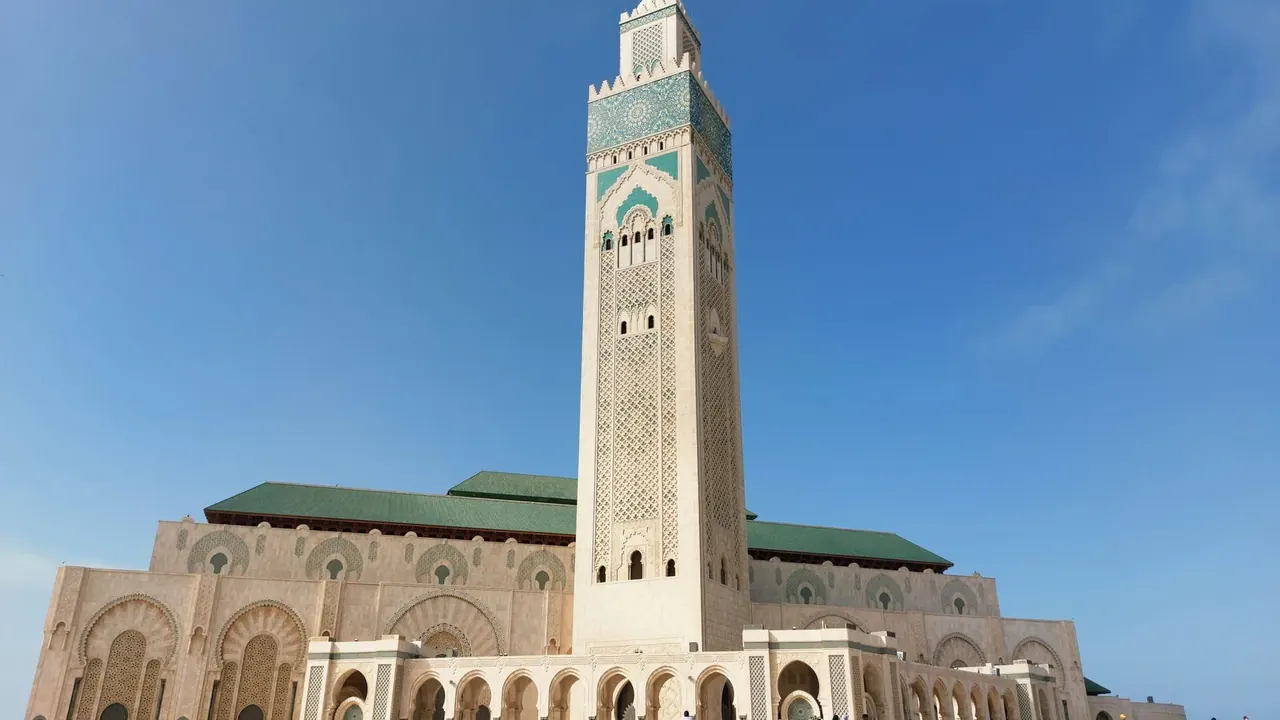
Photos: Cadiz by Bronch, CC BY-SA 3.0 ES, cropped; Casablanca by Samir Bakkah, Pexels License.
Cadiz or Casablanca?
Our verdict in twelve categories, each scored against the same fixed benchmark cities, and the climate month by month, so you can choose for your trip.
Choose Cadiz for
- nature and the outdoors
- beaches
- getting around
Cadiz is the choice for a summer by the sea with plenty to do beyond the sand. You can swim from the old town, walk everywhere, eat fried fish and tuna with cold sherry, and spend your other days in Jerez, Seville, the white hill towns or the wild beaches of the Costa de la Luz. It suits beach lovers, families with small children, walkers and anyone who wants a slow Andalusian rhythm built around the sea.
Choose Casablanca for
- shopping
- prices
- wellness
Casablanca suits a different kind of trip: a short urban stop, often part of a longer journey through Morocco. Its strengths are the Hassan II Mosque, the Art Deco streets, the hammam, modern shopping and day-to-day costs that stay low. Choose it if you want a big, working Moroccan city, smart evenings on the Corniche and fast trains to Rabat and beyond, not a beach vacation.
Scoreboard
Twelve categories on one fixed scale from 0 to 100. The shaded stretch is the gap between the two.
Your match
Pick a travel style or drag the sliders, and both match scores follow your weighting.
Wins on nature and the outdoors and beaches with your weighting.
Wins on shopping and prices with your weighting.
What matters to you?
Category by category
What the scores mean for a trip.
Beaches & swimming
In Cadiz the beach is part of the city itself. You can walk from the cathedral to swim in the sheltered cove of La Caleta, or take a bus to the long, clean golden sand of Playa Victoria, where families settle in for the whole summer. Within an hour lie the wide, empty beaches of the Costa de la Luz. The levante wind is the one real drawback.
Casablanca's sand at Ain Diab is long too, but the Atlantic hits it with strong swell and dangerous currents, and the water quality varies. Many locals swim in the beach-club pools rather than the sea. A proper beach day means driving out to Dar Bouazza or Mohammedia.
Food & drink
Both are Atlantic ports where the seafood is the best thing to eat, but Cadiz does it with more focus and flair. Paper cones from the freidurías, shrimp fritters, almadraba bluefin tuna in the La Viña tapas bars and chilled manzanilla from the nearby sherry towns make every meal easy and good, even if there is little else on offer.
Casablanca has a wider range but less depth. You get Friday couscous and tagines, fish grilled to order beside the Marché Central, and French-style brasseries and pâtisseries in Gauthier and Maarif. Wine and beer are kept out of sight, and Moroccans themselves rate the cooking of the old imperial cities more highly.
Culture & sights
Cadiz has the deeper history, and you can see it on a short walk. There are Phoenician sarcophagi in the Museo de Cádiz, a Roman theatre in the Barrio del Pópulo, merchants' watchtowers from the trade with the Americas, the gold-domed cathedral and the camera obscura of the Torre Tavira.
Casablanca is mostly a twentieth-century city. Its draw is one great monument, the Hassan II Mosque, which non-Muslims can visit on a guided tour, along with the Art Deco and neo-Moorish boulevards of the protectorate years. Both fill two or three days, but Cadiz packs more centuries into them.
Nightlife
The two are about level, but the evenings feel very different. In Cadiz the night happens outside: late tapas in La Viña, full squares around Plaza de San Francisco and summer terraces on the Playa Victoria seafront. Then in February comes Carnival, ten days of costumed partying through the night.
Casablanca goes out behind closed doors. Lounges and clubs on the Corniche play house and Arabic pop at weekends to a well-dressed crowd, and protectorate-era bars and hotel cocktail lounges fill downtown. You take a taxi between them rather than wandering from bar to bar.
Nature & outdoors
Cadiz has far more landscape within reach. The salt pans and marshes of the bay are full of spoonbills and flamingos, and you can kayak through them. Tarifa has world-class kitesurfing and boat trips to see dolphins and whales in the Strait, and the limestone gorges of Grazalema and the wetlands of Doñana are both close enough to visit.
Casablanca's outdoor life stays near the shore. You can run along the Corniche towards the El Hank lighthouse, take beginner-friendly surf lessons at Ain Diab or Dar Bouazza, or cycle in the Bouskoura eucalyptus forest. The Atlas mountains are too far for a day out.
Day trips
From Cadiz you get a whole region on your doorstep. Jerez's bodegas and riding school are half an hour away by train, a ferry crosses to El Puerto de Santa María, and Seville is an easy day out. With a car you can reach Vejer, Arcos and the Roman ruins of Baelo Claudia on the beach at Bolonia.
Casablanca has one excellent outing in Rabat, an hour away by train, with the Kasbah des Oudayas and the Chellah ruins. El Jadida's Portuguese cistern and the riverside medina of Azemmour make a good second day. After that the choice thins out, because Marrakech and Fes are too far for a day trip.
Good for families
Cadiz is simply easier with children. The old town is flat and mostly free of cars, the Alameda and Genovés parks give shade, there are lifeguards on Playa Victoria, and nobody minds children out late at dinner. It has no zoo or aquarium, so days revolve around the sand.
Casablanca has more built attractions, including the aquarium and indoor rides in the Corniche mall and the old zoo and amusement park at Ain Diab. Getting to them is the hard part, with heavy traffic, broken pavements and a sea too rough for young swimmers. It works best for a few days with older children.
Getting around
In Cadiz you can cross the old town on foot from shore to shore, take buses up the isthmus to the beach and catch trains to Jerez and Seville straight from the old town. The one gap is the coast and the white villages, which need a hire car.
Casablanca is a sprawl. You get around by tram and busway plus red petits taxis, which are cheap but come with shared rides and the odd ignored meter. Downtown is walkable, but the mosque and the Corniche are a long way off, and crossing the big roundabouts on foot is unnerving. The fast trains to Rabat are excellent.
Shopping & style
Casablanca is the stronger place to shop. It is where Moroccans go for modern retail, from international and luxury brands in the Corniche mall to local designers in Maarif. The Habous quarter sells leather, brass lamps and babouches with little pressure from sellers, though carpet hunters will find more choice in the older medinas.
Cadiz keeps it small and local. Around Calle Ancha and Plaza de las Flores you find chains and family-run shops, and the best souvenirs are hand-painted fans, ceramics, flamenco wear and sherry.
Affordability
Day to day, Casablanca is the cheaper of the two. Petits taxis, the tram, grilled fish at the market and simple Moroccan meals cost very little, and the Hassan II Mosque is the only big entry fee. Its weak spots are business hotels, a shortage of good guesthouses and expensive drinks on the Corniche.
Cadiz is good value for tapas, sherry and local transport, but rooms in the small old town get scarce and expensive in July, August and Carnival week. Staying near Playa Victoria or coming in spring or autumn helps a lot.
Live music & performing arts
Cadiz has more live culture on an ordinary night. In the old fishermen's quarter of Santa María, flamenco peñas put on alegrías, the city's own quick, bright style, for audiences who know the forms well, and the Gran Teatro Falla runs plays and concerts all year. The same theatre stages the satirical Carnival choirs and an autumn festival of Ibero-American theatre, though for opera you would go to Seville.
Casablanca's stage life comes in bursts. A long-running jazz festival and a hip-hop festival that grew out of the local scene are the highlights, and the city is a centre of Moroccan popular music from chaabi to rap, with gnawa musicians appearing at cultural centres. Outside those dates, a visitor may find little to see.
Wellness & relaxation
For treatments, Casablanca is the better choice. Every neighbourhood has a hammam for a black-soap scrub, Maarif has calmer upscale versions, and seafront spas along the Corniche offer seawater thalassotherapy. The noisy, traffic-filled city around them is the catch.
Cadiz has no bathing tradition of its own. You have to drive to the resort spas at Novo Sancti Petri or the Arab-style baths in Jerez. What it gives instead is an easy pace: siestas, long lunches and sunset walks on the sea walls above La Caleta.
When should you go?
Pick your month. The climate figures are measured averages, not a forecast.
Cadiz in July
Casablanca in July
Daytime high, °C
Rainfall in the month, mm
Temperature and rainfall are climate normals, averaged over the years shown. Cadiz: 1991-2020 normals, Cadiz Bay / Puntales (5.2 km from centre). Casablanca: 1991-2020 normals, Casablanca (5.6 km from centre).
Both cities have mild winters, dry summers and rain from October to December, but Cadiz has the bigger swing between the seasons. Its summers are hotter and sunnier, with highs of 28°C in July and August and almost no rain, and the sea stays warm enough for swimming from June to early October. Casablanca is a touch milder all year, a little warmer in winter and a little cooler in summer, and the Atlantic warms to much the same level by August, though the rough swell matters more than the temperature there.
The wet season is similar in both, with Cadiz at its wettest in November at 89mm. Neither city gets too hot to walk the streets in summer, but the midday sun in Cadiz is the stronger. Spring and autumn suit sightseeing in both. In winter Casablanca keeps more of its sunshine, while Cadiz gets cooler and greyer.
Which traveller are you?
On a beach and sun trip, Cadiz is the easy winner. You can swim at La Caleta or on the long sands of Playa Victoria without needing a car, and the empty strands from El Palmar to Bolonia are close by. Casablanca's rough surf mostly sends people to pools.
For an outdoors trip, choose Cadiz. Flamingos in the bay's salt pans, kitesurfing and whale watching from Tarifa, cliff-top pinewoods and the gorges of Grazalema all lie within reach. Casablanca is flat coastal plain, with surf lessons and a eucalyptus forest as its main outdoor outings.
On a shopping trip, Casablanca gives you far more choice. It has the country's biggest mall, designer streets in Maarif, calm craft shops in the Habous quarter and the Derb Ghallef flea market. Cadiz offers fans, ceramics and sherry, and sends serious shoppers on to Seville.
Before you go
| Measure | Cadiz | Casablanca |
|---|---|---|
| Official language | Spanish | Arabic, Standard Moroccan Tamazight |
| Currency | Euro (EUR) | Moroccan Dirham (MAD) |
| Sockets | CF230 V, 50 Hz | CE50 Hz |
| Driving side | Right | Right |
| Time zone | UTC+1, UTC+2 in summer | UTC+1 |
| Emergency number | 112 | Police 19/112, ambulance 15, fire 15 |
| Elevation | 11 m | 115 m |
| Main airport | Jerez Airport (XRY)31 km from centre25 non-stop destinations | Mohammed V International Airport (CMN)26 km from centre112 non-stop destinations |
| Public holidays this year | 12 days | 11 days |
By the numbers
| Measure | Cadiz | Casablanca |
|---|---|---|
| City population | 109,950 | 3,215,935 |
| People per km² | 9,087 | 8,375 |
| Museums within 10 km | 11 | 3 |
| UNESCO World Heritage sites within 50 km | 0 | 0 |
| Swim season, months above 21 °C | 3 months | 5 months |
Where else could you go?
Every comparison below shares a destination with this one, so you can follow Cadiz or Casablanca somewhere new.