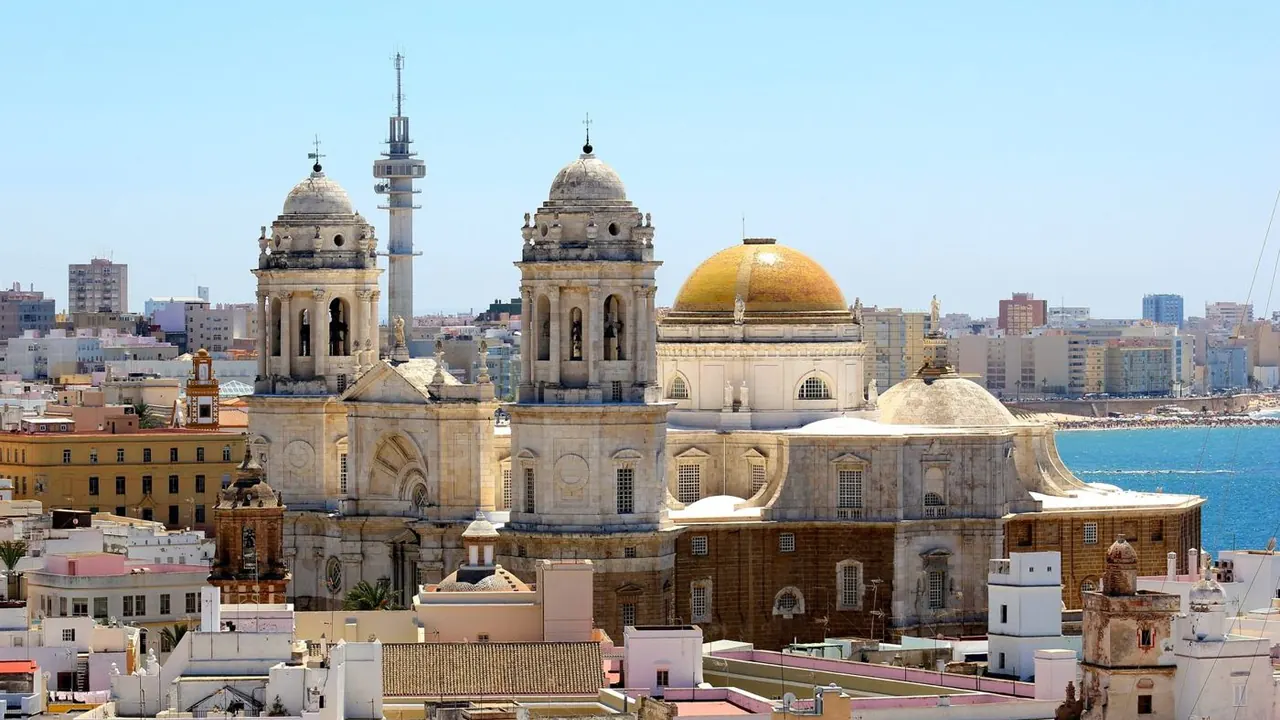
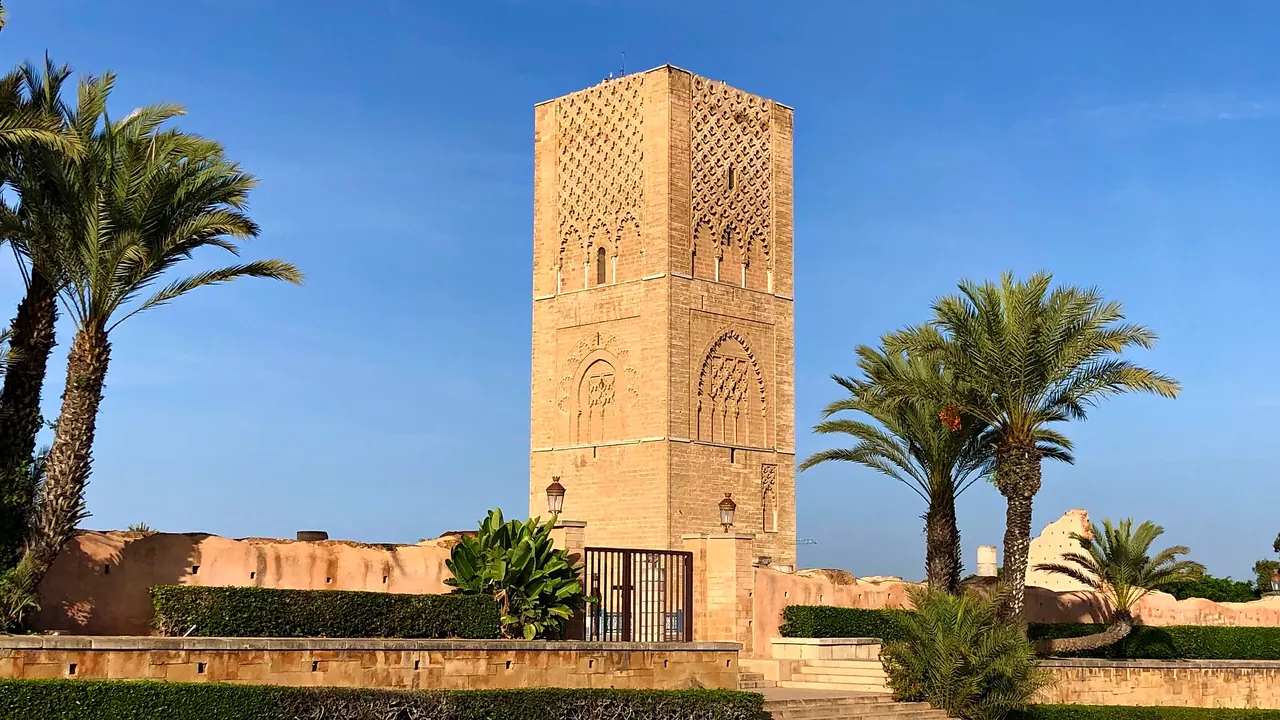
Photos: Cadiz by Bronch, CC BY-SA 3.0 ES, cropped; Rabat by Aemazy, CC BY-SA 4.0, cropped.
Cadiz or Rabat?
Our verdict in twelve categories, each scored against the same fixed benchmark cities, and the climate month by month, so you can choose for your trip.
Choose Cadiz for
- beaches
- nature and the outdoors
- nightlife
Cadiz is the better choice for a summer by the sea. It has a sheltered cove in the old town, kilometres of fine sand at Playa Victoria and the empty strands of the Costa de la Luz within an hour. Evenings go to fried fish, almadraba tuna and cold manzanilla, and there is flamenco in the peñas of Santa María. Sherry towns, white villages and Seville are all close enough for day trips, so the city suits travellers who want beach days, good eating and a busy programme of excursions.
Choose Rabat for
- prices
- wellness
- shopping
Rabat suits the traveller who wants a calmer, cheaper trip, with Morocco at an easy pace rather than the press of the bigger medinas. Daily costs are lower, the hammam is part of ordinary life, and the Kasbah of the Udayas, the Hassan Tower and the Chellah stand alongside an art deco French-era centre. It also makes a good first stop in the country, because the train runs to Casablanca, Tangier and Meknes without a hire car. Skip it if you want swimming or late nights.
Scoreboard
Twelve categories on one fixed scale from 0 to 100. The shaded stretch is the gap between the two.
Your match
Pick a travel style or drag the sliders, and both match scores follow your weighting.
Wins on beaches and nature and the outdoors with your weighting.
Wins on prices and wellness with your weighting.
What matters to you?
Category by category
What the scores mean for a trip.
Beaches & swimming
For swimming, Cadiz is far ahead. The city is almost surrounded by sea, so you can take a morning dip at La Caleta between its two castles and spend the afternoon on the wide golden sand of Playa Victoria, both reachable on foot. Within an hour lie Bolonia, Zahara de los Atunes and El Palmar. The one drawback is the levante, which can blow sand across the beaches for days.
Rabat's beach under the kasbah walls is livelier but less restful, with football, surf lessons and a swell that keeps swimmers near the shore. For calmer water you take a taxi south to Temara or Skhirat, and dress there is more modest than on a Spanish beach.
Food & drink
Cadiz gives the food lover more to travel for, provided that means seafood. You get paper cones from the freidurías, marinated dogfish, shrimp fritters and local bluefin tuna in the tapas bars of La Viña, all with chilled fino or manzanilla. Beyond fish and tapas the choice is narrow.
Rabat offers honest Moroccan home cooking: Friday couscous, harira, snail broth and msemen from evening stalls, and almond pastries with mint tea. Agdal adds French and Lebanese restaurants, but alcohol is discreet and few places stand out.
Culture & sights
The two are broadly level, and each fills two or three days, but they tell different stories. Cadiz is a merchant city of Phoenician origins. You climb the cathedral's bell tower, watch the rooftops in the Torre Tavira's camera obscura, find the Roman theatre in El Pópulo, and visit the oratory where the 1812 constitution was signed.
Rabat's sights are Islamic and royal. There is the Almohad gate of the Kasbah of the Udayas, the unfinished Hassan Tower beside the Mausoleum of Mohammed V, and the Chellah ruins full of storks. The art deco Ville Nouvelle and a modern art museum add a twentieth-century layer that Cadiz lacks.
Nightlife
Cadiz is clearly the livelier place after dark. Late tapas rounds in La Viña and around Plaza de San Francisco spill into the squares, and in summer the bars on the Playa Victoria promenade stay open into the early hours. Carnival in February turns the whole city into a ten-day street party.
Rabat's evenings are about cafés, families strolling the medina and walks along the Bou Regreg. Drinks mostly mean hotel bars and a few lounges in Agdal, and anyone who wants to go clubbing heads to Casablanca.
Nature & outdoors
Cadiz has the richer outdoors. Flamingos and spoonbills feed in the salt pans of the bay's natural park, Tarifa offers kitesurfing and boat trips to see dolphins and whales, and the gorges of the Sierra de Grazalema allow real mountain walking as a day out. Doñana's wetlands are also within reach.
Rabat's nature is gentler: surfing and paddling on the estuary, cycling in the vast Maamora cork oak forest and birdwatching at Sidi Boughaba. The mountains are too far away for anything but an overnight trip.
Day trips
Few bases in southern Spain beat Cadiz for excursions. A short train ride takes you to the bodegas and riding school of Jerez, a ferry crosses the bay to El Puerto de Santa María, and Seville is an easy day out. With a car you can add Vejer, Arcos and the Roman ruins of Baelo Claudia.
Rabat's day trips are fewer but rely entirely on the train. You can see the Hassan II Mosque in Casablanca, the kasbah in Tangier, the murals of Asilah or the imperial gates of Meknes. The tram crosses the river to Salé's older medina, while Fez needs an overnight stay.
Good for families
Cadiz works better for a family beach week. Playa Victoria has lifeguards and plenty of room, the old town is flat and almost free of cars, and the Alameda and Genovés parks give children shade to run around in. Nobody minds children out late at dinner.
Rabat has what Cadiz lacks, a large modern zoo and botanical gardens, and its medina is calm for a Moroccan city. Its rough city beaches need constant watching, though, so it fits better as one stop on a wider family tour.
Getting around
Cadiz is the easier city on foot. You can cross the compact, car-light old town from shore to shore in minutes, trains leave from its edge, and buses and the seafront promenade take you to Playa Victoria. The catch is the coast and the white villages, which really need a hire car.
In Rabat the river sights are walkable, but the Chellah, Agdal and the beaches mean taking the tram or a blue petit taxi. In return, the rail network means you need no car at all, even for day trips.
Shopping & style
Rabat is the better place to shop, mainly for crafts. Rue des Consuls is lined with deep-coloured Rabat pile carpets, brass, leather and embroidery, and the haggling is gentler than in the big souks. Salé adds pottery.
Cadiz offers Spanish chains on Calle Ancha, browsing at the Mercado Central, and fans, ceramics, flamenco dresses and sherry to take home. Anything more serious means a trip to Seville.
Affordability
Rabat is the cheaper city day to day. Medina meals, café terraces, the tram and taxis cost little, and most sights are cheap or free. Its weak points are business-style hotels and drinks, which are pricey because alcohol is mostly sold in hotels.
In Cadiz, tapas, sherry and the bay ferry are good value by Western European standards. Old-town rooms are the expensive part, especially in high summer and Carnival week, so staying near Playa Victoria or visiting in spring or autumn helps.
Live music & performing arts
Cadiz offers more to a visitor who wants live performance. In the Santa María quarter, flamenco peñas keep the city's own alegrías alive for audiences who know the forms well. The neo-Mudéjar Gran Teatro Falla runs plays and concerts all year, holds the satirical chirigota contest at Carnival and hosts an Ibero-American theatre festival every autumn.
Rabat has the national theatres, but their programmes are mostly in Arabic and French and run irregularly. Outside the Mawazine festival, Andalusian and chaabi music takes some effort to find.
Wellness & relaxation
Rabat has the real bathing culture. Neighbourhood hammams in the medina and Salé offer steam and black-soap scrubs, and hotel and riad spas give the same ritual more gently, with argan oil massage. The kasbah's Andalusian garden adds a quiet place to sit.
Cadiz has no such tradition, so treatments mean a drive to the resort spas at Novo Sancti Petri or the Arab-style baths in Jerez. What it offers instead is rest built into the day: a long lunch, a siesta and sunset over La Caleta.
When should you go?
Pick your month. The climate figures are measured averages, not a forecast.
Cadiz in July
Rabat in July
Daytime high, °C
Rainfall in the month, mm
Temperature and rainfall are climate normals, averaged over the years shown. Cadiz: 1991-2020 (sunshine 1961-1990) normals, Cadiz Bay / Puntales (5.2 km from centre). Rabat: 1991-2020 normals, Rabat-Sale (7.6 km from centre).
Cadiz is at its best for the beach from June to September. Highs sit in the upper twenties, almost no rain falls and the long, sunny days peak in July. The sea is warmest at 23°C in July and August, and it stays swimmable into early October. Rain sets in hard in October, and November is the wettest month. Winter is mild enough for walking the old town, though greyer and a little cooler than across the strait.
Rabat follows almost the same pattern on a gentler curve. Its winters are a couple of degrees warmer and noticeably sunnier, so it makes the better choice for a city stay from December to March. Summers are no hotter, and the sea reaches much the same temperature in August. Its rain comes later and heavier, with November and December both above 90mm. In neither city does summer get too hot for walking, because Atlantic breezes keep highs below 30°C.
Which traveller are you?
On a beach and sun trip, Cadiz is the clear pick. Playa Victoria has lifeguards and kilometres of fine sand, La Caleta is calm for a swim, and the Costa de la Luz is close by. Rabat's city beach belongs to surfers and strong currents.
For a trip on a tight budget, Rabat stretches money further. Medina meals, mint tea on café terraces, the tram and petit taxis all cost little. In Cadiz, tapas are cheap but old-town rooms are scarce and dear in summer.
On a relaxing and wellness trip, Rabat has the edge. You can take a steam and black-soap scrub at a neighbourhood hammam or an argan oil massage in a hotel spa, then walk the quiet kasbah garden. Cadiz offers slow days but few treatments in the city itself.
Before you go
| Measure | Cadiz | Rabat |
|---|---|---|
| Official language | Spanish | Arabic, Standard Moroccan Tamazight |
| Currency | Euro (EUR) | Moroccan Dirham (MAD) |
| Sockets | CF230 V, 50 Hz | CE50 Hz |
| Driving side | Right | Right |
| Time zone | UTC+1, UTC+2 in summer | UTC+1 |
| Emergency number | 112 | Police 19/112, ambulance 15, fire 15 |
| Elevation | 11 m | 87 m |
| Main airport | Jerez Airport (XRY)31 km from centre26 non-stop destinations | Rabat-Salé Airport (RBA)9 km from centre45 non-stop destinations |
| Public holidays this year | 12 days | 11 days |
By the numbers
| Measure | Cadiz | Rabat |
|---|---|---|
| City population | 109,950 | 515,619 |
| People per km² | 9,087 | 4,370 |
| Museums within 10 km | 12 | 7 |
| UNESCO World Heritage sites within 50 km | 0 | 1 |
| Swim season, months above 21 °C | 3 months | 4 months |
Where else could you go?
Every comparison below shares a destination with this one, so you can follow Cadiz or Rabat somewhere new.