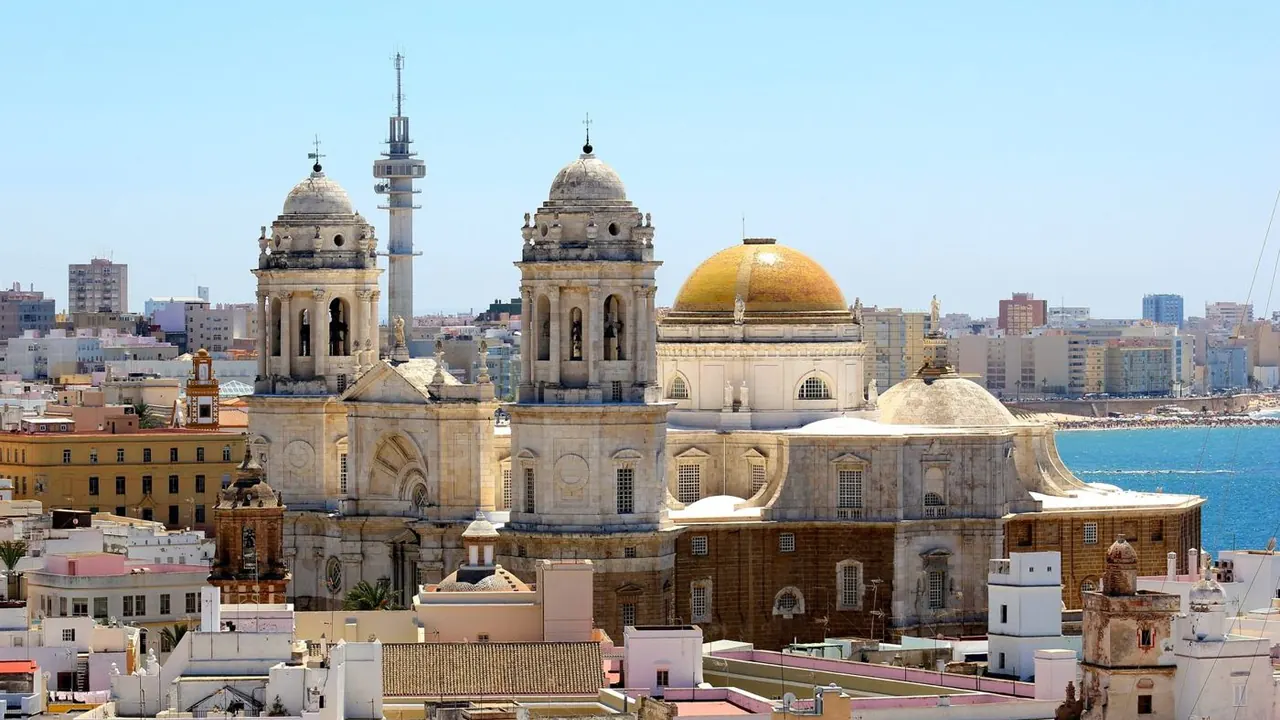
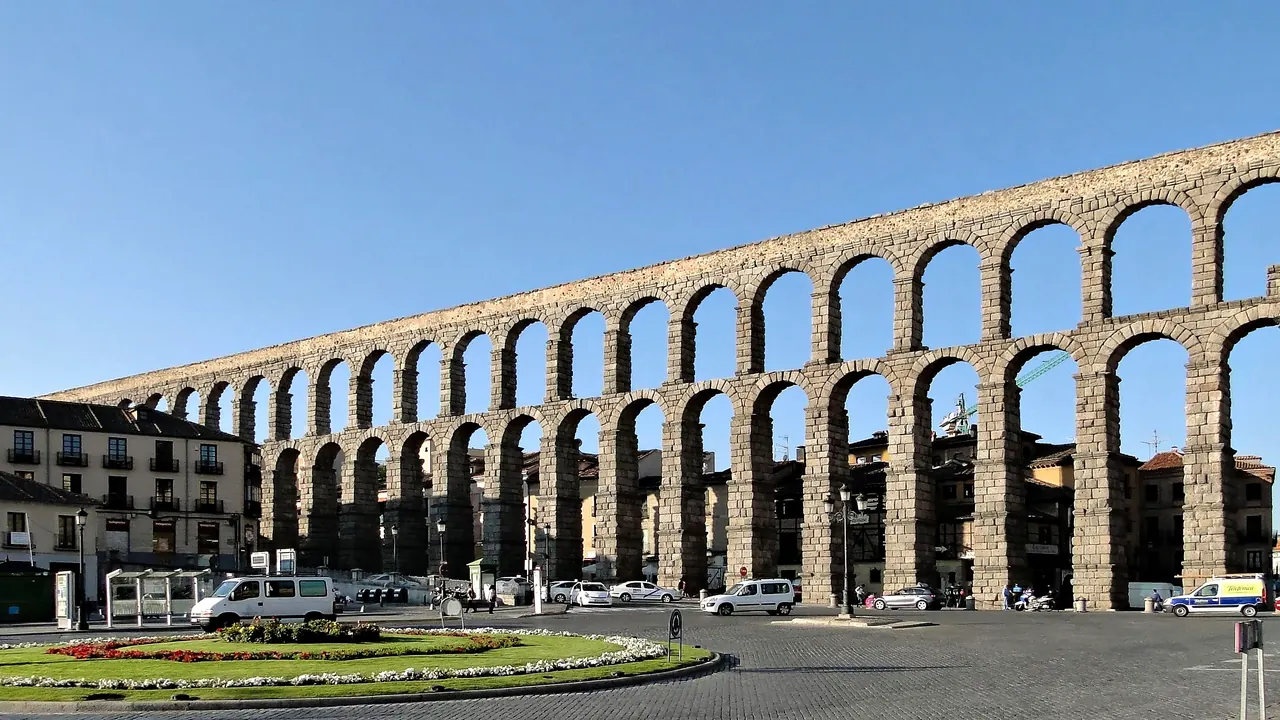
Photos: Cadiz by Bronch, CC BY-SA 3.0 ES, cropped; Segovia by Bernard Gagnon, CC BY-SA 3.0, cropped.
Cadiz or Segovia?
Our verdict in twelve categories, each scored against the same fixed benchmark cities, and the climate month by month, so you can choose for your trip.
Choose Cadiz for
- beaches
- live music and the arts
- nightlife
Cadiz is the choice for a summer by the sea with a historic city attached. It has the cove of La Caleta and the long sands of Playa Victoria, fried fish and cold sherry, and flamenco peñas and Carnival to fill the evenings. Families, beach lovers and anyone wanting warm weather into October will be happier here.
Choose Segovia for
- culture and sights
- nature and the outdoors
- prices
Travellers who come for monuments rather than the sea should look at Segovia. The Roman aqueduct, the Alcázar on its rocky ridge and the Romanesque churches make for denser sightseeing than Cadiz offers, and the Guadarrama mountains begin almost at the edge of town. It suits a short inland break or a side trip from Madrid, walking in spring or autumn, and anyone with an appetite for roast suckling pig.
Scoreboard
Twelve categories on one fixed scale from 0 to 100. The shaded stretch is the gap between the two.
Your match
Pick a travel style or drag the sliders, and both match scores follow your weighting.
Wins on beaches and live music and the arts with your weighting.
Wins on culture and sights and nature and the outdoors with your weighting.
What matters to you?
Category by category
What the scores mean for a trip.
Beaches & swimming
Here the two could hardly differ more. The Atlantic surrounds Cadiz, with La Caleta tucked between its two castles and the long, fine sand of Playa Victoria in the newer town. The empty strands of El Palmar, Conil and Bolonia are within an hour, though the levante wind can spoil a beach day.
Segovia sits on a high inland plateau, far from any coast. Swimming there means a hotel pool or a cold reservoir in the Guadarrama foothills, so anyone who wants the sea should plan for it somewhere else.
Food & drink
Both cities have a narrow range of food but eat well, and Cadiz has more to offer. Its cooking comes from the sea: paper cones from the freidurías, shrimp fritters, almadraba tuna in the tapas bars of La Viña, and cold manzanilla from the sherry towns across the bay.
Segovia is a place for one big meal rather than many. Wood-roasted suckling pig and lamb are the draw, served with La Granja beans and Ribera del Duero wine. Beyond the asadores, though, the choice thins out quickly.
Culture & sights
Both are old towns on narrow strips of land, but Segovia's monuments are grander and closer together. The aqueduct, the Gothic cathedral and the Alcázar line up along one ridge. Between them stand arcaded Romanesque churches and the old Jewish quarter, and the twelve-sided Vera Cruz church is just outside the walls.
Cadiz trades on its great age and its maritime story. There are Phoenician sarcophagi in the Museo de Cádiz, a Roman theatre in El Pópulo, the watchtowers of the old merchant houses, and the oratory where the 1812 constitution was signed. It rewards slow wandering, though no single sight matches the aqueduct.
Nightlife
Neither is a clubbing city, but Cadiz stays up later. In summer the evening starts in La Viña and around Plaza de San Francisco, then moves to bars along the Playa Victoria promenade that stay open into the early hours. Every February, Carnival turns the whole city into a costumed street party for ten days.
Segovia's evenings mean a tapas round on Plaza Mayor and a few student bars at weekends. On winter weeknights the old town goes quiet early, and Madrid is the answer for a late night.
Nature & outdoors
Both have strong landscapes close by, but of different kinds. Cadiz looks to the water: salt pans and marshes full of flamingos and spoonbills in the bay's natural park, cliff-top pine forest at La Breña, and kitesurfing and whale-watching from Tarifa. The limestone peaks of Grazalema are about two hours inland.
Segovia looks to the mountains. The pine forests of Valsaín and the passes leading towards Peñalara are within half an hour, with high walking from spring to autumn and snow in winter. The vultures of the Duratón gorge are a little further out.
Day trips
Cadiz opens onto sherry country and Andalusia, and Segovia onto royal Castile and the capital. From Cadiz, Jerez is half an hour by train for its bodegas and riding school, a ferry crosses the bay to El Puerto de Santa María, and Seville's cathedral and Alcázar are under two hours away. A hire car adds the white hilltop towns of Vejer and Arcos and the Roman ruins of Baelo Claudia beside the beach at Bolonia.
Segovia's outings lead instead to palaces and walled towns. The fountain gardens of La Granja are twenty minutes away, Madrid is under half an hour by high-speed train and Ávila about an hour. With a car, Pedraza, Sepúlveda and El Escorial across the mountains make easy days out, and the Ribera del Duero vineyards make a longer one.
Good for families
Cadiz is the easier city with children, largely thanks to the sea. Playa Victoria is wide and has lifeguards, small children can swim safely in sheltered La Caleta, and the Alameda and Genovés parks offer shade. The things to plan around are midday heat and the gusty levante.
Segovia has the more storybook sight in its turreted Alcázar, and the gardens at La Granja give children room to run. With steep cobbles that are hard on a pushchair and nothing built for children, though, it suits a couple of days better than a full week.
Getting around
Cadiz is the easier place to get around. The old town is flat and mostly closed to traffic, buses run the length of the isthmus to the beach, and trains to Jerez and Seville leave straight from the old town. The coast and the white villages, however, need a hire car.
Segovia's sights are just as walkable, all on one ridge, but the streets are cobbled and steep. The high-speed station is about fifteen minutes out of town by bus, and Pedraza, Sepúlveda and the trailheads are hard to reach without a car.
Shopping & style
Cadiz has an ordinary city high street, which Segovia's old town largely lacks. Around Calle Ancha and Columela, Spanish chains share the streets with long-established family businesses. A morning among the fish and produce stalls of the Mercado Central is one of the city's real pleasures. The souvenirs worth carrying home are Andalusian ones, from painted fans and flamenco dresses to fino from the nearby bodegas.
In Segovia the old-town shops mostly serve day visitors walking up Calle Real, with embroidery, local pottery and boxes of ponche or La Granja beans. Everyday shopping happens down in the newer town. Neither city has a fashion or design scene, so for serious shopping you take the train to Seville from Cadiz or to Madrid from Segovia.
Affordability
Overall costs are close, but the savings come in different places. In Cadiz, eating and drinking are the bargain, with freidurías, market counters and cheap sherry. Old-town rooms are scarce, though, and dear in high summer and Carnival week.
Segovia is partly the reverse. Small family-run hotels and guesthouses keep rooms reasonable, especially midweek and in winter, but the famous roasts in the dining rooms by the aqueduct make for an expensive meal.
Live music & performing arts
Cadiz has much more on stage. It is one of the cradles of flamenco, and the peñas of the Santa María quarter perform for audiences who know the forms well. The Gran Teatro Falla hosts the satirical Carnival choirs, plays and concerts through the year and an autumn festival of Ibero-American theatre.
Segovia's performing arts come in seasons: the Titirimundi puppet festival in spring, summer concerts in churches and palace gardens, and touring shows at Teatro Juan Bravo. Outside those weeks there is little on.
Wellness & relaxation
Neither city has a bathing tradition, but Cadiz has more within reach. There are resort spas with sea-water treatments at Novo Sancti Petri near Chiclana and Arab-style baths in Jerez, half an hour away. The day itself also slows down, with a siesta and a sunset walk along the sea walls.
In Segovia, the choice stops at a few hotel spas. Its calm comes instead from an old town that empties when the coaches leave and from the pine-scented air of the sierra.
When should you go?
Pick your month. The climate figures are measured averages, not a forecast.
Cadiz in July
Segovia in July
Daytime high, °C
Rainfall in the month, mm
Temperature and rainfall are climate normals, averaged over the years shown. Cadiz: 1991-2020 (sunshine 1961-1990) normals, Cadiz Bay / Puntales (5.2 km from centre). Segovia: 1991-2020 normals, Segovia (0.3 km from centre).
Cadiz has the gentler year. From June to September the days are long, dry and very sunny, and the Atlantic warms to about 23°C, so the swimming season runs into early October. Rain arrives in October and peaks in November at around 89mm. Even in midwinter the afternoons stay mild enough for a walk along the sea walls.
Segovia sits high on the Castilian plateau, and its seasons are much more extreme. July and August reach about 30°C, which makes its steep streets hard work in the afternoon. January highs of about 8°C and short, greyer days make winter sightseeing a matter of coats. June and September are the most comfortable months for both the town and the mountain trails. May and October are also pleasant but are the wettest months of its year.
Which traveller are you?
On a beach and sun trip, Cadiz is the only real option of the two. It has La Caleta and Playa Victoria in town and the Costa de la Luz within an hour. Segovia is landlocked and offers little more than pools and chilly reservoirs.
For a culture and arts trip built around monuments, Segovia gives more. The aqueduct, cathedral, Alcázar and Romanesque churches stand along one walkable ridge. Cadiz pulls ahead only if live flamenco and theatre matter more than architecture.
On a family trip with children, Cadiz works better. It has a wide beach with lifeguards, flat streets with little traffic and shady parks. Segovia's castle is exciting for a day, but its steep cobbles and lack of a beach make a longer stay harder.
Before you go
| Measure | Cadiz | Segovia |
|---|---|---|
| Official language | Spanish | Spanish |
| Currency | Euro (EUR) | Euro (EUR) |
| Sockets | CF230 V, 50 Hz | CF230 V, 50 Hz |
| Driving side | Right | Right |
| Time zone | UTC+1, UTC+2 in summer | UTC+1, UTC+2 in summer |
| Emergency number | 112 | 112 |
| Elevation | 11 m | 1,002 m |
| Main airport | Jerez Airport (XRY)31 km from centre26 non-stop destinations | Adolfo Suárez Madrid–Barajas Airport (MAD)68 km from centre241 non-stop destinations |
| Public holidays this year | 12 days | 12 days |
By the numbers
| Measure | Cadiz | Segovia |
|---|---|---|
| City population | 109,950 | 52,375 |
| People per km² | 9,087 | 320 |
| Museums within 10 km | 12 | 11 |
| UNESCO World Heritage sites within 50 km | 0 | 2 |
| Swim season, months above 21 °C | 3 months | - |
Where else could you go?
Every comparison below shares a destination with this one, so you can follow Cadiz or Segovia somewhere new.
- Jerez de la Fronteravs Cadiz
- Madridvs Segovia
- Sevillevs Cadiz
- Rondavs Cadiz
- Toledovs Segovia
- Marbellavs Cadiz